by Daniel Stefanski | Jun 14, 2023 | News
By Daniel Stefanski |
Governor Katie Hobbs and the Republican-led legislature are headed for another showdown.
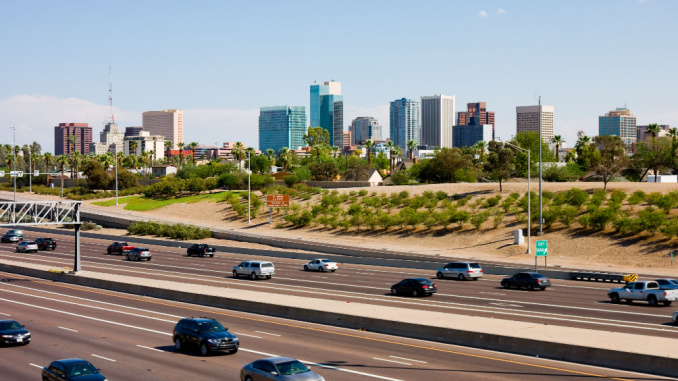
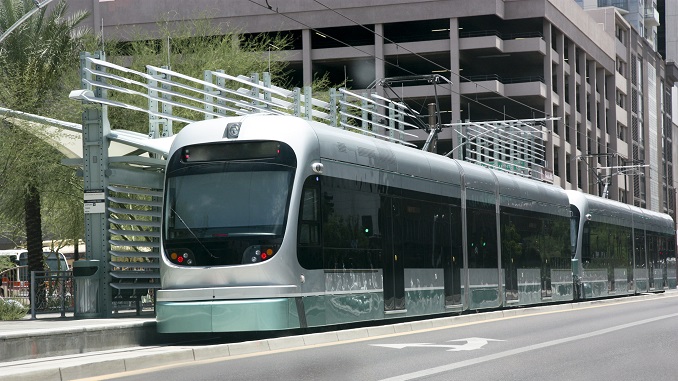
This week, Arizona Republicans introduced and passed their proposal for a Prop 400 resolution, sending their legislation to the Governor’s Office. According to a press release from the Arizona State Senate Republican Caucus, “The Proposition 400 extension supported by Republican Legislators and outlined in SB 1246 establishes two questions to be placed on the ballot. Question number one covers funding for freeways, arterial roads and the bus program. If voters approve the proposed 0.43% sales tax on question number one, this plan would increase funding for highway projects by $1.47 billion more than the proposal being pushed by Governor Katie Hobbs and the Maricopa Association of Governments (MAG). It would also shift $1 billion from undefined uses like ‘active transportation’ and ‘air quality’ to actual arterial road projects that drivers use every day. If voters approve the proposed 0.065% sales tax on question two, MAG will receive their request for light rail rehabilitation.”
SB 1246, as amended, passed the state house with a 31-26 vote (three members not voting) and the state senate with a 16-12 tally (two members not voting).
Senate President Warren Petersen defended his side’s proposal, saying, “MAG’s proposal is a shell game, where local road project funds are diminished to allow for light rail expansion. Our Prop. 400 extension proposal allows voters to fully evaluate the transportation plan on its merits to determine which funding options best fit their preferred commute patterns. If voters approve question one and reject question two, the valley’s freeways, arterial roads and bus program will be fully funded, and the sales tax will be reduced by 13%.”
House Speaker Ben Toma spoke in support of the legislation before voting Tuesday, stating, “This has been a long time coming, and Maricopa County voters deserve real choices in how their sales taxes continue to get spent. Transparent Prop 400 expansion gives voters that real choice and puts Arizona’s critical infrastructure first. Rather than mixing vague, controversial projects with real improvements to freeways, major roads, and buses, SB 1246 moves over a billion dollars from undefined programs to actual road projects… In short, this transparent extension puts Maricopa County residents first and fulfills our commitment to smart and responsible spending.”
Shortly after the Legislature’s actions on Tuesday, the governor promised a veto on the Republicans’ plan, tweeting, “From day one, I promised I would be laser-focused on growing our economy and bringing high-paying jobs to our state for Arizona workers. Republican leadership’s partisan bill does neither of those things, and will be vetoed when it reaches my desk. Now, it’s time for legislators to vote on a compromise that is supported by a bipartisan majority in both chambers, business and labor leaders, and Maricopa County cities. Republican leadership needs to stop playing partisan games, put the bipartisan compromise up for a vote, and stop holding our state’s economic potential hostage.”
Before the Republicans passed their proposal on Tuesday, Governor Hobbs released a statement to highlight ongoing disagreements over a Prop 400 proposal, writing, “From day one, I promised that I would be laser-focused on growing our economy and bringing high-paying jobs to our state for Arizona workers. That’s exactly what this proposal does, and business leaders, labor leaders, and mayors across Arizona agree. But Republican legislative leadership is holding our economy hostage and holding back our state’s potential to be the leader in new, fast-growing industries.”
Hobbs then encouraged Republican legislators to make a deal with her on this pressing issue, saying, “I’m calling on those legislators to put their partisan politics aside and accept this compromise so that we can keep our economy growing for Arizona families.”
The Governor’s Office included details on the proposed deal, which included the following:
- “Sets allocations at: 40% for freeways, 22% for arterials, and 38% for transit with the elimination of flexibility between the modes
- Sets aside 3.5% for the capital rehabilitation of the existing light rail system
- Includes proposed farebox language to provide statutorily prescribed benchmarks for farebox recovery consistent with our peers
- Road diet language applies to arterial and freeway projects
- Includes definitions for air quality and regional programs”
Arizona House Speaker Ben Toma took issue with the governor’s statement over the weekend, responding to reporters: “The Governor has chosen to be an uncompromising conduit for an inefficient MAG proposal that does not have sufficient votes to succeed in the House. I remain willing to negotiate, but their take-or-leave-it attitude is decidedly unproductive. We are prepared to move a more efficient alternative on Monday and work from there.” That alternative came to fruition on Tuesday.
The Arizona Freedom Caucus also pushed back on the governor’s statement, tweeting, “It’s ironic that Hobbs is pretending that she’s been involved in this issue for more than a few days. Hobbs has said very little about, and done even less, on prop 400 beyond this last week. Unfortunately for the people of Arizona, Hobbs was apparently more focused on firing yet another senior staffer and wasting the last month instead of being at the table on this issue with legislative leaders. Now instead of working with the legislature, Hobbs is choosing to shill for mayors to shove a wildly unpopular light rail boondoggle down everyone’s throats. Hobbs and MAG’s take it or leave it attitude is childish and impedes reaching a real agreement. It serves as yet more evidence that she has no idea how to lead or govern, and isn’t interested in solving complex problems, but rather just wants to play petulant political games.”
The governor has been chasing headlines over Prop 400 negotiations in recent weeks. On May 24, Hobbs used her official Twitter account to share an opinion piece from the Arizona Republic’s Editorial Board, posting, “The @azcentral editorial board is right: Prop 400 is critical to build businesses, create jobs, and secure our booming economic future. Arizona could face real consequences if we fail to pass a bill. It’s time for the Legislature to stop playing games. Maricopa county voters deserve the chance to make their voices heard.”
That tweet from the governor elicited a surprising comment from Arizona Senate President Warren Petersen, who said, “This is a bizarre tweet. We had just started a meeting with the governor about prop 400 while this tweet was sent out. Our plan has more roads, less congestion and is a better value to the taxpayer.”
Daniel Stefanski is a reporter for AZ Free News. You can send him news tips using this link.
by AZ Free Enterprise Club | Jun 13, 2023 | Opinion
By the Arizona Free Enterprise Club |
The Prop 400 package put together by the Maricopa Association of Governments (MAG) is in serious trouble at the legislature, and Katie Hobbs and the transit lobby knows it. So, in a desperate attempt to rescue their defective plan, they have phoned a friend to see if a little legacy media pressure will improve their flagging fortunes at the Capitol.
In recent weeks, the AZ Republic has unleashed a torrent of articles and opinion pieces attempting to scare the legislature into sending their transit slush fund package up to Hobbs’ desk. Most of their writings have been nothing more than recycled talking points from MAG and transit industry lobbyists attacking conservative lawmakers and critics (like the Club) for opposing a plan that slashes freeway funding and increases traffic congestion in the region.
A couple weeks ago it was in the form of an editorial that claimed to disprove our Prop 400 criticism by “relitigating” the merits of bus and light rail and proving its value in the region. And now over the weekend, their opinion writers couldn’t race out fast enough to promote the press release issued by Katie Hobbs and the transit lobby that the legislature needs to adopt a fake “compromise” MAG plan.
In short, their efforts to “relitigate” the merits of transit or to declare that there is any type of “compromise” only demonstrate how radical their position really is.
Here are just a few examples of how the Republic has veered from journalism to being nothing more than a lobbying arm of the transit lobby:
>>> CONTINUE READING >>>
by Daniel Stefanski | Jun 11, 2023 | Education, News
By Daniel Stefanski |
Advocates of Arizona’s Empowerment Scholarship Accounts (ESA) are responding to recent attacks on the program.
Last week, Democrat Governor Katie Hobbs launched a political assault on ESAs, reacting to a recent memo from the Arizona Department of Education, which detailed the expected cost for the upcoming fiscal year. Hobbs tweeted, “the school voucher program in its current form is not sustainable, and Republican legislators need to explain why they are forcing this runaway spending on Arizona taxpayers. We need to bring an end to this out of control and unaccountable spending, and I will work tirelessly to make that happen.”
The first-year governor has been working tirelessly to assuage angry members of her own party since she agreed to a negotiated state budget last month with Republican leaders of the Arizona House and Senate. Though she railed against ESAs on the campaign trail and leading up to the budget compromise, Hobbs signed the package that left the historic school choice expansion untouched and uncapped, leaving Democrats and interest groups opposed to ESAs to question her commitment to adhere to such a prominent platform of her administration.
Proponents of Arizona’s ESA program were ready for Hobbs’ – and other Democrats’ – attack, publishing national and local opinion pieces to assure people of the facts. Jason Bedrick and Corey DeAngelis, two national leaders of the school choice movement, wrote a commentary for the Wall Street Journal, entitled “School Choice Saves Arizona Money.” The advocates clarified the cost for ESAs in Fiscal Year 2024 ($900 million) “is barely 2% of total Arizona state spending of $80.5 billion in 2022. Arizona public schools spend about $14,000 per pupil, or $1.4 billion for 100,000 students. If the department’s enrollment projection is reached, school choice would serve roughly 8% of Arizona’s students for 6% of the $15 billion that Arizona will spend on public schools.”
They pointed to a report published by the Common Sense Institute, which found that “current enrollment in Arizona public district and charter schools combined is over 80,000 students below pre-pandemic projections,” saving Arizona $639 million.
Another opinion piece, written by Jon Gabriel for the Arizona Republic, stressed that “the critics of Arizona’s Empowerment Scholarship Accounts keep claiming the program is too expensive. At the same time, they insist the state spend far, far more on education.” Gabriel highlights that “an ESA student is only allowed 90% what that student would receive in a traditional public school,” arguing that Democrats “are galled to see education funding going directly to students and parents instead of to bloated public school administrations and teachers’ unions.”
Matthew Ladner took his defense of ESAs to Twitter to make a comparison with the Mesa Unified School Direct. He posted, “Mesa Unified was budgeted for $1.3 billion last year to educate 54,000 students. I’m having a hard time getting too excited about less money for 100,000 students. Let’s call ESA ‘a bargain for taxpayers.’”
As of the Arizona Department of Education’s update on June 2, 58,253 students are currently enrolled in ESAs.
Daniel Stefanski is a reporter for AZ Free News. You can send him news tips using this link.
by AZ Free Enterprise Club | Jun 10, 2023 | Opinion
By the Arizona Free Enterprise Club |
We all know it’s been a rough start for Governor Katie Hobbs as Arizona’s Chief Executive. Along with high-profile staff exits and breaking the veto record after killing the bipartisan “Tamale Bill,” Hobbs alienated many Democrats when she signed the budget sent to her by the Republican-led legislature.
Not to be outdone, Attorney General Kris Mayes has come along since taking office with one clear message to Hobbs: “Hold my Bud Light.”
Mayes has been occupying the AG office for a couple of months, and she has already figured out a way to abuse her power and violate her attorney client obligations. All driven by her desire for headlines and trying to claim the mantle as top Democrat demagogue in the state.
Her antics began in April when she decided it was a good idea to threaten action against the Arizona Department of Water Resources (ADWR)…
>>> CONTINUE READING >>>
by Corey DeAngelis | Jun 6, 2023 | Opinion
By Jason Bedrick and Corey DeAngelis |
Democrats claim a new program will bankrupt the state. The opposite is true.
Is school choice bankrupting Arizona? That’s what Gov. Katie Hobbs and Democratic legislative leaders would have you believe, but simple math says otherwise.
Arizona’s choice program, Empowerment Scholarship Accounts (ESAs), “in its current form is not sustainable,” Ms. Hobbs tweeted last week. “We need to bring an end to this out of control and unaccountable spending, and I will work tirelessly to make that happen.”
With an ESA, parents can use a portion of their child’s state education funds—typically about $8,000 a year—to pay for private-school tuition, tutoring, textbooks, online courses, home-school curricula, special-needs therapy and other expenses.
Ms. Hobbs’s declaration came in the wake of the Arizona Department of Education’s latest projection that the program, which has about 58,000 participants, will serve 100,000 students by the end of fiscal 2024 at a cost of roughly $900 million.
“Without reform, Empowerment Scholarship Accounts will bankrupt our state & our public schools,” tweeted Rep. Andrés Cano, leader of the Democratic caucus in the Arizona House. He omitted the portion of the department’s letter noting that “many of the students that are enrolling now are coming from the public school system, which in the end saves the state money.”
That $900 million is barely 2% of total Arizona state spending of $80.5 billion in 2022. Arizona public schools spend about $14,000 per pupil, or $1.4 billion for 100,000 students. If the department’s enrollment projection is reached, school choice would serve roughly 8% of Arizona’s students for 6% of the $15 billion that Arizona will spend on public schools.
A new report by the Common Sense Institute finds that “current enrollment in Arizona public district and charter schools combined is over 80,000 students below pre-pandemic projections,” producing a savings of $639 million. Arizona’s population is growing, so the vast majority of those students left for private or home schools, for which they could avail themselves of Arizona’s two private choice policies. In addition to the 58,000 students using education savings accounts, last year school tuition organizations issued more than 32,000 tax-credit scholarships.
The attacks on school choice are more than a public relations campaign. When Ms. Hobbs’s budget retained last year’s school-choice expansion, Arizona’s Attorney General Kris Mayes used the “bankrupt the state” talking point as a pretext to threaten a lawsuit. In a public letter to Ms. Hobbs and the Legislature, Ms. Mayes decried the “catastrophic drain on state resources caused by universal Empowerment Scholarship Accounts.” She later went on television and threatened to investigate participating families for “waste, fraud, and abuse.”
Ms. Hobbs lacks the legislative support to roll back school choice, as Republicans have slim majorities. But she’s signaling what she would do if she could. Arizona families should take note.
Mr. Bedrick is a research fellow at the Heritage Foundation. Mr. DeAngelis is a senior fellow at the American Federation for Children.