by Daniel Stefanski | May 5, 2023 | News
By Daniel Stefanski |
One of the least transparent administrations in Arizona history has become even less transparent.
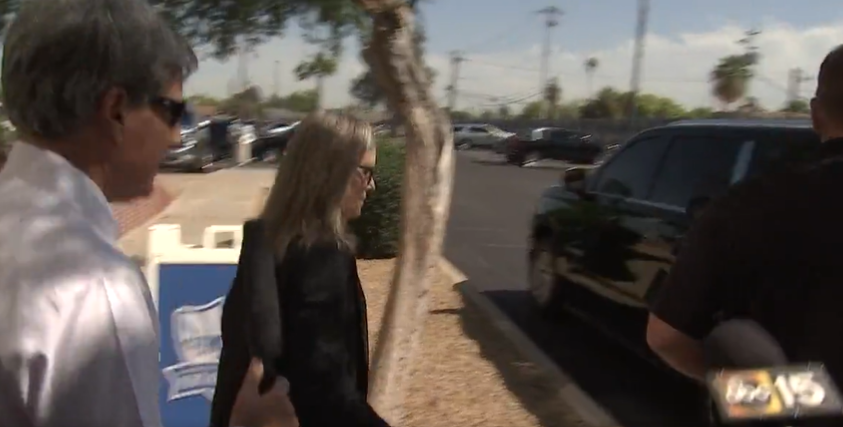
On Tuesday, veteran Arizona reporter Dennis Welch shared a video he captured of Democrat Governor Katie Hobbs avoiding questions from reporters as she raced to an awaiting suburban. A Hobbs aide was overheard saying, “We’re not taking questions today; I’m very sorry.”
In sharing the video, Welch wrote, “The Hobbs Dodge: Footage from Governor Hobbs yesterday ducking questions from the press, again. The move has increasingly become standard operating procedure for a governor who promised an open relationship with the media at the start of her administration.”
The tweet has over half a million views.
Senate President Pro Tempore T.J. Shope told AZ Free News, “Governor Hobbs promised to run a transparent administration but from the beginning, it’s been clear that those were just talking points. From taking weeks to disclose donors to her inaugural events, vetoing bills without reaching out to members, and now running away from reporters, the only thing transparent has been her desire to walk herself off from the public.”
Representative Cory McGarr reacted to the video shortly after it hit the social media platform, tweeting, “If I couldn’t defend any of my insane actions as governor I would probably run from the press too.”
Representative Austin Smith tweeted, “Why would she need to talk to the media? Y’all carry water for her anyway. She’s not beholden to you. She owns you.”
Former Arizona legislator Vince Leach also weighed in, thanking Welch for sharing the video.
Members of the Arizona press also piled on to express their frustrations with Hobbs’ refusal to answer questions. Laurie Roberts, a columnist with the Arizona Republic, stated, “This is a bad look for a governor…”
Nick Phillips, a reporter with the Arizona Capitol Times, wrote, “Last time Governor Hobbs answered journalists’ questions was in March, before 2 high-profile departures from her comms team.”
Jeremy Duda, a reporter with Axios Phoenix, said, “This is an annual event and I don’t ever recall a governor not doing a gaggle with the press afterward. It wouldn’t be as much of an issue if Hobbs hadn’t halted the weekly press conferences she was doing during her first few months in office.”
After posting his video of Hobbs, Welch added, “It’s been 2 weeks since Governor Hobbs vetoed the so-called tamale bill. She still hasn’t said what changes she wants to get her support. Unlikely to get answers soon. Her schedule shows she’ll be in DC & Sedona (an off the record event) for the rest of the week.”
Daniel Stefanski is a reporter for AZ Free News. You can send him news tips using this link.
by Michael Infanzon | Apr 26, 2023 | Opinion
By Michael Infanzon |
Firearms are a serious matter, and it’s essential to teach children from an early age about their potential danger. Unfortunately, not all parents and guardians are adequately informed or trained to teach their kids about gun safety. That’s why it’s important to have programs in place to help educate children about the importance of not playing with firearms.
This session, Representative Selina Bliss tried to do just that when she introduced HB2332, a bill dealing with firearms safety training in Arizona schools. But Governor Katie Hobbs vetoed it. This decision is concerning because it may put the safety of children at risk.
HB2332 would have provided education and resources to schools to teach children about firearm safety and the consequences of playing with guns. The Governor’s decision to veto the bill sends the message that gun safety is not a priority for the state, which is simply unacceptable. In her veto letter, Governor Hobbs stated, “Ensuring the safety of our students is a responsibility that belongs to all of us.” We agree. That is why HB2332 was so important, and yet while the Governor admits to meeting “with gun safety advocates to discuss acts of preventable gun violence,” she never responded to numerous requests to meet and discuss from us.
It’s crucial to remember that firearms are not toys, and they should never be treated as such. Children must understand the dangers associated with guns and how to handle them safely, even if they have never personally encountered a firearm before. This education can be the difference between life and death for both the child and those around them.
That’s why it’s critical for parents and guardians to take responsibility for educating their children about firearms, especially now that HB2332 has been vetoed. They should talk to their kids about the dangers of playing with guns and emphasize the importance of never touching a firearm without adult supervision. It’s also crucial to teach children what to do if they come across a firearm accidentally, such as immediately leaving the area and telling a trusted adult.
Moreover, parents and guardians should teach their children to differentiate between toys and firearms, as some toy guns look similar to real firearms. It’s important to emphasize that real guns can cause harm and are not to be played with, no matter how similar they may look to a toy.
Teaching children about firearm safety is a paramount responsibility for parents, guardians, and society as a whole. It’s not only about protecting our children but also about preventing tragedies. While the veto of the recent bill is disheartening, we can all take steps to educate our children about the importance of not playing with firearms. By doing so, we can create a safer world for our children to live in.
Michael Infanzon is the Managing Partner for EPIC Policy Group and lobbies on behalf of groups like the Arizona Citizens Defense League and the Arizona Firearms Industry Trade Association.
by Daniel Stefanski | Apr 26, 2023 | News
By Daniel Stefanski |
A controversial veto from Arizona’s Democrat Governor failed to garner the necessary votes for an attempted override from the state legislature.
On Tuesday, the Arizona House voted on the question of whether to override Governor Katie Hobbs’ veto of HB 2509, which was originally sponsored by Representative Travis Grantham. The proposal dealt with the sale and preparation of cottage food – and was coined as the Tamale Bill after the increased exposure due to the governor’s action.
The veto override failed to pass by five votes with a vote of 35-23, with one member not voting (Representative Shah) and one seat vacant.
Earlier this session, HB 2509 garnered 52 votes when it first passed the Arizona House, and 26 votes in the Senate, which amended the bill and sent it back to the House. The bill then obtained final clearance from the House with 45 votes before being transmitted to the Governor’s Office.
After the vote, Senator T.J. Shope released a statement, expressing his disappointment in the inability of the House to do its part to override the veto, saying, “Sadly, the men and women making an honest living by selling homemade foods, like tamales, will continue to be criminalized for doing so because of @GovernorHobbs vetoing HB2509 and a majority of Democrats who previously voted for the bill, refusing to override her veto in the House. I’m proud of the five Democrats who joined all 30 @AZHouseGOP members in the veto override attempt. What can be said of the others who originally voted YES on the bill and then chose to be cowards in the face of pressure from the Governor? As my mom & nana would say, ¡Qué vergüenza!”
The bill’s sponsor, Grantham, told AZ Free News, “It’s sad to see Democrats pick special interests and the Governor over their constituents. The vote was 52-8 one week ago and today the veto override failed. We only needed 40 votes. I’m heartbroken for the cottage food preparers who aren’t going to be allowed to exercise their basic freedoms because of partisan politics being played by this Democrat governor and her supporters in the house.”
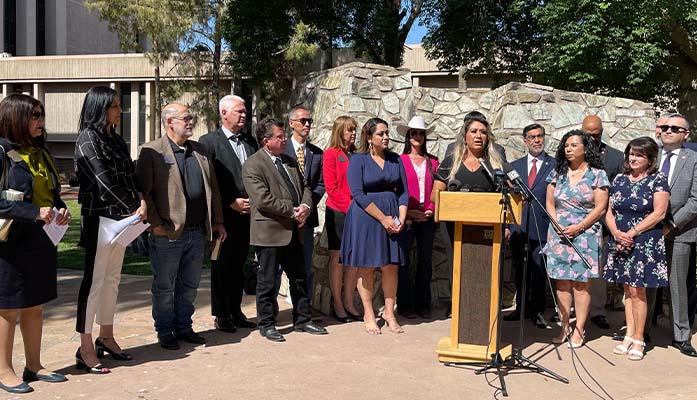
Both supporters and opponents of the override held dueling press conferences outside of the House chamber earlier in the day in an attempt to control the narrative over the fate of the bill. The Arizona Senate Republican Caucus tweeted, “Men and women making an honest living by selling homemade foods, like tamales, should not be criminalized for doing so. This bipartisan group of lawmakers is calling on their colleagues to override Hobbs veto of HB2509 today, which passed out of both chambers with supermajority support. Any Democrats who change their vote today are doing so to save Hobbs from embarrassment, and not because they want to do the right thing for their constituents.”
And the Arizona Senate Democrats Caucus sent out a tweet to highlight its press conference in opposition to the override: “HAPPENING NOW: Senator @ahernandezfor24 stands with Legislative Democrats to give Arizonans real solutions. “The individuals currently pushing this surface level narrative don’t care about the families making tamales or traditions that my community hold close to the heart. If they did, they would have backed policy made IN Arizona FOR Arizona.”
Daniel Stefanski is a reporter for AZ Free News. You can send him news tips using this link.
by Corinne Murdock | Apr 26, 2023 | Education, News
By Corinne Murdock |
The state budget sits at $2.5 billion, an unanticipated increase, despite a leap in school choice enrollments.
Nearly 40,000 students have joined Arizona’s universal school choice program; 7,000 have joined this year alone. Prior to the Education Savings Account (ESA) Program extension to all students, there were just over 12,100 students enrolled. At present, there are over 51,800.
Yet, this addition of tens of thousands of students didn’t hurt the state budget; the surplus has only increased as ESA Program enrollment increased. The surplus hit $2.5 billion this month, where last June it was $1.1 billion.
The ESA Program has also reflected a cost-saving measure for the state. Each student in the ESA Program receives scholarship funds of about $7,000 — about half of what the average public school spends on each student. Based on current program participants, that means that these students originally cost the state $725 million on average while in public schools, whereas they cost just over $362 million within the ESA Program.
Following these latest figures, ADE opened up enrollment for the ESA Program for the 2023-24 school year.
Gov. Katie Hobbs has rejected the cost-saving argument of the ESA Program. Shortly after taking office, Hobbs proposed rolling back the ESA Program, making the argument that universal school choice would bleed the state of $1.5 billion over the next decade. Yet, the Arizona public school system takes about $15 billion annually, or $150 billion over the next decade.
The Goldwater Institute, a public policy think tank who pointed out this disparity in an analysis defending universal school choice, argued that Hobbs’ arguments of frugality weren’t intellectually honest.
“To argue that taxpayers can afford the latter, but somehow not the former, defies basic common sense,” stated the organization.
The state legislature also increased public school funding by $600 million for this year. Anti-school choice activists continue to claim that the schools don’t receive adequate funding.
The Common Sense Institute found that the state saved $500 million annually after about 31,000 students exited the public school system from 2019 and following the COVID-19 pandemic. They also projected an $8 million end-of-year surplus based on enrollment trends.
According to the Joint Legislative Budget Committee (JLBC) report issued last week, base revenue growth is projected at nearly nine percent – a nearly two percent increase from January’s forecast, or $750 million.
JLBC noted that this year’s fiscal growth rate reflected a 64 percent increase in corporate income tax collections, much higher than the 10 percent increase in the federal collections. Additionally, individual income tax refunds increased by 54 percent.
Corinne Murdock is a reporter for AZ Free News. Follow her latest on Twitter, or email tips to corinne@azfreenews.com.
by Daniel Stefanski | Apr 25, 2023 | News
By Daniel Stefanski |
As the Republican-led Arizona Legislature and Democrat Governor Katie Hobbs inch closer toward a deadline for the next budget, one state lawmaker is setting the record straight on the status of negotiations.
On Monday, Arizona Senate President Warren Petersen issued a press release, outlining the budget negotiations saga throughout this legislative session.
Petersen began with the passage of the budget by Senate Republicans on February 1: “Back on February 1, Senate Republicans passed a budget proposal that would have provided certainty to our citizens and state agencies. The budget maintained current funding levels and operations in state government to assure schools would remain open, health services would continue, roads would be maintained, public safety would be funded, and so forth. Every Democrat voted against the proposal. Subsequently, on February 16, the Governor called it a “do nothing budget” and vetoed the plan. The fact of the matter is the budget did a lot. Included in this budget was not only funding for the next fiscal year, but supplemental funding for several state agencies. Consequently, those agencies will soon run out of money prior to the next fiscal year.”
The Senate President did not hold back when summing up the governor’s decision to veto this budget, saying, “A reasonable governor would have signed the budget and negotiated how to spend the surplus funds separately. A wise governor would have, at a minimum, line itemed everything except for the current year supplemental funding, ensuring that the Arizona Health Care Cost Containment System, Arizona’s K-12 public schools, and the Arizona State Hospital system had enough money to make it through the next few months. Chalk it up to inexperience. Her senseless veto means all are at risk.”
As the release continues, it remains apparent how much Arizona Republicans have sought to bridge the gaps with their colleagues from the other side of the political aisle – and Governor Hobbs: “Despite Hobbs’ error, Republicans immediately began to build a new budget. On March 2, the Senate Appropriations Chairman emailed all members of the Senate, requesting a list of their priorities for consideration in a new budget proposal. Room was included for reasonable requests from both Republicans and Democrats. The Republicans provided their priorities within a matter of days. Their reasonable, non-partisan priorities have been included in the budget. The Democrats provided no response until March 16, when the Minority Leader stated her Caucus would not provide their feedback for a month. Despite the lack of cooperation and leadership from the Democrat Caucus, President Petersen and House Speaker Ben Toma met with the Governor on March 20 to agree on ground rules to accomplish a second bipartisan budget proposal. Since then, frequent meetings have taken place with the Governor’s office to come up with a consensus on how to best appropriate funds. The Governor’s priorities are being negotiated, as are the Republicans’ priorities. Unfortunately, the Democrats have still not provided their requests.”
Petersen issued a direct warning about the state of the state’s finances, writing: “”We are, just weeks away from some government agencies running out of funding because legislative Democrats are stalling. I’m confident we would have already passed a budget had the Democrats spent the last seven weeks negotiating the budget with us, in good faith.”
Last week, after a slew of vetoes from her office, Hobbs attempted to justify her contention with the Republicans in the Legislature, stating, “I promised to deliver sanity, not chaos in the governor’s office and I am delivering. I will gladly work with anybody who will be a partner in addressing the real problems Arizonans face, but I refuse to play political games with our state government. I’m proud of the bipartisan accomplishments we have achieved and encourage leaders in our legislature to continue to come together and pass real solutions that will grow jobs, build roads and bridges, invest in education, and deal with our water crisis.”
Daniel Stefanski is a reporter for AZ Free News. You can send him news tips using this link.