by Staff Reporter | Mar 1, 2026 | News
By Staff Reporter |
The Arizona House has passed a bill banning gender transitions for minors.
HB 2085 not only bans gender transition procedures to minors, it bans referrals and distribution of public funding to gender transition procedures. The bill defined procedures to include puberty blockers and hormone replacement drugs.
The legislation did include exemptions for individuals who were born with sex development disorders; who were endangered due to a physical disorder, physical injury, or physical illness; or who sustained an infection, injury, disease, or disorder caused or exacerbated by a gender transition procedure.
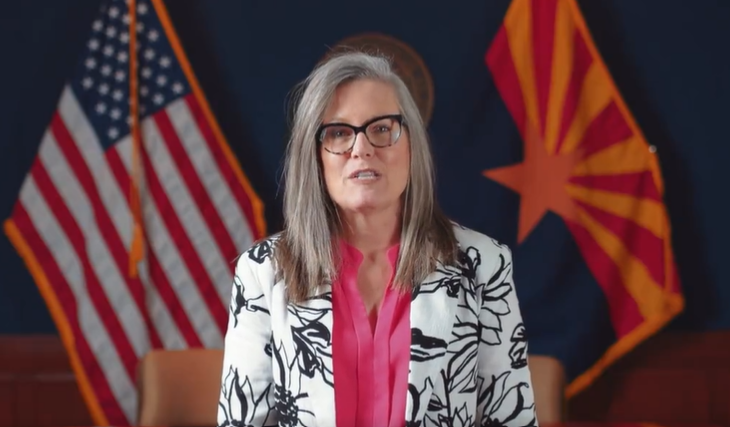
It is likely this bill is dead on arrival should it pass the Senate and hit the governor’s desk. Gov. Katie Hobbs supports gender transition procedures for minors, and her husband, Patrick Goodman, assisted children with gender transitions as a Phoenix Children’s Hospital Gender Support Program counselor.
The partisan divide was clear during House floor arguments for and against the bill.
Democrats argued HB 2085 violates parental and medical freedom.
Rep. Nancy Gutierrez (D-LD18), assistant minority leader, claimed parents had the right to decide for their children to transition their children.
Rep. Betty Villegas (D-LD20) argued puberty blockers and hormone therapies should be acceptable for gender transitions since they’re used to treat other ailments and defects.
Rep. Janeen Connolly (D-LD8) said gender transitions were a personal decision that should be beyond the scope of lawmakers. Connolly shared that one of her grandchildren, now 17 and identifying as “they/them,” had transitioned genders at 12 years old.
Rep. Stephanie Simacek (D-LD2) argued these decisions to transition genders weren’t made in haste since minors relied on parental consent to make the decision.
Across the aisle, Republicans argued the gender transitions of minors amounted to child abuse.
Rep. Lisa Fink (R-LD27), the bill sponsor, argued that allowing the puberty process to occur uninhibited was the prevailing treatment for gender dysphoria. Fink read off the myriad adverse health effects of puberty blockers and hormone replacement medications when applied to healthy children seeking gender transitions.
Rep. Rachel Keshel (R-LD17) accused those in support of gender transitions for minors of being inconsistent in their logic.
“It is my opinion that a parent that allows a child to permanently alter their body and potentially take away their ability to be parent one day, that is child abuse,” said Keshel.
Rep. Pamela Carter (R-LD4) countered that gender transitions don’t qualify as valid healthcare, and therefore not within the acceptable bounds of health decisions parents may make on behalf of their children.
“The physicians even now are stopping some of these procedures because they see the results of what happens to a minor when they realize what has happened: they cannot have children, or they are marred physically, emotionally for life,” said Carter. “Parents should be in charge of their children’s health, but to me this is not healthcare.”
Rep. Alexander Kolodin (R-LD3) questioned how Democrats could support irreversible procedures for minors given the universal agreement on age limits for other activities.
“Point of fact, there are many things our society does not allow minors to do: we don’t allow minors, at least up to a certain age, to drive. We don’t allow them to vote. We don’t allow them to drink. We don’t allow them to smoke,” said Kolodin. “We don’t even allow them to get tattoos because we’re worried that one day they will regret that decision. How much more so then should we not allow minors to engage in elective surgery that permanently disfigures them?”
AZ Free News is your #1 source for Arizona news and politics. You can send us news tips using this link.
by Staff Reporter | Feb 20, 2026 | News
By Staff Reporter |
The Republican-led Arizona Senate is advancing legislation aimed at increasing oversight of Gov. Katie Hobbs’ handling of contracts.
On Wednesday, the Senate Regulatory Affairs and Government Efficiency Committee passed Senate Bill 1186 (SB1186) along party lines: Republicans in support, Democrats against.
State Sen. Mitzi Epstein (D-LD12) said she opposed the bill because it wasn’t “ready for primetime.” Epstein raised a concern that private companies could be impacted under the current way the bill is written. Epstein was the only one to explain her vote.
“Influence peddling is a bad thing, and we want to make sure in all aspects of government, including in this body, that people cannot pay for play,” said Epstein.
The bill would require companies currently holding or vying for state contracts or grants to disclose anything of value provided within the preceding five years to the governor, including anything beneficial provided to campaign or inauguration-related activities or outside organizations supporting or opposing the governor politically.
It would also prohibit state agencies and state employees from destroying any notes taken during evaluation of a company responding to a request for proposal on a state contract or grant. Should any state agency or state employee destroy their notes, any agreed-upon contracts could be solicited again.
Gov. Hobbs remains under legislative investigation over allegations of a “pay-to-play” relationship with Sunshine Residential Homes. That company received a unique rate increase following their donations to Hobbs. This legislation was inspired by that ongoing controversy.
Senate leadership to include President Warren Petersen (R-LD14), President Pro Tempore T.J. Shope (R-LD16), Majority Whip Frank Carroll (R-LD28), and Majority Leader John Kavanagh (R-LD3) all issued statements endorsing the legislation preceding the committee vote.
“State government has a responsibility to ensure taxpayer dollars are awarded through a fair and competitive process people can trust,” said Petersen. “When billions in public funds are at stake, the rules must be clear, consistent, and focused on delivering the best value for Arizona families.”
“After vetoing our bill last year, the Governor came back this session with her own proposal, but it still leaves the biggest gap untouched,” said Shope. “Her plan focuses on releasing information after contracts are awarded. Our bill requires transparency before decisions are made, when it actually matters.”
“The scandals we’ve seen show what happens when government oversight fails,” said Carroll. “When billions of taxpayer dollars are being spent, mistakes or favoritism don’t just stay inside government, they affect services families rely on and erode public confidence.”
“Arizona’s contracting laws were written for a different era and leave gaps that agencies can’t effectively police today,” said Kavanagh. “SB 1186 modernizes the rules by setting clear disclosure standards and establishing enforceable safeguards that strengthen the contracting process itself.”
Earlier this month the bipartisan advisory team put together by the Republican-led Arizona House brought on outside counsel from out of state for an independent investigation of the connection between Hobbs and Sunshine Residential Homes. The counsel, Justin Smith, is representing President Donald Trump in his defamation lawsuit against E. Jean Carroll; Smith’s law group was founded by Trump’s solicitor general, D. John Sauer.
AZ Free News is your #1 source for Arizona news and politics. You can send us news tips using this link.
by Ethan Faverino | Feb 15, 2026 | News
By Ethan Faverino |
Governor Katie Hobbs has vetoed a Republican bill, HB 2785, which would have brought Arizona’s income tax law into full conformity with the federal Internal Revenue Code as reflected in the tax forms already issued by Hobbs’ Department of Revenue for the 2025 tax year.
The legislation, passed on February 11, 2026, aimed to protect Arizona taxpayers from uncertainty, the need for amended returns, potential penalties, and mid-season rule changes during the ongoing filing season.
By aligning state statute with the guidance taxpayers are currently following, HB 2785 would have prevented widespread disruption and costly refiles for Arizonans.
The action comes after Governor Hobbs vetoed an earlier Republican tax conformity package that included targeted relief measures—such as no tax on tips or overtime, deductions for seniors, and replacements for the federal SALT deduction with expanded child tax credits and childcare expense deductions.
Following the first veto, the Governor’s administration issued tax forms assuming full federal conformity (including provisions like deductions for qualified tips, overtime pay, certain vehicle loan interest, and additional charitable contributions for standard deduction filers), while repeatedly declining to clarify her position or support changes.
Department of Revenue testimony highlighted the risks of reversing course now, potentially forcing up to one-third of filers to submit paper-only amended returns, incur additional filing costs, and face unexpected tax liabilities months later.
In a press release, House Speaker Steve Montenegro stated, “Arizona taxpayers did exactly what the government told them to do, and the Governor left them exposed. Her Department of Revenue issued tax forms, told people not to delay filing, and testified that changing course would cause massive disruption. Then the Governor vetoed the Legislature’s solution and refused to explain what comes next.”
“That is the opposite of leadership,” added Montenegro. “The House and Senate acted because families, seniors, and small businesses should not be forced to pay penalties, refile returns, or owe unexpected taxes because the executive branch could not get its act together.”
Ethan Faverino is a reporter for AZ Free News. You can send him news tips using this link.
by Warren Petersen | Feb 12, 2026 | Opinion
By Sen. Warren Petersen |
Over the past couple of months, the nation’s eyes have (rightfully) been turned to the State of Minnesota, as concerned citizens have unearthed what appears to be significant abuses of taxpayer dollars going to seemingly fraudulent daycare and healthcare centers run by Somali immigrants. These discoveries have exposed Minnesota Democrat officials, who have (at the least) looked the other way as this fraud was ongoing and escalating.
Minnesota isn’t the only state where we are seeing this rampant misuse of hard-earned taxpayer dollars.
Over the past three years, Arizona has been governed by a Democrat Governor and Attorney General, Katie Hobbs and Kris Mayes. These two have combined to cultivate a culture of corruption in the Grand Canyon State that rivals the illegal shenanigans from Minnesota. There have been several instances of this abuse and chicanery from the Governor’s Office that the Attorney General’s Office has clearly provided cover for during this term in office.
Whether in Minnesota or Arizona or any other state or jurisdiction across the country, American taxpayers deserve honest, transparent public servants, who are committed to putting the interests of citizens above the political elite. Thankfully, for the people of Arizona, the Republican-led state legislature has worked to hold these lawless Democrats accountable to the rule of law, though Hobbs and Mayes continue to stonewall our efforts and perpetrate new avenues of corruption.
Inaugural Fund
Fresh off taking the oath of office, Hobbs proved herself unable to provide complete transparency to citizens with her inaugural fund. Arizona Governors have historically raised money to cover the expenses of their inaugurations, then transferred the excess funds to the state. However, Hobbs was reticent to share certain information of her donors and then withheld more than one million dollars from the state, forcing a clash with the legislature. This breakdown in transparency from the Governor’s Office led to legislation that codified the precedent predating Hobbs into law to mandate reporting of all future inauguration expenses and funds raised. The bill’s passage was overwhelmingly bipartisan – a rare feat in Arizona’s divided government, proving that Democrats understood the mess Hobbs had created for herself.
Hobbs Pay to Play
Likely the most egregious action of Hobbs’ administration to-date, the alleged pay-to-play scandal will define the culture of corruption surrounding her administration. Almost two years ago, The Arizona Republic reported that a for-profit, state-contracted group home operator, Sunshine Residential Homes, received a significant rate increase approval from the Hobbs-led Department of Child Services (DCS). Leading up to this rate increase, the group donated to Hobbs’ inaugural fund – after its request for a rate increase had been denied by the outgoing Republican administration. The reporting showed that Hobbs had not approved rate increases to any other group homes, nor were the rate averages for these group homes comparable with Sunshine Residential Homes. Additionally, DCS ended state contracts with 16 group homes, making the arrangement with Sunshine all the more suspicious.
Attorney General Kris Mayes did go through the motions of announcing an investigation into this alleged pay-to-play, but she attempted to order Maricopa County Attorney Rachel Mitchell and the Arizona Auditor General off the case – despite those offices being asked to investigate the uncovered scheme by state legislators. Mayes was soundly rebuked by Arizona Treasurer Kimberly Yee, who also requested that the Maricopa County and State Auditor General investigations continue. The Democrat Attorney General was also accused of a conflict of interest in that she was again shielding her same-party official from the full weight of accountability under the law. There have been no updates from Mayes’ office into the status of this investigation in almost two years, leading credence to the idea that this was a cover-up meant to protect Hobbs and her administration. Compounding the shady behavior from her administration, Hobbs vetoed a bill during last year’s legislative session meant to fool-proof future executives from exploiting any perceived loopholes to perpetuate this kind of abuse.
SNAP
The Supplemental Nutrition Assistance Program (SNAP) program doles out almost $100 billion annually to Americans to purchase food. However, like many government programs, this one is rife with fraud and theft. According to the U.S. Government Accountability Office, there were over $320 million in stolen benefits between October 2022 and December 2024. Additionally, the U.S. Department of Agriculture reported in 2023 (during the Biden administration) that approximately twelve percent of these benefits were fraudulent. The politics and policies of this bloated program aside, it is undeniable that SNAP needs more oversight and guardrails to ensure that taxpayer dollars are being stewarded appropriately.
Hobbs and Mayes disagree. Mayes sued the Trump administration over its commonsense efforts to request more information from states on SNAP beneficiaries. Hobbs, for her part, refused to acquiesce to the administration’s data requests. These two are politicizing an issue that should enjoy consensus across party lines. No government official should be standing in the way of efforts to root out fraud in any public program, where taxpayer dollars are at risk for abuse. Every taxpayer dollar should be protected to the highest level. Unfortunately, for Arizona, Katie Hobbs and Kris Mayes don’t want the federal government – and the taxpayer – to find out exactly how much fraud is in our state; and that’s a shame.
Mayes Pay to Play
U.S. Congressman Abraham Hamadeh has asked the U.S. Department of Justice to investigate an alleged pay-to-play bribery scheme involving Kris Mayes and outside political organizations. The allegations claim Mayes received political benefits in exchange for official actions targeting political opponents.
Shady Operator
Late last year, a top official in Mayes’ State Government Division was arrested for “controlling and trafficking stolen property.” Mayes’ office had been warned by the City of Peoria nearly two years earlier about serious allegations against this official – including fraud, conversion, and breach of fiduciary duty – yet Mayes kept her in a position of authority leading up to her arrest.
Arizona has long been known for its rugged independence and spirit of doing the right thing. Unfortunately for our state and its proud history, that reputation is being shattered by the culture of corruption from Hobbs and Mayes. Democrats across the country – from Arizona to Minnesota – have proven themselves incapable of governing our states – the laboratories of democracy – as the people rightly expect and deserve. It will be up to the voters to course correct this November and usher in legislators and executives who can – and will – steward the peoples’ money as it was intended.
Warren Petersen is the President of the Arizona State Senate and represents Legislative District 14.
by AZ Free Enterprise Club | Feb 9, 2026 | Opinion
By the Arizona Free Enterprise Club |
Governor Katie Hobbs rolled out her budget last month and, unsurprisingly, it doesn’t add up.
Not only because her “solutions” don’t match the problems she claims to be solving, like suggesting we can make goods and services more affordable by piling on new taxes and fees, but because her budget quite literally just doesn’t add up.
While it’s become common for governors to release budgets built on rosier revenue assumptions than the Legislature’s more conservative Joint Legislative Budget Committee (JLBC), Hobbs’ proposal relies on projections so fanciful it resembles a fairy tale more than a fiscal plan.
Counting Chickens Before They Hatch
Hobbs’ budget is a $17.7B spending plan ($100M more than last year) that leaves a meager $37.8M balance at the end of FY27. That means her revenue projections leave very little room for error. Yet one of the more obvious facts about her budget is just how likely error-prone these projections are, a fact that Republicans during a joint appropriations hearing were sure to point out.
One of the most speculative assumptions Hobbs is making in her budget proposal is relying on $760 million of “reimbursements” from the federal government for expenditures the state has made for border security since 2021. That is a good chunk of change, and her budget is unworkable without it.
The problem is it is actually way more likely than not that even if the state receives something in the way of reimbursement, it will not be the full amount, and who knows on what timeline. Regardless, it is irresponsible to commit money out the front door that may never come in.
This is nothing new for Hobbs. Just last year she continued a COVID-era program that neither had legislative authorization to continue nor the ongoing financial allocations to support it. That wound up blowing a $122M fiscal hole in the previous year’s budget mid-session that Republicans had to mop up.
The Governor’s budget also depends on tapping the State Land trust for another $1.5 Billion. Setting aside whether its a good idea to raid the land trust set up for various beneficiaries (K-12, Universities, deaf and blind, etc), changing the formula for trust land distributions requires a constitutional amendment that would need to be approved by voters in November.
Hobbs’ “Affordability” Plan is Really a Chaotic Tax-And-Spend Plan
Hobbs wants to brand her budget as improving affordability, but it does just the opposite. Every idea in her plan is built around $1B in new taxes and fees and the hope that the bureaucracy can “manage” the cost of living while literally contributing to its inflation…
>>> CONTINUE READING >>>