by AZ Free Enterprise Club | Jan 16, 2026 | Opinion
By the Arizona Free Enterprise Club |
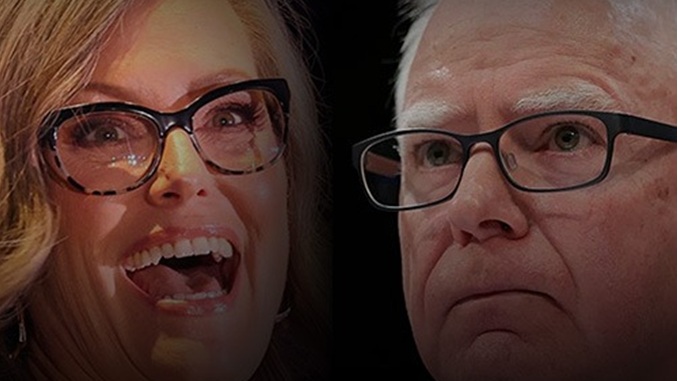
Over the past month, Minnesota has been hard at work to set the gold standard for jaw-dropping fraud scandals under the watch of Democrat Governor Tim Walz. The Somali daycare scandal has turned the state into a national punchline—hundreds of millions in taxpayer dollars stolen in plain sight while Kamala Harris’ favorite “masculine” governor looked the other way.
Now, with Walz stepping aside from this reelection bid, a new contender for “most scandal-plagued governor on the 2026 ballot” has emerged: Arizona Governor Katie Hobbs. While Minnesota’s scandals have dominated headlines, Hobbs has been busy compiling a rap sheet that rivals what happened in the Land of 10,000 Lakes. But unlike Walz, Hobbs and her administration are under active criminal investigation.
A Pay-to-Play Scheme Engulfs the Hobbs Administration
The list of Hobbs’ scandals is a mile long and begins at the start of her tenure as governor. At that time, Hobbs set up a shady slush fund to provide donors with a conduit to buy political favor from her administration. While setting up and managing the fund, Hobbs illegally used public resources—like the state’s website—to solicit money for her inauguration. And she also tried to stop the disclosure of the names of those who donated to her inaugural fund.
After immense political pressure, Hobbs finally released the names of the donors. One of the names of the groups on the list was Sunshine Residential Homes Inc., a for-profit company that contracts with the State of Arizona. Sunshine Residential donated $100,000 to the secret fund, which was suspicious enough. But after some additional digging by local reporters, an even deeper level of corruption was revealed—an alleged pay-to-play scheme between Hobbs and the group home.
According to the report, it turns out Sunshine Residential Homes doled out $400,000 to the Arizona Democratic Party, Hobbs’ gubernatorial campaign committee, and her aforementioned inaugural fund. Hobbs and her campaign finance manager even arranged a dinner with the government contractor to meet with the CEO in private.
After making the large donations, Sunshine was granted a 30 percent increase in their rates at a time when the Arizona Department of Child Safety cut loose 16 providers! On top of that, no other standard group home provider received a rate increase. This arrangement ensured that Sunshine Residential would receive millions in additional revenue at the taxpayers’ expense.
Hobbs’ is currently under three separate criminal investigations for this pay-to-play scheme, but it’s not the only financial scandal we’ve seen during her reign as governor…
>>> CONTINUE READING >>>
by Matthew Holloway | Jan 15, 2026 | Economy, News
By Matthew Holloway |
Republican legislators have sent a $1.1 billion tax relief package to Gov. Katie Hobbs, escalating a high-stakes policy dispute over tax conformity as the state enters filing season.
According to a statement released by House and Senate Republicans, lawmakers rapidly passed House Bill 2153 and Senate Bill 1106, legislation designed to align Arizona’s tax code with federal tax reforms enacted in 2025. Supporters estimate the measures will deliver approximately $1.1 billion in tax relief over the next three years.
The bills now await the governor’s signature.
In a statement posted to X, House Republicans wrote, “With costs still high and tax season underway, Arizona families shouldn’t be left waiting. The Legislature has done its job, now it’s time for the Governor to sign this relief into law.”
Republican leaders said the legislation is intended to provide clarity and certainty for families, small businesses, and tax preparers, particularly as tax season is underway. The package fully conforms Arizona law to recent federal tax changes and codifies provisions such as preventing the taxation of tips and overtime pay.
House and Senate Republicans said the plan is focused on helping working families retain more of their earnings, supporting small businesses and job creators, and ensuring taxpayers receive clear and lawful tax guidance during the filing process.
The legislation’s passage follows criticism from the National Federation of Independent Business (NFIB) over Gov. Hobbs’ separate tax conformity proposal. In a press release earlier this week, NFIB Arizona State Director Chad Heinrich urged lawmakers to reject the governor’s approach and instead advance HB 2153 and SB 1106.
Heinrich argued that Hobbs’ proposal would delay tax certainty by requiring taxpayers to wait until budget negotiations conclude before knowing how Arizona will align with federal tax changes passed in 2025 — potentially leaving taxpayers without clarity until June 2026.
“It’s unclear if the left hand knows what the right hand is doing in the Hobbs administration,” Heinrich said. He criticized the proposal for abandoning 2025 tax forms already posted by the Arizona Department of Revenue and instructing taxpayers to wait until budget negotiations are finalized. “This should be a non-starter,” Heinrich said.
NFIB highlighted HB 2153 and SB 1106 as preferred alternatives, noting that the bills would fully adopt federal tax reforms enacted in 2025, including provisions tied to the One Big Beautiful Bill Act (OBBBA), which the organization said small business owners welcomed for the certainty it provided.
“Small business owners breathed a sigh of relief when the One Big Beautiful Bill Act passed and collectively looked forward to the certainty that it provided,” Heinrich said. “Now, the Governor wants to upend all of that to score partisan political points, breaking precedent with how Arizona has always addressed federal tax changes.”
As previously reported by AZ Free News, legislative supporters say the GOP-backed bills offer broader tax relief than the governor’s more narrowly targeted proposal by fully conforming state law to a wide range of federal tax code changes, including those affecting businesses and itemized deductions.
NFIB noted that Arizona’s small businesses employ approximately 1.2 million people statewide and account for seven out of every ten new jobs created. The organization warned that uncertainty over tax conformity could delay business expansion and hiring.
With the legislation now on the governor’s desk, Republican lawmakers said Arizona families and businesses are waiting to see whether Hobbs will sign the tax relief package or veto another key Republican reform.
Matthew Holloway is a senior reporter for AZ Free News. Follow him on X for his latest stories, or email tips to Matthew@azfreenews.com.
by Warren Petersen | Jan 13, 2026 | Opinion
By Sen. Warren Petersen |
For years, Arizona was governed by Republican majorities in the state legislature—with Republicans also holding the Governor’s and Attorney General’s offices. During that time, we transformed Arizona into one of the most enviable and prosperous states in the nation: a booming economy, a hot jobs market, a flat income tax, strong support for law and order, and universal school choice.
That all changed in 2023 when Katie Hobbs and Kris Mayes—both Democrats—took over the Governor’s and Attorney General’s offices. Since then, they’ve worked to impose a radical agenda and remake Arizona in the image of California. If not for the slim Republican majorities in both chambers of the Arizona Legislature, Hobbs and Mayes would have quickly succeeded.
As the leader of the Senate Republicans, it has been my honor to work with my colleagues to defend Arizona values and push forward conservative priorities. Despite divided government, we’ve used every tool in our toolbox to not only stop the radical left’s agendas, but to also lead. In doing so, we have set the standard for other states dealing with divided government. Here are just a few of the top victories we’ve secured on behalf of Arizonans.
Fully Funded and Protected Universal School Choice
Over the past two decades, Arizona has led the nation in enacting school choice, giving all families the freedom to choose the education that best fits their children. We dramatically increased K-12 funding (now approximately $13,000 per student) during this time, investing heavily in and safeguarding all forms of education across the state—district, charter, home school, online, and empowerment scholarship accounts. The left only wants to give you one choice to educate your child. Both Hobbs and Mayes have prioritized the dismantling of the apparatuses that let parents decide where their children go to school.
I believe educational freedom is a foundation of the American Dream. Families shouldn’t be trapped in failing schools based on their zip code; rather, they should have the right to choose the educational institutions that work best for their sons and daughters. Unfortunately, Hobbs and Mayes have repeatedly rejected this belief to the detriment of our state’s future.
Under my leadership at the legislature, we stopped them. School choice remains fully funded and protected—even in this divided government. Fighting for parental empowerment and school choice has been one of the most consequential and rewarding endeavors of my time as Senate President. I believe that we are rescuing an entire generation of Arizonans from the grip of a broken education system.
Tax Cuts for Arizonans
One of our top priorities has been to return money to Arizona taxpayers. Despite repeated attempts by Hobbs to block us, we’ve delivered real tax relief. We eliminated the rental tax in Arizona, saving families and renters hundreds of millions of dollars each year. Charging a rental tax is bad policy, and now these revenues will stay in the pockets of the people who need them the most.
Republican lawmakers forced the governor to sign additional bills that cut taxes for hard-working Arizonans. We raised the state’s business personal property tax exemption, reducing burdens on small business owners. We banned municipal excise taxes on residential leases, relieving tenants of additional tax liability and helping lower housing costs. And we passed the Arizona Families Tax Rebate to return funds directly to eligible families.
At a time when families are feeling squeezed, we’re doing what government should—getting out of the way and letting our hardworking taxpayers keep more of what they earn. These tax cuts are the result of smart, conservative leadership that puts everyday Arizonans first. This is the same pro-growth, American First approach that President Trump is delivering for our nation, and we’re proud to carry that torch here in the Grand Canyon State.
Fully Vetted Agency Directors
One of the most consequential powers of any governor is the ability to nominate and install agency directors, who do the bidding of their chief executive. These individuals wield enormous influence over how state government functions, and under Hobbs, many of her nominees have been extreme, unqualified, or relatively unknown to the public. That’s why one of my first actions as Senate President was to create accountability through a formal vetting process for the governor’s nominees. The purpose was to ensure the individuals chosen to lead integral government agencies were competent and aligned with Arizona values. Despite resistance from the governor, we succeeded. We held her nominees to high standards and protected Arizona from the consequences of unchecked political appointments.
End of DOJ Investigation into Phoenix Police Department
Over the past several years, the Phoenix Police Department was the target of a blatantly politicized witch hunt by President Biden’s Department of Justice. They twisted facts and law in a backhanded attempt to hijack another police department and bring it under the control of the federal government. After I contacted the Trump administration and met with several of the President’s top officials, the White House and DOJ ended this rampage against the men and women in blue from the Phoenix Police Department. The announcement from the Trump administration was complete vindication, and it removed the handcuffs off our law enforcement so that they may do their jobs to keep the City of Phoenix and our citizens safe from criminals seeking to cause harm.
Divided government is messy. The path forward isn’t always easy or clear. But through consensus building, unity, discipline, determination, and bold conservative leadership, we’ve proven in Arizona that progress is possible—even in the toughest of times. The rewards of this hard work are immense for those entrusted with leaving our state and nation in a better place for future generations of Americans. I hope that our efforts in Arizona have not only preserved our rich heritage of conservative values, but inspired other warriors around the country to follow in our footsteps.
Warren Petersen is the President of the Arizona State Senate and represents Legislative District 14.
by Matthew Holloway | Jan 13, 2026 | Economy, News
By Matthew Holloway |
Republican legislative leaders in Arizona introduced a tax conformity plan on last week, aimed at aligning the state’s tax code with recent federal tax reforms. The proposal, outlined in a joint press release from the Arizona State Legislature, estimates roughly $1.1 billion in tax savings for Arizonans over the next three years.
Senate Finance Committee Chairman J.D. Mesnard (R-LD13) and House Ways & Means Committee Chairman Justin Olson (R-LD25) are sponsoring the plan through two bills: SB 1106 and HB 2153.
According to the release, Republican lawmakers say the conformity effort will provide certainty to taxpayers and tax preparers amid the current filing season. They state the proposal would adjust Arizona’s tax code to reflect provisions of the federal tax overhaul known as the “One Big Beautiful Bill.”
The Republican plan would include measures such as increasing the child tax credit and establishing a deduction for childcare expenses. It would also aim to apply the federal tax reforms to Arizona’s individual and business tax structures.
“This is an urgent matter. With tax season underway, tax professionals and families alike need clear guidance now,” Senate President Warren Petersen said. “Until the Legislature acts and the Governor signs this plan into law, there is real confusion about how to handle state tax returns. We’re urging Governor Hobbs to join us in resolving this issue promptly by signing this historic tax cut when it hits her desk.”
House Speaker Steve Montenegro (R-LD29) is quoted in the release, asserting that formal legislative action is needed to resolve confusion created by recent state tax guidance issued by the governor’s office, which he says assumes legislative action has already occurred.
Montenegro explained, “The Governor jumped ahead of the law by issuing state tax guidance this week that assumes legislative action – which hasn’t happened yet – and her recent executive order only deepens confusion. This kind of unilateral overreach undermines the process and leaves families, tax preparers, and businesses stuck in the middle.”
He added, “The Legislature is moving to restore certainty, respect the separation of powers, and make sure Arizonans have clear, lawful guidance.”
The press release states that Republican sponsors contend the plan’s focus is on working families, seniors on fixed incomes, and small businesses, and that it would codify measures such as preventing taxation of tips and overtime pay.
SB 1106 and HB 2153 are set to be debated in the Legislature as the session begins.
Matthew Holloway is a senior reporter for AZ Free News. Follow him on X for his latest stories, or email tips to Matthew@azfreenews.com.
by Matthew Holloway | Jan 12, 2026 | News
By Matthew Holloway |
The Arizona Legislature will return to the State Capitol today, marking the start of the Fifty-Seventh Legislature, Second Regular Session and the beginning of legislative work for 2026.
According to information published by the Arizona Legislature, the opening day will include ceremonies in both chambers of the Capitol, followed by a joint session of the House and Senate later in the afternoon.
Per a legislative announcement released ahead of the session, events will begin at 11:00 a.m. with welcome music in the Capitol courtyard performed by the Eastern Arizona College Marching Band.
The Arizona Senate is scheduled to convene at noon in the Senate Chamber to formally open the Second Regular Session. The program outlined in the legislative release includes gathering music by Trio Fratelli, a call to order by Senate President Warren Petersen (R-LD14), an invocation delivered by Pastor Luke Simmons of Ironwood Church, and the presentation of the colors by the Luke Air Force Base Honor Guard.
The Pledge of Allegiance is scheduled to be led by Senator Priya Sundareshan (D-LD17), followed by the national anthem performed by Trio Fratelli. Petersen is expected to deliver opening remarks before the Senate recesses.
Following the recess, Brian Mueller, president of Grand Canyon University, is scheduled to address lawmakers and guests, according to the same announcement.
At 2:00 p.m., members of the House and Senate are scheduled to convene in the House Chamber for a joint session, during which Democratic Governor Katie Hobbs is expected to deliver the annual State of the State address, outlining her priorities for the year ahead.
Following the joint session, the Senate is scheduled to reconvene to complete remaining Senate business.
In a statement included with the opening-day announcement, Petersen said lawmakers are entering the 2026 session focused on affordability and public safety.
“This session, our top priority is to provide real relief for the people of Arizona,” Petersen said. “Opening day is both a celebration and a call to action. It offers a special opportunity for the legislature to welcome their families and loved ones to the Capitol as we mark the beginning of a new session. As we start our work, our focus is clear: lowering costs, making Arizona affordable, protecting our freedoms, and enhancing community safety. I look forward to commencing this session and delivering results for Arizonans across the state.”
The opening-day ceremonies and the joint session will be livestreamed on the Arizona Legislature’s official website at: https://www.azleg.gov/liveproceedings.
Matthew Holloway is a senior reporter for AZ Free News. Follow him on X for his latest stories, or email tips to Matthew@azfreenews.com.