by Ethan Faverino | Oct 17, 2025 | News
By Ethan Faverino |
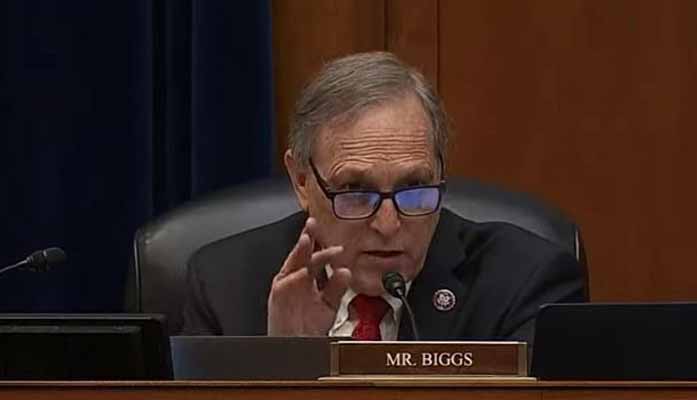
The Biggs for Arizona campaign announced a strong Q3 fundraising haul of $564,075, marking the strongest quarterly total of the campaign cycle to date. This significant increase from the previous quarter brings the campaign’s 2025 fundraising total to over $1.2 million.
With more than 4,000 new donors added in Q3, the campaign ended September with $630,187 cash on hand, demonstrating strong financial momentum heading into the critical stages of the 2026 Arizona gubernatorial race.
“As I continue to travel across Arizona and share my vision of freedom for our state, more and more voters are coming on board to show their support,” said Rep. Andy Biggs. “It’s clear we deserve better than the weak leadership and petty vetoes Katie Hobbs has built her office around, but it will take someone with the relationships and experience at the State Capitol and beyond to lead our state from Day One. Our campaign is making this case to voters every single day, and the results show we are on the right track. There’s no doubt we will be well-equipped to defeat Katie Hobbs in November 2026.”
Representative Andy Biggs (AZ-05) has garnered endorsements from key conservative figures, including President Trump, the late Charlie Kirk, and Turning Point CEO Erika Kirk. Congressmen Eli Crane and Paul Gosar, as well as Maricopa County Supervisors Debbie Lesko and Mark Stewart, also support his campaign. Recent polls show that Rep. Biggs is leading the Republican gubernatorial primary with a commanding 22-point advantage over Karrin Taylor Robson and a 37-point lead over Rep. David Schweikert. This substantial lead shows Biggs’ strong support among Arizona voters and his position as the frontrunner in the race.
Arizona State Representative Leo Biasiucci echoes this sentiment, saying, “Whether it’s at Republican events across Arizona or at the State Capitol, I’m hearing the same thing: Arizonans are ready for Andy Biggs as our next Governor. This strong quarter shows Andy is putting in the work and exceeding expectations on the fundraising front, which will only boost the momentum he has with grassroots conservatives across the state.”
Ethan Faverino is a reporter for AZ Free News. You can send him news tips using this link.
by Matthew Holloway | Oct 16, 2025 | News
By Matthew Holloway |
President Trump’s historic Gaza ceasefire deal, signed Monday with Palestinian leaders and Israel, has sparked rare bipartisan praise from Arizona’s elected officials.
Congressman Andy Biggs (R-AZ05) wrote from the gubernatorial campaign trail, “This incredible day is happening because of President Trump’s strength and determination to bring peace to the region.”
However, he has also raised the alarm regarding post-deal barbarism from Hamas, with reports of public executions in Gaza streets just hours after inking the treaty. “Hamas is carrying out barbaric executions… They must do so expeditiously or face consequences for violating the ceasefire,” he posted on X.
Kudos have poured in from Democrats as well, with Sen. Mark Kelly offering Trump a rare bipartisan praise. “I think he should get a lot of credit. I mean, this was his deal. He worked this out. He sent Steve Witkoff and Jared Kushner over to negotiate this, and it so far has gone well,” Kelly told CNN’s Dana Bash on “State of the Union.”
Kelly hailed the hostage returns and the flood of aid trucks that “should have been happening over the last two years.” Kelly, however, cautioned, “I am concerned that they may change their minds here.”
Kelly posted on X: “After two years, this is a real opening for peace that will release the hostages and get desperately needed aid to civilians in Gaza. There’s a lot more work to see this through, but I appreciate the work of President Trump, the administration, and our international partners to reach this point.”
Senator Ruben Gallego notably avoided lauding the Trump administration in his statement on Monday, merely calling the peace “profoundly overdue.” He wrote, “After two long years, the final Israeli hostages have returned home. This day is profoundly overdue, and my heart is with the families whose unwavering hope and perseverance made it possible. Their return marks an important step toward peace. I remain steadfast in the belief that the United States must continue its efforts to ensure humanitarian aid reaches Palestinians and that Gaza is rebuilt.”
Congressman Abe Hamadeh (R-AZ08), who has been instrumental in the administration’s Middle East diplomacy, wrote a lengthy statement, saying in part: “In a day some thought would never come, the remaining Israeli hostages have been freed and returned to their families.”
Hamadeh added, “It was a day 737 days in the making and one that wouldn’t have been possible without the bold leadership of President Trump and the hard diplomatic work of Secretary of State Marco Rubio, Steve Witkoff, Jared Kushner, and the entire Trump Administration.”
Hamadeh asked God for blessings for the returning hostages, their families and the families of those whose remains were returned adding, “It is my fervent hope that the bodies of those who haven’t been returned are located and returned soon.” He concluded: “Blessed are the peacemakers who fought so hard on behalf of these families amidst overwhelming odds and overwhelming uncertainty.”
Arizona Senate President Warren Petersen (R-LD14) offered very direct praise from the State House, naming the President simply “the peacemaker.” He wrote, “Peace in the Middle East. Thank you, @realDonaldTrump, the peacemaker.”
State Rep. Alma Hernandez (D-LD 10) provided a particularly raw and emotional take as well from the Democrat side of the aisle, posting about her openly sobbing over reunion videos only to wake in fresh grief for the families learning their loved ones wouldn’t return.
Though she didn’t directly credit the administration, she wrote, “While we are all overjoyed and celebrating the return of the 20 hostages, let’s not forget those families who anxiously waited for over two years to find out this morning that their loved one was not returning alive… I can’t imagine the feeling of great heartbreak & sorrow those families are feeling right now. They held on to every ounce of hope… my heart goes out to them, and I pray that they will overcome this tragedy.”
Notably, as of this report, no statements from Governor Katie Hobbs, Attorney General Kris Mayes, or Secretary of State Adrian Fontes praising the administration were publicly available, despite all three being vocal on the topic of the Hamas-Israel conflict.
Matthew Holloway is a senior reporter for AZ Free News. Follow him on X for his latest stories, or email tips to Matthew@azfreenews.com.
by Matthew Holloway | Oct 11, 2025 | News
By Matthew Holloway |
Former Arizona Governor Doug Ducey sharply rebuked Gov. Katie Hobbs’ announcement of her 2026 reelection campaign, accusing her of fiscal mismanagement that turned a $2.5 billion surplus into a $1.4 billion deficit.
Hobbs launched her bid for a second term on Wednesday in a two-minute video posted to X, where she emphasized her administration’s focus on education, public safety, and housing affordability.
“Arizona is a place of hard work, hope and determination,” Hobbs said. “That’s why I’m running for reelection — to continue putting your family first.”
Ducey, a Republican who preceded Hobbs in office, responded hours later on X, quoting Hobbs’ video and writing: “This dishonesty isn’t surprising given the current struggles on the 9th floor. When I left office, I turned over a $2.5B SURPLUS to Katie Hobbs. She blew it all AND created that $1.4B deficit in only a year. AZ didn’t have a revenue problem, Hobbs had a spending problem.”
The exchange between the former and current governors highlights Arizona’s ongoing budget tensions. Hobbs inherited the surplus from Ducey in January 2023, but the state faced a projected $1.4 billion shortfall for fiscal year 2025. According to a report from the Common Sense Institute of Arizona (CSI), that shortfall was mainly driven by increased spending and not the state’s adoption of a flat income tax rate of 2.5% or the Empowerment Scholarship Account (ESA) program.
The GOP-led Arizona legislature approved a $16.1 billion budget in June 2024, following a major budget battle that addressed the deficit by incorporating spending cuts and one-time adjustments. Hobbs signed the measure, though Republican critics, including House Speaker Ben Toma, have described her fiscal approach as unsustainable.
Reactions to Ducey’s post were polarized. A few users defended Hobbs, claiming Ducey’s tax cuts and ESA expansions as root causes of the shortfall. Others echoed his criticisms. A few, urged Ducey to support GOP challengers in the 2026 gubernatorial race, like U.S. Rep. Andy Biggs. The vast majority offered critiques of the former Governor.
Matthew Holloway is a senior reporter for AZ Free News. Follow him on X for his latest stories, or email tips to Matthew@azfreenews.com.
by Jonathan Eberle | Oct 10, 2025 | News
By Jonathan Eberle |
Arizona House Republican leaders are demanding answers after learning that the Chief Medical Officer of the state’s Medicaid program, AHCCCS, has been serving with an expired medical license.
According to records from the Arizona Medical Board, Dr. Theresa Costales, a psychiatrist appointed as Chief Medical Officer in January 2025, failed to renew her license, which was due April 9. The statutory grace period ended on August 9, leaving the license fully expired. Despite this, Dr. Costales continues to advise on state health policies that impact more than 2 million Arizonans.
House Speaker Steve Montenegro called the lapse “a failure of oversight” by Governor Katie Hobbs’ administration. “A lapse like this should never happen in a healthcare agency responsible for millions of people,” he said. “The public deserves accountability when even the most basic standards aren’t met.”
House Majority Leader Michael Carbone echoed the concern, noting that license verification is a simple process. “Any citizen can look this up in minutes. That it slipped through the cracks at the highest level of medical leadership is completely unacceptable.”
House Majority Whip Julie Willoughby, who is also a healthcare professional, questioned whether key policy decisions were made without proper credentials in place. “You cannot have a Chief Medical Officer without an active license—it’s that simple,” she said. She raised particular concern about the recent rollout of the controversial Home and Community-Based Services (HCBS) assessment tool, asking whether decisions tied to the program were made under expired authority.
Republican leaders also pointed to other state agencies, such as the Department of Corrections, that explicitly require valid medical licenses for their top medical positions. They argue AHCCCS should be held to the same standard, given its role in overseeing care for vulnerable populations.
Speaker Pro Tempore Neal Carter said the situation undermines public confidence. “Governor Hobbs’ administration has failed once again to ensure competence and accountability in state government. This isn’t a small oversight—it undermines trust in one of Arizona’s largest healthcare agencies.”
Jonathan Eberle is a reporter for AZ Free News. You can send him news tips using this link.
by Matthew Holloway | Oct 5, 2025 | News
By Matthew Holloway |
An investigative report released last week revealed that Arizona’s Democrat Governor Katie Hobbs accepted a campaign donation from Pin Ni, a Chinese Communist Party member and board director at major automotive parts maker Wanxiang Group.
According to the report, the donation appears to have been made after Hobbs vetoed one piece of legislation that would have pushed Chinese influence out of Arizona’s prominent healthcare and research base and another piece of legilslation that would have banned the Chinese Government from owning land in the state.
Michael Lucci, founder of State Armor, a national security group, told the Washington Examiner in a statement Tuesday, “State Armor respectfully calls upon Arizona Governor Katie Hobbs to partner with the Arizona legislature to oppose America’s adversaries instead of opposing the legislature’s attempts to protect Arizona from Communist China.”
He added, “In the last two years, Governor Hobbs has vetoed more legislation to protect her state from the CCP than any other governor in the country, including common-sense legislation to protect Arizona land and Arizonan genetic information from China’s military. So it is disappointing but not shocking to see Gov. Hobbs takes political money from CCP-tied billionaires.”
As previously reported by AZ Free News, Hobbs has already fallen under heavy criticism from Republican lawmakers following her veto of HB 2542, which would have blocked corporations with ties to the People’s Republic of China from securing contracts with the State of Arizona. She also vetoed SB 1109, a bill that would have specifically targeted Chinese purchases of land in Arizona, but approved Senate Bill 1082, which applied restrictions on land purchases to China, Russia, Iran, and North Korea.
Lucci urged Hobbs to return the funds and enact further legislation to protect Arizona from Beijing’s influence writing, “No amount of political contributions is worth selling out the great state of Arizona to the CCP. Governor Hobbs should send the CCP-tied money back to its source and instead enact a range of executive orders and legislative solutions to protect our state from America’s enemies.”
The timing of the allegations against Hobbs, coupled with the entry of a third Republican, Congressman David Schweikert, into the 2026 gubernatorial race could prove a serious challenge for the already embattled Democrat.
Recent polling shows Congressman Andy Biggs as the clear frontrunner in the Arizona Republican gubernatorial primary over Schweikert and businesswoman Karrin Taylor Robson.
Matthew Holloway is a senior reporter for AZ Free News. Follow him on X for his latest stories, or email tips to Matthew@azfreenews.com.