by Matthew Holloway | Sep 28, 2025 | Education, News
By Matthew Holloway |
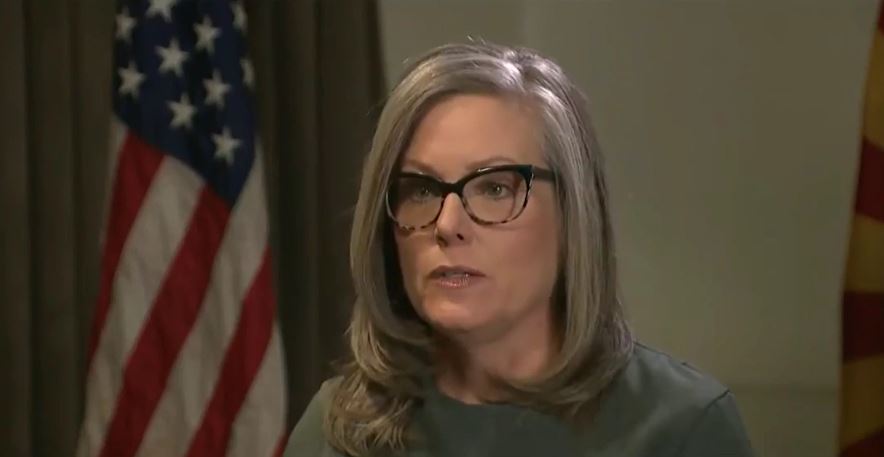
Governor Katie Hobbs has sparked controversy by appointing James “Jimmy” McCain, son of the late Senator John McCain, to the Arizona Board of Regents.
The decision raised eyebrows due to McCain’s opposition to President Donald Trump’s policies, the Arizona GOP’s censure of the late senator, and James McCain’s role at Hensley Beverage Company, a key sponsor of Hobbs’ inaugural committee.
“Jimmy McCain is a veteran, a businessman, and native Arizonan who is passionate about connecting every Arizona community to the education they need to thrive,” Hobbs said in a statement about the McCain-Hensley family heir.
“His long track record of public service and knowledge of the unique challenges and opportunities of northern Arizona make him well-positioned to advocate for the students of the region,” she added. “With his deep Arizona roots and passion for serving the people of our state, I know he will be a tireless advocate for northern Arizona. I look forward to seeing Jimmy deliver for our students, universities and communities while serving on the Board of Regents.”
Absent from the Governor’s remarks were any references to the $10,000 donated to her inauguration fund from Hensley Beverage Company, as reported by the Arizona Republic in 2023.
“I am deeply honored that Governor Hobbs has entrusted me with the opportunity to serve on the Arizona Board of Regents,” said Jimmy McCain. “As the Regent representing northern Arizona, I am excited to help strengthen higher education across our state and ensure that students from every background, especially those in our Tribal and rural communities, have access to the educational tools they need to succeed. Arizona’s public universities are the economic engine of our state, and I look forward to working with my fellow Regents, President Cruz Rivera, President Crow, and President Garimella, to advance our collective mission.”
According to the Daily Courier, McCain, like his father before him, opposes President Donald Trump and the MAGA Republican movement, and departed the Republican Party in 2016 after Trump’s first electoral win. After registering as an independent for eight years, he changed parties and became a Democrat in 2024, stating that he would vote for then-Vice President Kamala Harris.
Senator McCain’s widow, Ambassador Cindy Hensley-McCain, also endorsed former President Joe Biden in 2020 but told reporters she remains a registered Republican. She also remains Chairwoman of Hensley Beverage Company.
A press aide for Hobbs, Liliana Soto, told the Courier that McCain’s party change did not contribute to the Governor’s decision to appoint him. “Jimmy McCain has a strong track record of leadership, collaboration, and service,” Soto told reporters. She added that Hobbs believes he is, “committed to keeping Arizona’s universities affordable and innovative.”
Hobbs’ first pick for the Board of Regents, Liz Archuleta, was not given a hearing by the Republican-led state Senate.
Matthew Holloway is a senior reporter for AZ Free News. Follow him on X for his latest stories, or email tips to Matthew@azfreenews.com.
by AZ Free Enterprise Club | Sep 25, 2025 | Opinion
By the Arizona Free Enterprise Club |
Taxpayer-funded resources should not be used to tilt the scales of any election. This isn’t a difficult concept to understand. So, when Arizona State University (ASU) and PBS were exposed for colluding to help Katie Hobbs in the 2022 governor’s race against Kari Lake, we demanded accountability. We called on Arizona Attorney General Kris Mayes and Maricopa County Attorney Rachel Mitchell to launch a full investigation. After all, Arizona law is clear that universities must remain impartial and neutral in election-related activities.
In a ridiculous decision, both Mayes and Mitchell refused to take action on our complaint. But this battle is far from over.
The Illegal Use of Public Funds
This all began back in 2022 when Katie Hobbs was ducking just about everyone during her campaign for governor, most especially Kari Lake. It culminated in Hobbs’ refusal to debate Lake on Arizona PBS. From there, the process should’ve been simple. According to long-standing Arizona Citizens Clean Elections Commission (AZCCEC) rules, Kari Lake should have been provided with airtime, and the AZCCEC planned to do just that. But hours before Lake’s interview was scheduled to take place, the AZCCEC learned that Arizona PBS went behind their back to schedule an exclusive interview with Katie Hobbs—moving them to postpone Lake’s interview.
Then, last month, a series of emails came to light revealing that ASU leaders including President Michael Crow, former Arizona Republic publisher Mi-Ai Parrish, and Arizona PBS leaders allegedly colluded to jettison the debate rules to help Hobbs. This was a blatant and illegal use of taxpayer funds, and that’s why we filed a Hatch Act complaint with Mayes and Mitchell against ASU. But in a shocking and shameful decision, both decided against taking action…
>>> CONTINUE READING >>>
by Ethan Faverino | Sep 18, 2025 | News
By Ethan Faverino |
The Arizona Free Enterprise Club escalated its call for accountability, urging the County Attorneys of Mohave, Pinal, and Yuma Counties to launch investigations into Arizona State University (ASU) leadership for allegedly manipulating 2022 gubernatorial debate rules to favor Democratic Katie Hobbs over Republican Kari Lake.
The action follows a complaint filed by the Club in August 2025, with the Arizona Attorney General and Maricopa County Attorney, which was dismissed without a thorough review, prompting a broader push for enforcement under state law.
In a sharply worded letter addressed to the Mohave County Attorney Matt Smith, Pinal County Attorney Brad Miller, and Yuma County Attorney Karolyn Kaczorowski, Club President Scot Mussi detailed evidence of ASU’s deviation from established debate protocols, accusing university officials of using public resources to influence the election in violation of A.R.S. § 15-1633.
The statute states: “A person acting on behalf of a university or a person who aids another person acting on behalf of a university shall not spend or use university resources for the purpose of influencing the outcomes of elections or to advocate support for or opposition to pending or proposed legislation.”
This call-to-action stems from a September 2022 debate co-sponsored by ASU, Arizona PBS, and the Citizens Clean Elections Commission (CCEC).
Under longstanding CCEC regulations (Ariz. Admin. Code § R2-20-107(K)), a candidate declining an invitation to debate their political opponent forfeits airtime, granting the attending opponent a 30-minute solo interview.
When Hobbs announced she would skip the debate, ASU and PBS bypassed set regulations, granting her an exclusive 30-minute interview, a first in years to do so.
Internal communications, obtained and reported by the Arizona Republic, exposed the intent behind the decision. ASU President Michael Crow, Chief of Staff James O’Brien, and ASU Media Enterprise Managing Director Mi-Ai Parrish allegedly prioritized Hobbs’ comfort over neutrality.
Parrish’s emails to O’Brien highlighted concerns that “Katie is getting roasted hard” for dodging the debate and pressed CCEC staff to limit Lake’s discussion of election integrity, arguing that airing “a person with those views was wrong.” CCEC Executive Director Tom Collins confirmed to the Republic that Parrish sought to suppress Lake’s platform.
Correction: A previous version of this story incorrectly listed the names of the County Attorneys. They have now been corrected.
Ethan Faverino is a reporter for AZ Free News. You can send him news tips using this link.
by Ethan Faverino | Sep 15, 2025 | News
By Ethan Faverino |
In a decision advancing American energy dominance, the U.S. Environmental Protection Agency (EPA) announced a final rule granting the State of Arizona full primacy to control all classes of underground injection wells under the Safe Drinking Water Act (SDWA).
This approval positions Arizona as the primary regulator for protecting its underground sources of drinking water, while developing economic growth and innovation in clean energy technologies.
The move aligns with the EPA’s Powering the Great American Comeback Initiative, which emphasizes delivering clean and safe water to every American, restoring U.S. energy leadership, and empowering states to manage their own resources with local expertise.
By delegating authority to Arizona, the federal government recognizes the state’s unparalleled understanding of its unique water challenges and business landscape.
“Efficient and effective permitting is essential to bolstering American industry and unleashing energy dominance while protecting our nation’s water resources,“ said EPA Administrator Lee Zeldin. “States know their water resources best and understand the needs of their business community; entrusting them to take on permitting makes common sense. I am excited to see the economic growth that will be spurred by granting Arizona primacy to regulate underground injection under the Safe Drinking Water Act.”
The approval enables the Arizona Department of Environmental Quality (ADEQ) to oversee permitting and enforcement for all underground injection wells, including Class I wells for hazardous waste storage— ensuring these operations occur far below drinking water aquifers—and Class VI wells, critical for carbon capture and storage.
Following technical and legal review, the EPA confirmed that Arizona’s Underground Injection Control (UIC) program fully complies with SDWA standards. ADEQ will now handle authorizations and compliance monitoring with the EPA retaining oversight and permitting authority for wells on Indian Lands, except for Class II wells on Navajo Nation lands, because the Nation already holds primacy.
The move got the support from Arizona’s congressional delegation, emphasizing the significance of federalism and local priorities.
“Our Founding Fathers were clear in their commitment to states’ rights and a small federal government. Individual states must have the power to govern in the best interests of their own people. This ruling affirms that Arizona—not Washington bureaucrats—is best equipped to protect our water, foster economic growth, and ensure the well-being of our citizens. It is a key step in ensuring access to safe drinking water for Arizona communities for years to come. No one understands Arizona’s communities and resources better than Arizonans ourselves,” said Congressman Andy Biggs (AZ-05). “I am grateful to President Trump and EPA Administrator Zeldin for their commitment to slashing needless regulations and restoring authority to the states. This is a victory for federalism, for common sense, and for the people of Arizona.”
“Arizona understands our land, our water, and our energy needs better than anyone in Washington ever could. Granting primacy to our state of the Underground Injection Control program is a recognition that local expertise and innovation should lead the way,” said Congressman Juan Ciscomani (AZ-06). “It means that Arizona will now oversee the permitting for all underground injection wells, including Class VI wells essential for carbon capture and storage—a critical part of a secure and cleaner energy future, and Class I wells, which store hazardous waste far below drinking water resources critical for the health of all Arizonans. This step is a win for clean water, a win for responsible energy development, and a win for our economy.”
“I want to thank Administrator Zeldin and the Trump administration for recognizing that Arizona is best positioned to protect its underground sources of drinking water. This rule will allow us to provide clean and safe water for every Arizonan while bringing more and exciting economic opportunities to our great state,” said Congressman Abe Hamadeh (AZ-08). “This rule will strengthen Arizona’s ability to manage our future for our families.”
Arizona Governor Katie Hobbs also praised the decision as a pivotal achievement for the state saying, “Today’s decision is a major milestone for Arizona. By granting our state primacy over underground injection wells, the EPA is once again recognizing that Arizona is best positioned to protect its water and natural resources. This authority allows us to safeguard the integrity of our groundwater, while also supporting responsible economic growth and clean energy development. With this step, Arizona gains the tools to lead on sustainable environmental management and innovation for years to come.”
Ethan Faverino is a reporter for AZ Free News. You can send him news tips using this link.
by Matthew Holloway | Sep 12, 2025 | News
By Matthew Holloway |
In the wake of Turning Point USA co-founder Charlie Kirk’s assassination, comments from Arizona Democrats and some media figures struck a sour note Thursday. Their remarks drew swift and widespread condemnation across social media.
Most prominently, an initial comment from Governor Katie Hobbs calling for “lowering the temperature of our politics” has generated outrage, seen by many as a critique of Kirk.
Hobbs wrote in a statement, “I am deeply saddened by the news of the assassination of Charlie Kirk. I am saddened for Charlie’s family, friends, and Arizonans as they mourn his loss, and I am saddened for our country as our politics have descended into horrific violence. This tragedy is not about who Charlie Kirk supported politically. It is about the devastating loss of a father, a neighbor, and an Arizonan who called this state home, and whose life was cut short by senseless violence.”
Hobbs’ statement took a turn, however, with her adding, “We must stand together in rejecting violence, lowering the temperature of our politics, and recommitting ourselves to the values of civility, respect, and community that American democracy requires.”
The comments from Arizonans in general and groups like the Arizona Free Enterprise Club (AZFEC) were immediate and scathing.
“Katie Hobbs uses Charlie Kirk’s assassination to lecture conservatives that they need to ‘lower the temperature.’ Everything Charlie did was civil, engaging political opponents in open dialogue with ideas and arguments. Sorry Katie, we won’t back down,” AZFEC posted on X.
Garrett Lewis, Host of The Afternoon Addiction on 550 KFYI, replied, “All Charlie did was have civilized discussions and he showed respect to everyone, including those that disagreed with him. You evil freak.”
Pro-life commentator ‘Sanctity of Life’ responded with a harsh critique writing, “What should concern you and others who are prominent in the Democrat party is to change the tone of the party rhetoric that incites violence. Until that happens no one will take you Democrats seriously. We’re sick of being demonized and threatened for disagreeing with you!”
Gerald Bourguet, the now-former Lead Suns writer for PHNX Sports and co-host of the Phoenix Suns Podcast, was severely criticized after posting a lengthy thread blasting Kirk just hours after his death. The post resulted in PHNX Sports making “the decision to part ways,” early Thursday morning.
In a post to X announcing the decision, PHNX Sports wrote, “The opinions expressed by our employees do not represent the views of PHNX or ALLCITY Network. We take matters involving violence very seriously and are committed to ensuring that ALLCITY remains a safe place for our employees and community alike. We have addressed this matter with the individual and made the decision to part ways.”
The decision was praised by Tyler Bowyer of Turning Point USA, who wrote, “As a subscriber to @PHNX_Sports, thank you @Espo for making the right decision. Won’t forget that.”
As of this report, no public reaction has been issued by the Phoenix Suns.
Matthew Holloway is a senior reporter for AZ Free News. Follow him on X for his latest stories, or email tips to Matthew@azfreenews.com.