by Matthew Holloway | Jul 28, 2025 | News
By Matthew Holloway |
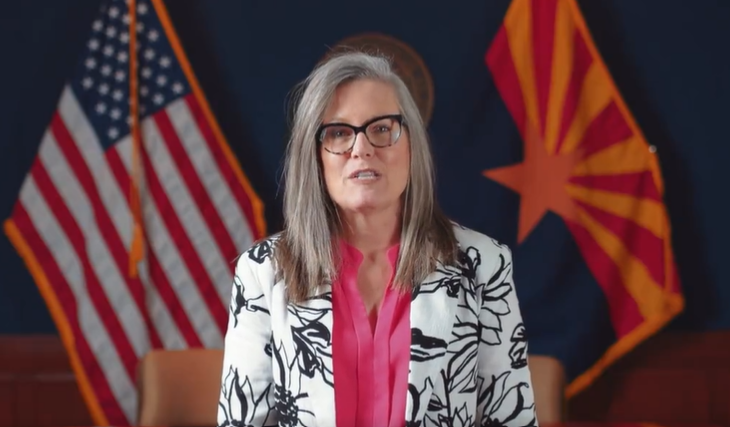
Arizona’s Democratic Governor Katie Hobbs traveled to Washington, D.C., on Wednesday to meet with Trump administration officials, including Secretary of the Interior Doug Burgum, to coordinate with federal authorities on the Dragon Bravo wildfire, which has claimed over 16,000 acres and is 26% contained as of this report. The move from Hobbs represents a rare departure from the governor’s antagonistic stance with Republicans in general, and the Trump administration in particular.
Along with Congressional leaders from both sides of the aisle, including fellow Democrats, Senators Mark Kelly and Ruben Gallego, and Republican Congressmen Paul Gosar and Eli Crane, Hobbs has called for an investigation into the measures used to control the fire and the policies that led to it as well.
In a post to X, Hobbs stood for a photo-op with the former North Dakota Governor-turned-Interior Secretary writing, “I was glad to meet today with @SecretaryBurgum. We both agreed to work together to combat the Dragon Bravo Fire and rebuild from the destruction. The Secretary also committed to an independent review of the decisions made during the Dragon Bravo Fire containment process. This accountability is essential as we work to ensure this never happens again.”
Following a tour of the devastated National Park lands on the north rim of the Grand Canyon, Hobbs said, “This is federal jurisdiction, but fire doesn’t know that boundary, and we all have to work together.”
“Seeing the complexity that goes into managing an incident like this is helpful, and certainly, I feel good about going back to Arizonans and saying, ‘Look, everyone’s concerned about making sure that we’re protecting as much as possible, and that we can rebuild, because the Grand Canyon is so important to our state,’” Hobbs said.
Congressman Gosar said in a statement last week:
“I am concerned that the Dragon Bravo Wildfire is the direct result of recently inherited policies from the Biden Administration.
“We must not waver in our efforts to seek answers for the people of Arizona. Today, I call on Secretary of the Interior, Secretary Burgum, to seek answers for the people of Arizona, who want answers as to the causes of this disaster and what can be done to prevent tragedies like this in the future.
“The people of Arizona will not be calling for answers alone. I will continue to seek answers and solutions, because these wildfires deeply impact Arizonans and our state.”
Speaking with KAFF News Tuesday, Rep. Eli Crane described the fire’s devastation as “heartbreaking” and said, “Generations of Arizonans have made priceless memories at the North Rim, so this is a very tragic loss. I also want to see the North Rim built back bigger and better than ever.”
Answering a caller’s challenge to rebuild the historic Grand Canyon Lodge, lost to the flames, Crane said, “We will continue to do what we can on this issue. I know how important it is to Arizona and our district. Let’s also modernize it so it can be open year-round.”
Matthew Holloway is a senior reporter for AZ Free News. Follow him on X for his latest stories, or email tips to Matthew@azfreenews.com.
by AZ Free Enterprise Club | Jul 23, 2025 | Opinion
By the Arizona Free Enterprise Club |
15 months. That is how much time we have left until Arizona can elect a new governor, and it couldn’t come soon enough.
Since taking office in 2023, Katie Hobbs has been a complete disaster. The heights of her corruption have certainly been well documented. From her illegal use of public resources to solicit money for her inauguration, to an alleged pay-to-play scheme between Hobbs and an Arizona group home that donated to her inauguration, to shelling out $700,000 to a company owned by the brother of the now-former Office of Tourism Director to create a new state logo, Hobbs has proven that the people of Arizona are her lowest priority. And there are no signs that will change any time soon.
In the latest reveal of her efforts to turn her office into a jobs program for her political friends, it was discovered that Hobbs handed out nearly $600,000 in taxpayer money to a former Democrat politician and her assistant for two newly created jobs. These just add to the long line of other phony baloney jobs Hobbs has created so that her buddies can get paid six-figure salaries to sit around and do nothing on your dime. In fact, just last year, she added six new jobs in the newly created Office of Resiliency (whatever that is), four new employees in the Office of Tribal Relations, and three new in-house attorneys, to name a few. All total, Hobbs has increased executive employment costs by over 50%!
With all these new government jobs, you would think Arizona must be leading the way in the nation for job creation, but no. It’s just the opposite…
>>> CONTINUE READING >>>
by Jonathan Eberle | Jul 23, 2025 | News
By Jonathan Eberle |
In a tense and disorganized special meeting last week, the Arizona Democratic Party voted to remove Chair Robert Branscomb after just six months in office. The ouster followed months of infighting, public disputes with elected officials, union clashes, and growing concerns over the party’s financial health heading into the 2026 election cycle.
Branscomb, who was elected chair in January after unseating incumbent Yolanda Bejarano, faced mounting criticism from party leaders and lawmakers. Arizona’s top Democratic elected officials—including U.S. Senators Mark Kelly and Ruben Gallego, Governor Katie Hobbs, Attorney General Kris Mayes, and Secretary of State Adrian Fontes—issued a rare public rebuke earlier this year, expressing a loss of confidence in his leadership.
Despite technical problems that plagued the meeting, 476 party committee members voted to remove Branscomb through the party’s preferred voting method, surpassing the two-thirds threshold required by Arizona Democratic Party (ADP) bylaws. Some members cast votes by email due to glitches in the party’s online voting system, though the total vote count remains unclear.
“Today’s recall effort is rooted in misrepresentation, divisive tactics and does not reflect our democratic values,” Branscomb said during the meeting. He argued that his removal was not about party unity but about “distraction and dividing us at a time when unity is more important than ever.”
Several lawmakers and party officials cited concerns over Branscomb’s ability to lead Democrats to victory in the next election. “Donors have told me directly they’re sitting out until the party gets its act together,” said State Representative Aaron Márquez.
The July 16 meeting stretched on for hours as frustrations mounted over procedural confusion and technical failures. Several members said they did not receive links to vote on the quorum, raising fears that they would be disenfranchised. Over two and a half hours were spent troubleshooting the party’s online voting platform.
Much of the confusion appeared to stem from tensions between party officers and ADP Executive Director Michael Ruff, who was tasked with managing the voting system. Some staff members claimed in Zoom chat messages that they had offered to help with the process but received no response.
ADP Vice Chair Melissa Galarza criticized the disorganization, saying, “I just feel like this was not well planned, the staff was not prepared for it, Michael Ruff did not prepare us, we had a lack of conversation about this meeting.”
A new election to select the party’s next chair is scheduled for September. Branscomb has the option to challenge his removal in that meeting. Until then, ADP Vice Chair Kim Khoury will serve as interim chair.
Jonathan Eberle is a reporter for AZ Free News. You can send him news tips using this link.
by Ethan Faverino | Jul 20, 2025 | News
By Ethan Faverino |
The Arizona Governor’s Office along with Arizona Department of Public Safety (AZDPS) are addressing the issue of growing concern nationwide of individuals impersonating law enforcement officers.
These deceptive acts not only undermine public trust with law enforcement officials, but they also jeopardize the safety of the community.
Under the Arizona Revised Statutes §13-2411, impersonating a police officer with the intent to deceive or induce compliance is a class 6 felony.
If committed during another felony, such as assault or theft, the offense escalates to a class 4 felony.
Director of AZDPS, Colonel Jeffrey Glover, said, “Impersonating a law enforcement officer is a serious crime that undermines public trust and threatens community safety. Our agency is committed to rigorously investigating and prosecuting anyone who falsely presents themselves as a peace officer. We will not tolerate individuals who exploit the authority and image of law enforcement for criminal or deceptive purposes.”
Governor Katie Hobbs also affirmed this same belief by saying, “Our local and state law enforcement have a tough job to do. Impersonating them makes that job even tougher. It puts our officers in harm’s way, undermines public trust, and makes our communities less safe. Impersonating a law enforcement officer is a felony in Arizona, and anybody caught doing so will be charged to the fullest extent of the law.”
The Governor’s office and AZDPS urge the public to remain vigilant and offer the following tips to identify and respond to potential impersonators:
- If driving, pull over in a well-lit, populated area.
- Request identification because legitimate officers carry authorized credentials identifying themselves and their agency.
- Call 911 to verify the encounter.
- Note details like vehicle type, license plate number, or badge number.
- Stay calm to ensure clear thinking and safe decision making.
Anybody who believes they have encountered a law enforcement impersonator is urged to report the incident to the local authorities immediately providing as much information as possible.
Ethan Faverino is a reporter for AZ Free News. You can send him news tips using this link.
by Matthew Holloway | Jul 19, 2025 | News
By Matthew Holloway |
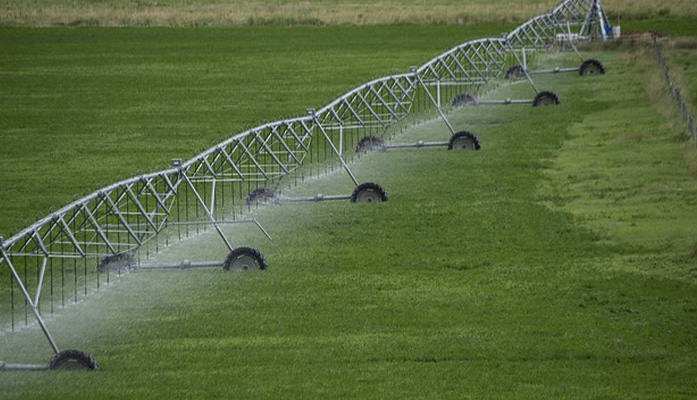
A quiet battle has been raging over the groundwater of the Hualapai Basin between Arizona State Representative John Gillette (R-LD30) and Mohave County Board of Supervisors Chairman Travis Lingenfelter.
Gillette has alleged that Lingenfelter enjoys the support of Governor Katie Hobbs, and High Ground, LLC., a firm “closely tied to the Walton Family Foundation and Environmental Defense Fund.”
In an email to AZ Free News, Rep. Gillette stated that Lingenfelter “has ‘cozied up’ with Governor Hobbs and High Ground, LLC., not by joining their party, but by aligning on a policy platform that places rural water in the hands of the Governor. He has advocated for several of the leftists’ water bills that trample the rights of property owners.”
The controversy appears to have arisen around the Final Assessment of the Hualapai Basin Water Data Integrity issued by Gillette to fellow legislators and third-party reviewers, which was allegedly made public by Lingenfelter in a May 8, 2025, formal rebuttal.
In his final assessment, Gillette wrote, “After continued research, legislative engagement, and review of both historical and current data, my original 2021 assessment of the Hualapai Basin water situation remains valid. The data presented by the City of Kingman and Mohave County remains suspect, with indications of overstatement used to drive political narratives and policy agendas.”
In the assessment, which Rep. Gillette asserted was reviewed by “three independent scientific and policy bodies prior to publication,” he found:
- The Hualapai Basin has enough groundwater storage to supply the region for 100–300+ years, even under heavy usage.
- Forecast models were based on worst-case pumping assumptions and should not be used to justify alarmist policy actions.
- Recharge estimates, storage volumes, and historical withdrawal rates all point to significant long-term water availability.
- The City of Kingman and Mohave County appear to have overstated risks—possibly to justify control over water rights or block agricultural competitors.
In the formal rebuttal dated May 8th, Lingenfelter addressed Gillette and claimed, “Your letter unfortunately contains a series of flawed assumptions, technical inaccuracies, and mischaracterizations that misinform rather than advance the public dialogue around long-term rural groundwater sustainability in Mohave County.”
He added, “Your letter asserts that data presented by Mohave County and the City of Kingman remains ‘suspect’ and ‘politically compromised.’ Such a characterization is categorically false and impugns the reputations of Mohave County, City of Kingman, and credentialed hydrologists at the ADWR and USGS and the public they serve.”
Responding to Lingenfelter’s rebuke in a formal response on May 16th, Gillette wrote, “While I welcome constructive dialogue, your letter reflects a degree of emotional overreach rather than a calm, scientific response to the concerns raised. Unfortunately, it reveals more about political defensiveness than about data transparency or hydrological best practice.”
Responding to critiques of the assessment’s findings Gillette wrote, “The assessment I authored was reviewed by three independent scientific and policy bodies prior to publication. All concluded that the findings were as accurate as possible given available data. I welcome peer review. What I reject is politically motivated resistance to scrutiny. As further evidence of bias, it should be noted that the ‘comparison document’ you reference—submitted by your team only days after my final assessment—contains several confirmations of my position.”
Rep. Gillette pushed back on Lingenfelter’s assertions based on the MODFLOW-NWT model from the U.S. Geological Survey and its 75,586 adjustable parameters writing, “As any trained analyst knows, such complexity magnifies sensitivity. Even small changes in assumptions—especially politically influenced assumptions—can result in dramatic shifts in outcome. Your confidence in the model would carry more weight if you supported my proposal to recalibrate baseline figures using 15 new field test sites with controlled, non manipulated measurement inputs. This is the kind of ground-truth methodology science demands. Strangely, your rebuttal ignores this recommendation entirely.”
He further strongly criticized the veto of a bill to cap irrigation on an irrigation non-expansion area (INA) by Governor Katie Hobbs, saying the veto “executed without explanation—is further evidence that political goals are outweighing scientific governance.”
AZ Free News reached out to Supervisor Lingenfelter for a comment and received the following reply:
Thank you for reaching out. I am not aware of any dispute or controversy between the Mohave County District 1 Office and Representative Gillette’s Office as you phrase it. As Mohave County Supervisor for District 1, I have served as Mohave County’s lead on water issues for the past five years, and was actively involved in our local water policy advocacy during my prior four years on the Kingman City Council.
My responsibility is to represent the shared, official position of both Mohave County and the City of Kingman, guided by the most accurate and credible data and hydrological modeling available, based on a multi-year, science-based partnership between Mohave County, the City of Kingman, and the United States Geological Survey (USGS)—an independent agency with a long-standing reputation for being the gold standard of scientific water modeling.
The ‘Final Assessment of the Hualapai Basin Water Data Integrity’ issued by Rep. Gillette is his office’s interpretation. The County and City remain firmly grounded and unified in the professional peer-reviewed science and long-term hydrological data and modeling that have guided our efforts to protect rural groundwater and ensure sustainable water use for future generations.
As always, Mohave County, City of Kingman, and USGS look forward to jointly collaborating with all legislators on our water issues on behalf of our rural communities.”
Based upon his team’s findings, Rep. Gillette has announced his intention to pursue “a stand-alone Hualapai Basin bill—developed outside of executive influence—that reflects the data as it exists, not as it is manipulated.”
Editor’s Note: Following the filing of this report, AZ Free News was contacted by Nick Ponder, Senior Vice President of Government Affairs of HighGround Public Affairs. Mr. Ponder provided the ’Analysis of Water Constraints and Economic Growth,’ a report prepared for Mohave County by Rounds Consulting Group, and the formal rebuttal issued on May 8th by Chairman Lingenfelter to Rep. Gillette with the note: “The County, City, and USGS have been very transparent in the processes and data used in determining the water situation in the Hualapai Valley Basin. The letter and the attached analysis should reflect that robust and transparent process.”
Matthew Holloway is a senior reporter for AZ Free News. Follow him on X for his latest stories, or email tips to Matthew@azfreenews.com.