by Matthew Holloway | Nov 14, 2025 | News
By Matthew Holloway |
Arizona’s top elected leaders — Democrats and Republicans alike — have joined forces to demand federal action after the seven Colorado River Basin states missed a critical deadline to finalize post-2026 water-sharing rules. In a letter to Interior Secretary Doug Burgum, they warned that refusal by upper basin states to commit to verifiable conservation has pushed the negotiations to a breaking point.
The letter, dated November 11, 2025, highlights Arizona’s role as a leader in water conservation and criticizes upper basin states for refusing to commit to verifiable reductions, which the signatories say have stalled a seven-state agreement needed to sustain the river amid ongoing droughts.
The seven Colorado River Basin states—four in the upper basin (Colorado, Utah, Wyoming, New Mexico) and three in the lower basin (Arizona, California, Nevada)—missed a federal deadline on November 11th to submit a consensus plan for sharing water shortages after 2026, when current operating guidelines expire. Federal officials, including the Bureau of Reclamation, have urged the states to reach an accord to avoid potential court intervention or unilateral action by the Trump administration.
In the letter, the Arizona leaders commended Burgum’s efforts over the past year to develop a framework preserving the century-old 1922 Colorado River Compact, which allocates water among the states. They emphasized the river’s critical role in fueling Arizona’s advanced technology ecosystem, world-class agriculture, military bases, and communities home to millions, including 22 of the basin’s 30 Native American tribes.
“Arizona’s cutting-edge semiconductor industries and IT infrastructure are making it possible for the onshoring of manufacturing operations that are critical for maintaining American technological leadership,” the letter states. It notes that Yuma County, one of the world’s most sophisticated agricultural regions, produces over 90% of the winter leafy greens supplied to the United States and Canada each year.
The signatories stressed that Arizona’s allocation is vital not only to the state’s citizens but to national economic growth and independence. They warned that the upper basin states’ refusal to offer “meaningful, verifiable conservation commitments” over the last two years risks these foundations of growth.
Arizona has positioned itself as a basin-wide leader in water efficiency, the letter asserts, partnering with California and Nevada to propose creative and significant post-2026 operating criteria. Under most scenarios, Arizona’s plans would conserve 1.5 million acre-feet of water per year, representing more than 27% of the state’s entitlement in most years. This follows more than 3 million acre-feet in efficiencies already offered by the lower basin states since 2023 to stabilize Lakes Mead and Powell.
In contrast, the letter points out that upper basin states have repeatedly refused to implement any volume of binding, verifiable upper basin reductions. “This extreme negotiating posture—four of the seven Basin States refusing to participate in any sharing of water shortages—has led to a fundamental impasse that is preventing successful development of a 7-State consensus plan for management of the Colorado River,” it reads.
The group urged Burgum to use his authority to ensure that any alternative considered by the Department of the Interior “contains measurable and enforceable conservation requirements” for the upper basin, guaranteeing the resource remains available for Arizona’s contributions to the economy and national security.
Signatories to the letter include Governor Katie Hobbs (D), Senate President Warren Petersen (R-LD14), House Speaker Steve Montenegro (R-LD29), Senate Democratic Leader Priya Sundareshan (D-LD18), and House Democratic Leader Oscar De Los Santos (D-LD11).
A joint statement from the seven states and federal officials acknowledged the missed deadline. Still, it affirmed a shared recognition of the basin’s challenges, with negotiators committing to continuing talks despite the setback. Lake Mead’s surface elevation stood at 1,057 feet as of recent measurements, with commenters noting that’s just 37 feet above levels that could trigger a “devastating” crisis for Arizona, including potential mandatory cuts to urban and agricultural users.
The full text of the letter is available here.
Matthew Holloway is a senior reporter for AZ Free News. Follow him on X for his latest stories, or email tips to Matthew@azfreenews.com.
by Staff Reporter | Nov 12, 2025 | News
By Staff Reporter |
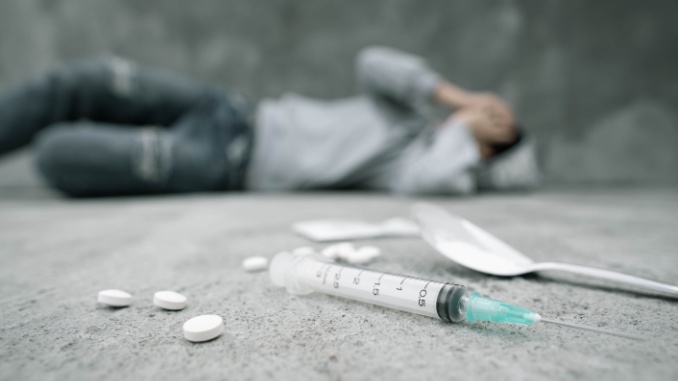
Arizona may be the next state to adopt drug injection sites following Governor Katie Hobbs’ veto.
Safe injection sites, overdose prevention centers, safer drug consumption services, supervised injection services—all descriptors for locations or facilities where drug addicts can inject illegal drugs while medical personnel watch to ensure an overdose doesn’t occur. In the event of an overdose, personnel intervene to reverse it.
Arizona doesn’t have any drug injection sites—yet. It also doesn’t have a ban on them, and it won’t for the foreseeable future under this current administration.
Earlier this year, Governor Katie Hobbs vetoed HB2798, a bill that would have prohibited local governments from allowing the development of any drug injection sites. Hobbs indicated the injection sites were part of “common sense solutions” for drug addiction.
“These sites are nonexistent in Arizona,” said Hobbs. “I encourage the Legislature to seek common sense solutions to actually help Arizonans struggling with substance use disorder.”
Hobbs’ veto rationale wasn’t widely shared by others in her party. Other states banned drug injection sites before they came into existence. Pennsylvania, for example, passed a ban in 2023 with the support of Governor Josh Shapiro, also a Democrat. So did California.
State-supplied overdose reversal kits are widespread in the state already, even and especially in places where minors frequent. Arizona schools have received tens of thousands of overdose kits in recent years to address the growing trend of minors abusing drugs. Libraries across the Valley also received more than their fair share.
The lawmaker behind the rejected bill, Republican State Rep. Matt Gress, said Hobbs should be replaced for killing his legislation.
Gress paired his commentary with recent footage of an injection site from Canada in Vancouver, British Columbia.
“Arizona deserves a better governor,” said Gress.
Those who spoke out against the bill during committee hearings included the Southwest Recovery Alliance (SRA).
SRA’s executive director Arlene Mahoney opposed the bill language referring to drug injection sites as “narcotics injection sites” rather than “overdose prevention centers,” which advocates often prefer.
“I think the name ‘narcotics injection site’ incites a lot of fear into people and it doesn’t encompass what an overdose prevention center actually provides. It’s an integrative healthcare facility that offers, yes, a safe place for people to consume pre-obtained drugs inside a facility which they would be doing in parks and other places anyways,” said Mahoney.
Mahoney was a social worker and co-investigator on a federally funded study on methadone application at the University of Arizona’s Harm Reduction Research Lab from last year to August.
In 2023, the Biden administration issued a $5 million grant to study the effectiveness of overdose prevention across 1,000 participants at two safe injection sites in New York City and one in Providence, Rhode Island, over the course of four years.
The first injection site in the United States was authorized to launch by New York City in 2021.
Apart from New York and Rhode Island, few legally sanctioned drug injection sites exist because of concerns with federal drug laws.
The city council of Denver, Colorado, attempted to implement a drug injection site in 2018, but the Trump administration warned the site would be illegal.
However, after the Biden administration showed a friendliness to the concept, more drug injection centers are emerging.
In 2022, San Francisco launched a social services resource facility, the Tenderloin Center, that quickly devolved into a drug injection site. The transition to the latter caused the site’s closure after less than a year.
The Tenderloin Center racked up a serious bill: $22 million to service around 400 people daily for 11 months. That’s about $72,400 a day—just under $200 per person if, indeed, an average of 400 people used the center daily.
Last year, Vermont established operating guidelines for drug injection centers after its legislature authorized and funded a drug injection center in the city of Burlington. The city launched its drug injection pilot program earlier this year.
Minnesota has authorized state funding for drug injection centers, but hasn’t granted legal authorization for them.
AZ Free News is your #1 source for Arizona news and politics. You can send us news tips using this link.
by Jonathan Eberle | Nov 8, 2025 | News
By Jonathan Eberle |
The watchdog organization Judicial Watch has filed a lawsuit against Arizona Gov. Katie Hobbs, seeking access to documents it says may shed light on whether the governor directed state agencies to limit cooperation with federal immigration enforcement.
The suit, filed in Maricopa County Superior Court, comes after Judicial Watch submitted a public records request on December 17, 2024. According to the group, the Governor’s Office responded that no responsive records existed, prompting the legal action. The case is listed as Judicial Watch Inc. v. Office of the Arizona Governor (No. CV2025-039217).
Judicial Watch’s records request sought two categories of documents: any instructions, communications, or policies given to state agencies that would restrict participation in federal immigration enforcement efforts; and any legal analysis or anticipated litigation documents tied to the governor’s position on the state’s role in enforcing federal immigration laws. State law prohibits Arizona officials or agencies from limiting enforcement of federal immigration laws “to less than the full extent permitted by federal law.”
The dispute follows comments Gov. Hobbs made in November 2024, when she was asked whether state police or the Arizona National Guard would cooperate with federal immigration authorities. Hobbs said Arizona would not support what she described as “misguided policies that harm our communities,” and said the state would not participate in efforts she believes “terrorize our communities.”
Immigration enforcement is primarily a federal responsibility. Under the U.S. Constitution’s Supremacy Clause and the Immigration and Nationality Act, federal authorities retain sole authority over immigration regulation, enforcement, and removal. Judicial Watch President Tom Fitton criticized the governor’s reported approach, saying that declining to support federal operations “undermines the rule of law and places law enforcement and other innocent lives at risk.”
The case now moves forward in county court, where a judge will determine whether the Governor’s Office must turn over any documents or further justify its stance that none exist.
Jonathan Eberle is a reporter for AZ Free News. You can send him news tips using this link.
by Jonathan Eberle | Nov 1, 2025 | News
By Jonathan Eberle |
Senator Carine Werner (R-LD4), Chair of the Arizona Senate Health and Human Services Committee, announced that the committee will convene its third special oversight hearing on the Arizona Health Care Cost Containment System (AHCCCS) on November 12 at 1 p.m.in Senate Hearing Room 1.
The hearing continues the committee’s months-long probe into what lawmakers describe as systemic failures in the state’s Medicaid program. The focus will be on AHCCCS’s ongoing response to widespread Medicaid fraud and the long-term fallout affecting behavioral health providers and Arizona families.
Senator Werner has invited newly appointed AHCCCS Director Ginny Roundtree and members of the agency’s executive leadership to testify. The committee has also requested the attendance of Arizona Department of Health Services (ADHS) leaders to address allegations that providers who have publicly criticized the agencies faced retaliation.
“Arizonans deserve answers — not excuses,” Werner said. “Governor Hobbs and AHCCCS continue to hide behind lawsuits and misleading data, instead of owning up to the damage caused by its failed oversight. We will not allow bureaucratic stonewalling to stand in the way of accountability.”
The committee’s investigation began earlier this year following revelations of billions in fraudulent billing, tens of thousands of member disenrollments, and severe service disruptions impacting vulnerable populations, including Native American communities. Lawmakers argue that AHCCCS’s sluggish response has deepened the crisis, with incomplete data, opaque enforcement actions, and a lack of transparency on recovery efforts.
Werner’s committee has repeatedly pressed AHCCCS for detailed documentation on how it is addressing fraud, reinstating providers, and safeguarding patient access. So far, legislators say the agency’s evasiveness underscores a larger pattern of bureaucratic failure. The November 12 hearing will publicly review AHCCCS’s compliance with data and document requests, as well as evaluate whether corrective actions are being implemented.
Jonathan Eberle is a reporter for AZ Free News. You can send him news tips using this link.
by AZ Free Enterprise Club | Oct 18, 2025 | Opinion
By the Arizona Free Enterprise Club |
Ever since Arizona passed universal school choice, the Empowerment Scholarship Account (ESA) program has been the target of the Red for Ed teachers’ union, Democrat lawmakers and their corporate media allies. They demand transparency and accountability for alleged abuse of ESA dollars—all while scandal after scandal continues to pop up in our state’s K-12 public schools.
We saw it at the beginning of the year when the Isaac Elementary School District (IESD) was placed under a state receivership after it was determined that it had a budget shortfall of over $12 million! And this wasn’t a surprise. The Auditor General had been sounding the alarm on IESD’s mismanagement of funds for five years!
But where was the corporate media? Where was the digging? Where was the series of articles and threads on X exposing the corruption?
We got none of it. Instead, we have certain Red For Ed reporters, like Craig Harris, attacking Arizona’s popular ESA program with liberal talking points about unspent funds and alleged waste and abuse.
But if the failures of IESD weren’t enough, now we have the sordid financial tale of Tolleson Union High School District, a story so scandalous that it should make every taxpayer’s blood boil…
>>> CONTINUE READING >>>