by Daniel Stefanski | Apr 25, 2023 | News
By Daniel Stefanski |
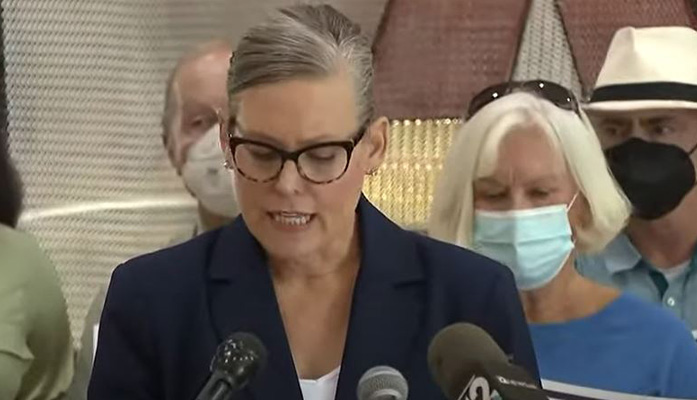
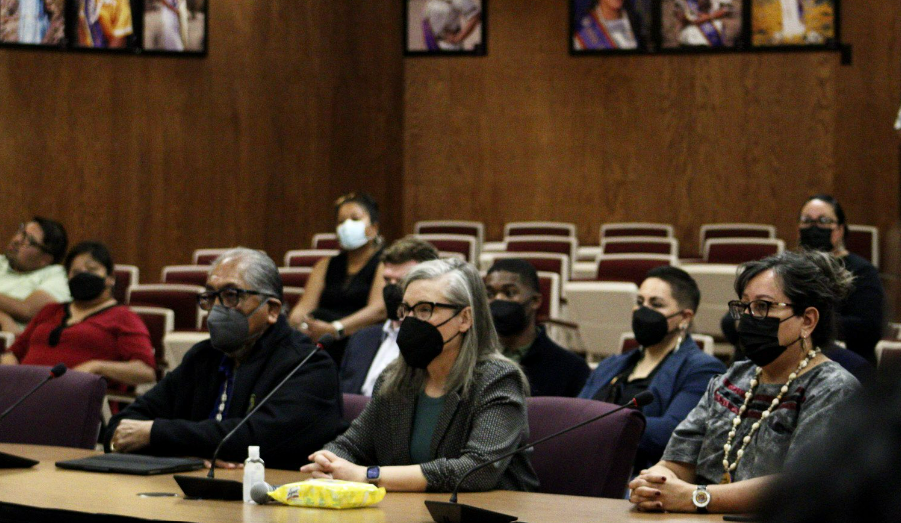
Arizona legislative Democrats are facing increasing pressure over Democrat Governor Katie Hobbs’ shocking decision to veto an overwhelmingly bipartisan bill – and an upcoming vote this week to override that veto in both chambers.
On Sunday, the National Hispanic Caucus of State Legislators (NHCSL) wrote a letter to Senate President Warren Petersen and House Speaker Ben Toma, announcing their support for HB 2509 and for legislators’ “efforts to override the Governor’s veto.”
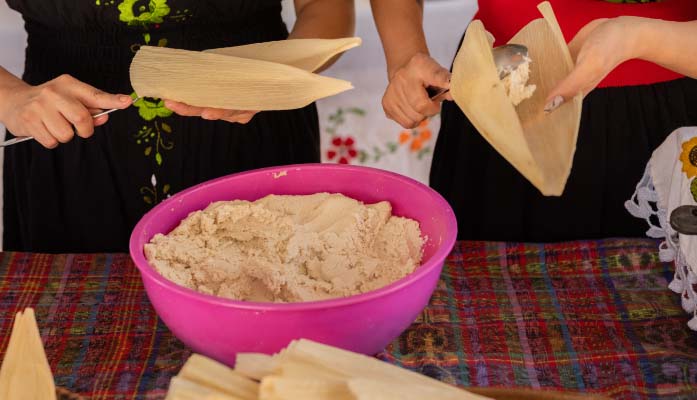
Last week, Governor Hobbs vetoed HB 2509, sponsored by Representative Travis Grantham, which deals with the sale and food preparation of cottage food – and now known as the Tamale Bill.
In her veto letter to the Arizona Legislature, Hobbs explained the reasoning behind her decision, writing, “This bill would significantly increase the risk of food-borne illness by expanding the ability of cottage food vendors to sell high-risk foods. It fails to establish sufficient minimum standards for inspection or certification of home-based food businesses, and could limit the ability of ADHS to investigate food-borne disease outbreaks. Nor does it provide a strong enough mechanism to ensure home kitchens are free of hazardous chemicals, rodent or insect infestation, or that equipment and storage of temperature-sensitive foods are adequate.”
Hobbs’ veto immediately drew bipartisan outrage, and legislative leaders plotted the path forward for veto overrides for this proposal. HB 2509 garnered 52 votes when it first passed the Arizona House, and 26 votes in the Senate – which amended the bill and sent it back to the House. The bill then obtained final clearance from the House with 45 votes before being transmitted to the Governor’s Office.
In her letter to the Arizona Legislature, NHCSL President Nellie Pou wrote, “For many Hispanic populations, selling homemade food is a family tradition passed down from generation to generation. Many low-income Americans need it to supplement their income in the face of disparities. It is a way to break the cycle of poverty. Today’s homemade food producers are tomorrow’s restaurant or nationwide prepared foods business owners….In Arizona this is especially important due to the significant Hispanic population and even more important to those who qualify under DACA or asylum seekers who have limited options when it comes to work.”
The NHCSL President did not hold back on Hobbs’ veto of this bill, saying, “By signing this bill, the Governor had an opportunity to support the Hispanic community and personal freedom that should be accessible to everyone. Our community should not fear legal repercussions for selling their homemade foods and we urge Arizona Legislators to do what is right and override her veto.”
As of now, it does not appear like the Legislature has enough votes to override the Governor’s veto on HB 2509. Even after providing a significant number of votes in both the House and Senate to send this legislature to Hobbs’ desk in the first place, Democrats have been reticent to sign on to the attempts to reverse the governor’s decision. Last week, the Senate Democratic Caucus issued a joint statement from its leadership team, announcing that “Senate Democrats will not be providing the required votes needed to override Governor Hobbs’ veto of HB 2509.”
The Senate Democratic leadership team added, “The bill, which we recognize has some benefits, also has some concerns brought forward by health advocates after the final vote. Our promise to Arizona is that we work to enact the best policy to protect consumers and sellers. As a Caucus, we stand ready to work with stakeholders to craft a bill, which could still be considered this session if Republican Leadership demonstrated that it is serious about addressing this issue. We were elected to solve the problems that are facing Arizonans daily, not to engage in political power struggles. It is our duty to serve the people and ensure that their voices are heard, and we are committed to fulfilling this responsibility with the utmost sincerity and diligence.”
The change of heart from some Senate Democrats who previously voted for the bill has not been lost on other neutral observers. Arizona Republic columnist Laurie Roberts wrote Monday that she doesn’t buy the statement released by the Senate Democrats’ leadership team, saying, “Senate Democrats’ change of heart on the tamale bill isn’t about protecting the people from imagined illness. It is all about protecting a governor from embarrassment.”
Daniel Stefanski is a reporter for AZ Free News. You can send him news tips using this link.
by AZ Free Enterprise Club | Apr 22, 2023 | Opinion
By the Arizona Free Enterprise Club |
Democrats like to believe they are the party of compassion and kindness, but the reality in most blue cities says otherwise. For years, homeless encampments have been springing up in liberal-run cities like Seattle, Portland, San Francisco, and Los Angeles. And in recent years, this trend made its way into Phoenix.
Just blocks from the state capitol, amidst what was once a thriving business district, a sprawling encampment of around 1,000 homeless has come to be known as “The Zone.” It’s a place where drug use, drug deals, defecation, urination, sexual acts, assaults, rape, and murder are frequently committed out in the open—often with little to no consequences. The problem has even gotten so bad that the Phoenix Fire Department won’t respond to calls inside The Zone without assistance from the Phoenix Police Department and assurance that the scene of the incident is secure.
But crime within The Zone is only one part of the problem…
>>> CONTINUE READING >>>
by Daniel Stefanski | Apr 20, 2023 | News
By Daniel Stefanski |
Democrat Governor Katie Hobbs just marked her 100th day in office, and a recent poll showed that she isn’t quite as popular in her state as other governors are in theirs.
A recently completed Morning Consult poll (conducted January 1 – March 31) highlighted America’s Most Popular and Unpopular Governors. Arizonans would have to scroll far down the list to find their governor’s name and numbers; Hobbs was third from the bottom.
Hobbs’ approval rating was below 50%, at 47%. Her disapproval number was at 36%.
Politicos and other onlookers took to Twitter Wednesday to debate the significance of the numbers for Hobbs. DJ Quinlan, the former Executive Director of the Arizona Democratic Party, pushed back against some negative characterizations of the governor’s numbers, writing, “Since when is +11% grim? The previous governor was regularly underwater. A fair reading is that a plurality of voters have a favorable impression, but a lot of voters have yet to form an opinion.”
Governor Hobbs’ initial tenure as the state’s chief executive has not been smooth, and her administration has had to deal with multiple missteps, including her decision to pull the nomination of her first appointee to serve as the Director of the Arizona Department of Child Safety, the lack of transparency over aspects of her Inaugural Fund, or the sudden resignation of her press secretary – among others. Hobbs has also clashed with Arizona legislators over many of their proposals or their perceptions of her unwillingness to negotiate with them over different policies.
Most recently, Hobbs vetoed HB 2509, which had attracted significant bipartisan support in both chambers of the state legislature, inciting outrage from all across Arizona. This action led Democrat Representative Alma Hernandez to tweet, “It’s not a veto to be proud of, and I know I am not the only one who feels this way.” Laurie Roberts, a columnist for the Arizona Republic, also slammed the governor’s decision, writing, “Give Hobbs credit. The governor, with veto No. 63, did manage to bridge the deep political divide in the Arizona Legislature. Most everybody is mad at her on this one.”
Daniel Scarpinato, a veteran of the Governor’s Office during the Doug Ducey era, told AZ Free News that “First impressions matter, and the new governor has a lot of ground to make up.”
Daniel Stefanski is a reporter for AZ Free News. You can send him news tips using this link.
by Corinne Murdock | Apr 20, 2023 | News
By Corinne Murdock |
As the community mourned, Gov. Katie Hobbs celebrated killing a bill legalizing more homemade food sales with an email campaign applauding herself for issuing the most vetoes in state history. The bill would have the greatest impact on small business owners in the “cottage food” industry, such as street vendors.
State Rep. Alma Hernandez (D-LD20) voiced her frustration with Hobbs’ lack of support for the bill, HB2509, on Twitter. Hernandez, who trained at the Johns Hopkins Bloomberg School of Public Health, said that Hobbs’ rationale for the veto flew in the face of public health professionals’ opinion.
“People are NOT dying from street food poisoning. This is personal. Not only do many Hispanics depend on this to make a living but many fear being reported and fined,” said Hernandez. “When my father was injured and could not work, my mother made cakes from home to ensure we could put gas and food on our table. This does nothing in the name of ‘health & safety.’ It goes against my community.”
State Rep. Consuelo Hernandez (D-LD21) added that the veto denied recognition of the popular practice of Latino communities relying on tamale sales for income. Hernandez called Hobbs’ celebratory email “cruel.”
In Hobbs’ letter explaining her veto, the governor claimed that the bill would increase risk of food-borne illness, as well as limit quality control preventing food contamination from hazardous chemicals, or rodent or insect infestation.
Sen. President Warren Petersen (R-LD14) arranged for a veto override next Tuesday.
“We will put it up for a vote. #freethetamales,” wrote Petersen.
House Speaker Ben Toma (R-LD27) assured that an override motion was prepared for next week.
The bill would be the legislature’s first override vote of the session.
Hobbs vetoed a total of 11 bills on Tuesday, raising the record to 63 — five more than the record set by former Democratic Gov. Janet Napolitano.
The other bills Hobbs vetoed were SB1091, SB1101, SB1262, SB1455, SB1565, HB2379, HB2394, HB2474, and HB2691.
Critics shared images of the celebratory email Hobbs’ team issued following this latest round of vetoes.
Former senior policy advisor to former Gov. Doug Ducey, Christina Corieri, noted that she was one such small business owner-hopeful impacted by Hobbs’ veto.
After issuing the vetoes, Hobbs told her critics that she was delivering “sanity, not chaos” to the people.
“I will gladly work with anybody who will be a partner in addressing the real problems Arizonans face, but I refuse to play political games with our state government,” tweeted Hobbs. “I’m proud of the bipartisan accomplishments we have achieved and encourage leaders in our legislature to continue to come together and pass real solutions that will grow jobs, build roads and bridges, invest in education, and deal with our water crisis.”
Corinne Murdock is a reporter for AZ Free News. Follow her latest on Twitter, or email tips to corinne@azfreenews.com.
by Daniel Stefanski | Apr 19, 2023 | News
By Daniel Stefanski |
Arizona’s Democrat Governor may be wearing her record number of legislative vetoes as a badge of honor, but Republicans are attempting to ensure that she bears her actions as a political liability.
After Governor Katie Hobbs used her veto stamp on a bill for the 63rd time since she assumed office, Republicans pushed back against her propensity to reject many of their legislative proposals, providing Arizonans with examples of the bills vetoed by the state’s chief executive.
A release sent out by the Arizona State Senate Republican caucus noted that “Hobbs has so far chosen to alienate the remaining voters who also duly elected their Republican lawmakers to represent them on a variety of issues important to their lives and livelihoods, including:
- Inflation relief in the form of tax cuts on groceries and rent for our hardworking families.
- Requiring power companies to first prioritize affordability for Arizonans as well as grid reliability.
- Harsher punishment for domestic abusers of pregnant women.
- Greater penalties against fentanyl dealers when a child dies from an overdose.
- Declaring drug cartels as terrorist organizations.
- Parental notification of sex offenders on school campuses.
- Prohibiting racist curriculum in public schools.
- Health care requirements of providers for protections of infants born in distress.
- Ban on homeless camps outside of businesses.
- Religious protections for employees required to get the COVID-19 vaccine.
- Support for small, at-home businesses.”
In addressing the record number of vetoes (and those assuredly to come before the end of the legislative session), Senate President Pro Tempore T.J. Shope issued the following statement: “Vetoing is a tool that weak leaders will use in an effort to control legislative priorities, and we’re witnessing this tactic front and center from Katie Hobbs. Instead of demonstrating diplomacy and bipartisanship, the Governor is showcasing her failure to work across the aisle.
Instead of accomplishing the priorities of our citizens and strengthening our communities, she’s done little outside of hosting press gaggles and photo ops with activists groups and Democrats alike. Republican lawmakers will continue to fight for legislation expected from the voters who elected us into office, and we’ll leave the political games, subsequent chaos and insanity to Governor Hobbs.”
The previous record holder for Arizona legislative vetoes was Democrat Governor Janet Napolitano in 2005, who jettisoned 58 bills that were sent to her desk.
The sheer number of vetoes stand in contrast to Hobbs’ December 14, 2002, tweet as Governor-Elect, where she posted a picture of incoming Republican legislative leaders Warren Petersen and Ben Toma, writing, “Had a productive discussion with Speaker-Elect Ben Toma and President-Elect Warren Petersen this morning. We are ready to find common ground and get to work on behalf of all Arizonans.”
While Hobbs’ record to date hasn’t been comprised of all vetoes, most Republican legislators have been angered by some of her final decisions on their bills and by what they have perceived as a closed door to her office. “Common ground” between the governor and Republicans in the state legislature has yet to be achieved.
Daniel Stefanski is a reporter for AZ Free News. You can send him news tips using this link.