by Staff Reporter | Apr 24, 2025 | News
By Staff Reporter |
A New Mexico man detained by Arizona immigration enforcement after he falsely claimed he was an illegal immigrant has stirred up media coverage critical of the Trump administration.
Jose Hermosillo, a 19-year-old from Albuquerque, remained in border detention for nine days earlier this month until his family brought proof of his citizenship.
In a sworn affidavit released by the Department of Homeland Security (DHS), Hermosillo claimed he was a citizen of Mexico who had no claim to being a citizen of the United States and no documents issued by a legal authority permitting him to be in the United States. Hermosillo also claimed to the immigration officer that he had entered the country illegally “in the desert” for the purpose of obtaining work in Tucson over the next 20 years.
DHS issued a statement clarifying Hermosillo approached Border Patrol in Tucson and made these false statements.
“Mr. Hermosillo’s arrest and detention were a direct result of his own actions and statements,” said DHS.
Hermosillo’s family claimed to Arizona Public Media that Hermosillo “got lost” while walking near the Border Patrol facility in Tucson. At the time of the incident, Hermosillo was visiting family in Tucson with his girlfriend and their infant child. The family’s account conflicts with the DHS affidavit, in that the family maintained that Hermosillo told Border Patrol agents that he was a U.S. citizen.
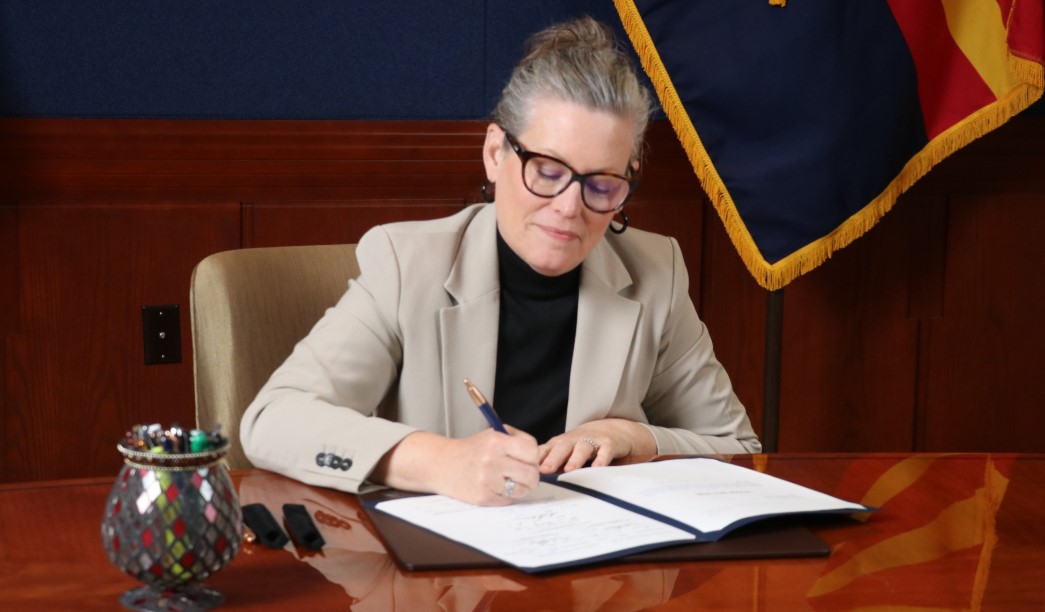
Governor Katie Hobbs called Hermosillo’s detention “unacceptable” in a post on X and promised to receive answers from DHS.
“I will be in contact with @DHSgov and expect immediate answers for their wrongful detention of an American citizen,” said Hobbs.
Likewise, Attorney General Kris Mayes said on X that she contacted ICE for answers on Hermosillo’s detention.
“It is wholly unacceptable to wrongfully detain US citizens,” said Mayes.
Mayes’ post was issued about an hour after DHS assistant secretary Tricia McLaughlin issued a statement detailing Hermosillio’s false confession of illegal immigration, and Hobbs’ post was issued hours after DHS released the sworn affidavit revealing Hermosillo’s remarks pertaining to his citizenship.
A court dismissed Hermosillo’s case without prejudice last week.
Hermosillo’s case wasn’t the only false confession of immigration status to make national news this week.
Two college-aged German women claimed they were deported after arriving in Hawaii to begin a trip exploring several states and Costa Rica. DHS dismissed these claims as reported by multiple outlets, revealing the two women were denied entry into the country for admitting their unlawful intention to work in the United States after falsely claiming they were only there to tour California under a Visitor visa and the Visa Waiver Program, respectively.
The response from DHS prompted the New York Post to delete their coverage portraying the women as victims of wrongful detention and deportation.
“Another false narrative. These travelers weren’t deported—they were denied entry after attempting to enter the U.S. under false pretenses,” stated DHS.
AZ Free News is your #1 source for Arizona news and politics. You can send us news tips using this link.
by Jonathan Eberle | Apr 23, 2025 | News
By Jonathan Eberle |
Despite opposition from local leaders and community organizers, Governor Katie Hobbs has signed SB 1543 into law, a move that will significantly curtail the ability of residents in cities like Scottsdale to refer zoning decisions to the ballot. The legislation, which passed the Arizona Legislature along party lines earlier this month, takes aim at local control.
The law applies retroactively, nullifying a referendum effort by nearly 27,000 Scottsdale residents who had petitioned to challenge a city council-approved expansion plan by public safety technology company Axon. The referendum would have placed the matter on a future citywide ballot, giving voters the opportunity to weigh in on the project’s future.
In a letter sent to Governor Hobbs prior to her decision, Scottsdale Mayor Lisa Borowsky and the full City Council warned that SB 1543 “undermines the principles of local control that are foundational to Scottsdale’s governance” and “sets a dangerous precedent.” The city emphasized that the referendum effort was not a protest against development, but rather a call for public input on a high-impact zoning change.
The controversy began after the Scottsdale City Council voted in November 2024 to approve Axon’s expanded development plans. While the company’s previously approved headquarters from 2020 remains intact, the new proposal includes nearly 2,000 multifamily residential units; over 400 hotel rooms; and approximately 47,000 square feet of retail and restaurant space.
Many residents argued that the expansion warranted broader community input, prompting a grassroots petition drive that garnered tens of thousands of signatures. However, with SB 1543 now law, the referendum effort has been invalidated, and Scottsdale voters will not have the opportunity to decide on the matter at the ballot box.
SB 1543 removes the ability of residents in cities of certain sizes—including Scottsdale—to challenge zoning decisions. Supporters, including Republican legislative leaders, say the law clears the way for large-scale development projects and reduces delays caused by ballot initiatives. Critics, however, argue it silences community voices and weakens the checks and balances that local governments rely on.
City leaders have expressed concern that the legislation fails to address critical issues related to growth, including increased traffic and infrastructure strain. “These are not abstract issues—they impact the daily lives of our residents,” the city wrote in its plea to the Governor.
With the law now enacted, Scottsdale is weighing legal and procedural responses to preserve local authority, while other municipalities watch closely to see how the law will be implemented and challenged.
Jonathan Eberle is a reporter for AZ Free News. You can send him news tips using this link.
by Staff Reporter | Apr 22, 2025 | News
By Staff Reporter |
The Arizona Democratic Party (ADP) is strained by infighting, with party leadership and top elected Democrats at odds.
ADP Chairman Robert Branscomb issued a tell-all email over the weekend revealing the politics within the party. Branscomb’s email — styled as “a candidate update on the past 90 days” — focused primarily on accusing his predecessor of undermining him and both U.S. Senators of threatening him over his decision making.
Sens. Mark Kelly and Ruben Gallego supported Branscomb’s opponent for the chairmanship, Yolanda Bejarano — as did Governor Katie Hobbs, Secretary of State Adrian Fontes, and Attorney General Kris Mayes.
Branscomb accused the party’s former executive director, Morgan Dick, of resistance and “outright obstruction” during the transition. Branscomb alleged false accusations were made against him in staff chats; banking information was withheld; the state party workspace was emptied of computers, furniture, and transitional documents; and staff were encouraged to resign. For those reasons, Branscomb said, he let Dick go and replaced her with political director Michael Ruff. Dick denied Branscomb’s allegations.
Following Dick’s removal, Branscomb alleged Senator Kelly attempted to control his staffing decisions. Then, following Ruff’s appointment, Branscomb alleged both senators threatened to withdraw their support for the party.
“Let me be clear: no state party chair should be threatened or intimidated by any elected official for making a decision in the best interest of our party,” said Branscomb. “The idea that both Arizona Senators would withdraw support because I did not choose their preferred candidate is not only troubling — it’s a threat to the integrity and independence of our party. I will not be coerced, and I will not be silenced.”
Kelly, Gallego, Hobbs, Fontes, and Mayes issued a joint response disputing Branscomb’s claims. The state’s top Democratic elected officials vowed they had met with Branscomb regularly and supported him through the transition. However, they didn’t express surprise at the publication of Branscomb’s letter.
“We’ve spent the last several months meeting regularly with the chair and working to support the party through the transition,” read the statement. “Unfortunately, his statement today includes many false claims and is the kind of bad-faith response we’ve come to expect from the new leadership over the last several weeks.”
Following the Saturday letter from the ADP chair, LD22 Democrats experienced a more localized form of infighting at their Monday meeting. The Arizona Republic’s Mary Jo Pitzl reported precinct committee members had attempted unsuccessfully to remove their district’s entire board, specifically citing displeasure with newly elected district chair Leezah Sun.
Sun couldn’t attend the LD22 Democrats meeting in person due to an active restraining order against her. Sun earned the restraining order following workplace harassment complaints filed by city of Tolleson employees; a Maricopa County Superior Court judge found Sun to be a threat to the employees’ physical safety and barred her from contacting the employees or entering the Tolleson Civic Center.
Sun was formerly a lawmaker in the state legislature. Sun resigned from the House last February to avoid expulsion after the House Ethics Committee found she violated ethics rules with a pattern of disorderly behavior. Undeterred by effectively having been ousted from the legislature, Sun ran for and won a seat on the Tolleson Union High School District governing board. The board also elected her to be their president.
AZ Free News is your #1 source for Arizona news and politics. You can send us news tips using this link.
by Staff Reporter | Apr 21, 2025 | News
By Staff Reporter |
The number of registered Democratic voters in Arizona declined by nearly 11,000 from January to April of this year.
The trend represents a marked decline in Democratic voter registrations since January, after a 70,800 registration uptick between the primary and general election and another 22,600 registration uptick between the general election and January’s voter registration report.
April’s total registered Democrats amounts to about 11,700 more than the party’s total registered voters in the general election.
Comparatively, current Republican registered voters amount to about 40,200 more than the party’s total registered voters in the general election.
The counties with leading losses in Democratic voter registrations in this recent voter registration report were Maricopa County (over 5,000 less registered Democrats) and Pima County (over 2,500 less registered Democrats).
It appears that the decline between January and April’s voter registration totals for Democrats and Republicans occurred due to voters switching registrations to Independent and No Labels. Where Democrats lost around 10,900 voter registrations and Republicans lost around 1,100 voter registrations between January and April of this year, registered Independents increased by 10,300 and registered No Labels increased by 2,000.
This theory is further supported by the voter registration total remaining the exact same between January and the count released this month: 4,462,819 registered voters.
The Arizona Republican Party interpreted this latest voter registration report as positive news for their prospects in future elections. Arizona GOP Chair Gina Swoboda claimed the multiple opposition campaigns and lawsuits against the Trump administration by Governor Katie Hobbs and Attorney General Kris Mayes swayed voters to switch their voter registrations.
“Arizona voters sent a strong message to Democrats in the November 2024 General Election, that they wanted the major political parties to work together to restore security, prosperity, and opportunity to our state and nation,” said Swoboda. “Instead of heeding that message and working with Republicans to better the lives of people in our state, Arizona Democrats have nominated themselves to become President Donald J. Trump’s chief antagonists. We need look no further than Governor Katie Hobbs and Attorney General Kris Mayes for two examples of this blind partisan obstruction to President Trump’s efforts.”
Mayes said in a Monday interview with The Arizona Republic that a majority of Arizonans support her 11 lawsuits against the Trump administration.
“The feedback that I’m getting as attorney general is that people by and large support what we’re doing because they by and large don’t support what Donald Trump is actually doing as president,” said Mayes.
Swoboda also brought attention to the voter registration increases in rural areas, crediting the gains to the party’s prioritization of advocating for more voter roll cleaning. The Trump administration has taken steps to support Republican-led election integrity initiatives by dropping cases against these efforts, requiring the Department of Justice to assist states and counties with citizenship databases, and requiring proof of citizenship going forward in federal election registrations.
“April’s numbers show that Republicans’ rural county registration advantages are growing as we work to clean voter rolls in the counties of Maricopa and Pima,” said Swoboda. “Republicans will continue to earn the trust of Arizona voters in the months ahead as we work alongside President Trump to make Arizona and America Great Again.”
AZ Free News is your #1 source for Arizona news and politics. You can send us news tips using this link.
by Matthew Holloway | Apr 20, 2025 | News
By Matthew Holloway |
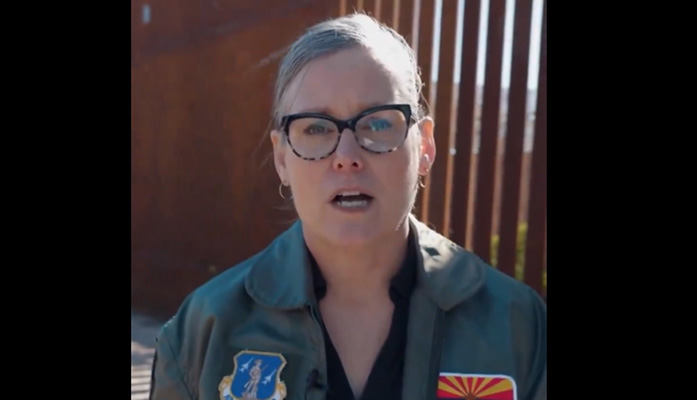
In a stark contrast to her efforts to rebrand herself as tough on the border, Governor Katie Hobbs has vetoed the Arizona Immigration Cooperation and Enforcement (ICE) Act, SB 1164. The bill would have required that every police department and sheriff’s office in the state comply with detainer orders from Immigration and Customs Enforcement.
Amidst her ongoing deliberate obstruction of the legislative process, labeled as a “moratorium” on signing new bills, Hobbs vetoed an additional 32 bills as well.
In Hobbs’ veto letter, she addressed Senate President Warren Petersen, seeming to attempt a conciliatory tone and saying in part, “You and I both disagreed with the previous administration’s immigration policies, and we may both disagree with the next administration’s immigration policies. I have worked productively with the federal government to secure our border, stopping fentanyl at our ports of entry through the Task Force SAFE, disrupting cartel operations with Operation Desert Guardian, and working across all levels of government to keep communities safe with the Border Coordination Office.”
She claimed, “I will continue to work with the federal government on true border security, but we should not force state and local officials to take marching orders from Washington.”
The Republican State Governor’s Association’s Rapid Response Director Kollin Crompton released a statement in response to Hobbs’ veto saying, “Katie Hobbs’ veto is no surprise — her record on the border is pitiful. Hobbs tried to fool Arizonans into thinking she was a border hawk, but this shameful veto shows she is unserious about addressing the border and protecting Arizonans from the violence and drugs coming into the state. She waited until 7:00 pm on Friday of a holiday weekend to try to hide from her open borders record. Arizonans are sick of Katie Hobbs’ window dressing — they deserve a governor who will actually work to secure the border and keep them and their families safe.”
As reported by AZ Free News in November of last year, Hobbs stated during her disjointed kick off of Task Force SAFE, “We will not be participating in misguided efforts that harm our communities. And I’ve been incredibly clear about that.”
Petersen described the bill as a measure to make Arizona a “partner and not an obstacle,” to the federal government’s efforts to enforce immigration law.
“It deals with this first wave of deportation that the Trump administration is focused on, which is removing the most dangerous criminals from our streets,” Petersen explained.
Matthew Holloway is a senior reporter for AZ Free News. Follow him on X for his latest stories, or email tips to Matthew@azfreenews.com.