by AZ Free Enterprise Club | Dec 5, 2025 | Opinion
By the Arizona Free Enterprise Club |
Despite the noble work of Republican lawmakers over the past five years to reduce the state’s burden on taxpayers (lowering and flattening the income tax, eliminating tax on renters, and addressing taxes on food,) cities and towns are constantly undermining this progress through rampant tax, fee, and utility rate increases.
Arizona’s affordability is being eroded through the insatiable tax-hungry decisions of city and town councils and their year-over-year spending sprees. If taxpayers have not noticed already, surely, they are feeling the pinch as these tax and fee hikes continue to stack one on top another. Red or blue, no city is immune, most likely your costs are going up…
>>> CONTINUE READING >>>
by Matthew Holloway | Dec 2, 2025 | News
By Matthew Holloway |
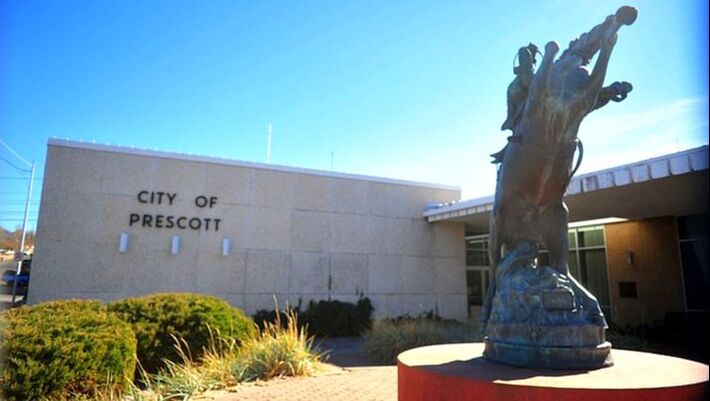
Jim Griset, the proprietor of a souvenir store, an art gallery, and a Harley Davidson shop in Prescott, has secured a hard-fought victory in his efforts to bring his vision of a new hotel to the city’s historic downtown. Represented by Goldwater Institute attorney Jon Riches, Griset’s victory successfully overturned a City Council ruling that upheld the Prescott Preservation Commission’s denial of his permit.
According to the Goldwater Institute, Griset has sought to transform three buildings he already owns on Prescott’s historic Whiskey Row into a hotel. The buildings already house his existing businesses, but he has endeavored since 2023 to bring the hotel into being that would “complement the surrounding architecture and preserve the charm and character that make Prescott special.”
As noted by Goldwater, none of the buildings in question are listed as historic. Still, they are located within the city’s designated historic district and thus require approval from the Preservation Commission.
Writing for Goldwater Riches explained:
“When Jim first submitted his application in 2023, the commission rejected it—not based on any clear or objective standards, but in response to NIMBY [not-in-my-backyard] opposition and vague impressions. Instead of pointing to identifiable criteria in the city’s preservation code, the commission relied on subjective notions like whether the design was ‘respectful’ of the district’s ‘intimate scale.’
Those terms don’t appear anywhere in the law. They’re not defined. They’re entirely subjective—which is exactly what the law is supposed to prevent.”
The law Riches refers to is The Permit Freedom Act, a Goldwater Institute-developed law enacted in 2023. He notes, “The Act prohibits local governments from making new rules midstream or applying vague, subjective standards to block lawful use of private property. And that is precisely what Prescott did.”
When Griset applied for the permit and was denied, he reportedly took the commission’s feedback, revised his designs, and worked to meet the standards set. “Yet every time he met the standards placed before him, the standards seemed to change,” Riches wrote.
When the denial was appealed to the Prescott City Council, the Council ruled against Griset. The council brought in a neutral historic preservation expert, who found that Griset had met the standards, and Goldwater attorneys brought the potential violation of the Permit Freedom Act to the City’s attention. Goldwater told the city, “Based on this review, under the Permit Freedom Act, there was simply no legal criteria authorizing the denial of his permit,” per Riches. However, the Commission again ruled 3-2 against Griset and his hotel plans.
Riches noted that in 2024, Prescott’s City Council sold the old City Hall building to a property developer with similar plans for a four-story hotel in the very same district. But it wasn’t rejected by the Commission or Council.
On November 4th, the City Council heard Mr. Griset’s appeal. Riches wrote, “Several council members spoke openly about the importance of private property rights and the need for fair, consistent rules—not decisions driven by subjective preferences or political pressure. Members of the public echoed the same: government rules must be fair, consistent, and objective. They should not favor some over others.”
Riches concluded, “Property owners in Prescott, and across Arizona, deserve certainty. They deserve to know the rules before they invest. When government shifts the rules or invents new ones as it goes, it undermines confidence, deters investment, and violates the law.”
The council voted to overturn the Preservation Commission’s decision. Mr. Griset’s hotel plan is pending approval from Prescott’s city zoning and planning commission and, subsequently, from the Council. A water service agreement will also require approval.
Matthew Holloway is a senior reporter for AZ Free News. Follow him on X for his latest stories, or email tips to Matthew@azfreenews.com.
by Staff Reporter | Nov 25, 2025 | News
By Staff Reporter |
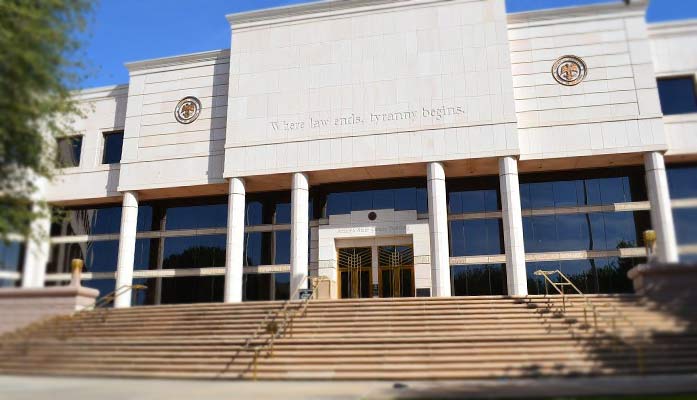
The Arizona Supreme Court held a hearing on Monday to decide whether the city of Phoenix can hide certain public records.
The city is being sued by the Goldwater Institute, a Phoenix-based public policy and litigation organization, over its hiding of records concerning union negotiations.
In Goldwater v. Phoenix, the Goldwater Institute argued the city of Phoenix has a duty to disclose those records in order to allow the public to have an informed decision, and because they serve as the entity negotiating on behalf of the public.
The organization filed their lawsuit in March of 2023 after the Phoenix Law Enforcement Association (PLEA) declined to provide a draft memoranda of understanding (MOU) for public input at the end of 2022. PLEA had provided its MOU drafts in preceding years.
Per the city’s “Meet and Confer” ordinance, unions must submit MOUs by Dec. 1 in the year before the expiration of an operative agreement so that the public may provide input prior to negotiations between the union and city.
Despite not having a draft MOU available for the public to review, the Phoenix City Council moved forward with a meeting to collect public comment on an unsubmitted draft.
The city then began negotiations in January 2023.
The city of Phoenix refused to give PLEA’s draft MOU to the Goldwater Institute upon request, claiming the records were exempt from public records disclosure because public scrutiny would burden negotiations.
The city claimed they were protected under the state’s public records law exemption allowing the withholding of records should they prove detrimental to a government’s best interest.
“Releasing those types of materials would create a chilling effect on the parties’ willingness to candidly engage with each other and it would hinder the negotiations process,” said the city in their denial message.
The city also expressed concerns that public access to MOUs would politicize union negotiations.
Parker Jackson, Goldwater Institute staff attorney, disagreed that these records were covered by the best interests exemption.
“With few exceptions, public records must be made available to the public,” said Jackson in a press release. “When there’s a need to protect things like personal privacy or public safety, the government must be able to show that specific and significant harm is likely to result from public disclosure. It cannot simply withhold information based on self-interested speculation that some minimal inconvenience ‘might’ occur.”
In January, the Arizona Court of Appeals remanded the case to the Arizona Superior Court so that court could privately review unredacted and redacted versions of the contested MOU documents, and determine whether the documents deserved exemption from public disclosure according to the best interests of the state.
The Arizona Supreme Court is considering two issues in this case:
- Did the Court of Appeals err by not requiring the City, after it invoked the “best interests of the state” exception, to establish a probability that specific, material harm will result from disclosure, as Mitchell v. Superior Court requires?
- Did the Court of Appeals err by not applying the Carlson v. Pima County balancing test de novo to independently determine whether the City’s purported interests in nondisclosure outweigh the presumption in favor of disclosure?
The public may watch the archived video of Goldwater v. Phoenix here.
AZ Free News is your #1 source for Arizona news and politics. You can send us news tips using this link.
by Ethan Faverino | Nov 17, 2025 | News
By Ethan Faverino |
The Goldwater Institute has filed a lawsuit against Arizona Attorney General Kris Mayes, demanding the release of consumer records tied to the AG’s 2024 antitrust lawsuit against nine major residential landlords and RealPage, Inc.
Filed on November 12, 2025, in Maricopa County Superior Court, the suit accuses the Democratic attorney general’s office of violating Arizona’s public records law by refusing to disclose basic information about complaints, or lack thereof, that prompted the state’s allegations of an illegal rent price-fixing conspiracy affecting hundreds of thousands of renters in Phoenix and Tucson metros.
Stacy Skankey, litigation director for the Goldwater Institute’s American Freedom Network, noted that there was no mention of any actual consumer complaints.
Skankey emphasized that Goldwater takes no position on the underlying antitrust claims. Instead, it seeks only aggregate data: the total number of consumer complaints received by the AG’s office regarding RealPage and the defendant landlords, including any unsolicited submissions.
The Goldwater Institute first requested the records in April 2024. After months of silence, the AG’s office issued a denial in January 2025. Follow-up attempts went unanswered, prompting Wednesday’s legal action.
“It should be very easy to comply with, and yet, you know, after this long, drawn-out process, here we are now having to demand that these be produced,” stated Skankey.
The Center Square reported that when it contacted the Attorney General’s Office, the agency responded that it had produced all documents required under state law.
Kris Mayes’ communications director, Richie Taylor, also told The Center Square, “Attorney General Mayes is proud to have taken on major corporate landlords and RealPage for allegedly orchestrating a price-fixing scheme that drove up rents for families across Arizona.”
Skankey responded, saying she and her team disagree with the statements made by the AG’s office, and there is no proof they complied with the state public records law.
Ethan Faverino is a reporter for AZ Free News. You can send him news tips using this link.
by Matthew Holloway | Nov 14, 2025 | News
By Matthew Holloway |
The Arizona Supreme Court recently declined to review an Appeals Court ruling holding the City of Tucson liable for a public nuisance caused by homeless encampments, siding with three property owners who suffered property damage and financial losses. The Goldwater Institute highlighted this case as “welcome news for all Arizonans,” following the adoption of voter-approved Proposition 312.
The case, Bradford v. City of Tucson, comes on the heels of a similar court ruling against the City of Phoenix over its “Zone” encampment and is now being highlighted by the Goldwater Institute alongside voter-approved Proposition 312—a 2024 measure that lets property owners seek refunds when cities decline to enforce basic public nuisance laws.
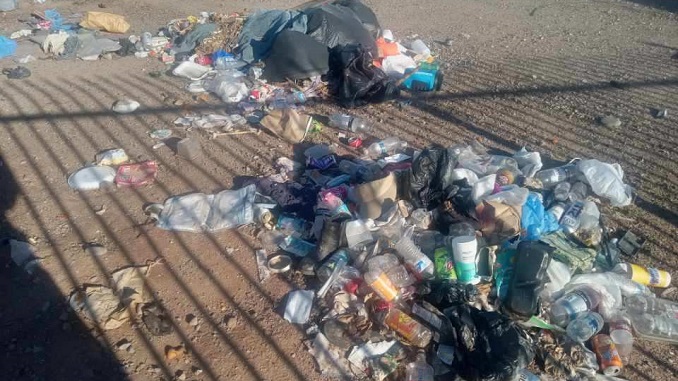
Filed on behalf of three Tucson residents, the lawsuit sought injunctive relief against the City of Tucson, after homeless encampments near their homes and businesses in the Navajo Wash developed with makeshift toilets, dangerous fires, and individuals engaging in violent and criminal behavior.
The appellate court, reversing a trial court ruling against the residents, found that the “record is replete with testimony of specific incidents which proved that camping in the Navajo Wash has caused unsanitary and indecent conditions that invade the rights of the neighboring residents and business owners,” and demonstrated that Tucson was not shielded from liability “because the City knew the activity of homeless camping in this location was being carried on and that it repeatedly and continually caused a nuisance, yet consented to it anyway.”
Prop 312 now gives property owners a reimbursement tool in situations like those described in Bradford v. Tucson, allowing Arizonans to seek relief when a municipality “follows a policy, pattern, or practice of declining to enforce existing nuisance laws prohibiting illegal camping, obstructing public thoroughfares, loitering, panhandling, public urination or defecation, public consumption of alcoholic beverages, or possession or use of illegal substances, or maintains a public nuisance,” according to the Goldwater Institute’s explanation of Prop 312 claims.
Reimbursements are capped at the amount of property taxes paid the prior year, with any excess eligible for reapplication later.
Goldwater explained the law’s necessity on its website:
“Rampant homelessness is overtaking Arizona’s cities, as municipalities refuse to enforce laws against public camping, loitering, intoxication, and other nuisances. The result has been a rise in violent crime, biohazardous pollution, property destruction, and even death. Residents and business owners have had to take matters into their own hands, installing fences, hiring security, and cleaning up garbage, human waste, and other hazardous materials themselves—services the city is supposed to provide with the tax money these residents pay every year.”
Under Prop 312, once the Department of Revenue notifies a municipality of a claim, the city has 30 days to accept or reject it. If rejected, property owners may challenge the decision in superior court; if the city does not respond in time, the refund is deemed approved. Goldwater has offered to assist residents, saying, “If you believe your claim was improperly denied and you would like legal assistance, please contact us! Our lawyers may be able to help you.”
Claims are filed through the Department of Revenue’s online portal at prop312reimbursement.aztaxes.gov, which requires proof of property ownership, tax payment, and mitigation costs. The department notifies cities and issues approved reimbursements by check.
The decision represents a major blow to a large Arizona city’s assertion of immunity and underscores growing frustration with Tucson’s approach to homelessness amid public safety concerns.
In an op-ed Monday, Timothy Sandefur, Goldwater’s vice president for legal affairs, urged city leaders to act:
“Homelessness is a tragic and frustrating issue. But policies that leave people living on the streets aren’t the answer. Instead, they only create a new set of victims: the innocent taxpayers who must pay for police protection that they don’t receive. The time has come for city officials to shoulder their responsibilities—instead of forcing homeowners to shoulder the costs.”
Sandefur also warned that property owners in other states lack similar protections, citing Utah, and encouraged lawmakers elsewhere to “follow Arizona’s lead” by adopting Goldwater’s proposed Safe Neighborhoods Act.
Correction Notice: A previous version of this story incorrectly linked the Bradford v. Tucson case to the Goldwater Institute and cited an unrelated ruling.
Matthew Holloway is a senior reporter for AZ Free News. Follow him on X for his latest stories, or email tips to Matthew@azfreenews.com.