by Staff Reporter | Mar 28, 2024 | Education, News
By Staff Reporter |
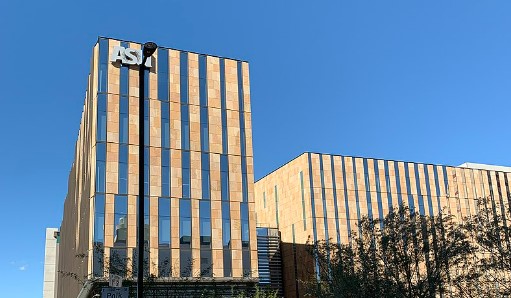
Arizona State University (ASU) is facing a lawsuit over the inclusivity training it mandates for faculty.
The Phoenix-based Goldwater Institute sued the university earlier this month over the allegedly discriminatory training, on behalf of longtime ASU philosophy and religious studies professor Dr. Owen Anderson. The organization specifically alleged that ASU’s training violated Arizona law, A.R.S. § 41-1494(A), prohibiting trainings, orientations, or therapies that present any blame or judgment on the basis of race, ethnicity, or sex.
“Arizona state law prohibits mandatory training for state employees and use of taxpayer resources to teach doctrines that discriminate based on race, ethnicity, sex, and other characteristics,” said Goldwater Staff Attorney Stacy Skankey in a press release.
Contested aspects of the ASU training, “ASU Inclusive Communities,” required faculty to acknowledge the history of white supremacy and social conditions persisting its existence as a structural phenomenon; society’s normalization of white supremacy; the sociohistorical legacy of racism, sexism, homophobia, and structural inequalities that impact minority faculty; white privilege; antiracism; and the relationship between sexual identities and power and the privilege of heterosexuality.
The training also included a video to which Anderson objected. The video encouraged faculty to “critique whiteness,” and to ascribe definite beliefs of good and evil as inherently racist.
“And what colonization did, was it really created this system of binary thinking,” stated the video. “There were folks that were inherently good and folks that were inherently bad, and that led to the systems of superiority that were then written into the foundational documents of our Nation.”
In addition to completing the training, ASU required faculty to pass an exam. The correct answers for that exam reinforced controversial concepts of systemic bias, intersectionality, land acknowledgement, equity, decolonization, microaggressions, and social justice. The Goldwater Institute claimed in their lawsuit that the inclusivity training only served to teach concepts of blame or judgment based on race, ethnicity, or sex.
“The Inclusive Communities training provides discriminatory concepts including, but not limited to: white people are inherently racist and oppressive, whether consciously or unconsciously; heterosexuals are inherently sexist and oppressive, whether consciously or unconsciously; white people should receive adverse treatment solely or partly because of their race or ethnicity; white people bear responsibility for actions committed by other white people; land acknowledgement statements are a way of holding one race or ethnicity responsible for the actions committed by other members of the same race or ethnicity; transformative justice calls for an individual to bear responsibility for actions committed by other members of the same race, ethnic group or sex; and dominant identities (whites or heterosexuals) are treated morally or intellectually superior to other races, ethnic groups or sexes.”
As justification for its call of decolonization, the ASU training also challenged the validity and goodness of the American founding.
In a press release, Anderson said that his employment shouldn’t hinge on his submitting to ideas that conflict with his beliefs.
“This ‘training’ is simply racism under the guise of DEI. It goes against my conscience, and I want no part of it,” said Anderson.
The contents of this training were obtained last May through a public records request by the Goldwater Institute. Prior to filing the lawsuit earlier this month, the organization sent a letter to the Arizona Board of Regents last fall asking ASU to cease and desist spending on the inclusivity training and others like it that allegedly run afoul of state antidiscrimination law.
The university requires faculty to repeat the inclusivity training every two years.
The case, Anderson v. Arizona Board of Regents, is in the Maricopa County Superior Court.
AZ Free News is your #1 source for Arizona news and politics. You can send us news tips using this link.
by Elizabeth Troutman | Mar 20, 2024 | Education, News
By Elizabeth Troutman |
Arizona State University’s journalism school teaches students “cultural sensitivities, civil discourse, bias awareness and diversity initiatives.”
The Walter Cronkite School of Journalism and Mass Communication requires students in at least three of the undergraduate degree programs to take a course called “Diversity and Civility at Cronkite,” the Goldwater Institute uncovered.
ASU’s online course catalog says the class “emphasizes the importance of diversity, inclusion, equity and civility to ensure all Cronkite students feel represented, valued and supported.”
The course “Offers training and awareness on cultural sensitivities, civil discourse, bias awareness and diversity initiatives at the Cronkite School and ASU” and “Empowers students to approach reporting and communication projects with a multicultural perspective and inspire mutual respect among students from various backgrounds and beliefs within different Cronkite professional paths,” the catalog says.
The “Learning Outcomes” on the course syllabus lay out identity categories: “By the end of this course, students will be able to … understand the value of their own and other people’s identities in terms of the work and study at Cronkite.”
The course’s seven units affirm the theme of identity. Units include “Race & Ethnicity,” “Geography and Income,” “Language & Citizenship,” “Sexuality and Gender Identity,” “(Dis)ability,” and “Differences and Conflict.”
The “Race & Ethnicity” unit includes the learning objective “Learn what microaggressions are and why they matter.” The instructor asks students to review a list of “typical microaggressions” published on a University of Minnesota webpage.
Examples of microaggressions include “America is a melting pot,” a statement that demands that people “assimilate/acculturate to the dominant culture;” “There is only one race, the human race,” a statement “denying the individual as a racial/cultural being;” “I believe the most qualified person should get the job,” a statement communicating that “people of color are given extra unfair benefits because of their race;” and “Everyone can succeed in this society, if they work hard enough,” a statement communicating that “people of color are lazy and/or incompetent and need to work harder.”
A week of the course is dedicated to discussing “sexuality and gender identity” to make students:
- Understand the difference between sexuality and gender identity and why it matters.
- Recognize privileges related to sexuality and gender identity.
- Know how to ask for and why to use a person’s pronouns and the benefits of gender-neutral language.
The unit includes an assignment to read an article which defines nonbinary as “a term that can be used by people who do not describe themselves or their genders as fitting into the categories of man or woman,” and Agender as “an adjective that can describe a person who does not identify as any gender.”
Students are asked to demonstrate what they learned about gender ideology by responding to the following prompt:
“Imagine you’re working at a PR firm and you have a client whose first album is about to drop. Your client’s gender identity is nonbinary and they use they/them pronouns. They have a massive press tour planned.
How do you prepare journalists to talk with your client?”
Diversity initiatives at ASU are not limited to the journalism school. Goldwater identified more than 100 classes offered in ASU’s Spring 2024 course catalog that include terms like “diversity,” “equity,” and “inclusion,” or that fulfill the university’s general education requirement in “diversity.”
“To return Arizona’s public universities to their educational missions, it is imperative that the institutions themselves—or the bodies who oversee them—adopt a change in policy to eliminate politicized ‘diversity’ based course requirements such as DCC,” said Timothy K. Minella, senior fellow at the Goldwater Institute’s Van Sittert Center for Constitutional Advocacy.
Elizabeth Troutman is a reporter for AZ Free News. You can send her news tips using this link.
by Daniel Stefanski | Mar 15, 2024 | News
By Daniel Stefanski |
A ballot referral to help protect Arizona business owners from degrading landscapes outside their front doors will be considered by state voters thanks to the efforts of legislators.
The Arizona Senate President, Warren Petersen, and Speaker of the House Ben Toma introduced HCR 2023 / SCR 1006, which would “allow a property owner to apply for a primary property tax refund if the owner documents expenses caused by a city, town or county adopting a policy, pattern or practice which declines to enforce existing laws or the maintaining of a public nuisance” – according to the overview provided by the state House.
In a statement after the successful passage of the bill out of his chamber, Petersen said, “There are instances where local governments routinely and repeatedly fail their citizens by not enforcing laws. An example of this would be the City of Phoenix’s handling of the former homeless encampment known as ‘The Zone.’ This area was not only a public safety and public health disaster for those who camped there, but it was also a detriment to the livelihoods of small business owners who set up their shops in the area.”
President Petersen added, “Money talks, and as a way to encourage municipalities to enforce the law, Speaker Toma and I teamed up to sponsor HCR 2023/SCR 1006. This measure is a ballot referral that would protect law-abiding citizens. If approved by voters, property owners would be allowed to request a refund for expenses incurred to mitigate the problem, up to the amount of their property tax liability. The funds would be deducted from the local government’s state shared revenue.”
The chamber’s president also noted that “all Senate Democrats voted ‘no’” on the referral.
At the end of February, the Arizona House approved the referral with a 31-28 vote (with one vacant seat). The Arizona Senate then passed the measure with a 16-12 vote (with two members not voting). The referral was then transmitted to the Arizona Secretary of State to be placed on the November General Election ballot.
Representatives from Barry Goldwater Institute for Public Policy Research, QuikTrip, Arizona Free Enterprise Club, Arizona Chamber of Commerce, Arizona Food Marketing Alliance, and the National Federation of Independent Business, indicated their support for the proposal on the Arizona Legislature’s Request to Speak system. Representatives from the League of Arizona Cities & Towns, Living United for Change in Arizona, Arizona Coalition to End Sexual and Domestic Violence, Professional Fire Fighters of Arizona, Arizona Association of Counties, County Supervisors Association of Arizona, Arizona Housing Coalition, and several state cities and towns, signed in to oppose the measure.
Daniel Stefanski is a reporter for AZ Free News. You can send him news tips using this link.
by Elizabeth Troutman | Mar 7, 2024 | News
By Elizabeth Troutman |
On Monday, the Arizona Senate approved HCR 2023 to be on the 2024 general election ballot. The ballot measure would compensate residents, businesses, and property owners whose livelihoods are harmed by lawlessness surrounding the homelessness crisis.
According to the Goldwater Institute, the first-in-the-nation reform allows property owners, who have had to deal with mitigation expenses as a result of a municipality’s purposeful failure to enforce nuisance regulations related to the homeless crisis, to receive a refund for damages up to the amount of their property tax liability.
The funds are then deducted from the offending municipality’s state shared revenue and sent to the property owner.
“Arizonans no longer trust that their tax dollars are being used by local governments to enforce the law and address rampant homelessness,” Goldwater President and CEO Victor Riches said. “This ballot measure will ensure that when municipalities fail to do their job, business and property owners are not left holding the bag.”
The Goldwater Institute is a Phoenix-based conservative think tank. The group says the reform has a large coalition of support from residents, property owners, and business owners who have been hurt by their government’s failure to enforce the law, and the government’s tendency for pushing homeless people into unofficial open-air shelters like “The Zone” in Phoenix.
The bill was sponsored by Senate President Warren Petersen and Speaker of the House Ben Toma, both Republicans.
Toma said Arizona residents are tired of lawlessness and inaction regarding the homelessness crisis.
“Business owners and residents alike are having their property stolen, vandalized, or terrorized and are desperate for help,” Toma said. “That’s why I sponsored HCR2023, to hold our local governments accountable to our community members and to help provide some relief for property owners who have suffered damages because of a city’s purposeful failure to provide the public health and safety services we all pay for.”
Correction: A previous version of this story incorrectly stated that the Goldwater Institute was founded by Barry Goldwater. The story has been corrected.
Elizabeth Troutman is a reporter for AZ Free News. You can send her news tips using this link.
by Elizabeth Troutman | Feb 19, 2024 | Education, News
By Elizabeth Troutman |
The Goldwater Institute is suing the Biden administration for fining Grand Canyon University for $37 million without explanation.
The U.S. Department of Education assessed a record fine of $37 million against the private, Christian university in October 2023. This marks the largest fine of its kind ever assessed by the department.
The Goldwater Institute, a Phoenix-based conservative think tank, is suing the administration to get answers about the fine and hold the government accountable.
Fines on universities who have improperly dealt with sexual assault pale in comparison to those levied against GCU. The Department of Education fined Penn State University only $2.4 million for failing to report the crimes of serial pedophile Jerry Sandusky. Michigan State University was fined a mere $4.5 million fine for refusing to address sexual assaults committed by athletic director Larry Nassar, who abused more than 500 students.
The Education Department claimed to fine GCU for insufficiently informing P.h.D students that they may have to take continuing courses while completing their doctoral dissertations. The federal government report did not cite any student’s complaints, and Education Department personnel did not visit GCU as part of its so-called investigation.
The Goldwater Institute submitted a Freedom of Information Act request to the department to gain clarity on the fine against GCU.
“The records may help inform the public about this extraordinary fine, as well as coordination between various federal agencies in what appears to be the intentionally targeting of a successful university—one that’s no stranger to run-ins with the feds—based on extraordinarily thin allegations,” a Goldwater news release says.
The Department of Education refused to turn over these public records, the think tank said, so it is suing the agency in federal court to get them anyway.
“With its motto of ‘private, Christian, affordable’ and its track record of graduating students into high-demand and high-paying jobs, GCU is a success story by any metric,” Goldwater Institute staff attorney Stacy Skankey said. “And it stands apart from universities across the country that are facing declining enrollment, that are indoctrinating students with radical politics, and that are under attack for failing to defend the First Amendment.”
Correction: A previous version of this story incorrectly stated that the Goldwater Institute was founded by Barry Goldwater. The story has been corrected.
Elizabeth Troutman is a reporter for AZ Free News. You can send her news tips using this link.