by AZ Free Enterprise Club | Sep 28, 2022 | Opinion
By the Arizona Free Enterprise Club |
What’s the difference between 141,714 and 88,866? Take a few seconds to do the math, and feel free to use a calculator if you’d like.
If you answered 52,848, you’re correct! Congratulations and give yourself a pat on the back because your math skills are far superior to those of Save Our Schools (SOS) and the rest of Arizona’s teachers’ unions.
On Friday, SOS Executive Director Beth Lewis boldly proclaimed—with all the confidence in the world—that the wall of boxes she was standing in front of contained the signatures of 141,714 Arizona voters who supported a ballot initiative aimed at overturning universal Empowerment Scholarship Accounts (ESA) in Arizona. She was giddy. Her supporters cheered. SOS declared blocking universal school choice for all a “historic victory.” And corporate media jumped on the opportunity to push their narrative, accepting everything SOS said at face value.
But there was a problem. And that’s where simple math comes into play…
>>> CONTINUE READING >>>
by AZ Free Enterprise Club | Sep 4, 2022 | Opinion
By the Arizona Free Enterprise Club |
Public schools are out of control. And it’s going to get worse if we don’t do something about it. Unfortunately, for far too long, school board elections have been some of the most ignored around our state. But whether you have kids in public school, private school, or homeschool—whether your kids are out of school or you don’t have kids at all—this year’s school board election will affect you.
How? Take a look at some of the worst abuses in public school districts in the past year.
A Financial Mess
As a taxpaying citizen, you probably care a lot about where your dollars go. But most school districts don’t share your same concerns. Mesa Public Schools (MPS) is one of them. Back in March, MPS failed to explain where over $32.3 million of their federal emergency funds slated for COVID-related expenditures went—which should’ve resulted in an audit by the State of Arizona.
But Mesa isn’t the only problem…
>>> CONTINUE READING >>>
by Corinne Murdock | Aug 28, 2022 | Education, News
By Corinne Murdock |
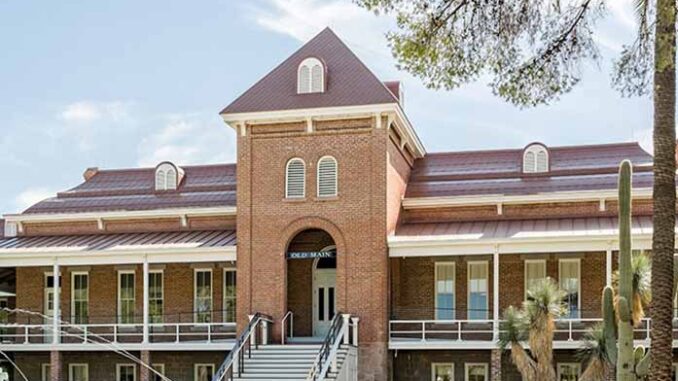
Records obtained from the University of Arizona (UArizona) revealed that its bias reporting system inspired political correctness witch hunts among students.
UArizona provided the records to a College Fix reporter after initially denying their request for all 2021 reports submitted to the Bias Education & Support Team (BEST). The Goldwater Institute, a Phoenix-based public policy research and litigation organization, sent a letter on behalf of the reporter to UArizona insisting that the university must comply with public records law.
According to the records, a group of students reported one female peer for drawing a darker-toned person picking cotton when she was given the word “cotton” to depict for an Pictionary-like online game. The group complained that they felt “deeply ashamed” of her insensitivity, and wanted the school to help her understand why her actions were hurtful and how she could grow in the future.
“While she claimed that she did not specifically denote the race of the person, the witnesses claimed that she chose a dark brown color for their skin tone,” read the complaint. “[She] claims she was only trying to make a historical reference and did not have discriminatory intent [but] several members of the zoom call told her the drawing was inappropriate.”
“Cotton” is one of the well-known “Five Cs” of Arizona’s economy, in addition to cattle, citrus, climate, and copper.
In another bias complaint, one student reported a professor for using “outdated and offensive” terms: “transsexual,” “transgendered,” and “mentally retarded” during class discussions.
“[P]rofessors should be required and expected to use the modern and correct terminology when discussing these issues, especially when there may be students in the class who have intellectual disabilities or who have friends and family who have intellectual disabilities,” wrote the student.
Another report was filed against a professor for asking a student if she had a green card after the student mentioned that her family lived in Mexico. Another report was filed against a professor who was perceived as supportive of police, failed to exhibit grief over the deaths of George Floyd and Breonna Taylor, and discussed their deaths in the context of shared meanings between cultures.
“The classroom is not an appropriate place to discuss these matters,” the complaint read. “Supporting the police openly in class during such a sensitive time in this country, as well as during Black History Month, was completely unprofessional.”
Another complaint was submitted against a student for expressing that he didn’t want to reside in the same dorm hallway as “trannies,” slang for transgender individuals.
[SEE POST HERE]
Goldwater Institute Vice President of Litigation Jon Riches told AZ Free News that they were pleased that UArizona decided to comply with the law, but troubled that a reporter had to obtain a lawyer in the first place.
“These were public records. It was troubling that they originally denied the request, particularly since they fulfilled a similar records request two years earlier,” said Riches. “Public records custodians will sometimes deny a request despite knowing that they should produce it, hoping the requestor will just go away. It shouldn’t require a lawyer to get involved. The information is public. We’re glad they did the right thing.”
The resistance of UArizona and government entities to records requests prompted the Goldwater Institute to launch an initiative to increase public records compliance: “Open My Government.”
As AZ Free News reported, the UArizona public records coordinator that denied the College Fix records request into BEST, Kim Fassl, has a professional connection with one of the six women leading BEST, or the “Core Team.”
Prior to handling public records requests, Fassl was UArizona’s associate director of residential education for student behavioral education. BEST Core Team leader Nina Pereira was Fassl’s superior at the time, serving as the director of residential education that oversees behavioral education.
BEST says it offers educational and dialogue opportunities, but doesn’t conduct investigations, issue disciplinary sanctions, or require any participation. However, BEST does pass on perceived student or faculty violations of UArizona’s nondiscrimination and anti-harassment policy to higher administrative offices, such as the Dean of Students Office, the Office of Institutional Equity, and Human Resources.
[SEE POST HERE]
Corinne Murdock is a reporter for AZ Free News. Follow her latest on Twitter, or email tips to corinne@azfreenews.com.
by Terri Jo Neff | Jul 27, 2022 | Education, News
By Terri Jo Neff |
If state lawmakers provided nearly 28 percent more funding to increase the salaries of Arizona’s public school teachers between 2018 and 2021, why did those teachers’ pay only go up 16.5 percent? And how did Arizona’s public schools spend billions of federal COVID funds?
Those are among the questions related to public school expenditures addressed in a policy report released this week by the Goldwater Institute which uses Arizona as a case study to delve into how school districts allocated COVID funds and why teachers have not seen meaningful pay increases dispute funding being made available to their district boards.
The report, “The COVID Funding Flood: How Spending Surged in Arizona’s Public School System Amid the Pandemic Era” by Matt Beienburg contains information which lawmakers, school district stakeholders, and the public can learn from when addressing future school funding issues.
Beienburg, Goldwater’s Director of Education Policy, provides data showing that the flood of taxpayer spending in response to COVID was “ostensibly meant to address the harms of the pandemic” but actually led to a massive overspending of federal funds, triggered a costly cycle of fiscal irresponsibility within K-12 public schools, and prioritized the interests of teachers’ unions “over student wellbeing.”
And during that time, the long-running pattern of public school districts increasing overall spending without meaningfully raising teacher salaries continued, according to Beienburg’s report. It should not be surprising then that district boards and administrations engaged in the same type of redirection when it came to COVID funds, the report notes.
Some key findings of the policy report are:
· Between fiscal years 2018 and 2021, Arizona lawmakers increased funding for teacher pay by 27.9 percent. But district schools provided only a 16.5 percent average teacher pay raise during that time, showing many district boards chose to use the funds for other expenditures and not what the legislators, teachers, and parents understood those funds were being used for.
· Arizona public school districts triggered a massive statewide enrollment decline of nearly 50,000 students as a result of their COVID mitigation protocols (i.e. closures, mask mandates) even as charter school enrollment rose and state and federal taxpayer funding for all public schools surged during the pandemic;
· Arizona school districts spent a significantly smaller proportion of their federal COVID funds (23.6 percent) compared to charter schools (31.3 percent) during the peak of the pandemic through June 2021. This was primarily due to a disproportionately high level of funding that districts have received from legislation but accumulated instead of spending at that time.
· The vast majority of public school districts’ expenditures of federal COVID funds for technology and school facilities upgrades occurred more than a full year after most public schools reopened for in-person learning. This suggests the funds are being primarily used for a non-COVID-related purpose. According to Beienburg’s report, the “COVID-19 pandemic ushered in an era of unprecedented spending on public K-12 schools, yet available evidence suggests that the bonanza of federal spending was almost entirely avoidable and that much of it will likely serve a very different purpose than the one originally sold to policymakers and the public.”
The report recommends that to avoid this sort of institutional failure in the future, policymakers in other states should seek to replicate the steps taken by the Arizona legislature to mandate reporting requirements on the use of all federal COVID stimulus funds.
Beienburg’s full report can be read here.
by Corinne Murdock | Jul 26, 2022 | Education, News
By Corinne Murdock |
The University of Arizona (UArizona) denied a reporter’s public records request concerning complaints received by its bias complaint system for students.
The reporter, Christian Schneider with The College Fix, submitted the records request last August. UArizona had no issue fulfilling a similar 2019 request for its bias complaint system. Overseeing the reporting system is the Bias Education & Support Team (BEST), which falls under the Dean of Students’ jurisdiction.
The Goldwater Institute, Phoenix-based public policy research and litigation organization, took up Schneider’s case. Last week, the organization requested that UArizona fulfill the records request.
UArizona Public Records Coordinator Kim Fassl claimed to Schneider that they denied his latest request based on the Family Educational Rights and Privacy Act (FERPA) as well as Arizona court precedents upholding record denials to ensure individual privacy and the state’s best interests.
“The production of these records could cause a chilling effect among future complainants and the University,” wrote Fassl.
The previous public records coordinator that fulfilled Schneider’s 2019 request, Teri Bentson, raised none of the objections issued by Fassl. The change in perspective may have to do with the connection between Fassl and one of the six women in charge of BEST: the “Core Team.”
Prior to handling public records requests, Fassl was the associate director of residential education for student behavioral education. One of BEST’s Core Team, Nina Pereira, serves as the director of residential education, which oversees behavioral education. It appears that Fassl was Pereira’s subordinate. Neither Pereira and Fassl responded to a request for comment.
Fassl has also served as a member of the UArizona Behavioral Intervention Team (BIT). Similarly to BEST, BIT has a referral form to report concerning student behaviors.
In their letter petitioning for the fulfillment of Schneider’s request, the Goldwater Institute contended that both Arizona and federal court precedent determined redaction of identifying information was sufficient for FERPA adherence. The organization added that Schneider allowed for redactions in his initial request, too.
UArizona launched BEST in October 2020 amid the racialized protests and riots initiated by George Floyd’s death less than five months before.
BEST’s Core Team has remained the same since its launch. In addition to Pereira, there’s Veda Kowalski, assistant dean of students; Beverly Perez-Mercado, organizational development specialist within the Office of Learning & Organizational Development; Judy Marquez Kiyama, associate vice provost; Whitney Mohr, civil rights investigator within the Office of Institutional Equity; and Jane Pizzolato, director of the Office of Diversity & Inclusion.
Kiyama also serves as an equity consultant for the Ada Center and Strong Start to Finish. She’s also involved with the Culturally Responsive Curriculum Development Institute (CRCDI), which represents eight colleges. Culturally Responsive Education (CRE), also known as Culturally Responsive Teaching (CRT), is synonymous with Critical Race Theory (CRT).
Corinne Murdock is a reporter for AZ Free News. Follow her latest on Twitter, or email tips to corinne@azfreenews.com.