by Matthew Holloway | Jul 18, 2025 | News
By Mathew Holloway |
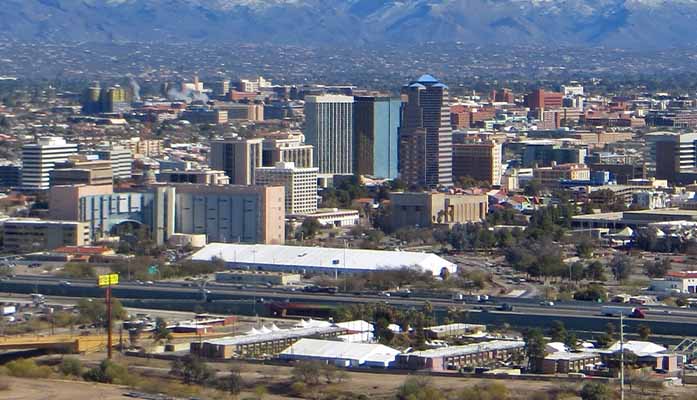
Municipal Affairs Liaison at the Goldwater Institute William Beard sat for an interview with AZ Free News to expand on an op-ed published Saturday, “Regional Transit In Tucson: Bigger Tax Bill, Worse Results?”
Beard warned in his column that as we approach 20 years of the 2006 vintage Regional Transportation Authority (RTA), only 18 of the 35 projects promised to the taxpayers of Pima County have been completed.
He wrote, “The mismanagement is staggering. Tucson’s unfinished Regional Transportation Authority (RTA) projects are estimated to be $400–$600 million short. At the current pace—roughly $50 million in spending per year—completing the work would take at least eight more years. There’s one big problem, however: the sales tax that funds the RTA is set to expire in 2026, and time is running out. Tucson officials have responded by throwing up their hands and admitting defeat, postponing four projects for inclusion in a future ‘RTA Next’ plan.”
Beard directly attributes the RTA’s financial woes and lack of productivity to a series of economic factors, exacerbated by the City of Tucson’s project mismanagement, delays, and unwillingness to shoulder the added cost burden. He explained, “Every infrastructure plan faces risks, and Pima County’s strategy was no exception. The 2008 recession slowed tax collections, and inflation has since driven construction costs well beyond the 10% buffer allowed by law. Tucson, however, made matters worse by repeatedly altering project scopes to appease neighborhood groups, further delaying timelines and driving up costs. Each time, Tucson failed to take responsibility by allocating more supplemental resources. Instead, city leaders appeared to hope the problem would simply go away.”
He added, “Tucson’s leaders clearly misunderstand the purpose of the RTA, viewing it more as a construction manager responsible for overruns than a basic funding mechanism distributing tax dollars. Each city was responsible for designing and building its own projects. Any change in scope—additional lanes, neighborhood preferences, unforeseen costs—was theirs to fund, not the RTA’s.“
Speaking with AZ Free News, Beard elaborated:
“I’m from Tucson. I grew up there, so this is a little personal for me. But there’s a history of kicking the can down the road by the community writ large, leadership, etc. A ‘Why deal with it today when we can postpone to tomorrow’ attitude. And it’s only when things truly reach a critical point that something happens politically.
“The powers that be down there would prefer to kind of maintain the status quo. They don’t want their boat rocked. They don’t want anybody coming in and potentially undermining their political power, so let’s maintain things as they are.
“To the point of the article, the problem fundamentally is two things. One, was it a failure to plan or a plan to fail? And number two, remember when voters vote on these long-term things, you always end up with a situation where the compromises politically that were made in order to get the thing past the voters that were approved in the beginning, political leadership that are elected further on into the cycle, they don’t believe that they are obligated to follow the wishes of whatever compromises were made in the first place.”
As for the political fallout, Beard predicted that an attempt from Tucson Mayor Regina Romero to extricate the city from the RTA, as she threatened in 2022, might not “end well for her politically speaking.”
He noted, “The problem is she is basically telling all of the voters across Pima County, not just the other communities, but the voters throughout Pima County, including her own voters, ‘eff you’. And I don’t think, given what happened with (Proposition) 414 a few months ago in the city of Tucson, I don’t think that will end well for her politically speaking.”
City voters soundly rejected Prop 414 or the “Safe & Vibrant City” proposition, which would have enacted a half-cent sales tax increase for the next 10 years to fund various city projects. City Manager Tim Thomure told AZCentral that the Proposition’s rejections sent city planners “back to the drawing board [to] sharpen our pencils and work it out so that we live within the budget that will be available to us.”
Beard continued saying that Romero, “is, of the opinion, and there are other people, including Supervisor Hines on the Board of Supervisors, of the opinion that the City can basically go its own way and make its own sales tax. They’re forgetting, of course, that if that happens, roughly… a third of the total revenue that would come to the region would disappear because it would revert back to the state legislature to determine whether or not those funds get distributed based on the regional planning that southern Arizona currently enjoys.”
He added that Tucson’s deviation from the RTA planning adopted in 2006 could leave the city open to legal consequences. He observed, “I’m not an attorney, so I don’t give legal advice, but I spent 30 years in the contracting world and I’ve read enough of the documents, the intergovernmental agreements, the procedures, policy procedures of the RTA that was adopted in 2006, all of them keep referring to voter language, you know, the amount of money that was set aside by the voters that could go to these projects.
“Under state law, you can vary that up to 10 % overrun, because it’s the vagaries of construction, that happens. But anything above and beyond that, you’ve got to go back to the voters in order to get their approval to make that kind of scope change. Again, I’m not an attorney, but I can read what’s in the language and it’s pretty clear.”
According to Beard, the RTA board did send its new legal counsel a question with the hope of getting an answer by the end of July at their next formal board meeting, asking: “What is the legal obligation of the RTA board to complete all of the projects if the revenue has not come in to satisfy all of the needs that the voters … determined 20 years ago?”
He concluded: “To be blunt, the city of Tucson’s got nobody to blame but themselves. You can point fingers at the RTA all you want to. You can point fingers to the leadership. The reality is in the numbers; the math is the math. And for all of these projects the City of Tucson kept postponing, it only dramatically increased the amount of money they would have to bring to the table, even assuming the RTA never had a revenue shortfall.
“Because the City of Tucson kept postponing these projects, the costs were going through the roof and there was no way legally for the RTA to step forward and say, oh yeah, we’ll cover those extra costs. That’s not possible.”
Matthew Holloway is a senior reporter for AZ Free News. Follow him on X for his latest stories, or email tips to Matthew@azfreenews.com.
by Matthew Holloway | Jul 8, 2025 | Economy, News
By Matthew Holloway |
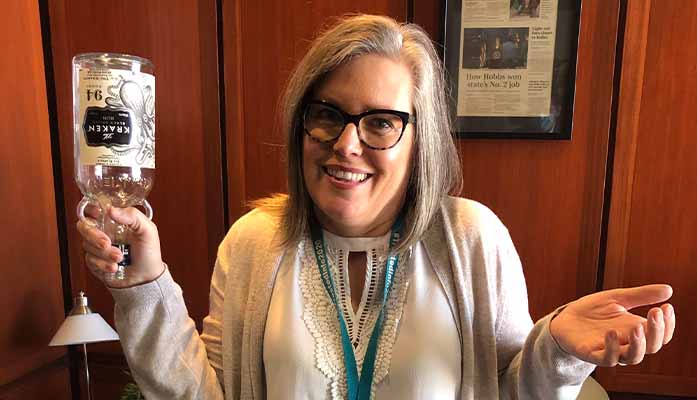
Although the causes are attributed to various factors by different sources, largely dependent on political leanings, one irrefutable fact emerged on Monday. During Governor Katie Hobbs’ tenure, Arizona has plunged from a ranking of 4th place in the nation in job growth, to 47th.
On Monday, Russ Wiles, writing for the Arizona Republic noted, “AZ no longer ranks near the top for job creation,” and asked rhetorically, “What went wrong?”
Citing figures from the U.S. Bureau of Labor Statistics, the Republic reported that Arizona now ranks in 47th place among the fifty states, just ahead of Massachusetts, West Virginia, and Iowa. The report cited a net loss of 1,900 jobs year-to-date in 2025.
In 2020, at the height of the first Trump Administration and under former Gov. Doug Ducey’s tenure, Arizona ranked third in the nation for economic momentum.
In 2019, the Phoenix Metro area even beat out the largest cities in California, Texas, and Florida to take the #1 slot for job growth.
More recently, in a March 2024 statement, Hobbs touted that Arizona ranked 4th in job growth, and tripled the national average in workforce growth. In the pronouncement, which has aged quite poorly, the governor even dubbed herself “Governor Katie Jobbs,” and credited the “81,800 jobs created,” to “investments in housing, healthcare, infrastructure, childcare, and education.”
Meanwhile, a Goldwater Institute op-ed in January, predicting an acrimonious budget battle that materialized over the next five months, pointed out Hobbs’ askew priorities. While the beleaguered Democrat focused on defeating Arizona’s popular Empowerment Scholarship Account program (ESA) and presided over a surge in crime, her failure to account for $800 million in statutorily required Medicaid spending and an affordable housing crisis represented “fiscal mismanagement at its worst.”
AZCentral’s Russ Wiles, in working to answer “What went wrong?” addressed one factor in the decline as “slowing migration, with fewer people moving here from other states,” which dovetails with the affordable housing issue and the Arizona Department of Water Resources (ADWR) rule cracking down on new developments.
Lee McPheters, director of the Economic Outlook Center for Arizona State University’s W. P. Carey School of Business, noted to the outlet, “With domestic migration trending down and international migration dropping off a cliff in 2025, the impetus for population growth has diminished and undoubtedly plays a role here.”
In May, Goldwater launched a legal battle against the Hobbs administration over the ADWR’s controversial new rule imposing the requirement of a 100-year “unmet demand” groundwater supply rule across wide swaths of the state, essentially choking out new housing development.
In addition, as Wiles notes, construction employment has been further weakened by rising material costs, with overall job growth stunted by tariff uncertainty and high interest rates.
Large scale layoffs, such as Nikola Corp.’s 855 jobs lost to its February bankruptcy and Joann Fabrics’ layoffs of 374 employees in January, also factored in heavily. While not directly attributable to Hobbs’ actions, the losses drew a spotlight to a lack of decisive action from Hobbs to attract new employers to Arizona in the short term.
Another factor, unmarked by AZCentral however, has been the $1.6 billion deficit under Hobbs which forced budget cuts, including Department of Economic Security layoffs that directly contributed to the 1,900 net job loss. As Common Sense Institute of Arizona (CSIAZ) explained in June, rather than being caused by Arizona’s flat tax, the shortfall was caused by a massive increase in spending under Hobbs.
“If spending had followed historical trends, Arizona would have had a $4.3 billion surplus rather than a $1.6 billion cash shortfall last year,” CSIAZ wrote.
Hobbs’ vetoes could present the most egregious contribution she’s made. By vetoing 178 total bills in 2025, 73 in 2024, and 143 in 2023, totaling 424 to date, or approximately a third of all bills sent to her desk, Hobbs has prevented the implementation of a comprehensive policy for economic growth from either her administration or Republican leaders in the state legislature from materializing.
Ultimately, Hobbs’ unwillingness to work productively with Republican lawmakers and her active obstruction of legislation to reduce tax burdens, ease regulation, and stimulate job growth may have proven to be as prominent in Arizona economics as it has been in politics. And as prominent Democratic President Harry Truman famously said, “The buck stops here.”
Matthew Holloway is a senior reporter for AZ Free News. Follow him on X for his latest stories, or email tips to Matthew@azfreenews.com.
by Matthew Holloway | Jun 27, 2025 | News
By Matthew Holloway |
As the City of Scottsdale stands poised to enact a staggering $2.2 billion budget, city leaders must now contend with a new lawsuit from the Goldwater Institute challenging the city’s controversial sales tax increase.
As of the council’s June 10th meeting, the city has reportedly agreed to spend up to $90,000 in taxpayer dollars on the outside law firm Osborne Maledon to defend it.
In June 2024, the Goldwater Institute challenged the newly approved 0.15% sales tax, which was pitched to voters as a “replacement tax,” for an unrelated, expired 0.2% Land Acquisition Tax.
Goldwater won that legal battle, “forcing the city to admit that it was raising, rather than lowering taxes,” according to a press release.
Under the Arizona Constitution, such a tax hike must be approved by at least 60 percent of voters, a threshold the city did not meet in the 2024 election. Scottsdale leaders, however, have enacted the tax.
On Friday, June 3rd, the Goldwater Institute filed a lawsuit against the city, panning the tax as “unconstitutional.” It stated that, “Supermajority rules help protect minority voices, prevent special-interest-driven decisions, and force governments to clean up their budgets before reaching for more of your money. Just like any responsible household, city, county, and state officials should look at how they’re spending first—not just always demand more, regardless of what the law and economic commonsense demand.”
Scott Day Freeman, writing for Goldwater added, “Scottsdale is ignoring the state’s constitutional mandate—requiring us to go to court yet again.”
City Attorney Sherry Scott’s summary to the city council stated, “The budget implications of not defending this case are $25 million per year for the next 30 years.” The law firm, earning approximately $912 per hour at the taxpayer’s expense, is fighting the Goldwater Institute’s efforts to seek an injunction that would stop the tax from taking effect on July 1st, along with a declaratory judgment that the tax is unenforceable.
Freeman said, “Our clients seek only a declaration that the tax is unlawful and an injunction to stop it being enforced. Our clients do not seek a refund or damages.”
Scottsdale spokesman Kelly Corsette stated, “The city is confident its ballot item and election result comply with the Arizona Constitution and all applicable election laws.” He claimed that “the 60% tax approval threshold does not apply to local ballot measures: it is in a section of the constitution that regulates statewide initiatives and referendums, not in the separate section of the constitution applicable to city initiatives and referendums.”
In its press release, the Goldwater Institute maintained that, “In 2022, Arizonans strengthened those protections by amending the Constitution to require any tax passed through a citizen initiative or referendum receive at least 60 percent approval to become law—a requirement that applies not just to statewide, but also to local ballot initiatives.”
Matthew Holloway is a senior reporter for AZ Free News. Follow him on X for his latest stories, or email tips to Matthew@azfreenews.com.
by AZ Free Enterprise Club | Jun 17, 2025 | Opinion
By the Arizona Free Enterprise Club |
One of President Trump’s most important campaign promises was to bring accountability and transparency to federal government spending. Under the newly created Department of Government Efficiency (DOGE), his administration didn’t waste any time getting to work.
Within weeks of Trump’s inauguration, DOGE had uncovered billions of dollars in waste and abuse of taxpayer funds under the United States Agency for International Development (USAID). Here are just a few of the ways the Trump administration discovered USAID was spending your tax dollars:
- $1.5 million to “advance diversity, equity, and inclusion in Serbia’s workplaces and business communities.”
- $2 million for sex changes and “LGBT activism” in Guatemala.
- Millions to EcoHealth Alliance — which was involved in research at the Wuhan lab.
- $1 million to boost French-speaking LGBTQ groups in West and Central Africa through the State Department.
- $15 million for condoms to the Taliban through USAID.
This list barely scratches the surface of the waste and abuse that was discovered. But now, it appears it’s not just the federal government that’s been throwing your money around to outlandish woke initiatives. Arizona may have its very own USAID scandal…
>>> CONTINUE READING >>>
by Matthew Holloway | May 27, 2025 | News
By Matthew Holloway |
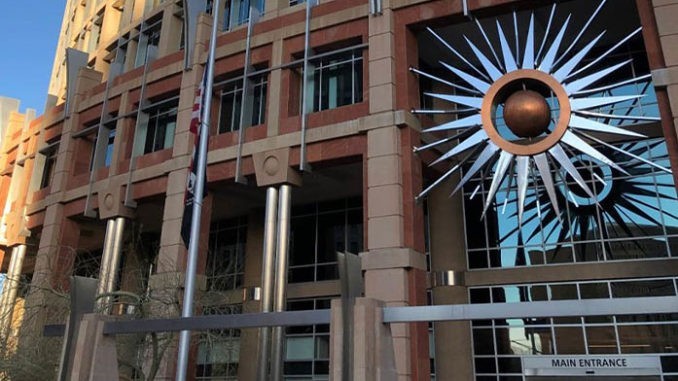
An investigation by Republican Reps. David Marshall, Walt Blackman, and Quang Nguyen found that the City of Phoenix has distributed over $28.5 million of taxpayer funding to more than 100 private organizations with a shocking lack of oversight. Now, the Goldwater Institute is asking Arizona Attorney General Kris Mayes to intervene and stop what it termed an “unlawful spending spree.”
Citing the legislative findings, the Goldwater Institute alleges that “Organizations like the Phoenix Film Foundation, Phoenix Pride Inc, Mexican Baseball Fiesta LLC, the Arizona Science Center’s Galaxy Gala, and many others received subsidies—sometimes simultaneously by multiple departments—under questionable labels like ‘Sponsorships,’ ‘Grants and Subsidies,’ ‘Emerg[ency] Assist[ance],’ or ‘Miscellaneous.’ The city has no lawful authority to spend public money in this way.”
Parker Jackson, a staff attorney at the Goldwater Institute, said in a statement, “This effectively turns large portions of the city’s budget into a patchwork of slush funds that special interests can access in the sole discretion of a single city employee. Amazingly, the city ‘does not track donations by nonprofit status,’ so it does not know exactly how much taxpayer money has been funneled out through this opaque process.”
The reported “Sponsorships,” “Grants and Subsidies,” “Emerg[ency] Assist[ance],” or “Miscellaneous” donations run afoul of the Arizona State Constitution’s Gift Clause according to Jackson in a letter to the Attorney General co-signed by Jon Riches, the Goldwater’s Vice President for Litigation.
Riches wrote, “Most—if not all—of these expenditures appear to violate the Arizona Constitution’s Gift Clause, which strictly prohibits use of public funds to benefit private, special interests. Not only is it doubtful that these allocations serve a legitimate public purpose, but there also appears to be no direct or measurable consideration received in return for this use of public resources.”
The Arizona Constitution under Article 9 Section 7 states, “Neither the state, nor any county, city, town, municipality, or other subdivision of the state shall ever give or loan its credit in the aid of, or make any donation or grant, by subsidy or otherwise, to any individual, association, or corporation, or become a subscriber to, or a shareholder in, any company or corporation, or become a joint owner with any person, company, or corporation, except as to such ownerships as may accrue to the state by operation or provision of law or as authorized by law solely for investment of the monies in the various funds of the state.”
The Goldwater attorneys have called on Mayes to “[e]njoin the illegal payment of public monies” and to “[r]ecover illegally paid public monies,” under A.R.S. § 41-194.01 and A.R.S. § 35-212 respectively.
Jackson wrote in a Goldwater Institute press release that the finding by the Arizona legislature may seem familiar to keen observers: “If treating taxpayers as financiers for private entities—even controversial and ideological ones—sounds familiar, that’s because it mirrors what has been exposed throughout the federal government this year. For example, the U.S. Agency for International Development (USAID) was aptly described as ‘a slush fund for leftist priorities’ after the White House exposed decades of waste and abuse in that agency.”
In a video posted to X, Jackson said, “At the end of the day, public dollars should be used for public purposes… not to enrich special interests at a bureaucrat’s whim.”
Matthew Holloway is a senior reporter for AZ Free News. Follow him on X for his latest stories, or email tips to Matthew@azfreenews.com.