by Matthew Holloway | Apr 4, 2026 | Economy, News
By Matthew Holloway |
The U.S. added 178,000 jobs in March, with gains driven by the private sector, while federal employment declined and labor force participation edged slightly lower, according to the Joint Economic Committee.
The report shows job growth rebounded following a weaker February. Private employers added 186,000 jobs, while government employment declined by 8,000 positions.
In a statement posted to X, the JEC Republicans announced the findings, “Beating Expectations!”
The unemployment rate decreased slightly from 4.4 percent in February to 4.3 percent in March. The labor force participation rate declined by 0.1 percentage points to 61.9 percent.
The broader U-6 measure of unemployment, which includes underemployed and marginally attached workers, increased from 7.9 percent to 8.0 percent.
Revisions to prior months showed weaker job performance than initially reported in February. Job losses for that month were revised downward by 41,000, from a decline of 92,000 to a decline of 133,000 jobs. January’s figures were revised upward by 34,000, bringing total job gains for that month to 160,000.
CNN Senior Reporter Matt Egan told audiences Friday, “The job market bounced back in a big way in March. And that is good news. Really, blowing away expectations.”
Wage growth continued on a year-over-year basis. From March 2025 to March 2026, average nominal weekly earnings for all employees on private nonfarm payrolls increased by 3.52 percent, with hourly earnings rising by the same percentage.
For production and nonsupervisory employees, average weekly earnings increased by 3.69 percent, while hourly earnings rose by 3.38 percent over the same period.
Sector-level data showed gains concentrated in specific industries. From February to March, private education and health services added 91,000 jobs, while leisure and hospitality added 44,000.
Losses were recorded in federal government employment, which declined by 18,000 jobs, and in financial activities, which fell by 15,000.
On a year-over-year basis, private education and health services added 663,000 jobs, and leisure and hospitality added 176,000. Federal government employment declined by 330,000 over the same period, while trade, transportation, and utilities decreased by 154,000 jobs.
Job openings declined during the most recent reporting period. From January to February 2026, total nonfarm job openings decreased by 358,000 to 6.88 million. The job openings rate declined by 0.2 percentage points to 4.2 percent.
Sector data for job openings showed increases in other services, which added 77,000 openings, and professional and business services, which added 64,000. Declines were led by leisure and hospitality, down 213,000 openings, and private education and health services, down 78,000.
In a statement, White House spokesman Kush Desai said, “The March jobs report blew out expectations with strong construction job growth and a surge in manufacturing job creation as trillions of dollars in investments begin to materialize. America remains on a solid economic trajectory thanks to President Trump’s proven agenda of tax cuts, deregulation, tariffs, and energy dominance. Americans can rest assured that after the short-term disruptions of Operation Epic Fury are behind us, America’s economic resurgence is set to only accelerate.”
Matthew Holloway is a senior reporter for AZ Free News. Follow him on X for his latest stories, or email tips to Matthew@azfreenews.com.
by Staff Reporter | Apr 3, 2026 | News
By Staff Reporter |
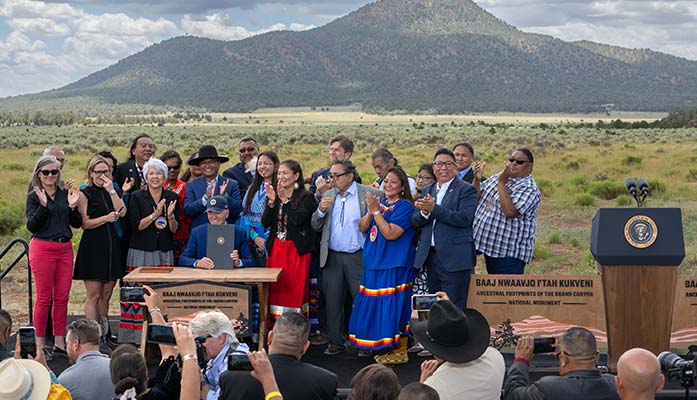
A federal appeals court rejected Republican lawmakers’ effort to undo a million-acre monument near the Grand Canyon.
The Ninth Circuit Court of Appeals upheld former President Joe Biden’s designation of the monument. Biden issued a proclamation establishing the monument on land surrounding the Grand Canyon National Park. The former president justified its creation as a means of conservation and deference to Native American tribe history.
The acreage is now referred to as the Baaj Nwaavjo I’tah Kukveni Ancestral Footprints of the Grand Canyon National Monument.
The monument name comes from two of the Native American tribes who lived in the region: the Havasupai (Baaj Nwaavjo, meaning “where Indigenous peoples roam,” and I’tah Kukveni meaning “our ancestral foot prints”).
The designation further shielded the acreage from mining operations, first prohibited in 2012 under a Department of Interior (DOI) ban lasting until at least 2032.
The Bureau of Land Management (BLM) and U.S. Forest Service jointly manage the monument.
The initial announcement prompted lawmakers to call Biden’s proclamation a “dictator-style land grab” and “government overreach” that had the potential to impact national security.
Arizona legislative leaders, State Treasurer Kimberly Yee, Mohave County, and the towns of Colorado City and Fredonia sued to reverse the designation in 2024.
The three local governments argued the monument would hurt the potential of future tax revenues, pending the DOI ban lapsing after 2032. Colorado City also argued the water supply coming from an aquifer under the monument could be infringed if federal actors decided to restrict it.
Arizona lawmakers and the state treasurer argued the monument designation limited their ability to sell, lease, set royalty rates, and set values for the land. They also argued the designation forced them to divert resources to address the effects of the monument.
As to the ban on uranium mining, all against the designation claimed economic harm would occur due to the potential for higher energy prices in the future.
The Ninth Circuit Court of Appeals rejected all of those arguments in a ruling issued on Wednesday. The judges found their claims to be speculative.
Apart from the physical land management provided by BLM, the Baaj Nwaavjo I’tah Kukveni Ancestral Footprints of the Grand Canyon National Monument is overseen by a Monument Advisory Committee (MAC).
The MAC, established in the fall of 2024, has 15 members:
- Luke Thompson, Arizona Game and Fishing Department representative;
- Jason Chavez, Gov. Katie Hobbs’ tribal affairs director;
- Patrice Horstman, Coconino County Board of Supervisors member;
- Angelita Bulletts, BLM district manager and Paiute tribal member;
- Bennett Wakayuta, Hualapai tribal member;
- Lena Fowler, Coconino County Board of Supervisors member and Navajo tribal member;
- Forrest Radarian, a high school science teacher representing outdoor recreations;
- Amanda Podmore, a conservationist with Grand Canyon Trust;
- James “Jim” Unmacht, executive director of Arizona Sportsmen for Wildlife Conservation;
- Kathryn Leonard, state historic preservation officer with Arizona State Parks and Trails;
- Clare Aslan, associate professor and director of Northern Arizona University’s school of earth and sustainability;
- Sherre Finicum, a rancher;
- Clarinda Vail, mayor of the town of Tusayan; and
- Members of the public Dale Barlow and Lydia Breunig.
Their terms are set to expire in 2027 or 2028. It doesn’t appear that the MAC has conducted any meetings.
AZ Free News is your #1 source for Arizona news and politics. You can send us news tips using this link.
by Matthew Holloway | Apr 3, 2026 | News
By Matthew Holloway |
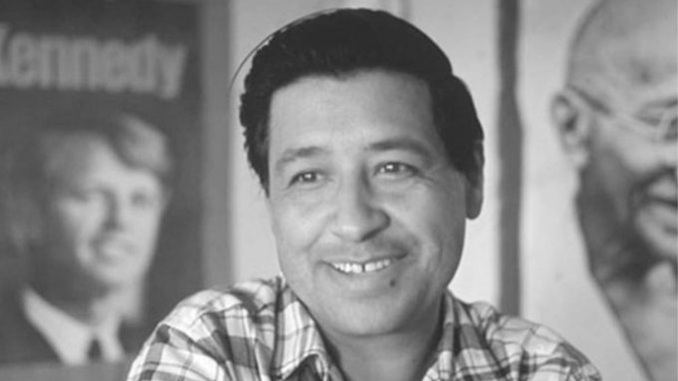
Arizona Governor Katie Hobbs has signed a bipartisan emergency measure to repeal the state law recognizing César Chávez Day, following the legislature’s action on Monday.
House Bill 2072, sponsored by Rep. Lisa Fink (R-LD27), removes statutory recognition of the March 31 holiday honoring the late union leader following New York Times reporting on allegations that he sexually abused women and minors during his tenure.
The bill passed the Arizona House with a 48-8 vote and cleared the Arizona Senate with a 29-1 vote, with State Sen. Sally Ann Gonzales (D-LD20) casting the sole dissenting vote.
“Once these reports came to light, there was no excuse for leaving this honor in Arizona law,” Fink said. “The women and children Chavez harmed should not have to watch the state continue honoring his name. Repealing this law is the proper response. It respects the victims he left behind and removes a state honor that should not remain in place.”
The legislation advanced following recent reporting on allegations involving Chávez during his tenure as president of the United Farm Workers.
“Arizona law should not honor a man tied to sexual abuse against children and violence against women,” House Speaker Steve Montenegro (R-LD29) said in a statement. “The House acted today because victims deserve better, the truth cannot be ignored, and state honors carry meaning.”
Montenegro urged Hobbs to sign the bill, stressing bipartisan support in both chambers of the legislature.
Hobbs said in a statement on Wednesday that she is “deeply troubled by the recent revelations about César Chávez.”
“After learning the troubling news, I decided not to recognize César Chávez Day this year and have signed legislation to repeal the observance of March 31st as César Chávez Day. While I know signing this bill won’t erase the pain, my thoughts are with the victims and everyone affected. I’m working with community leaders to find meaningful ways to honor and celebrate our farmworker community and their continued contributions to the state of Arizona. “
Addressing the Arizona farmworkers Chávez once represented, Hobbs said, “I am incredibly grateful for our hardworking farmworkers. Their resilience is evident in the lettuce fields of Yuma and the orange-picking farms of Mesa. Arizona’s farmworkers are the backbone of our state’s economy. I remain committed to supporting them and ensuring their contributions are recognized with dignity and respect.”
A March 2026 report by The New York Times detailed allegations from multiple women who said Chávez engaged in sexual misconduct, including claims that he “used his power within the organization to exploit women and girls.”
House Republicans stated in a release that “Arizonans should not be forced to celebrate a figure whose legacy is now under serious question,” adding that the measure reflects “a responsibility to ensure state-recognized holidays align with values supported by the public.”
The emergency legislation, an amended version of HB 2072, repeals sections of the Arizona Revised Statutes that establish the holiday and includes an emergency clause that makes the repeal effective immediately upon the governor’s signature. The bill text specifies that it “repeals section 1-301, Arizona Revised Statutes,” which designates César Chávez Day as a state holiday.
In a March 30 letter to Governor Hobbs, Gonzales urged a veto of the measure, arguing the emergency clause is unconstitutional.
“House Bill 2072 is not an emergency, and it lacks the constitutionally required section that explains why it is necessary to preserve the public peace, health, or safety,” Gonzales wrote. She added that the bill “denies the people of Arizona their constitutionally protected right to direct democracy via referendum.”
Gonzales also called on state leaders to pursue recognition of farmworkers’ contributions through an alternative designation, writing that lawmakers should consider “renaming Dr. Cesar Estrada Chavez Day” rather than eliminating it entirely.
Despite those objections, the bill received the supermajority required for an emergency clause.
Matthew Holloway is a senior reporter for AZ Free News. Follow him on X for his latest stories, or email tips to Matthew@azfreenews.com.
by Staff Reporter | Apr 2, 2026 | News
By Staff Reporter |
Arizona Attorney General Kris Mayes’ former division chief was sentenced to probation for theft on Wednesday.
Vanessa Paice Dailey (formerly Hickman) stole a misdelivered package containing $40,000 in jewelry last May. Out of all the jewelry in the package, Dailey failed to return a diamond bracelet worth $2,400. The package belonged to one of Dailey’s neighbors.
Records reflected that Dailey had sold an identical diamond bracelet on Poshmark for $750. As part of her sentencing, Dailey was ordered to pay that money back.
The attorney general’s office placed Dailey on administrative leave in November; shortly after, Dailey resigned.
The name change from Hickman to Dailey reflected the finalization of her divorce, which occurred when she was placed on leave. It was during those proceedings that Hickman admitted to attending an alcohol abuse outpatient treatment program while working full-time for Mayes.
Dailey pleaded guilty last month to the charges of theft and facilitation to commit trafficking in stolen property.
Not only did Mayes let Dailey go under controversial circumstances, she hired her under dubious circumstances as well.
The city of Peoria warned Mayes about hiring Dailey back in 2023. City leaders alleged Dailey, who became their city attorney in 2018, was guilty of serious misconduct to include fraud.
Mayes dismissed the warning as a “political stunt.”
The city later sued Dailey, accusing her of paying herself a six-figure severance to which she wasn’t entitled. That lawsuit is ongoing. Dailey filed a countersuit, which the Maricopa County Superior Court dismissed.
Dailey’s work as city attorney can be tied to one high-profile murder case that occurred this year.
As AZ Free News reported, it was under Dailey that a man released from a weapons charge later committed the widely-reported deadly shooting of a man at a Phoenix gas station in January.
City of Peoria prosecutors dismissed a deadly weapons charge against Deondre Stephen Franklin, 25, in 2020. Franklin was under 21 years old at the time. The court allowed Franklin to undergo substance abuse evaluation and education instead of jail time.
The murder case against Franklin is ongoing.
Dailey’s arrest and other key events have prompted Arizona’s legislative leaders to scrutinize Mayes publicly.
Arizona Senate President Warren Petersen (R-LD14), attorney general candidate, accused Mayes of maintaining a culture of misconduct, corruption, and political weaponization.
“Mayes’ office had been warned by the city of Peoria nearly two years earlier about serious allegations against Hickman — including fraud, conversion, and breach of fiduciary duty — yet Mayes kept her in a position of authority,” said Petersen.
Mayes also faced criticism over her ongoing prosecution of the 2020 electors for Trump. Republican leaders say the timeline connecting donations from the Democratic Attorneys General Association and key actions undertaken by Mayes in the case amounted to corruption.
Rep. Abraham Hamadeh (R-AZ08) asked the Department of Justice (DOJ) to investigate those appearances of bribery and prosecutorial misconduct.
“Many of the individuals involved in this scheme have engaged in highly questionable activity, and as I wrote in my letter to Attorney General Bondi, their rogue and unethical conduct is not isolated to Arizona,” said Hamadeh. “As a former prosecutor, it is unimaginable to me that these officers of the court allegedly conspired to deny citizens their fundamental constitutional rights. Yet, it appears that is exactly what happened.”
That request was made in November. The DOJ has not announced any investigation into Mayes.
AZ Free News is your #1 source for Arizona news and politics. You can send us news tips using this link.
by Ethan Faverino | Apr 2, 2026 | News
By Ethan Faverino |
Senate Health and Human Services Committee Chair Carine Werner (R-LD4) will hold the final Department of Child Safety (DCS) oversight hearing of the legislative session on Monday, April 6, at 9 a.m. The hearing caps a months-long investigation into systemic failures that left vulnerable Arizona children unprotected despite repeated contacts with the child welfare system.
The oversight effort, launched after several high-profile tragedies, exposed critical breakdowns in how DCS handles reports of abuse, coordinates with partners, and responds to warning signs.
Among the cases that drew urgent attention were Emily Pike, a 14-year-old who ran away from a group home and was later found dead, Rebekah Baptiste, a 10-year-old who died after multiple reports of abuse were filed but not addressed with sufficient urgency, and Zariah Dodd, a 16-year-old in DCS care who was reported missing and later found murdered in Phoenix.
In each instance, the children had prior involvement with the system, yet missed opportunities for timely intervention, poor information sharing, and delayed action contributed to fatal outcomes.
“This investigation made one thing painfully clear. People were raising red flags, but the system wasn’t connecting the dots or acting fast enough,” stated Senator Werner. “These children were not invisible. They were known. Reports were made. And still, the response fell short. That cannot happen again.”
Through a series of stakeholder meetings and hearings involving DCS officials, law enforcement, child welfare experts, and affected families, Senator Werner’s committee identified key gaps in coordination, documentation, reporting, and response times. That work has culminated in a targeted package of bipartisan reform bills designed to prevent similar failures.
- SB 1125 strengthens coordination between DCS and Arizona’s Indian tribes by requiring efforts to establish memoranda of understanding. These agreements focus on sharing best practices in intake, investigations, placement, case management, and service coordination; designating tribal liaisons; and providing tribes access to regulatory actions, licensing sanctions, and safety violations involving group homes where tribal children are placed.
- SB 1126 improves information sharing between schools and DCS investigators. In compliance with federal privacy laws, schools must, upon request, identify other schools that have sought a student’s records, note any withdrawals, and provide relevant information or records during active abuse or neglect investigations. The bill also prohibits schools from barring employees from speaking with DCS caseworkers.
- SB 1127 tightens mandatory reporting requirements, stipulating that individuals with a duty to report suspected abuse or neglect who have direct knowledge must report immediately to DCS and may not delegate responsibility to another person.
- SB 1174 enhances DCS’s centralized intake process by requiring hotline workers to compile and review a child’s full history—including prior hotline calls and investigations involving the child and siblings—so patterns of concern are immediately visible. Workers must also review recent non-report calls when assessing new allegations.
- SB 1175 mandates that DCS caseworkers photograph children during every contact in an abuse or neglect investigation and maintain those images in the case file. When developing safety plans, caseworkers must review photos to identify any decline in the child’s appearance or health.
- SB 1496 strengthens legal protections and representation for children in dependency cases, including provisions addressing the Department’s role as representative payee for benefits and efforts to identify more appropriate non-DCS individuals for that responsibility.
- SB 1631 ensures that children who are alleged victims of sexual abuse receive a forensic interview conducted by a trained professional immediately or within 72 hours of the report. The requirement includes specific definitions of sexual abuse and allows documented good cause exceptions for limited delays, such as the child receiving inpatient care or not being located.
Presentations at Monday’s hearing will feature insights from Casey Family Programs, a national nonprofit dedicated to improving child welfare and reducing unnecessary foster care placements; Collaborative Safety, which partners with agencies to enhance child protection practices and lower risks; and an update from the Arizona Department of Child Safety on policy changes implemented since the investigation began.
“The reforms we’re advancing are about making sure information is shared, warning signs are taken seriously, and experienced professionals step in immediately when a child is in danger,” added Senator Werner. “When a child’s life is on the line, there is no room for delays, confusion, or missed communication.”
Ethan Faverino is a reporter for AZ Free News. You can send him news tips using this link.
by Matthew Holloway | Apr 2, 2026 | Economy, News
By Matthew Holloway |
Arizona households are carrying higher debt, seeing declining credit scores, and falling behind on payments at rates above the national average, according to a new analysis from the Common Sense Institute of Arizona (CSI).
The report, which examines credit data and financial trends, found that Arizona’s average credit score dropped by seven points in 2025, placing the state 30th nationally with an average score of 666.
The findings also show long-term growth in household debt. Since 2003, per capita debt in Arizona has increased by 129%, reaching approximately $74,000—one of the largest increases among U.S. states.
Across major categories, Arizona borrowers carry higher balances than the national average. Mortgage debt per capita is 22% higher, while auto loan balances are 7% higher and credit card debt is 8% higher, according to the report.
Missed payments are also more common in Arizona. The report found higher delinquency rates at multiple stages, including accounts 30, 60, and 90 days past due, as well as higher levels of derogatory marks on credit histories compared to national benchmarks.
The analysis also includes a measure of “Household Liquidity Resilience” that assesses households’ ability to withstand financial stress. By that measure, Arizona households are estimated to be 23% less prepared for financial disruptions than the national average. The report identifies the source of this unreadiness emerging from “generally higher than average debt, higher change of delinquency, and a lower cash cushion than the average U.S. household.”
Zach Milne, senior economist at CSI, said the data reflects ongoing financial strain tied to rising costs and borrowing conditions.
“Arizona households are facing residual financial pressure from post-pandemic inflation on top of higher borrowing costs, which continue to strain budgets,” Milne said. “Declining credit scores, rising delinquency rates, and above-average debt levels all point to broader affordability challenges across the state.”
He added, “As households absorb higher costs for housing and other essential expenses, many are becoming more vulnerable to financial shocks and less financially resilient.”
The report compares Arizona’s credit and debt trends to national data, highlighting differences in borrowing levels, repayment patterns, and financial stability indicators.
Matthew Holloway is a senior reporter for AZ Free News. Follow him on X for his latest stories, or email tips to Matthew@azfreenews.com.