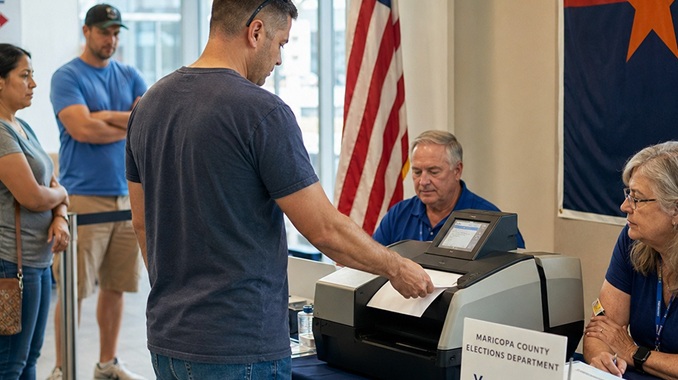
Maricopa County is transitioning dozens of election sites while early voting is underway.
The Board of Supervisors and Recorder entered an agreement to transition 46 election sites from the recorder’s office to the board by Election Day on November 3.
BOS Elections Dept presentation on 2026 general election “Transition Plan”
The leadership teams from Recorder’s Office & Board of Supervisors agreed to Vacate the lawsuit rulings.
46 election sites will be transitioning from Recorder’s Office to BOS by Nov 3rd Election Day. pic.twitter.com/o6vCZTsAeP
— Thomas Galvin: Maricopa County Brd of Supervisors (@ThomasGalvin) October 19, 2026
The board discussed the transfer during its informal meeting on Monday. It is the outcome of a settlement agreement between the county recorder and board to vacate court rulings in the former’s lawsuit against the latter over election roles and responsibilities.
The 46 voting locations will be transitioned from early voting to emergency voting sites. The county aims to accomplish each site transition within 45 to 90 minutes.
Scott Jarrett, director of elections for the county, said during Monday’s meeting that he was “very confident” that the county would experience a “smooth transition.”
Under the agreement, Jarrett said, the board and recorder won’t share election equipment. Jarrett said the transition of equipment and sites reflected best practices for chain of custody and security.
“The reason why we’re doing this is, not only was it part of the settlement agreement, but this is a principle that is established in business practices, in government,” said Jarrett. “So that’s one of the main reasons why we’re not sharing this equipment: it’s to adhere to the [principle of] least privilege[.]”
Ballot-on-demand printers, check-in stations, and corresponding cabling will be swapped upon transition. Only non-technical equipment will stay, like voting booths, signage, and tables.
Taylor Kinnerup, communications personnel for Supervisor Thomas Galvin, posted a statement claiming that this refusal to share was because the transfer of site equipment was required.
The language of the agreement doesn’t include a requirement for transition and even supports shared equipment, as noted by Merissa Caldwell, EZAZ chairwoman. The agreement does state that the board was required to give the recorder ownership of early voting equipment, and that the board handles the procurement, deployment, and control of equipment and supplies.
The agreement also allowed for the board and recorder’s office to purchase early voting site equipment jointly.
Despite the arrangement that took place this week, the supervisors and recorder have not been operating on friendly terms.
Some of the supervisors, including board leadership, attacked Recorder Justin Heap last week for adhering to federal policy and filing a complaint about suspicious activity witnessed on a ballot tabulation center livestream.
Footage reflected two elections workers entering the tabulation center late at night to upload flash drives into elections equipment.
The Federal Bureau of Investigation quickly investigated and cleared the workers of wrongdoing. The county also issued statements clarifying that the footage reflected authorized work updating ballot duplication system software and uploading election files.
Days later, a voting location in Chandler had the settings for three ballot printers altered. The recorder’s office replaced the printers and sent them for forensic examination, and on that same day issued a press release notifying voters of the incident. The Maricopa County Sheriff’s Office is investigating but says it has so far found no evidence of election interference or a crime.
AZ Free News is your #1 source for Arizona news and politics. You can send us news tips using this link.
Arizona Congressman Andy Biggs (R-AZ-05), alongside fellow Republican Congressmen Paul Gosar (R-AZ-09) and Eli Crane (R-AZ-02), is urging the U.S. Department of War to explore opportunities to expand domestic copper production on military lands across Arizona.
In an October 19 press release, Biggs announced that the three lawmakers sent a letter dated October 9, 2026, to Secretary of War Pete Hegseth, requesting that the department identify opportunities for copper mining, processing, refining, and recycling on approximately 3.12 million acres of defense land under its management in Arizona.
The lawmakers emphasized Arizona’s position as the nation’s leading copper-producing state, accounting for approximately 70% of all copper mined in the United States.
With its extensive mineral deposits, skilled workforce, established infrastructure, and significant military presence, the state is positioned to play a central role in strengthening domestic mineral supply chains and reducing dependence on foreign sources.
“Arizona has been blessed with an abundance of natural resources that are essential to America’s economic prosperity and national security,” stated Congressman Biggs. “For too long, our country has allowed unnecessary barriers and an overreliance on foreign supply chains to undermine our ability to produce the critical materials our military needs.”
“Arizona already leads in copper production, and we have a tremendous opportunity to build on that strength. We should be looking at every responsible avenue to expand domestic production, unleash American industry, and ensure our military has a reliable supply of the resources necessary to defend our citizens and freedoms,” added Biggs.
I'm urging the Department of War to identify opportunities to expand domestic copper mining, processing, refining, and recycling on the approximately 3.12 million acres of defense land under its management in Arizona.
In their letter, the congressmen highlighted copper’s importance to military readiness, noting its widespread use in electrical systems, communications equipment, munitions, aircraft, naval vessels, and military installations.
The lawmakers also cited three executive orders aimed at strengthening domestic mineral production and national security.
These include Executive Order 14220, which identified copper as essential to national security, Executive Order 14241, which directed efforts to accelerate domestic mineral production, and Executive Order 14415, signed July 20, 2026, which established a policy prioritizing domestic and allied sources for critical materials used by the military.
The letter requests that the Department of War identify suitable military lands in Arizona for copper and other critical mineral development while ensuring that any proposed activities remain consistent with military training, testing, and operational readiness requirements.
Additionally, the lawmakers asked the department to evaluate existing federal authorities, programs, partnerships, and investments that could accelerate domestic mineral production and processing, while identifying potential legislative changes Congress could consider.
Biggs, Gosar, and Crane also requested a briefing within 90 days outlining potential development sites, available resources, and any outstanding infrastructure or permitting requirements.
“Arizona has the resources, workforce, infrastructure, and military presence to play a central role in securing America’s copper supply,” the lawmakers wrote. “We urge the Department to put these assets to work.”
The congressmen argued that expanding domestic copper production and processing would strengthen the nation’s defense supply chain, create opportunities for American workers, and reduce reliance on foreign mineral suppliers.
Ethan Faverino is a reporter for AZ Free News. You can send him news tips using this link.
U.S. Rep. Juan Ciscomani’s (R-AZ-06) reelection campaign released a new advertisement last week featuring an injured combat veteran who identifies himself as a registered Democrat and credits the congressman with speaking up on his behalf.
In the advertisement, the veteran describes seeking assistance from Ciscomani.
“I’m an injured combat veteran. I wish you could hear my desperation, my frustration, what’s happened to me,” he says. “I am a registered Democrat, but I chose to reach out to him because I was at the end of my rope.”
Chris is an injured combat veteran. He’s also a registered Democrat.
When he had nowhere else to turn, he called my office. We answered. And we delivered.
“He has spoken out for me, spoken up for me. He definitely put me as a person over politics,” he says.
The campaign identifies Chris as a resident of the Sixth District. The advertisement does not specify the underlying case or describe a particular benefits decision or other outcome.
“This is what public service is supposed to look like,” Ciscomani said. “It doesn’t matter if you’re a Republican, a Democrat, or an independent. If you’re a resident of AZ-06, especially a veteran who served this country and needs help, my office will show up for you.”
Ciscomani is seeking reelection against Democrat JoAnna Mendoza in Arizona’s Sixth Congressional District, which includes portions of Pima, Pinal, Cochise, and Graham counties and all of Greenlee County.
In an endorsement announcement in July, the campaign listed 11 current and former county supervisors supporting Ciscomani. The Democratic endorsers included former Pima County Supervisor Sharon Bronson, Graham County Supervisor Paul David, and Greenlee County Supervisor David Gomez. Greenlee County Supervisor Will Wearne was identified as an independent.
The new advertisement’s focus on veterans follows legislative efforts involving education benefits, health care, and homeownership. Ciscomani’s congressional office says nearly 80,000 veterans live in the district and that four veteran-focused bills he led passed the House during the current Congress.
Among those measures is the Veterans Education and Technical Skills Opportunity Act, H.R. 1458, which the House passed Feb. 2, 2026. The legislation would expand access to qualifying certificate and technical training programs through the GI Bill, including certain programs offered in a hybrid format.
The measure also addresses protections for National Guard and Reserve students called to active duty during a semester. Ciscomani’s office said it would allow eligible students to receive grades for substantially completed coursework rather than having to repeat it.
Ciscomani also co-led the VA Home Loan Affordability Act, H.R. 8532, with Rep. Derrick Van Orden (R-WI). An announcement from Ciscomani’s office in May described the proposal as an effort to remove barriers in the Department of Veterans Affairs’ home loan process, particularly for veterans in rural communities.
Beyond legislation, Ciscomani’s office reported in May that it worked with the VA to reopen a Vet Center Outstation in Sierra Vista, providing mental health care and other resources at no cost to veterans. During that district work period, Ciscomani also visited the Northwest VA Clinic with VA Secretary Doug Collins and met with veterans and service organizations.
“I am here to serve everyone in the district, regardless of party,” Ciscomani said.
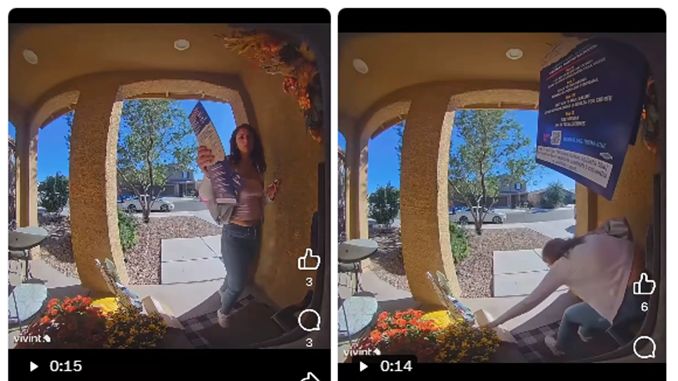
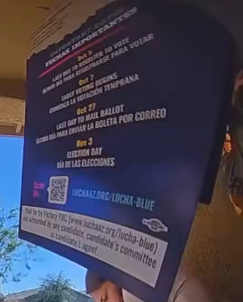
The Arizona Republican Party is circulating an allegation that a person identified online as a volunteer for Democratic Gov. Katie Hobbs took a package from a residential porch while canvassing. Screenshots from the posted footage show the person carrying a LUCHA Blue voter information flyer.
Robert Contreras, whose X bio identifies him with Turning Point Action’s Chase the Vote effort in the Gila River Region and as co-chair of the Pima County Young Republicans, shared the doorbell-camera video, writing, “Katie Hobbs volunteer steals package off someone’s porch while knocking.”
The Arizona Republican Party amplified the accusation, writing, “This is who supports Governor Katie Hobbs.” The party also questioned whether Attorney General Kris Mayes would give the person a pass if she declined an interview with investigators.
This is who supports Governor Katie Hobbs.
If they catch this thief, will AZ AG Kris Mayes giver her a pass if she refuses to sit for an interview with investigators?
The party’s reference to an investigative interview appears to invoke the Sunshine Residential Homes investigation. Hobbs declined an in-person interview but submitted two written statements through her attorneys denying wrongdoing. Mayes declined to prosecute Hobbs following the investigation into political contributions and state decisions benefiting the group-home provider.
One video posted by Contreras shows a person holding a flyer toward a Vivint doorbell camera. Another video shows the person bending down and reaching toward an item on the porch. In that video, the person leaves with a package that was already on the porch and takes it to their car.
Close-up images reviewed by AZ Free News identify the flyer as LUCHA Blue material, displaying election dates and directing readers to the organization’s website. A disclaimer states that the communication was not authorized by any candidate or candidate’s committee.
Contreras described the person as a Hobbs volunteer. The posts supplied for this report do not explain how that affiliation was established. The flyer identifies the political material being distributed, while the person’s employment or volunteer relationship remains unconfirmed.
The quoted posts do not identify the person accused, specify the incident’s date or location, or provide a police report number. The materials reviewed do not establish whether the homeowner reported a theft or whether law enforcement has opened an investigation.
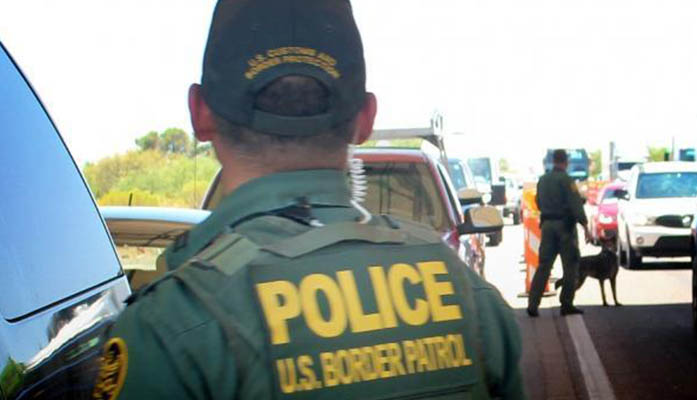
The U.S. Department of Homeland Security (DHS) and U.S. Customs and Border Protection (CBP) announced preliminary fiscal year 2026 data showing a 95% decline in southwest border apprehensions compared with annual levels under the Biden administration. The data also showed the lowest annual nationwide encounters in CBP history.
According to the CBP, fiscal year 2026 marked the first time in agency history that the U.S. Border Patrol completed an entire fiscal year without releasing migrants into the United States.
September also marked the 17th consecutive month with zero Border Patrol releases.
The preliminary figures show that Border Patrol agents recorded 98,708 apprehensions along the southwest border during FY26, compared to an annual average exceeding 1.8 million under former President Joe Biden.
The total was also approximately 60% lower than the 249,740 apprehensions recorded during the highest single month under the Biden administration, according to DHS.
That’s right. ZERO releases for an entire fiscal year. Lowest nationwide encounters in CBP history. Our agents have worked hard for these results, and we are keeping our foot on the gas. pic.twitter.com/nVmR8WLwK5
“President Trump promised the American people a secure border, and the data proves he delivered,” stated DHS Secretary Markwayne Mullin. “Over the past year, CBP recorded its lowest numbers in American history. A stark contrast to Biden, where CBP recorded its highest illegal immigration numbers ever.”
Nationwide encounters also fell to a reported 379,243 during FY26, compared to an annual average of approximately 2.7 million under the previous administration.
The latest figures represent an 88% decline from FY23, when encounters reached their highest annual level.
CBP Commissioner Rodney Scott attributed the decline to increased enforcement efforts and cooperation among federal agencies.
“FY 2026 demonstrated what focused enforcement, strong partnerships, and the commitment of our frontline personnel can achieve,” said Scott. “DHS and CBP are securing the border, stopping dangerous drugs and criminals, protecting communities, and ensuring our personnel have the resources necessary for this critical mission.”
The agency also reported a nearly 80% decline in migrant deaths identified by Border Patrol during FY26 and since President Donald Trump returned to office in January 2025, compared to levels under the Biden administration.
Despite the reduction in crossings, CBP personnel continued conducting search-and-rescue operations and providing emergency medical assistance.
During FY26, CBP’s Office of Field Operations responded to more than 3,000 medical emergencies, performed CPR on more than 50 individuals experiencing cardiac arrest, and administered naloxone to individuals experiencing suspected opioid overdoses.
In addition to declining border crossings, CBP reported completing 250 miles of new border barriers along the southwest border since January 2025. The construction includes primary and secondary barriers, waterborne barriers, and supporting surveillance technology.
The agency also obligated approximately $34.3 billion between September 2025 and September 2026 toward Smart Wall projects across the southwest border states, using funding provided through the Working Families Tax Cut Act.
CBP also reported higher drug seizure totals during the fiscal year.
Preliminary figures show the agency seized nearly 1 million pounds of illegal drugs nationwide, approximately 63% above the annual average of 600,000 pounds recorded during the previous four years.
“The results could not be clearer: strong enforcement works,” added Mullin. “Thanks to President Trump’s leadership and the hard work of CBP and DHS law enforcement personnel, we have restored control of the border and made America safer than ever.”
Beyond border enforcement, CBP reported stopping more than 4,000 shipments valued at over $325 million due to suspected forced labor violations. The agency also seized approximately 55.5 million counterfeit items with an estimated value exceeding $12.6 billion.
Among those seizures were 476,903 counterfeit items associated with FIFA World Cup intellectual property valued at more than $33 million.
DHS officials attributed the reduction in unlawful border crossings to the administration’s immigration enforcement policies and investments in border infrastructure, while highlighting increased drug seizures and trade enforcement efforts during FY26.
Ethan Faverino is a reporter for AZ Free News. You can send him news tips using this link.
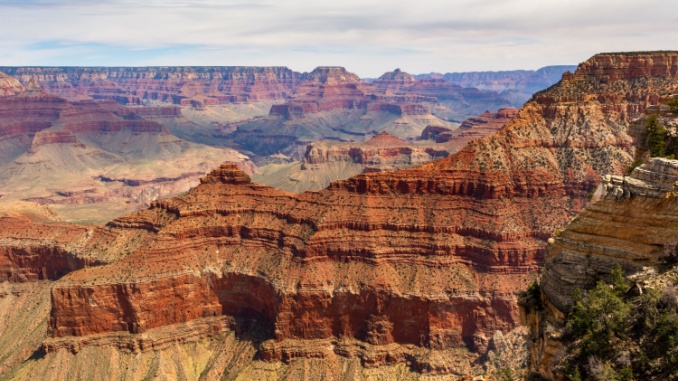
The U.S. Small Business Administration (SBA) announced the availability of low-interest federal disaster loans for small businesses and private nonprofit organizations experiencing financial losses from flash flooding at Grand Canyon National Park earlier this year.
The disaster declaration, issued October 13, follows a request from Governor Katie Hobbs on October 8 and provides assistance to eligible organizations affected by flooding that occurred between August 29 and September 3.
The declaration covers five Arizona counties, including Coconino, Gila, Mohave, Navajo, and Yavapai, as well as Kane and San Juan Counties in Utah.
Through the SBA’s Economic Injury Disaster Loan (EIDL) program, eligible small businesses, small agricultural cooperatives, and private nonprofit organizations, including faith-based organizations, can apply for loans of up to $2 million to help offset financial losses directly related to the flooding.
The loans are intended to provide working capital for operating expenses that businesses and nonprofits would have otherwise been able to cover had the disaster not occurred. Eligible expenses include fixed debts, payroll, accounts payable, and other financial obligations.
Businesses and nonprofits may qualify for assistance even if they did not sustain physical property damage.
Interest rates are as low as 4% for businesses and 3.625% for private nonprofit organizations, with repayment terms extending up to 30 years. Interest does not accrue, and payments are not required until 12 months after the first loan disbursement.
The SBA determines loan eligibility, amounts, and repayment terms based on each applicant’s financial condition.
“SBA loans help eligible small businesses and private nonprofits cover operating expenses after a disaster, which is crucial for their recovery,” stated Chris Stallings, associate administrator of the SBA’s Office of Disaster Recovery. “These loans not only help business owners get back on their feet but also play a key role in sustaining local economies in the aftermath of a disaster.”
Congressman Eli Crane (R-AZ-02), whose congressional district includes Grand Canyon National Park, also announced the availability of the disaster assistance, encouraging affected businesses and nonprofit organizations to explore the federal program.
Following the devastating flash floods at @GrandCanyonNPS, @SBAgov has approved a disaster declaration for several counties.
If your small business suffered economic losses as a result, I encourage you to see if you qualify for a low-interest loan: pic.twitter.com/cYlcE7aMYg
“If your business or nonprofit experienced challenges caused by the flooding, I encourage you to review this avenue of assistance from the SBA,” stated Crane. “The EIDL program offers eligible applicants low-interest loans, which can help offset losses from this tragic disaster.”
Crane also emphasized the importance of continued recovery efforts for Grand Canyon communities and highlighted recent congressional action involving the North Rim Restoration Act of 2025.
“Although it’s been a difficult period for park staff, gateway communities, and local businesses, my team and I are committed to doing everything we can to assist with the recovery effort,” added Crane. “Between this week’s announcement and recent Senate action on the North Rim Restoration Act of 2025, I’m hopeful we can help deliver long-term stability to this cherished place.”
Eligible businesses and nonprofit organizations have until July 13, 2027, to submit economic injury disaster loan applications.
Ethan Faverino is a reporter for AZ Free News. You can send him news tips using this link.