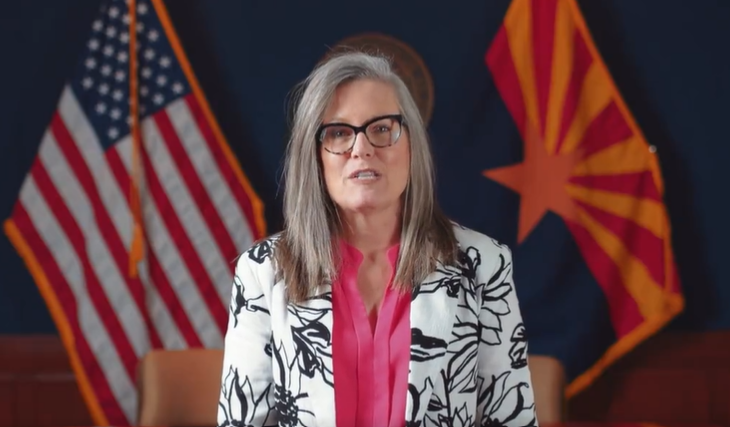
A law firm with close ties to Gov. Katie Hobbs has benefited from a series of government contracts within her administration totaling over $6 million.
Coppersmith Brockelman PLC has been awarded legal counsel contracts for multiple state agencies, according to initial reporting by FOIAzona.
The law firm, which has been a go-to for top Democrats, is also providing legal counsel to Hobbs’ secretive inaugural fund. The firm has disclosed its defense of Hobbs’ inaugural fund as one in a list of conflict-of-interest matters considered adverse to state interests.
Two of the firm’s partners have been appointed to high court positions in recent years. In 2022, Roopali Desai was appointed to the Ninth Circuit Court of Appeals; she administered Hobbs’ oath of office months later in January 2023. Earlier this year, Hobbs appointed Andy Gaona to the Arizona Court of Appeals.
Last year, one of Hobbs’ general counsel members, Bo Dul, joined Coppersmith Brockelman. Prior to joining the Hobbs administration, Dul had been senior counsel at States United Democracy Center, where she represented Hobbs pro bono.
Coppersmith Brockelman has contracts to provide counsel to the Department of Health Services (DHS), Arizona Department of Administration (ADOA), Arizona Department of Water Resources (ADWR), and the Arizona Health Care Cost Containment System (AHCCCS).
For all of the agencies, contracts were listed as “competition impracticable” — meaning the state didn’t undergo the competitive bidding process to award those contracts. For example, ADOA designated Coppersmith Brockelman in a 2024 competition impracticable procurement authorization form as having “specialized expertise” with DHS contracts.
The law firm received two contracts in 2024, two contracts in 2025, and one so far this year.
The two contracts in 2024 were for DHS and ADOA.
One of the 2024 contracts was for DHS litigation claims related to Sober Living Assisted Facilities at the request of Hobbs’ office; that contract has an initial estimated cost of up to $3 million, with listed counsel rated at anywhere from $350 to $500 per hour, paralegals listed at $150 per hour, and a legal assistant listed at $50 per hour.
The other 2024 contract was for civil claims against ADOA following a disqualification notice filed by Attorney General Kris Mayes. The contract had an initial estimated cost of up to $2 million, with listed counsel rated from $350 to $400 per hour, a paralegal for $150 per hour, and a legal assistant for $50 per hour.
The two contracts in 2025 were for ADWR and AHCCCS.
One of the 2025 contracts was for ADWR related to two separate actions filed in Maricopa County Superior Court pertaining to groundwater rules and regulations. Counsel rates were $400 and $425 per hour, with an estimated cost of up to $120,000 per year.
The other 2025 contract was to provide miscellaneous legal counsel for AHCCCS, with an initial estimated cost of $100,000 that was extended earlier this year to $200,000. Counsel rates were listed as $350 to $475 per hour, and an associate for $275 per hour.
The contract this year concerned ADWR’s involvement in an appeal and special action lawsuit on the assured water supply program: Home Builders Association of Central Arizona v. Arizona Department of Water Resources. The contract listed an initial estimated cost of up to $600,000. The state justified competition in this contract as impracticable because ADWR’s in-house attorneys were handling other litigation as well as Hobbs’ policy priorities.
AZ Free News is your #1 source for Arizona news and politics. You can send us news tips using this link.
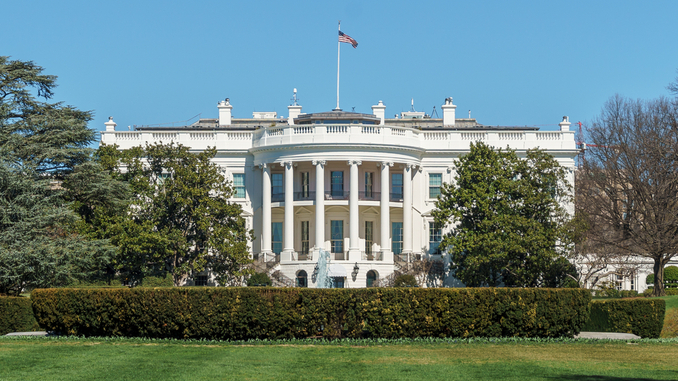
A Tucson man charged with threatening to bomb the White House allegedly sent an earlier message threatening an anthrax attack in Tucson. The message also threatened a bombing at a federal building, according to reporting on the federal criminal complaint.
Jacob Aaron Hicks, 46, was arrested on Oct. 7 and charged with making an interstate threat to injure. He made his initial appearance in federal court on Oct. 8.
The investigation began after Tucson television station KGUN9 received an email on Sept. 23 threatening an imminent attack against the White House and other Washington, D.C., locations. The station said it forwarded the message to authorities. The FBI confirmed to KGUN9 that its referral prompted the investigation.
TUCSON, Ariz. – Jacob Aaron Hicks, 46, of Tucson, was arrested yesterday and charged by criminal complaint with Making an Interstate Threat to Injure. Hicks is accused of sending an email on Sep.23, 2026, threatening to commit mass bombings at the White House and around the…
The email claimed an attack would occur within 12 hours and that bombs were positioned around Washington.
“Be advised. In 12 hours, there’ll be a strike against the White House. There’s bombs all around Washington D.C. This is not a joke. Be advised. You Americans will pay. Allah, to Allah,” a portion of the email read.
Hicks claimed he had loaned his phone to a homeless person when the email was sent.
Federal investigators identified Hicks as the alleged sender and located additional unsent drafts in the same email account, prosecutors said. Those drafts, also dated Sept. 23, were addressed to other news organizations and contained similar threats against the White House and surrounding areas.
The investigation also uncovered a Sept. 2 text message allegedly sent by Hicks to a Tucson-area number. The message threatened an anthrax attack against Tucson, claimed possession of C4 for a federal-building bombing and specified Sept. 11, 2026, at 5 a.m.
An announcement from the Justice Department did not report the discovery of explosives or anthrax.
Investigators also identified earlier threats Hicks allegedly made while living in New York against the Wayne County Department of Social Services. Authorities there reportedly visited his address and warned that further threatening contact could result in charges. The account did not identify a conviction stemming from those earlier incidents.
“We must take threats of violence like this one seriously,” U.S. Attorney Timothy Courchaine said.
“I am grateful to our local news station for referring this threat to law enforcement, and to the FBI for addressing the situation quickly, professionally, and with the level of commitment it required.”
The FBI is conducting the investigation with assistance from the U.S. Secret Service. Federal prosecutors in Tucson are handling the case.
The Justice Department identified the prosecution as part of the National Security Presidential Memorandum 7 initiative, describing it as a White House-directed interagency effort addressing political violence while protecting First Amendment rights. The department said Joint Task Force Vanguard leads the initiative.
Tucson Man Criminally Charged for Bomb Threat Against the White House
Jacob Aaron Hicks, 46, of Tucson, was arrested yesterday and charged by criminal complaint with Making an Interstate Threat to Injure. Hicks is accused of sending an email on Sep.23, 2026, threatening to… pic.twitter.com/peLomtfTWX
“The FBI remains steadfast in its mission to defend the United States against criminal and national security threats and will investigate them to the fullest extent of the law. We appreciate the community partner who reported the threat to law enforcement,” said FBI Phoenix Special Agent in Charge Rebecca Day. “Cooperation and partnership are essential to protecting the American people.”
Mountainside Fitness founder Tom Hatten has endorsed Arizona Senate President Warren Petersen, the Republican nominee for Arizona Attorney General, in a new 30-second campaign advertisement emphasizing fair enforcement of the law, support for Arizona businesses, and public safety.
Hatten, who has spent more than three decades building his Arizona-based fitness company, announced his support for Petersen while highlighting the importance of an attorney general who understands the challenges facing business owners, employees, and families across the state.
“Business owners need an attorney general who sees entrepreneurs as partners, not opponents,” said Hatten. “We’ll protect our neighborhoods and will stand with law enforcement.”
🚨 NEW AD FEATURING TOM HATTEN: BUSINESS OWNERS SUPPORT WARREN PETERSEN FOR ATTORNEY GENERAL
Honored to have the support from NFIB, the voice of small business and the AZ Chamber.
Businesses deserve an Attorney General who will protect them from crime and government over…
Hatten founded Mountainside Fitness in 1991 while attending Arizona State University, opening his first gym in a 4,800-square-foot facility in Ahwatukee. Since then, the company has expanded across Arizona and now serves more than 150,000 members.
The endorsement reflects Hatten’s support for Petersen’s approach to law enforcement, economic development, and the consistent application of state laws.
“That’s why I’m supporting Warren Petersen for Attorney General. As attorney general, Warren will enforce the laws fairly and protect the people building Arizona’s economy,” Hatten said.
“That matters to my employees and our customers who need safe neighborhoods and an affordable cost of living,” he added. “Please join me in voting Warren Petersen for Attorney General.”
Petersen welcomed the endorsement, emphasizing Hatten’s experience as a business owner and the responsibilities that come with operating a company employing Arizona workers.
“Tom knows what it takes to build something from the ground up and carry the responsibility of having employees and families count on you,” said Petersen. “I’m grateful for his trust.”
Petersen also criticized incumbent Democratic Attorney General Kris Mayes over energy policies, arguing that rising electricity costs place additional financial burdens on Arizona businesses and households.
“When businesses face higher electric bills, those costs reach their employees and customers, too,” Petersen said. “Kris Mayes is fighting efforts to repeal costly energy mandates when families need relief.”
“I will bring an approach grounded in the law, fair treatment, and respect for the people working to make a living here,” added Petersen. “That means protecting consumers from fraud, standing with law enforcement, and giving business owners confidence that the rules will be enforced consistently.”
The endorsement comes as Petersen campaigns to unseat Mayes in the November general election, with recent polling indicating a closely contested race.
According to a September survey published by Equis Research, Mayes and Petersen each received 45% support among Arizona likely voters, placing the candidates in a statistical tie.
Ethan Faverino is a reporter for AZ Free News. You can send him news tips using this link.
Democratic congressional candidate Bernadette Greene-Placentia recently went public with a claim that she was raped by two men while cleaning up campaign signs.
Democratic elected officials were quick to voice their support for Greene-Placentia, but some voters and others online have expressed skepticism about her claims.
The Maricopa County Sheriff’s Office (MCSO) confirmed that it is investigating a sexual assault report filed August 31 by Greene-Placentia, who first went public with the alleged attack in a Phoenix New Timesarticle published October 7.
Greene-Placentia’s campaign toldPeople that the attack occurred August 14 at approximately 2 a.m. while she was repairing a campaign sign. Greene-Placentia is challenging Republican Rep. Abe Hamadeh in Arizona’s 8th Congressional District.
An MCSO spokesperson stated that the report, number IR26022432, won’t be available until their investigation is complete. The agency has not disclosed suspects, investigative findings, or a possible motive.
“I talked with the Detectives, they advised it is still an ongoing investigation and we cannot comment on the investigation at this time,” stated the spokesperson.
According to the Phoenix New Times report, Greene-Placentia claimed to have been struck in the head and lost consciousness after entering a parking lot to repair a sign. She alleged she regained consciousness as one man was raping her and then recalled a second man approaching. Greene-Placentia’s account varies between reports on whether the second man raped her or ceased his attempt to rape her when she put up a fight.
Greene-Placentia told the outlet that she interpreted one of her attackers as saying “Democratic bitch,” though she also expressed uncertainty about the words she heard. MCSO has not attributed any motive to the attack, political or otherwise.
Greene-Placentia described gaps in her memory following the incident, including her drive home, and expressed uncertainty about the precise location of the attack, which she said was likely near 99th Avenue and Bell Road in Sun City.
Once home, Greene-Placentia didn’t contact the police. Instead, she waited two weeks and three days to file a report.
Greene-Placentia continued her campaign activities between the attack and the day she filed the police report — including middle-of-the-night excursions to put up campaign signs.
On August 22 at about 3 a.m., about a week after the alleged rape, Greene-Placentia posted on Facebook that she was once again putting up signs at 2 a.m.
“Because whether it’s 2pm and 115 degrees while we canvass, coming off a 36 hour day to speak alongside Adrian Fontes for Arizona Secretary of State or put[ting] up signs at 2am when it’s still 105 degrees, Trucker Tough means the work never stops!” stated Greene-Placentia.
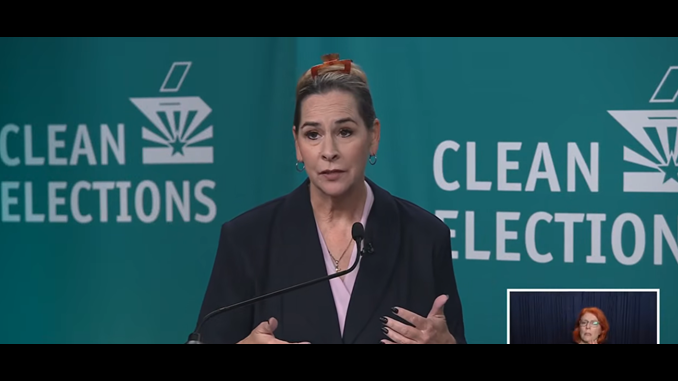
Four days before filing a police report, Greene-Placentia participated in a televised congressional candidate forum organized by Arizona’s Citizens Clean Elections Commission.
After filing the police report, Greene-Placentia waited five weeks to go public about the alleged attack.
Greene-Placentia’s rape claim — namely her decision to wait more than two weeks to contact police — has amassed skepticism online.
Hundreds of users across multiple platforms have expressed doubts about Greene-Placentia’s story, with many comparing Greene-Placentia’s allegation to Jussie Smollett’s fabricated 2019 attack.
Smollett was charged with felony filing of a false police report in February 2019 for staging a hate crime in which he falsely claimed masked men had insulted his homosexuality and told him it was “MAGA country.” Prosecutors decided to drop the charges about a month later.
just so i understand, she was in Surprise, at 2-3am, repairing her political signs, was recognized by two men who happened to be out and about and ready to rape her, and they did, and all this right before an election?
AZ Free News has compiled a timeline from the night of the attack to the first media report on Greene-Placentia’s allegations.
Timeline from Alleged Attack to Present:
Aug. 14, approximately 2 a.m.:Greene-Placentia says she was assaulted and raped by two men while repairing a campaign sign. She identified the general Sun City area while expressing uncertainty about the precise location.
Aug. 15:Greene-PlacentiajoinsEva Osuna, Peoria City Council candidate, and Melissa Ewing, Peoria Unified School District Governing Board candidate, for a canvassing launch in south Peoria.
Aug. 15–16 (approximate):Greene-Placentia’s husband described speaking with her by telephone but not seeing her for roughly two days. Her landlord described seeing her appear unsteady.
Aug. 16:A volunteer drove Greene-Placentia to a Chandler canvass launch, where she disclosed the alleged assault to campaign staff. Greene-Placentiapostson her Facebook page about her frustration with the Maricopa County Democratic Party for not investing $20,000 in her campaign: “Still pissed off..”
Aug. 17:Greene-Placentia told her husband about the alleged rape and contacted Greg Freeman, secretary of the Arizona Democratic Party.
Aug. 18:Greene-Placentiaattendedthe LD28 general meeting alongside Secretary of State Adrian Fontes in Peoria from 5:30 to 8 p.m.
Aug. 22:Greene-Placentiapostedon Facebook that she was putting up signs at 2 a.m. Later that day, Greene-Placentiaparticipatedin a South Peoria canvass with Raquel Terán, Melissa Ewing, Deborah Howard and Kyle Clayton, associated with Eva Osuna’s campaign.
Aug. 27:Greene-Placentia participated in the Clean Elections CD8 forum.
Aug. 30:Greene-Placentiaparticipatedin a canvass with LD29 Democrats, Melissa Ewing, and Eva Osuna.
Aug. 31:Greene-Placentia files a report of rape with MCSO; initial contact with the agency wasreportedlyby telephone.
Early September:Greene-Placentia reportedlytoldstate Rep. Stephanie Simacek about the alleged assault during a coffee meeting. No exact meeting date was established.
Sept. 1:Two sergeantsvisitedGreene-Placentia’s apartment the day after she filed her report.
Sept. 3:Greene-Placentiascheduledto appear at Grand Dems Meeting in Surprise from 5:30 to 7:30 p.m.
Sept. 8:Greene-Placentiahosteda live TikTok town hall with Friends with Political Benefits starting at 6 p.m.
Sept. 26:Greene-Placentiaappearedat LD3 Democrats canvass, LD3 Candidate Expo in Anthem, a house party, and the Arizona Democratic Party Hall of Fame dinner.
Oct. 7:Phoenix New TimespublishedBernadette-Greene’s rape allegation.
AZ Free News is your #1 source for Arizona news and politics. You can send us news tips using this link.
Arizona Public Service (APS) plans to keep the Four Corners Power Plant operating beyond its previously planned 2031 exit, citing reliability needs. Preliminary modeling estimates that extending operations through 2038 would reduce revenue requirements by approximately $1.02 billion from 2026 through 2041.
In a recent presentation to its Resource Planning Advisory Council, APS disclosed that it had signed an agreement with Navajo Transitional Energy Company (NTEC) allowing continued operation beyond 2031. The presentation compared a 2038 extension with a base case incorporating a 2031 exit and a new pipeline in 2030.
APS told KJZZ it signed the confidential agreement in September. The utility is preparing an updated resource plan amid growing electricity demand, including demand from data centers.
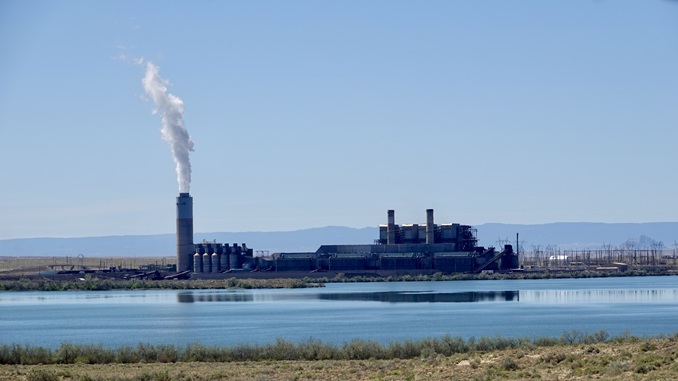
Located on the Navajo Nation in New Mexico, Four Corners is APS’s last remaining coal-fired power plant. Its two units provide approximately 1,540 megawatts of generating capacity. APS owns 63%, representing about 970 megawatts, and the facility employs approximately 250 APS employees.
The utility said its lease with the Navajo Nation permits operations through 2038 and that future decisions will continue through its integrated resource-planning process. APS cited the value of existing generation as it adds resources to meet Arizona’s growth.
The company said its analysis showed the potential for a “meaningful reduction in costs to customers” compared with retiring the plant in 2031. Its announcement did not specify an individual customer’s projected bill savings.
APS previously outlined a 2031 departure from Four Corners during an Arizona Corporation Commission resource planning workshop, where commissioners emphasized reliability and affordability as utilities prepared for growing electricity demand.
By September 2025, the utility’s planning documents contemplated a Four Corners exit between 2031 and 2038. The newly announced agreement advances APS’s plans to continue operating beyond the earlier date.
APS’s coal-generation decisions have also drawn attention from President Donald Trump. In April 2025, the President directed Energy Secretary Chris Wright to save APS’s Cholla Power Plant in northeastern Arizona, drawing support from Rep. Eli Crane (R-AZ-02). APS had stopped coal operations at Cholla the previous month.
In August 2026, APS began pursuing a natural gas conversion for that facility. The Four Corners agreement separately advances continued coal generation at APS’s remaining coal-fired plant.
In its September presentation, APS showed a $1,023.5 million reduction in net-present-value revenue requirements compared with its base case. The analysis covers 2026–2041 and is labeled as draft modeling.
APS’s planning scenarios also examine higher natural gas prices, construction costs, different levels of electricity demand, and pipeline delays. The utility’s proposed resource strategy includes continued Four Corners operations alongside additional natural gas, renewable generation, battery storage, and transmission development.
Navajo Transitional Energy Company, whose Navajo Mine supplies the plant’s coal, welcomed APS’s decision.
“It helps extend the FCPP, in turn bringing more reliability to the electric grid in our region,” NTEC Board Chairman Tim McLaughlin said. He also cited continued employment and revenue for the Navajo Nation.
NTEC reported that Navajo Mine employs more than 350 people, predominantly Navajo Nation members and members of other Native American tribes. The company said annual taxes and royalties from the mine and power plant account for approximately 35% of the Navajo Nation’s General Fund.
The company also reported more than $128 million in annual economic impact and more than $1.7 million in contributions to Navajo Nation communities during 2025. Those figures were reported by NTEC.
Environmental organizations opposed the extension. The Sierra Club argued that continued operations would prolong air pollution, water consumption, and climate impacts. It also disputed the economic case for keeping the plant operating.
Tó Nizhóní Ání Director Nicole Horseherder criticized the extension’s effects on Navajo communities, while Sierra Club Grand Canyon Chapter Director Sandy Bahr questioned whether APS’s coal and natural gas plans were consistent with its carbon neutrality goal.
APS previously announced plans for seasonal operations as part of its anticipated transition away from coal by 2031. That proposal called for one unit to operate June through October, with the other available year-round, subject to market conditions and maintenance. APS estimated that arrangement would reduce annual carbon emissions by 20% to 25%.
APS has scheduled a virtual public stakeholder meeting for Oct. 14, from 9 to 11 a.m., to discuss its 2026 Integrated Resource Plan.
APS develops that plan every three years to evaluate electricity needs and resources over a 15-year period, then files it with the Arizona Corporation Commission.
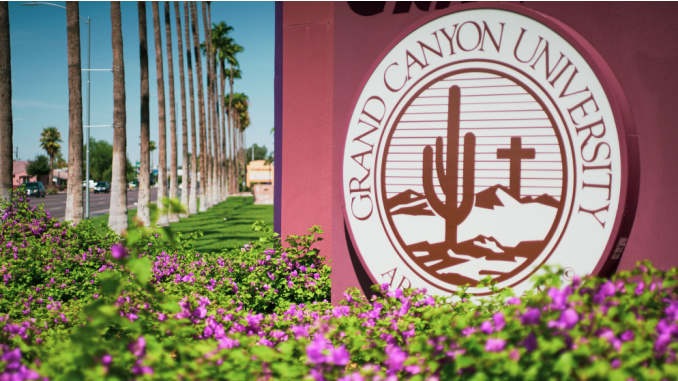
Grand Canyon University (GCU) announced this week the appointment of Phoenix attorney James Williams as the inaugural dean of its College of Law, marking another step toward the university’s plans to establish a law school centered on academic excellence, professional development, and Christian principles.
Williams will oversee the development of GCU’s 12th college, which aims to prepare future attorneys through rigorous legal education while emphasizing faith, integrity, justice, and service to others.
James L. Williams has been named the inaugural dean of GCU’s College of Law and will lead the development of the university’s 12th college. Williams is an accomplished Phoenix attorney and president of the Phoenix chapter of the Christian Legal Society. https://t.co/iRSlrkO1Mv
“We are grateful James answered the calling to serve as the inaugural dean of the College of Law,” stated GCU President Brian Mueller. “There are many accomplished attorneys who understand the law. What makes James uniquely suited for this role is the way he brings together legal excellence, a passion for teaching and mentoring, and a deeply rooted Christian faith.”
Mueller emphasized that the university intends to take a different approach to legal education by incorporating Christian worldview principles, free-market thinking, and a commitment to public service into its academic programs.
“We are not simply building another law school. We have an opportunity to rethink what legal education can look like when academic excellence, Christian worldview principles and free market thinking are joined with a strong sense of purpose,” said President Mueller. “We want to develop attorneys who pursue truth and justice, serve others with integrity and understand the tremendous responsibility that comes with the influence they will have in their communities. James understands that vision because he has lived it throughout his career.”
The College of Law could welcome its first class as early as fall 2027, pending regulatory approval.
GCU is currently pursuing authorization through the Arizona Supreme Court, the Higher Learning Commission, and the Arizona Board for Private Postsecondary Education.
The university also plans to seek accreditation from the American Bar Association (ABA), a separate process expected to take multiple years.
If authorized by the Arizona Supreme Court, eligible graduates could pursue admission to practice law in Arizona, subject to applicable requirements. Upon receiving ABA accreditation, GCU would become Arizona’s third ABA-accredited law school, joining Arizona State University and the University of Arizona.
Williams brings 18 years of legal experience in Arizona and currently serves as an attorney and shareholder at Phoenix-based law firm Schmitt Schneck Even & Williams.
A graduate of Baylor University School of Law, Williams also serves as president of the Phoenix chapter of the Christian Legal Society, where he has been a board member for approximately a decade.
In addition to his legal practice, Williams has worked with students at Arizona State University’s Sandra Day O’Connor College of Law, helping coach its mock trial competition program and mentoring aspiring attorneys.
Williams said the opportunity to establish a law school from the ground up was a significant factor in his decision to accept the position.
“Starting from the ground up gives us the opportunity to be very intentional about the kind of law school we want to become and, more importantly, the kind of lawyers we want to develop,” Williams said. “GCU students will be challenged academically, prepared professionally and encouraged to think deeply about the purpose of their work and the responsibility they have to serve others. I am confident this is a work God has begun in and through GCU, and that He will be faithful to complete it.”
His involvement in Christian leadership extends beyond the legal profession. Williams serves as an elder and worship leader at New City Church in Phoenix, reflecting his longstanding commitment to integrating faith with professional responsibilities.
Williams said he hopes the new college will develop attorneys who are not only capable legal professionals but also individuals committed to serving their communities and upholding the rule of law.
“My hope is that GCU will develop lawyers who are exceptional advocates and legal thinkers, but also men and women of courage, humility, integrity and faith who understand that their profession is ultimately about serving people,” Williams added. “If we can send graduates into courtrooms, businesses, government agencies and communities with that mindset, the impact can extend far beyond the practice of law. That is the kind of law school we intend to build.”
The establishment of the College of Law represents another expansion of GCU’s academic offerings as the university works toward introducing a new legal education program in Arizona.
Ethan Faverino is a reporter for AZ Free News. You can send him news tips using this link.