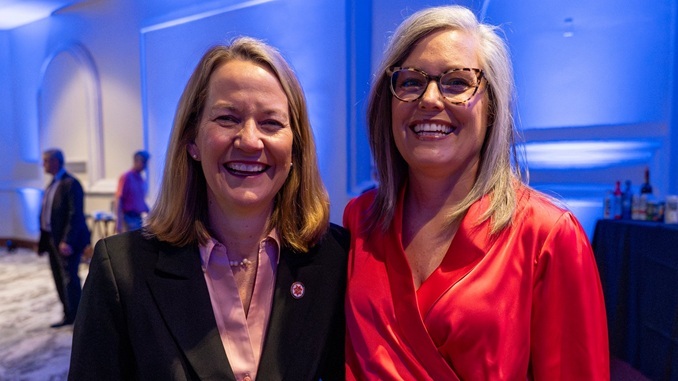
Attorney General Kris Mayes wouldn’t confirm whether Gov. Katie Hobbs will be questioned as part of the investigation into the governor’s alleged pay-to-play scandal, which has been ongoing for more than two years.
Mayes was asked during a press conference announcing her lawsuit against the Trump administration’s tariffs on Monday whether it was possible that Hobbs would never sit for questioning.
“I’m going to decline to answer that question right now,” said Mayes.
Mayes’ office has asked Hobbs publicly to sit for questioning for months.
Despite needing a sit-down interview to proceed with the investigation, Mayes did promise to release the results of the investigation sometime before the general election in November. Left unsaid was the possibility that voters may not have those results until their ballots have already been cast in the highly competitive governor’s race between incumbent Hobbs and Republican Andy Biggs.
Mayes disagreed that Hobbs was shirking questioning and denied that the prolonged lack of communication between her and the governor on the matter had to do with Hobbs leaning on her power and status as the state’s chief executive, and their shared party affiliation.
“You cannot blow off the attorney general’s office. Full stop. No one can, regardless of who they are,” said Mayes. “When we have a result in this investigation, we will make an announcement. And we are near the end of the investigation.”
The investigation concerns an allegation that Hobbs directed a unique rate increase of 30% for Sunshine Residential Homes, a group home operator, as thanks for the company’s sizable 2024 election cycle donations totaling more than $400,000 to Hobbs and the Arizona Democratic Party. Hobbs was the only candidate to receive contributions from Simon Kottoor, founder and CEO of Sunshine Residential Homes.
While Sunshine Residential Homes received a rate increase, the Arizona Department of Child Safety (DCS) denied rate increases for other home operators and dropped more than a dozen providers. DCS has since stated that the rate increase occurred because Sunshine Residential Homes threatened to prioritize intake of migrant children over Arizona’s foster children.
Mayes began her investigation more than two years ago, in the summer of 2024, after others began investigating following reporting by the Arizona Republic that broke the pay-to-play scandal.
Certain officials had begun to investigate the allegations, but Mayes stepped in to stop them. Mayes sent letters to Maricopa County Attorney Rachel Mitchell and Auditor General Lindsey Perry, ordering both officials to stop seeking answers.
“It would not be appropriate or in the best interest of the state to conduct parallel investigations into the same matter,” said Mayes in the letter to Mitchell. “[A] separate process conducted by the MCAO could jeopardize the integrity of the criminal investigation that my office will now proceed with.”
Mitchell’s response urged Mayes to reconsider her position on being the sole investigator into the allegations.
“I want to be clear: This is not an accusation against you or the many fine employees in your office,” said Mitchell. “We are in a time when people are increasingly distrustful of government. Your insistence on being the sole investigator in this matter will greatly contribute to people’s […] belief that nothing can change.”
Leadership within the Republican-led legislature announced their own investigatory efforts earlier this year. The House advisory team obtained outside counsel to investigate the alleged pay-to-play scandal. No findings have been made public as a result of that effort to date.
Earlier this summer, the governor vetoed legislation establishing financial transparency requirements tied to the alleged pay-to-play scandal.
Hobbs has denied any wrongdoing throughout the years-long investigation.
AZ Free News is your #1 source for Arizona news and politics. You can send us news tips using this link.
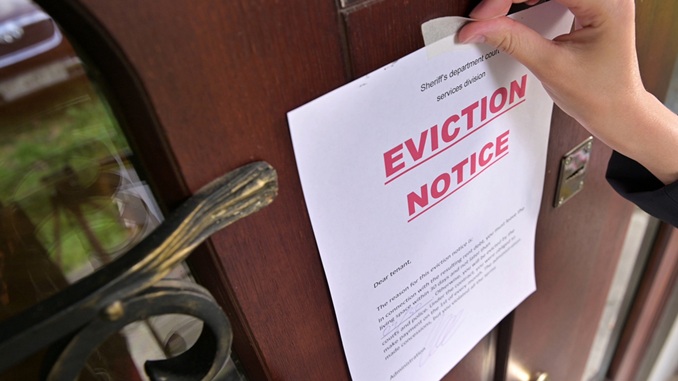
City of Phoenix leaders are looking for a funding pathway to cover the millions it will cost to continue to provide legal and other services to evictees.
The city launched a pilot Eviction Legal Services (ELS) program in January 2025 using $1.2 million out of the interest accrued from American Rescue Plan Act (ARPA) funds. Phoenix received nearly $400 million in ARPA funds as part of an economic stimulus package in response to the COVID-19 pandemic.
The ELS program is scheduled to continue through June 2027.
City leaders and staff discussed the proposal to continue the ELS program, or another iteration of evictee services, during the most recent Community Services and Education Subcommittee meeting last month.
According to city staff, the ELS program handled 766 applications from January 2025 through March 2026. 436 of those applications were eligible for referral to an ELS provider. 292 eligible referrals, or 67%, were for legal representation to respond to an eviction filing.
330 applications were considered ineligible: 260 failed to provide complete documentation and 70 were either not city residents or their cases were not eviction-related.
Staff further reported that 25% of all closed cases ended with a negotiated settlement or agreement in which the landlord and tenant agreed with the outcome jointly. 140 cases with legal representation, or 48%, were classified as having reduced negative impacts of eviction on tenants. Examples of reduced negative impacts were evictees receiving 42 additional days to move out and paying $2,600 less on average for back rent.
City of Phoenix leaders are familiar with repurposing COVID-19 relief funds for housing assistance. Jacqueline Edwards, director of the Human Service Department (HSD), came on the job two years ago having successfully distributed $200 million in COVID-19 relief funds for rental assistance while with the Maricopa County Human Services Department. Edwards joined the city of Phoenix as its HSD director in 2024.
The COVID-19 relief windfall is coming to an end, however. During the Community Services and Education Subcommittee meeting last month, Edwards disclosed that the city doesn’t have a dedicated funding source for continuation of ELS or a similar program.
Vice Mayor Kesha Hodge Washington said subsidized housing was one of her key priorities, and urged Edwards to find funding for ELS.
Edwards made that nonfunding disclosure as she proposed three new programs for additional eviction prevention and response:
Preferred Landlord program: the city would create a “verified landlord” list of city-recognized landlords committed to city-funded mediations rather than evictions.
“Tenants would know up front that these landlords would seek mediation activities rather than simply filing an eviction,” said Edwards.
Landlord Risk Mitigation Fund program: the city would assist households with a history of evictions by providing financial incentives for landlords to accept these higher-risk tenants, such as deposit assistance.
One-Stop Stabilization Appointment program: the city would meet with evictees within three days of their eviction to enroll them in public benefits and resources.
Washington said she approved of all three programs.
“It is less costly and more effective to prevent homelessness than it is to respond to someone who’s already lost their housing,” said Washington.
Beyond legal services for evictees, the city also began distributing $3 million for emergency financial assistance last month.
The new Stability Assistance program gives “vulnerable Phoenix residents” up to $2,500. Noncitizens qualify since they have residency, as well as those who reside in a qualified census tract; have incomes no greater than 200% of the federal poverty line; or receive or have received funding from the Supplemental Nutrition Assistance Program, Temporary Assistance for Needy Families, or Medicaid.
The funds may be used for “utilities, rent, transportation, or other basic expenses [for] other household needs” according to city meeting records, though Edwards revealed that staff don’t have strict requirements for how recipients may spend their thousands. Edwards said funds could be used to pay for other things, like continuing education or work credentials.
“[It’s] not for staff to say, ‘These are the steps that you have to do, but rather let that [decision making] be driven [by fund recipients] because households really do know what’s best for them and we’re there to walk right next to them and help them achieve those goals,” said Edwards.
AZ Free News is your #1 source for Arizona news and politics. You can send us news tips using this link.
Arizona House Republicans are calling on Gov. Katie Hobbs to pursue a federal data-sharing agreement intended to help investigators identify Medicaid and other public-benefit fraud by finding connections between government benefit payments and complex business records.
House Majority Leader Michael Carbone (R-LD25) and House Health and Human Services Committee Chairman Selina Bliss (R-LD1) issued the request Monday following the Justice Department’s announcement of new cooperation agreements with several southeastern states.
✅House Republicans Call on Governor Hobbs to Join Federal Anti-Fraud Data-Sharing Partnership Six states have already agreed to help federal investigators uncover fraud
“Arizona families work hard and pay their taxes, and they have every right to expect that not one dollar of… pic.twitter.com/y0L8vKPchx
— Arizona House Republicans (@AZHouseGOP) August 3, 2026
The Justice Department’s National Fraud Enforcement Division announced the agreements July 30 as part of a wider federal-state initiative involving Alabama, Florida, Georgia, Louisiana, Mississippi, North Carolina, and South Carolina.
Secretaries of state from Alabama, Florida, Georgia, Louisiana, Mississippi, and South Carolina entered data-sharing agreements giving the division access to publicly available corporate-registration and public-benefit payment information held by their agencies. State treasurers from Florida, Mississippi, and South Carolina also joined the agreements.
Federal investigators plan to use the data to identify patterns connecting business entities with public-benefit payments and trace financial activity through shell companies, layered business structures, and related entities. The department encouraged other states to pursue similar partnerships.
“Arizona families work hard and pay their taxes, and they have every right to expect that not one dollar of their money ends up in the pocket of a fraudster,” Carbone said. “Six states have already signed up to help catch the criminals stealing from taxpayers and from the people these programs are supposed to serve. There is no good reason Arizona should not be next, and no good reason for Governor Hobbs to wait.”
“Arizona’s most vulnerable families should not pay the price for fraud and inaction,” he added. “Arizona taxpayers have already lost billions of dollars, and the Justice Department has given states a practical way to identify suspicious payments and business connections earlier. Governor Hobbs should begin the process today.”
Carbone proposed that Arizona begin with a two- or three-year memorandum of understanding that would preserve state control over the information and allow officials to evaluate the partnership’s results.
“Every dollar siphoned off by fraudsters is a dollar that does not reach an Arizona family who needs it,” Bliss said. “We have seen billions lost to sober living scams and phantom behavioral health clinics right here in our state, and Arizona has been named one of the riskiest states in the country for this kind of abuse.”
The Republican lawmakers did not specify which Arizona agencies would enter the agreement or which categories of public-benefit information would be shared.
Unlike the participating states, Arizona’s Secretary of State’s Office does not register corporations or limited liability companies. Those records are maintained by the independently elected Arizona Corporation Commission, while public-benefit payment information is held by executive agencies including AHCCCS and the Department of Economic Security.
The request comes as Hobbs remains under investigation over allegations involving Sunshine Residential Homes, a Department of Child Safety (DCS) contractor. Sunshine donated $300,000 to the Arizona Democratic Party and $100,000 to Hobbs’ inaugural fund before DCS approved a 30% rate increase, though no other group homes received rate increases and over a dozen contracts were terminated.
Attorney General Kris Mayes’ office has sought an interview with Hobbs as part of its ongoing criminal investigation, while the Arizona House has retained outside counsel to conduct a separate inquiry. Hobbs has denied wrongdoing and maintained that she did not influence the contracting decision. As of July 30, no date had been set for her interview with investigators. KJZZ reported that Mayes expects to make an announcement regarding the investigation before the November 3 election.
The Justice Department established a West Coast Health Care Fraud Strike Force in April covering Arizona, Nevada, and the Northern District of California. U.S. Attorney Timothy Courchaine said federal investigators and prosecutors had disrupted fraud schemes representing more than $1 billion in Arizona alone.
In announcing the strike force, the Justice Department cited the prosecution of two wound-graft company owners in a $1.2 billion Medicare and Medicaid fraud scheme and the indictment of Farrukh Jarar Ali, a Pakistani national accused of directing an approximately $650 million fraud operation involving at least 41 Arizona substance-abuse treatment clinics.
Federal prosecutors allege Ali’s company helped enroll clinics as providers with AHCCCS before submitting approximately $650 million in fraudulent claims for services that were unnecessary, substandard, or never provided. AHCCCS paid approximately $564 million on the claims, according to the Justice Department.
Hobbs’ administration has separately promoted Arizona’s existing efforts to prevent Medicaid fraud. In May, the governor’s office said the state’s enforcement campaign had targeted as much as $2.5 billion in suspected fraud, produced more than 364 payment suspensions based on credible allegations, and contributed to more than 100 indictments. AHCCCS also began deploying the Alivia 360 analytics platform this summer to identify potential improper claims before payment.
Carbone said the federal agreement could add another investigative tool by allowing authorities to identify suspicious connections between public payments and corporate records earlier.
“Arizona has already paid an enormous price for fraud,” Carbone said. “Governor Hobbs can act now to help prevent the next scandal. If she chooses to leave Arizona on the sidelines, she should explain why.”
Arizonans can now access records of mutual fund notice filings online.
The Arizona Corporation Commission (ACC) announced that the state began accepting mutual fund notice filings electronically on Monday.
The filings are available on the Electronic Filing Depository (EFD), an application system maintained by the North American Securities Administrators Association (NASAA).
The ACC’s Securities Division oversees mutual fund notice filings. Division Director Mark Dinell said in a statement that enabling EFD usage improved efficiency for investor regulation.
“The Securities Division is committed to providing efficient, modern regulatory services that facilitate lawful capital formation while maintaining Arizona’s strong investor protection standards,” said Dinell. “Arizona’s participation in the NASAA EFD offers issuers and their representatives an additional electronic filing option that streamlines the submission process, improves administrative efficiency, and supports timely access to Arizona’s capital markets without compromising the division’s regulatory oversight responsibilities.”
The EFD also has the capability of maintaining the electronic submissions of other notice filings to include Rule 506 offerings, unit investment trusts, and franchise registrations, though Arizona only allows for several filing types.
Going forward, the EFD will allow both the ACC and authorized filers to reduce paper submissions and administrative processing for mutual fund notice filings.
In addition to the ability to submit those filings electronically, authorized filers may pay applicable Arizona filing fees online, manage filings and renewals through a centralized portal, review filing status and history, and receive electronic confirmation of submitted filings.
The EFD also enables Arizonans to search and view filings submitted using the system, at no cost to the public.
Arizona is one of 22 states and territories that allow electronic filing through EFD for mutual fund notices: Alaska, Delaware, Georgia, Idaho, Kentucky, Louisiana, Massachusetts, Minnesota, Montana, New Jersey, North Dakota, Ohio, Pennsylvania, Puerto Rico, Rhode Island, South Carolina, Tennessee, Vermont, Virginia, West Virginia, and Wisconsin.
Kentucky also joined the EFD for mutual funds filings on Monday.
All other states, as well as the District of Columbia and the Virgin Islands, are in the process of allowing that kind of electronic filing through EFD.
Arizona began accepting EFD submissions of initial and amendment filings for Regulation D, Rule 506 offerings in 2023. The ACC still accepts paper filings for those as well.
Arizona does not allow electronic submissions through the EFD for notices of unit investment trusts or other filings through the universal filing type.
Also on Monday, the ACC issued its annual report for the 2025-26 fiscal year. ACC Chair Nick Myers said highlights of the fiscal year aligned with the commissioners’ commitment to safety, reliability, and affordability when it comes to utilities, entrepreneurship, and investing.
“The commission has continued strengthening Arizona’s grid, championing regulatory stability and efficiency, and eliminating subsidies and cost shifts,” stated Myers.
Highlights included grid stability proven by the lack of rolling blackouts and major power outages, nearly 8,000 megawatts of new electricity generation, electricity prices below the national average marked by a 1.2% decrease compared to a 7% national increase, a new online business filing portal called the Arizona Business Center, and more than $76 million in revenue contributed to the state’s general fund.
AZ Free News is your #1 source for Arizona news and politics. You can send us news tips using this link.
Arizona now enjoys nearly $7.4 billion in total assets, representing a 126% increase since Treasurer Kimberly Yee took office in 2019.
Per the latest local government investment report from the treasurer’s office, total June earnings among the four local government investment pools (LGIP) exceeded $22.8 million. Per the treasurer’s office, each LGIP is a fixed-income investment pool with multiple governmental entity contributors.
Pool 5 investment fund earnings exceeded $10.5 million; Pool 7 earnings exceeded $9 million; Pool 500 earnings exceeded $2.5 million; and Pool 700 earnings exceeded $686,000.
Arizona Treasurer Kimberly Yee reported at the State Board of Investment meeting that the Local Government Investment Pool reached $7.4 billion in total assets. This is an increase of 126% since @AZTreasurerYee took office.
— Office of the Arizona State Treasurer (@AZTreasury) July 30, 2026
The treasurer’s office accomplished a record $7.6 billion in total assets last fall. The state’s Permanent Land Endowment Trust Fund has also hit record highs under the Yee administration.
Recently, Yee secured the Republican nomination over incumbent Tom Horne in the race for Arizona Superintendent of Public Instruction.
She has positioned herself as a defender of parental privacy rights when it comes to school choice funds. The treasurer remained in a lawsuit filed by a media outlet seeking records not kept by the treasurer’s office which contained sensitive student and family information, some of which were educational, medical, or financial in nature.
Earlier this month, Yee prevailed in that case in the Maricopa County Superior Court.
“We will continue to provide transparency regarding records in our custody, consistent with our statutory duties, while safeguarding confidential information entrusted to the state,” stated Yee at the time.
Today, we won our case against 12 News and Craig Harris to prioritize the privacy of Arizona children and ESA families. This case has been about protecting the privacy of Arizona's children and their families.
Yee also partnered with the State Financial Officers Foundation this year to produce a report on fraud and mismanagement of federal education tax dollars within state education departments and school districts. The report described oversight of public funding within education as more than bureaucratic duty, but “an economic and moral imperative” given the growing affordability crisis facing families.
The collaborative report including Yee’s contributions relied on more than six years’ worth of semiannual reports to Congress by the U.S. Department of Education Office of Inspector General (OIG), which yielded approximately 90 instances of confirmed and prosecuted fraud and abuse.
Arizona was not included in the report highlights. However, one Arizona case was within the cited OIG data, concerning the Bradley Academy of Excellence enrollment fraud scheme that resulted in the theft of $2.5 million.
I am honored to partner with @SFOF_States in addressing national education issues related to fraud and mismanagement. My office is dedicated to protecting taxpayers and promoting fiscal responsibility and transparency for Arizona families.⁰ Full report: https://t.co/UZWaeiinJEpic.twitter.com/vo60SfRo8H
— Arizona Treasurer Kimberly Yee (@AZTreasurerYee) July 16, 2026
AZ Free News is your #1 source for Arizona news and politics. You can send us news tips using this link.