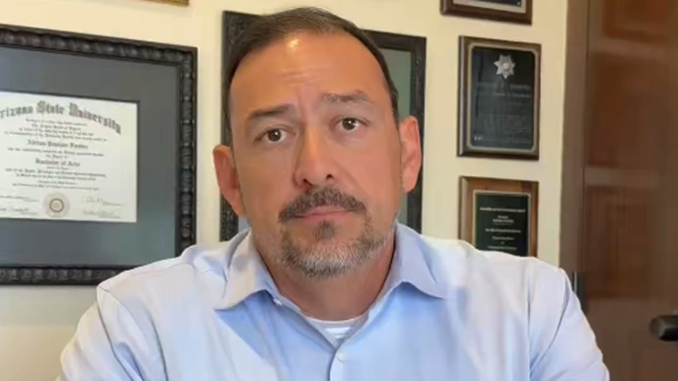
Republican leaders of the Arizona legislature are suing Secretary of State Adrian Fontes for allegedly misrepresenting a ballot measure to preserve school choice funding for military families.
Arizona Senate President Warren Petersen (R-LD14), the Republican nominee for attorney general, and House Speaker Steve Montenegro (R-LD29) sued Fontes to prevent the ballot measure language from going to voters.
The 66-page verified complaint accused Fontes of drafting ballot language that intentionally undermines the constitutional amendment, Proposition 145, in order to give a leg up to a competing ballot proposition to end the universality of the Empowerment Scholarship Account (ESA) program.
The language for Prop. 145’s descriptive title reads:
“Would nullify Proposition 212 (below) if voters enact it this election; prohibits the state from sweeping funds from certain state-run scholarship accounts if the student’s parent has provided certain active-duty military service; nullifies all laws that would sweep any such funds, including unrelated provisions of those laws.”
The yes/no language reads:
“A ‘yes” vote shall have the effect of amending the Arizona Constitution to: (1) nullify Proposition 212, which imposes spending and income limits on the Empowerment Scholarship Account (ESA) program, if the people enact that Proposition during this election; (2) prohibit the state from sweeping funds from certain state-run scholarship accounts if the student’s parent has provided certain active-duty military service; and (3) nullify all parts of any law that would sweep any such funds, including unrelated provisions of those laws, applying retroactively to all laws enacted on or after November 1, 2026.
A ‘no’ vote shall have the effect of maintaining current constitutional provisions related to scholarship accounts and allowing Proposition 212 to go into effect if voters enact it this election.”
According to the lawmakers, Fontes’ Prop. 145 ballot language allegedly skimped on and buried details of how the proposed constitutional amendment would preserve military families’ school choice funding. Much of the language, they say, used “partisan, argumentative framing” of Prop. 145 as a direct nullification of Proposition 212, or the Protect Education Act.
Prop. 212 seeks to end the ability for all Arizona students to enter the ESA program by imposing an income cap. It would also require approved curriculum for the release of ESA funds, degrees and background checks for ESA-funded tutors, accreditation or administration of state standardized tests for ESA-funded schools, and revocation of unspent ESA funds for public school usage.
The lawmakers argued that the “impermissibly misleading” ballot language focused more on Prop. 145’s potential future impacts on Prop. 212, in conflict with Arizona law, rather than summarizing the essential change in existing law. They claimed the ballot language is biased, argumentative, and fails to state the measure’s impact on existing law.
Attorney General Kris Mayes signed off on the ballot language.
Montenegro accused Fontes of “play[ing] political games” at the expense of military families.
“Instead of giving voters a fair description, Fontes turned the Secretary of State’s Office into a platform for Democrats’ anti-school-choice talking points,” said Montenegro. “Military families deserve better. I’ll see him in court.”
Adrian Fontes claims to support our veterans, yet he is using official ballot language to play political games with the children of military families. Prop. 145 safeguards their scholarship funds and protects school choice. Instead of giving voters a fair description, Fontes…
Gov. Katie Hobbs launched a new attack ad accusing Republican challenger Andy Biggs of driving up costs, but one of the ad’s top financial backers is an insurance company that has imposed significant premium increases and is seeking another double-digit rate hike.
The ad, “No Clue,” accuses Biggs of ignoring inflation and planning to raise sales taxes by 23%.
“Biggs does have a plan to raise prices 23% more, a sales tax on everything: gas, groceries, rent,” stated the ad.
The ad disclosed that much of its funding came from Elevance Health (branded as Anthem Blue Cross and Blue Shield), an insurance company which has instituted massive rate hikes in recent years.
Elevance Health was one of the top single donors last year to the heavily indebted Arizona Democratic Party.
Elevance Health has not donated to the Arizona Republican Party.
Although Elevance Health’s headquarters is in Indiana and its political action committee is in Washington, D.C., the company used the address of its corporate office in Cincinnati, Ohio, to disclose donations to various Hobbs-affiliated entities.
Elevance Health raised its premium rates by up to 24% across its Affordable Care Act and Medicare plans, and is requesting another 17% increase for 2027, as reported by the Wall Street Journal.
Elevance Health also recently reported a raise to its annual profit forecast. They recently announced a second-quarter net income of more than $1.4 billion.
The company also reported a 1.5% decline in membership year-over-year, declining to less than 45 million members.
Elevance Health has also put more affordable health care options on the chopping block. The company is taking steps to exit Medicaid markets, starting with Washington, D.C., this summer.
The Navajo County Democratic Committee (NCDC) paid for the governor’s latest attack ad. Other top donors besides Elevance Health were Marcia Grand, former leader in the consumer technology publication industry, and Uber, the rideshare giant.
NCDC funds have been alleged to be unlawfully sourced from the millions derived from a commingled campaign funding scheme by Hobbs. This alleged scheme involved the political action committee Copper State Values, which serves as the largest single funding entity to Hobbs’ reelection campaign “Elect Katie Hobbs” and to which Elevance Health reported donating $40,000 last year.
Hobbs’ campaign reported that Copper State Values has contributed more than $400,000 in non-contribution income. The heavily indebted Arizona Democratic Party served as the single largest donor to Copper State Values, having given more than $1.7 million to the political action committee.
Though not identified as a top donor on this latest attack ad, another major contributor for Hobbs benefiting from rate hikes is Arizona Public Service (APS), the state’s largest electric utility.
APS is requesting to increase its rates by more than 14% for its residential customers and more than 45% for large load users like data centers and manufacturing companies. Its 31-day rate case hearing that concluded earlier this month is one of the Arizona Corporation Commission’s longest and more contentious hearings in recent commission history. Most rate case hearings conclude within two weeks.
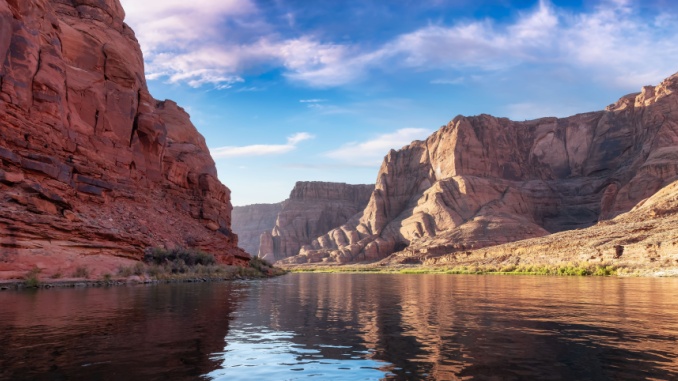
Rep. Andy Biggs (AZ-05), Republican gubernatorial candidate, is leading Arizona’s congressmembers in a bipartisan petition to House leadership to include emergency funding for Colorado River Basin infrastructure.
The Colorado River serves as a critical water supply for Arizona and the six other basin states. 36% of the state’s supply comes from the river. Put another way, the river supplies drinking water for one in 10 Americans.
Additionally, around 2.5 million individuals across the Western states rely on the river for power.
The river has reached historically low water levels due to prolonged drought and increasing aridity. These levels haven’t been seen on the river since the late 1950s.
The letter requested emergency funding to provide for infrastructure investments, upgrades, and long-term planning, noting that the present average flow measurements on the river amount to 20% less of what they were in the 20th century.
Democratic Reps. Yassamin Ansari (AZ-03), Adelita Grijalva (AZ-07), and Greg Stanton (AZ-04) joined the letter alongside Republican Reps. Eli Crane (AZ-02), Abe Hamadeh (AZ-08), and Paul Gosar (AZ-09).
The letter argued that the river’s decline represented a national security threat worthy of emergency funding, citing its critical function as more than a water and energy source for individuals but also as a source for the national security industry. California and Arizona are consistently among the top 10 states for defense spending, and Colorado is in the top 20.
“In addition to helping meet basic needs of communities out West by supplying drinking water, serving as a power source, supporting municipal services, and helping put food on the table, the Colorado River and its related parks, forests, and recreation areas also contribute over $26 billion to the outdoor recreation economy each year,” said the letter. “In addition, the River supports critical national security industries that have taken root in the West, including in the advanced manufacturing, aerospace, and defense sectors.”
The letter also documented congressional precedent for the proposed emergency funding. In 2022, Congress issued $4 billion for drought mitigation with priority given to Arizona and the other basin states. According to the congressmembers, this cash infusion did mitigate the water crisis.
By comparison, congressional funding sits currently at less than $100 million for the river.
“We have no doubt that without this vital funding source, the water crisis today facing our communities would be much worse,” stated the letter. “Funding is urgently needed to limit the pain that could be felt by communities across the basin in the near term and may smooth the path forward for post-2026 operating agreements.”
Biggs said in a statement that bipartisanship was a need because the river represents a crisis far bigger than either party.
“For desert dwellers, nothing is more important than protecting and cultivating our water resources,” said Biggs. “The Colorado River situation is not just an issue for Arizona and the West; it’s an issue that affects the entire country because of the national industries that depend on this water source. I hope that House leadership and appropriators will heed our request and include the necessary funding to prevent this crisis from getting worse and needlessly harming vulnerable Americans.”
AZ Free News is your #1 source for Arizona news and politics. You can send us news tips using this link.
Arizona experienced increases to both unemployment and jobs in the month of June.
The latest monthly update from the Joint Economic Committee (JEC) reflected that Arizona was one of seven states to experience an increase in unemployment and one of 34 states to experience an increase in jobs last month.
Arizona unemployment rose by 0.1% for a total of 4.9%. In other words, employment fell by 22,427 last month and by 91,024 over the past 12 months. That unemployment rate reflects the state’s highest rate since the pandemic.
Labor force participation fell by 0.4% to 60.3% last month, nearing the state’s 10-year low. This decline marked the fifth consecutive month of the downward trend. Over the past 12 months, the state’s labor force participation rate fell by 1.8%. Overall, Arizona ranks 37th in the nation for labor force participation. The state reached its 10-year high in November 2019, at 62.2%, and sank to its 10-year low in April 2020, at 60.2%.
Net payroll jobs grew by 2,400 after a loss of 1,600 net payroll jobs in May. Arizona’s nonfarm payroll employment increased in nine of the past 12 months.
Arizona also ranked 15th in the nation for percentage gain in nonfarm payroll employment over the last 12 months. The state’s private sector added 2,500 net private payroll jobs, reaching a total of 30,300 private payroll jobs over the past 12 months.
An analysis from the Common Sense Institute (CSI) found that Arizona outperformed the nation for job growth in June. CSI found Arizona’s national growth rate to be 0.72%, more than double the national growth rate of 0.32%.
CSI did warn that May’s employment estimates underwent significant revisions, which indicated volatility of monthly labor data. The state initially reported gaining 2,000 jobs for that month. The decline of 1,600 jobs marked one of the largest downward revisions in the nation, per CSI.
JEC reported that Arizona’s best performing sectors for employment from May to June were trade, transportation, utilities, and professional and business services, collectively accounting for the addition of 5,700 jobs. The worst performing sectors were leisure and hospitality and manufacturing, collectively accounting for the loss of 4,200 jobs.
From June 2025 to June 2026, the best performing sectors for employment were private education and health services and professional and business services, collectively accounting for the addition of 30,500 jobs. The worst performing sectors were leisure and hospitality and state and local government, collectively accounting for the loss of 9,900 jobs.
CSI found that Arizona’s mining sector was the fastest-growing industry in the state over the past year. The sector added 1,400 jobs over the past 12 months, a growth of nearly 9%. CSI also found that education and health services also grew at a steady clip of about 3.7%, outpacing national growth.
Nationally, unemployment fell in 30 states, rose in seven states, and remained unchanged in 14 states. The District of Columbia was included in the national analysis and maintained the highest unemployment rate, 6%. South Dakota had the lowest unemployment rate, 2%.
Payroll jobs rose in 34 states and fell in 17 states. Alaska and New Hampshire had the largest payroll job percent increase, and West Virginia had the largest payroll job percent decline.
AZ Free News is your #1 source for Arizona news and politics. You can send us news tips using this link.
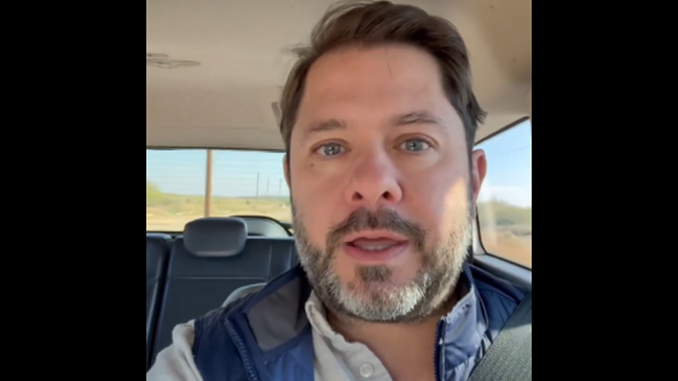
Congressional candidate JoAnna Mendoza is staying silent on new allegations against her fellow Democrat, Sen. Ruben Gallego.
Gallego has been accused of engaging in sexual relationships with at least two congressional staffers which were believed to have occurred between his two marriages. These allegations were detailed in an exclusive report by the New York Post lastweek.
According to three anonymous sources cited by the outlet, Gallego had sexual relationships with two staffers working under Democrat members of Congress from Texas while he was in the House. Members of Congress may not have relationships with their own staffers; though the rules don’t prohibit staffers of other offices, some questioned to what degree consent was possible due to Gallego’s position of authority.
Gallego divorced his first wife Kate Gallego, mayor of Phoenix, in early 2017. He married his second wife, Sydney Barron Gallego, in 2021.
Gallego was elected to the Senate last year.
While other Democrats have made a point to go public with disavowals of those elected officials and candidates facing allegations of sexual impropriety — like Gallego’s longtime best friend Eric Swalwell, or a Senate candidate he endorsed and defended, Graham Platner — Mendoza has not commented on these new allegations.
Mendoza’s campaign received over $7,000 from Gallego through his Juntos PAC as well as the Future Forum PAC, a political action committee involving him and Swalwell. She has expressed their support of her as a point of pride for her campaign, though she declined to disavow Swalwell.
Swalwell faces accusations of sexual misconduct, sexual assault, and rape.
Mendoza has a spotty past with romantic relationships as well. The professed bisexual combat veteran and “single mom by choice” was married for two weeks to a Syrian national, Tariq Alrawwass, according to marriage records obtained by the Daily Mail earlier this month.
Mendoza and Alwrawwass reportedly married in Syria: a fact that raised questions over how the two met, since Mendoza was between enlistments and had not yet served overseas as part of her military service. A March 2001 court filing by Mendoza noted that Alrawwass had relatives in California at the time, and indicated that he could have either been in Syria or the U.S.
Marriage records further reflect that Mendoza and Alrawwass wed in April 1998, about three years after Mendoza had left the Navy and one year before she joined the Marine Corps.
Mendoza’s court records, filed in California, stated that she returned to the U.S. in May 1998, describing it as approximately one week after her marriage, though she didn’t file for divorce until October 2000. A court granted a default divorce judgment several months after Mendoza filed that declaration of her separation from Alrawwass.
Also in recent weeks, Mendoza made headlines for using her official campaign account on Instagram to follow multiple accounts dedicated to erotica and witchcraft. Among those Mendoza followed was former Arizona Democratic Party (ADP) leader Brianna Westbrook, the first openly transgender candidate for federal office in Arizona.
Westbrook’s Instagram profile is public and displays BDSM content and links to Westbrook’s sexual services as his alter ego, Harley DeVil. Westbrook was a former ADP vice chair, congressional candidate, and Democratic nominee to a seat in the state legislature. He was arrested earlier this month for an alleged violent home invasion of a former romantic partner.
Citing these recent and past actions, the Republican National Committee questioned whether Mendoza was fit for elected office. A statement from RNC spokesman Nick Poche said Mendoza’s hesitation to condemn Swalwell and Gallego raised concern.
“Mendoza keeps finding herself connected to the weird, the bizarre, and the downright disgusting,” said Poche. “If she refuses to condemn Gallego and reject his endorsement, Mendoza is endorsing his behavior.”
AZ Free News is your #1 source for Arizona news and politics. You can send us news tips using this link.