by Staff Reporter | Aug 2, 2026 | News
By Staff Reporter |
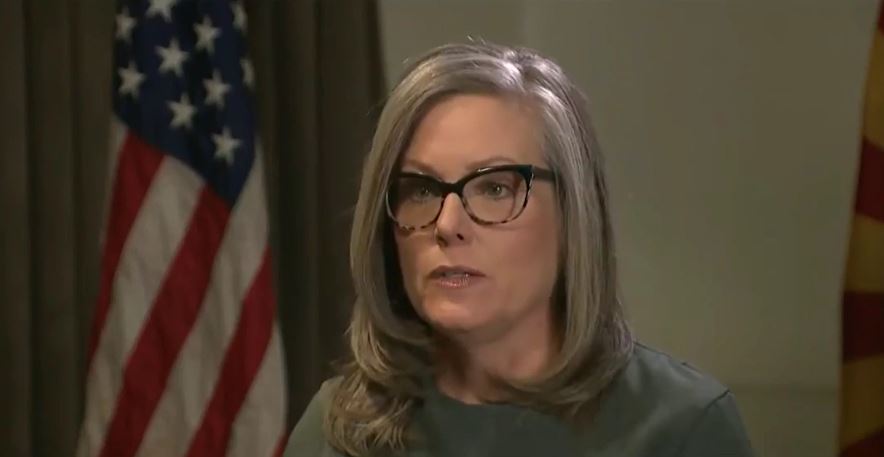
Voters will not be seeing a debate occur in the Arizona governor’s race between Gov. Katie Hobbs and Rep. Andy Biggs.
Hobbs announced formally on Tuesday that she wouldn’t be debating Biggs, though many speculated for months beforehand that would be the case regardless of who won the Republican primary.
The Democratic governor even stonewalled reporters for days after the primary before finally opening up to 12News reporters Brahm Resnik and Craig Harris on the subject.
Hobbs’ campaign manager Nicole DeMont told the outlet that the governor doesn’t find debates important.
DeMont said Hobbs’ time was better spent convincing constituents of her work through a statewide “Arizona First” tour with more than 100 open-press events and interviews.
“We respectfully decline debate invitations in this campaign because face-to-face engagement with Arizonans is more effective than a stage designed for short soundbites and political theater,” said DeMont.
DeMont’s statement confirmed what Hobbs appeared to indicate in media interviews in recent years: that she doesn’t believe debates hold much value with voters anymore.
Some have expressed concern that Hobbs engaging voters unchecked by opponents serves as a calculated echo chamber. They pointed to claims made in a recent Hobbs campaign ad, which were later characterized across the political spectrum as misleading or false.
The governor claimed in the ad to have reduced electricity bills, though utility rates have increased; cut red tape to build more affordable housing, though her administration imposed a housing moratorium that may cost taxpayers millions; and balanced the budget, though the multibillion-dollar surplus flipped into a deficit under her and it was the Republican-led legislature that convinced Hobbs to sign on after months of stalling and a legislative moratorium.
It will have been 8 years since Hobbs engaged in a debate.
In the past, the governor had fled from reporters when pressed on her willingness to debate opponents, and once claimed to have COVID-19 when expected to appear for a debate.
Although Hobbs won’t show, Biggs does plan to appear on the stage for the Clean Elections Debate in October. Drew Sexton, Biggs’ campaign senior advisor, said Hobbs’ continued rejection of debates was less about principle and more about fear of confrontation.
Sexton also said that Hobbs’ avoidance indicated moral failings that would explain the multiple rejections by lieutenant governor picks and the years-long criminal corruption investigation. Sources told The New York Times that both Jimmy McCain, John McCain’s son, and John Giles, former Mesa mayor and Republicans for Harris leader, turned Hobbs down for the role.
“The independent and persuadable voters up for grabs in Arizona deserve to hear from statewide candidates in a traditional debate setting, one that was held in every Arizona gubernatorial race since 1954 until Katie Hobbs ran for the position in 2022,” said Sexton. “Katie Hobbs can avoid the debate stage but she won’t get to avoid voters in November.”
AZ Free News is your #1 source for Arizona news and politics. You can send us news tips using this link.
by Staff Reporter | Aug 2, 2026 | News
By Staff Reporter |
The federal government expects Arizona to do more to conserve its water in the ongoing Colorado River supply crisis while other basin states face far lower restrictions.
Arizona’s elected leaders responded that the state has done more than its fair share to conserve water throughout this historic multi-decade drought, and that they would not accept this federal directive. They indicated that they may challenge the directive in court.
The Final Environmental Impact Statement on Colorado River operations, released by the Bureau of Reclamation on Friday, would require Arizonans to cut water usage by up to 77% in 2027 and 2028.
Arizona, California, and Nevada had proposed water usage reductions that would have reduced Arizona’s supply by about 31%, but the federal government rejected that proposal.
The Arizona Department of Water Resources (ADWR) said the federal decision would “devastate” Arizonans and the state’s economy. ADWR criticized the federal framework for not including reductions to the Upper Basin or sufficient use of water in those upper reservoirs.
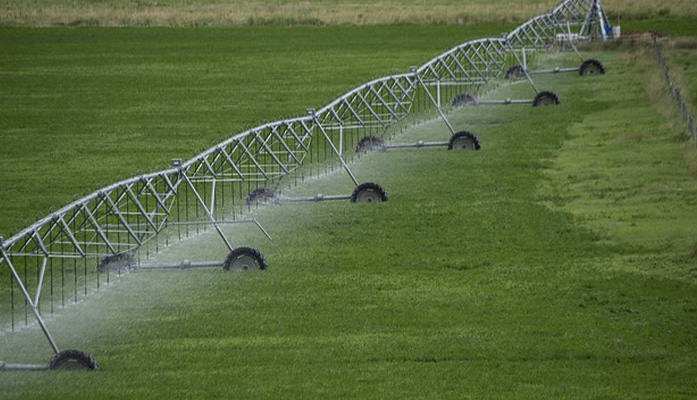
The Colorado River Basin provides drinking water and power for more than 40 million people, and irrigation water for more than five million acres of agricultural land. A 26-year drought has reduced the basin to historically low runoff and reservoir levels.
Arizona, California, and Nevada rely on water from the Lower Basin, while Colorado, Utah, Wyoming, and New Mexico rely on the Upper Basin.
Gov. Katie Hobbs expressed hope that the Department of the Interior (DOI) would still accept the Lower Basin alternative plan, but acknowledged the federal restrictions contained “unacceptable options” that included having Arizona take on the majority of water cutbacks, which Hobbs called “draconian.”
As Rep. Andy Biggs (AZ-05), Republican nominee for governor, mentioned in his appeal to Congress for Colorado River emergency funding, Hobbs cited Arizona’s unique position as a power player in the agricultural and defense industries.
“Arizona provides the agricultural produce, critical minerals, weapons defense systems and cutting-edge semiconductors that feed America, protect America and fuel America’s high-tech economy. No other state in the Colorado River basin can say the same,” said Hobbs.
The DOI has been unsuccessful in its attempts the past six years to reach consensus with Arizona and the six other basin states concerning long-term operational guidelines. The lack of consensus didn’t stop the federal release of the environmental impact statement, since current operational guidelines expire this year and the government must begin new operations on October 1 of this year.
Danny Seiden, President and CEO of the Arizona Chamber of Commerce & Industry, condemned the DOI decision as placing a “deeply disproportionate burden on Arizona” while failing to provide a cohesive conservation solution for all basin states. Seiden said they would stand alongside state leaders to demand a fairer decision.
“[A] plan that imposes severe, enforceable reductions on Arizona while shielding senior users and allowing other states to avoid comparable mandatory commitments is neither fair nor sustainable,” said Seiden. “Arizona will do its part, as it always has, but we will not accept being treated as the system’s default shock absorber. Any sustainable path forward must recognize Arizona’s conservation record, protect the investments our state has already made, and require measurable contributions from the entire Colorado River Basin.”
Rep. Teresa Martinez, an LD16 Republican whose constituents also hail from Pinal and Pima counties, questioned who in Arizona would be expected to cut water usage, and who would be given the better end of the deal.
Martinez said the federal government is forcing communities and farmers to bail out those beginning to feel the effects of the water crisis.
“Pinal County farmers already lost their Colorado River water. That happened years ago. They took the hit without a bailout, without fanfare, and without much sympathy from anybody,” said Martinez. “Rural Arizona cannot keep being treated like the first place to cut and the last place anyone thinks about.”
Martinez said she plans to speak with LD16 community leaders, especially those within the agriculture industry, to gauge the anticipated impact of this latest decision.
AZ Free News is your #1 source for Arizona news and politics. You can send us news tips using this link.
by Staff Reporter | Aug 1, 2026 | News
By Staff Reporter |
Arizona voters will get to decide if public employment should have diversity, equity, and inclusion (DEI) requirements, a court has ruled.
The Maricopa County Superior Court found on Tuesday that Proposition 142 was constitutional, not in violation of the single subject rule as opponents claimed.
Proposition 142, passed by the legislature as HCR 2044, would bar the state and all political subdivisions from making preferential treatments or discriminations based on immutable traits — race, sex, color, ethnicity, or national origin — in public employment, education, or contracting. This would extend to a ban on any preferential consideration given to individuals based on race or ethnicity.
It would also prohibit public entities from requiring individuals to endorse or support preferential treatments or discriminations based on immutable traits as a condition of admission, graduation, hiring, promotion, certification, contracting, or other employment or scholarship opportunities.
Further, the proposition would prohibit requiring or soliciting a written or oral statement supporting certain race-based DEI concepts, theories, or practices, as well as any confession of race-based privilege or discussion of personal race or ethnicity or experiences with the race or ethnicity of others.
The proposition would also prohibit any requirements for employees to undergo and complete DEI trainings or courses.
Will of the People, a progressive political action committee, was behind the lawsuit to prevent Proposition 142 from appearing on the ballot. Also named as a plaintiff in the lawsuit was Joel Edman, Arizona State University’s Democracy Director for the Indian Legal Clinic’s Native Vote Election Protection Project.
Edman founded the Arizona Democracy Resource Center and the Arizona Election Protection Coalition. He was also the executive director for the Arizona Advocacy Network, where he served as a lobbyist. Edman’s wife, Marilyn Rodriguez, founded the lobbying firm Creosote Partners. It was reported in a 2019 feature on Edman by the Flinn Foundation that the two shared office space for their organizations.
The lawsuit argued that Proposition 142 would establish prohibitions already covered by state and federal laws, including the Fourteenth Amendment of the Constitution, the Arizona Civil Rights Act, and Title XII of the federal Civil Rights Act of 1964.
Further on the topic of the Constitution, the lawsuit claimed the proposition violated the right to free speech.
“The absolute bar on trainings, policies, and procedures that are designed or implemented with reference to race or ethnicity is both a content-based and viewpoint-based restriction on speech and therefore violates the First Amendment[,]” stated the lawsuit.
It also contended that the proposition had two subjects: barring preferential treatment or discrimination by the state based on immutable traits, and barring public funding for promoting programs or activities referencing DEI.
The Maricopa County Superior Court rejected those arguments, stating that the proposals were sufficiently connected because they were all rooted in limits on governmental action regarding immutable traits, and that the issue of free-speech restrictions could only be addressed should voters approve the measure.
Will of the People has also sued to stop another legislative ballot referral, HCR 2003, the “Protect Girls’ Sports in Arizona Act.”
AZ Free News is your #1 source for Arizona news and politics. You can send us news tips using this link.
by Staff Reporter | Aug 1, 2026 | Economy, News
By Staff Reporter |
Inflation cooled for the Phoenix metro area last month, and expenditures went up.
The Common Sense Institute (CSI) reported that Phoenix metro’s Consumer Price Index rose 2.8% year-over-year in June, a slight reduction from a 3% reading in April. Energy prices dropped by more than 6% in a single month, attributed to easing tensions with Iran.
CSI noted that Arizona’s growth rate was slower than the rest of the nation. Arizona’s home prices have also cooled while home prices climb nationally.
Over the past seven years, prices have increased in the Phoenix metro area by more than 33%. The typical household pays nearly $1,700 more a month on average for its regular expenditures than they did in the last year before the pandemic hit: around $5,200 to nearly $6,900. CSI estimated that the average Phoenix metro household would have been paying just $600 more compared to 2019 if inflation had followed a steady 2% increase rate these past seven years.
From the national perspective, the Joint Economic Committee (JEC) reported that headline personal consumption expenditure price index inflation rose to nearly 4% from June 2025 to last month. The Federal Reserve’s target for that metric is 2%. Core personal consumption expenditure price index inflation was reported to be nearing 3.3%.
Services inflation rose by 0.13% and goods inflation dropped by 0.63%.
Real personal consumption expenditures increased by $68 billion, or 0.4%. Real personal consumption expenditures on all services increased by $28 billion, or 0.26%, and real personal consumption expenditures on all goods increased by $42 billion, or 0.73%.
The JEC reported that the nominal personal savings rate declined by 0.1% to 2.7%. Headline personal income increased by $55 billion, or 0.2%, and real disposable income per capita increased by nearly 0.3%.
U.S. News & World Report ranked Arizona fourth for economy in its latest Best States annual report for 2026. This marked the highest ranking achieved by the state this past year among all scorecard metrics. The state ranked high for business environment, seventh; growth, seventh; and employment, 17th.
Arizona also ranked 33rd for fiscal stability and 42nd for opportunity: 28th for economic opportunity, 32nd for equality, 35th for affordability, 30th for long-term fiscal stability, and 33rd for short term fiscal stability.
All metric rankings tallied, Arizona came in 34th overall.
Elsewhere, Arizona ranked 21st for healthcare, 23rd for infrastructure, 29th for crime and corrections, 41st for natural environment, and 43rd for education.
The Arizona Commerce Authority issued a new report this month indicating that Arizona is exceeding its goals for the 2026 fiscal year: more than 26,000 potential new jobs added (131% of goal), nearly $110 billion in capital expenditures (2,749% of goal), and more than $81,000 in wages (137% of goal).
Yet, Arizona’s unemployment rate has been outpacing job growth. The state was one of seven states to experience an increase in unemployment, and its rate recently hit a high of 4.9%, numbers not seen since the pandemic. Labor force participation also fell to a total nearing a 10-year low.
AZ Free News is your #1 source for Arizona news and politics. You can send us news tips using this link.
by Staff Reporter | Jul 31, 2026 | News
By Staff Reporter |
The city of Mesa will honor the birth of Jesus Christ with a drag queen show at its multimillion-dollar arts center.
“A Drag Queen Christmas” is the longest-running drag tour in America per the event organizers, Murray & Peter Present. This year, the group will perform at more than 40 locations across the country, including the Mesa Arts Center.
Those listed as performing at Mesa this year are drag performers under the stage names Crystal Methyd, Darlene Mitchell, Discord Addams, Juicy Love Dion, Myki Meeks, Nini Coco, and Silky Ganache. All Drag Queen Christmas performers were either contestants or winners in “RuPaul’s Drag Race,” a reality competition television series.
The event will take place in the Tom and Janet Ikeda Theater, which has more than 1,500 seats.
Publicly available video footage from past Drag Queen Christmas performances showcased some of the performers anticipated to take the stage in Mesa incorporating typical drag race elements in their performances: costumes and dance numbers peppered with sexually suggestive gestures and themes.
Performers incorporated air-humping, gyrating, and other sexual pantomimes; pulled out sex toy props; and made references to their genitalia or sexual desires.
Tickets for the Drag Race Christmas in Mesa cost between $43 to $151 for seating, and an additional $134 for a meet and greet. Based on seat pricing, a sold-out show could bring in around $130,000 in ticket sales.
The show is limited to people aged 18 and older, though in Arizona it’s not illegal for children to attend these shows.
Republican lawmakers initially attempted to prohibit the exposure of minors to drag shows, as well as ban public funds for them, but Gov. Katie Hobbs swiftly squashed that effort when she vetoed a group of those bills upon taking office in 2023.
The city of Mesa has more than $18 million listed as projected expenditures this year for the Mesa Arts Center, more than $5 million of which was reported for live performances. The city’s budget reported more than $9 million allocated to the arts center.
The city has also listed more than $8 million for operations, nearly $2 million for fund development, more than $1 million for adult and youth studio classes, nearly $900,000 for education and engagement, and more than $89,000 for volunteer recruitment and management.
The Fox Tucson Theatre in Tucson will also be hosting A Drag Queen Christmas performance this year.
The tour came through Arizona last year as well, hitting the Phoenix Theater in Phoenix and the University of Arizona main campus in Tucson.
Mesa is represented in the Arizona legislature by a supporter of drag shows.
State Rep. Lorena Austin (LD9), a Democrat representing Mesa, partnered with Planned Parenthood Advocates of Arizona to host a Drag Story hour in the Arizona Legislature’s basement in 2024.
House leadership accused Austin of misleading them when reserving the space for an event, and her actions resulted in Democrats temporarily losing access to House meeting rooms.
Austin rejected the accusation in a response published by Arizona House Democrats.
Austin would then go on that summer to host a drag show fundraiser open to all ages.
AZ Free News is your #1 source for Arizona news and politics. You can send us news tips using this link.