A Maricopa County Superior Court judge ordered Arizona election officials Tuesday to rewrite the descriptive title and “yes” and “no” statements for Proposition 212. The judge found that the current version omits substantial changes to enforcement and government oversight and misleadingly describes Arizona’s Empowerment Scholarship Account (ESA) program as a “school voucher program.”
Judge Julie Ann Mata enjoined Secretary of State Adrian Fontes from using the current language on the official ballot or in the publicity pamphlet. She also issued a writ directing Fontes and Attorney General Kris Mayes to revise the language in accordance with state law and her ruling.
The court left the exact wording to Fontes and Mayes under their statutory drafting and approval authority. Mata declined to order the state to adopt replacement language proposed by the plaintiffs and denied their request for attorneys’ fees and costs.
Daryl Groves and the Arizona Free Enterprise Club (AFEC) filed the case against Mayes and Fontes on July 28. Protect Education, Accountability Now, the political committee sponsoring Proposition 212, participated as a friend of the court in support of the challenged language. The defendants argued that the wording fairly summarized the measure and complied with A.R.S. § 19-125(D).
AFEC called the order a “major victory for Arizona school choice” and said, “Arizona voters deserve the truth.”
BREAKING NEWS: MAJOR VICTORY FOR ARIZONA SCHOOL CHOICE
The Arizona Free Enterprise Club has won at the trial court in our lawsuit challenging the misleading ballot language drafted for Proposition 212: the union-backed initiative targeting Arizona’s ESA program.
Mata wrote that the court’s review addressed the accuracy of the ballot language and left the policy merits of Proposition 212 to voters.
The version posted by the Secretary of State before the ruling states that Proposition 212 would limit ESA eligibility to families earning $150,000 or less per year, with specified exceptions; prohibit spending on noneducational and luxury items; impose qualifications on tutors; require accreditation or testing for participating schools; and generally return unspent annual ESA allocations to the state.
The full initiative also gives the sponsoring committee or its designee standing to initiate or intervene in litigation to enforce or defend the measure. Mata found that authority to be a substantial change that the ballot title or description must disclose. She found that the existing phrase “other rules and restrictions” failed to adequately inform voters about it.
Mata also found that the “yes” statement omitted a substantial change to two existing statutory limits on government control or supervision of nonpublic schools and homeschools. Proposition 212 would amend those provisions to permit control or supervision provided elsewhere in the ESA chapter for schools and homeschools receiving ESA funds. The court did not rule on the constitutionality of that proposed change.
The judge separately found the phrase “school voucher program” misleading. She cited Arizona decisions that invalidated two voucher programs and later upheld the ESA program under a different legal structure. Mata wrote that using the phrase could lead voters to treat the legally distinct programs as equivalent.
The court rejected one of AFEC’s arguments. The group argued that describing the $150,000 income limit as “adjusted for inflation” could mislead voters because the initiative caps the annual adjustment at the lower of 2% or the change in the gross domestic product price deflator. Mata found the existing wording provided appropriate information and held that omitting the precise formula was not misleading.
In a separate decision, Maricopa County Superior Court Judge Daniel Martin also ordered changes Tuesday to a separate piece of voter information concerning Proposition 212. The judge directed the Arizona Legislative Council to revise its analysis for the publicity pamphlet by Aug. 21.
Martin found the Council’s statement that the initiative committee would have “the power to sue the families and private schools that participate in the program for any violations of the proposition” sufficiently partisan to violate state law. He ordered the Council to strike or revise the language by Aug. 21. The Council’s adopted three-page analysis is governed by a separate law requiring an impartial explanation for the publicity pamphlet.
Mata’s case concerned the shorter ballot title and “yes” and “no” statements prepared by the Secretary of State and approved by the Attorney General.
Proposition 212’s ballot qualification remains the subject of separate litigation over petition circulators and signatures. That case, Clark v. Fontes, is a Goldwater Institute and AFEC-backed challenge to the initiative’s petition circulators and signatures. Maricopa County Superior Court Judge David McDowell is expected to rule on the matter by the end of the week. The amended complaint seeks to prevent the initiative from appearing on the November ballot.
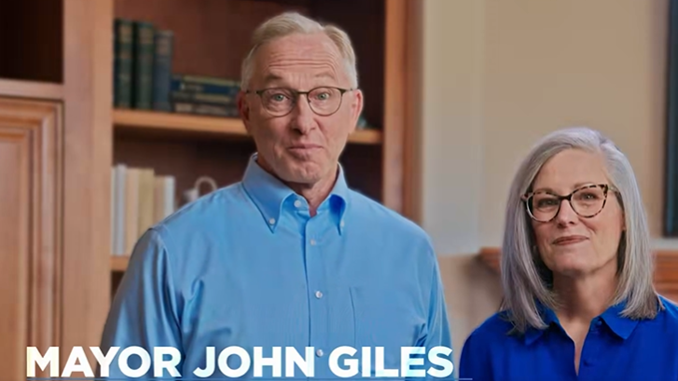
Gov. Katie Hobbs confirmed that the rumors of her lieutenant governor pick were true: John Giles is her running mate.
Hobbs went public with her decision the weekend following an initial deadline from the secretary of state’s office, reportedly established to ensure the state had adequate time for ballot printing.
Giles is the former mayor of Mesa and a recently registered independent who voted in the Democratic primary this year. Giles voted for Joe Biden in 2020, endorsed Sen. Mark Kelly in 2022, and Kamala Harris in 2024.
During the 2024 election, Giles led the Arizona Republicans for Harris organization and spoke at the Democratic National Convention. Giles said in Tuesday’s announcement that those with the Republican Party were “extremists” that prevented good governance.
“I was a lifelong Republican before becoming an independent because extremists shouldn’t stand in the way of getting things done,” said Giles.
Arizona deserves leaders who put our state ahead of partisan politics.
That’s why I’m proud to have former Mesa Mayor @johngiles4AZ by my side as my pick for Lieutenant Governor.
Together, we’ll put Arizona first, deliver real results, and keep moving our state forward. pic.twitter.com/TddoGok0Ve
Not long after going public as Hobbs’ running mate, Giles announced he would fall in line with Hobbs’ preferred non-engagement approach to campaigning and announced he would not be participating in any public debates.
Sine Kerr, Republican nominee Andy Biggs’ running mate, had stated shortly after Hobbs’ reveal that she was eager to debate Giles.
“We should discuss my Arizona Women’s Bill of Rights legislation and SB1583, which protected children from predators,” said Kerr. “Katie Hobbs vetoed both. Maybe John Giles can explain why.”
Kerr said Hobbs and Giles avoiding debates was unfair to voters.
“It’s really unfortunate that they don’t want to stand for a debate. They don’t want to answer tough questions,” Kerr said. “I think it’s very disrespectful to the people, to the voters of Arizona.”
The Arizona Clean Election Commission scheduled a debate between the lieutenant governor picks to occur on October 5.
Looking forward to the Lt. Governor’s Debate on October 5th with Democrat primary voter John Giles.
We should discuss my Arizona Women’s Bill of Rights legislation and SB1583, which protected children from predators.
Hobbs told Arizona’s Family that she selected Giles because he, too, has a history of governing beyond political party.
“I believe Arizonans deserve leadership that puts them ahead of the partisan politics. That’s how I’ve governed,” said Hobbs.
Hobbs dismissed the notion that issues facing Arizonans, including traditionally partisan ones like abortion, were not actually partisan.
“[P]rotecting reproductive freedom, which is not a partisan issue. It’s something that a vast majority of Arizonans support. We’re on the same page,” said Hobbs.
Giles said that the topic of abortion should be left to the voters, which is why he supported Proposition 139.
“I’m a Republican with standards,” said Giles. “In recent years, I felt like some of the folks at the top of the ticket and the Republican Party were just below the bar with regard to character and commitment to the Constitution and rule of law.”
Many of Giles’ most significant policies and initiatives as mayor of Mesa aligned with Democratic Party priorities. In some cases, Giles preempted Hobbs on progressive policy.
In 2021, Giles led the passage of an ordinance to add sexual orientation and gender identity to the protected classes in the city’s nondiscrimination laws. The ordinance was similar to those adopted by the cities of Phoenix, Flagstaff, Tempe, and, later, Chandler.
Residents opposed to the ordinance cited concerns of males entering spaces historically reserved for females, such as restrooms and locker rooms, and that businesses would face religious persecution. Giles dismissed those concerns as not based in reality and told those opponents that the city had considered the ordinance since he joined as a city council member in 2014. About two years later, Hobbs’ first executive order prohibited gender identity discrimination.
“We’re not breaking any ground here,” said Giles. “This ordinance is moderate and reflects the input from the community. This is a mainstream ordinance that hasn’t been dictated to us from any outside groups.”
AZ Free News is your #1 source for Arizona news and politics. You can send us news tips using this link.
Arizona Democrat’s nominee for the 6th Congressional District refused to elaborate this week on why she opposes a measure that would prevent males from entering female-only spaces and sports.
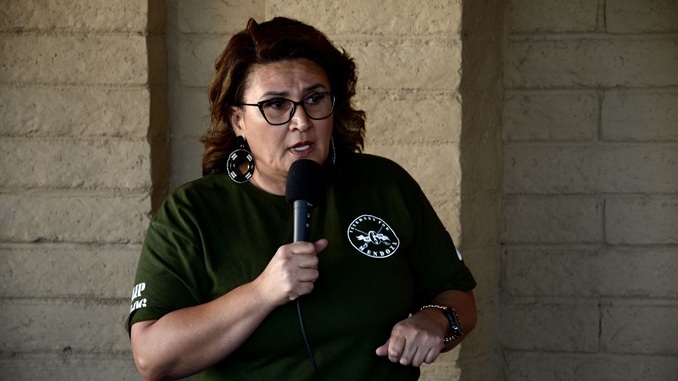
JoAnna Mendoza ignored public questioning when asked about her opposition to Proposition 318, a ballot initiative that would require schools and athletic associations to restrict individuals to private spaces and sports teams designated for their biological sex.
The proposition, titled “Require Schools and Athletic Associations to Restrict Use of Restrooms, Locker Rooms, and Other Privates Spaces Based on Sex,” would also define sex as the biological status as male or female recorded at birth on the original birth certificate.
Yesterday, YES on Prop. 318 – Protect Girls Sports released a new video entitled "Pretending.” Please watch and share.
The opposition's website copies the YES on Prop. 318 website- violating Arizona election law, as well as, consumer protection and copyright laws.
Mendoza indicated in a statement to American Journal News last month that she opposed the proposition. Mendoza implied that the question shouldn’t be decided by a ballot vote but should instead be decided by parents, coaches, and sports associations.
“As a mom, I know that parents just want to protect their kids on the playing fields and across Arizona,” said Mendoza. “Rules about keeping sports fair and safe for young people should be made by the people who know the most — parents, coaches, and sports associations — not politicians.”
Mendoza is running for the 6th Congressional District to unseat its Republican incumbent, Rep. Juan Ciscomani.
Mendoza had previously stated during the 2020 campaign for the state legislature that legislation requiring strict biological gender adherence for sports teams was “toxic” and non-inclusive. In deleted interview footage, Mendoza said public schools and sports needed to be inclusive of transgenderism.
“And I believe that we need to ensure that our students from all backgrounds from the LGBTQ community should feel accepted and safe in their environments and at school,” said Mendoza.
The National Republican Congressional Committee spokesperson Ben Petersen said Mendoza was a “far-left lobbyist” that has strategically toned down her rhetoric on these politicized issues.
“Lobbyist Mendoza called concerned parents ‘toxic’ for wanting to protect girls’ sports, and now she won’t even explain why she opposes this common sense ballot initiative,” said Petersen.
It was also during her 2020 campaign that Mendoza advocated for legalizing prostitution, especially for transgender women of color and other communities she characterized as marginalized.
Mendoza has received backing from major Democratic donors.
Mendoza raised more than $7.3 million. Some of her biggest single contributors have been the House Victory Project 2026, JStreetPAC, New Politics Next Mission Fund, Dem Rising 2026, Emily’s List, Invest to Elect Illinois Battleground Support 2026, and VoteVets Hellcat Victory.
Mendoza also received funding from the Soros family via George Soros’ son Jonathan Soros.
In recent weeks, Mendoza has faced questions over her campaign salary and financial disclosures changes. In her 2026 candidate financial disclosure filed last month, Mendoza reported receiving a salary of more than $35,000. Other campaign finance filings reflecting regular payroll payments to Mendoza indicated that she was compensated much higher: approximately $102,000 annually before taxes.
OpenPolitical’s federal campaign finance data reflected that Mendoza’s campaign reported nearly $300,000 in payroll-related expenditures.
Ciscomani has raised more than $6.1 million. His biggest single contributors so far have been the Ciscomani Victory Fund, Grow the Majority, Defend Our Majority, and Emmer Majority Builders.
AZ Free News is your #1 source for Arizona news and politics. You can send us news tips using this link.
The Biden administration publicly lauded the safety and efficacy of the COVID-19 vaccine — but privately, they shared concerns similar to those they worked to dissuade.
A text exchange released during an ongoing congressional investigation into Dr. Anthony Fauci, former director of the National Institute of Allergy and Infectious Diseases, revealed that the doctor was aware that COVID-19 vaccines could cause miscarriages. Fauci texted Rochelle Walensky, former Centers for Disease Control director, that the side effects from the vaccine could be severe enough to kill an unborn child.
“[A]nother issue came up that you need to be aware of,” wrote Fauci. “Since many people have significant cytokines storm and fever after the second dose, this theoretically could be associated with miscarriage in the 1st trimester.”
And yet, several months later, Walensky issued a public advisory urging pregnant women to get the COVID-19 vaccine and claiming it was safe for their unborn children.
“Importantly, no safety concerns were observed for people vaccinated in the third trimester or safety concerns for their babies. As such, CDC recommends pregnant people receive the COVID-19 vaccine,” said Walensky.
Despite privately texting with Fauci about their concerns regarding COVID shots for pregnant women, Rochelle Walensky told the public on April 23, 2021:
President Joe Biden gave Fauci a full and unconditional pardon for any federal offenses in which he may have committed or participated from Jan. 1, 2014, to Jan. 19, 2025.
Last week, a Senate committee voted to hold Fauci in contempt. The Homeland Security and Governmental Affairs Committee called Fauci to testify on his handling of COVID-19. Fauci refused to answer most questions. He invoked his Fifth Amendment right to remain silent more than 100 times during the three-hour hearing.
Rep. Andy Biggs (AZ-05) was not only one of the first to condemn Fauci for his refusal to engage with Congress — he was one of the first elected officials to push back against the COVID-19 response under Fauci.
Biggs spoke early and often during the COVID-19 pandemic advocating against prolonged shutdowns and enforced mandates.
In April 2020 — just one month into what would become a three-year emergency declaration peppered with mandates of masks, vaccines, quarantines, curfews, and shutdowns — Biggs issued an op-ed urging the federal government to end the shutdown.
“It’s time for a new approach, one that values and protects all life,” wrote Biggs at the time. “We must give hope to the public and set forth a plan to reopen the economy and remove oppressive government restrictions. Right now, the cure is proving worse than the disease itself.”
For the first few years of the pandemic, Biggs chaired the House Freedom Caucus. While in that role and as a member of the Congressional Task Force on Reopening the American Economy, Biggs challenged the growing responsibilities of bureaucrats regarding the pandemic. Biggs demanded the disbanding of the Coronavirus Task Force in July 2020 on the claim that Fauci and his cohorts were intentionally undermining Trump’s efforts to roll back COVID-19 restrictions and reopen the economy.
Biggs was also one of the few in Congress to vote against the COVID-19 relief funds that now, years later, have gone beyond their pandemic purpose and been farmed out to fulfill various elected officials’ policy wish lists, like Gov. Katie Hobbs canceling medical debt and her rumored lieutenant governor pick John Giles establishing a homeless housing program that coincided with a 31% surge in homelessness.
Biggs then co-authored another op-ed in May 2020, again calling for an end to the shutdown and accusing Fauci of intentionally curbing American freedoms. In the early days of the pandemic, Fauci had promised the shutdown would last two weeks to flatten the curve.
AZ Free News is your #1 source for Arizona news and politics. You can send us news tips using this link.
The Democratic nominee for Superintendent of Public Instruction, Teresa Leyba Ruiz, says Arizona’s school choice funds should be reverted back to the public schools.
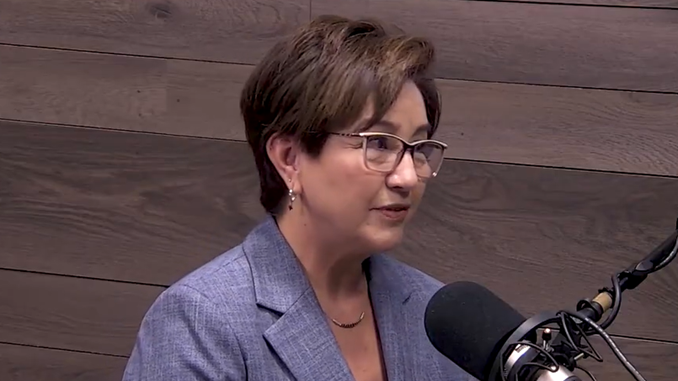
Ruiz, the former president of Glendale Community College, told “The Mike Broomhead Show” on KTAR that Empowerment Scholarship Account (ESA) funds should be converted to public school funding under her administration of the Arizona Department of Education (ADE).
Ruiz said that she would like to use ESA funds to pay for a literacy coach in every single classroom. Ruiz said if Arizona spent more on its schools, parents would be “fighting” to stay in public schools instead of leaving.
“Right now, in Arizona, there’s over $350 million dollars being stockpiled for future use, for college perhaps. Wouldn’t it be amazing if we took that money and invested it in our schools?” said Ruiz. “If we just invested in our schools — remember this is 50 years of underfunding and not prioritizing our public schools.”
The state spent more than $13.4 billion on public schools in the past fiscal year, an increase of $300 million from the prior fiscal year. Per-pupil spending was more than $12,000, and the average teacher salary was more than $65,600.
Instructional spending declined for the third consecutive year to 52%, the lowest rate since state monitoring began in 2001.
Ruiz also told KTAR on the “AZ Political” podcast that ADE would save money by creating an automated denial system for ESA funds.
“Over $650 million of our taxpayer dollars have flown out the door, unchecked and unchallenged. No oversight on the front end, and that’s something we would put an end to,” said Ruiz. “We’re talking about having a modern, automated system that can quickly process transactions that are appropriate and flag and stop inappropriate transactions.”
According to the current superintendent, Tom Horne, ADE automatically approved expenditures under $2,000 due to lack of staffing. Problematic expenditures under that cap would be subject to review post-approval.
Ruiz said it was for a lack of leadership that Horne had that problem. She claimed that ADE could have shifted resources from one aspect of the department to another to make up for understaffing within the ESA expenditure approval team.
Ruiz served on President Joe Biden’s Advisory Commission on Advancing Educational Equity, Excellence, and Economic Opportunity for Hispanics, specifically the committee for Advancing Higher Education and Hispanic Serving Institutions. The commission was part of the Biden administration’s reestablishment of the Hispanic-Serving Institution programming, which used federal funding to incentivize higher education institutions to intentionally prioritize Hispanic students within admissions.
Ruiz’s commission resulted in the July 2024 creation of the White House Initiative on Advancing Educational Equity, Excellence and Economic Opportunity Through Hispanic-Serving Institutions, which formally prioritized Hispanic-serving institutions through federal recruitment, federal resources, and federal funding.
The commission also successfully convinced the Biden administration to expand federal TRIO programming to illegal alien students classified as Dreamers; TRIO programming has historically provided low-income American citizens with support services such as college campus visits, tutoring, and assistance with college and financial aid applications.
Ruiz also served in the Aspen Institute’s 2018-2019 Presidential Fellows Program; as reported previously, the Aspen Institute played a major role in covering up the Hunter Biden laptop scandal ahead of the 2020 election.
AZ Free News is your #1 source for Arizona news and politics. You can send us news tips using this link.