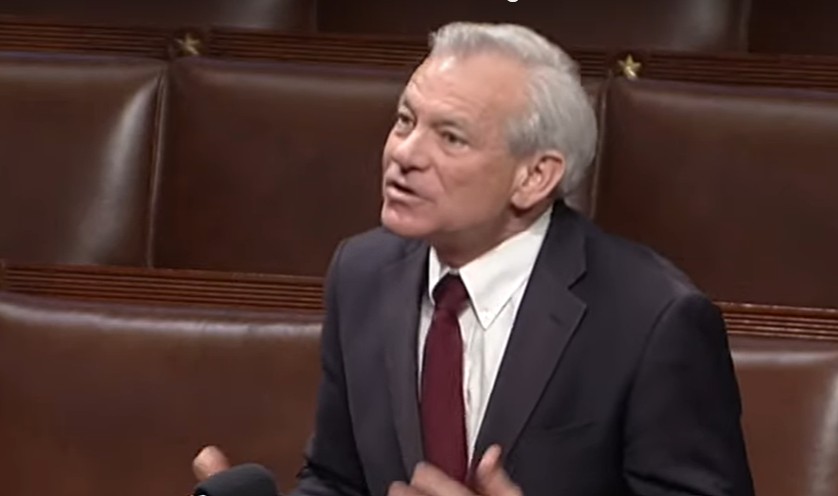
The Joint Economic Committee (JEC) chairman, Republican Rep. David Schweikert (AZ-01), says the government’s inaction on the $40 trillion national debt is “immoral.”
The JEC leader issued a statement on Thursday after the national debt reached a new record high of more than $40 trillion. This fiscal year, the U.S. added more than $2.4 trillion to the national debt. The JEC noted in its press release that interest payments on the national debt make up the fourth-largest line item in the federal budget.
Schweikert said the debt posed “a dangerous fiscal trajectory” that forecasts future economic demise as well as the reality that the national debt will consume most of federal spending.
“Our debt is quickly switching from sustainable, business as-usual, to an unsustainable, market-unraveling nightmare. At this rate, it won’t be long before we face catastrophic consequences,” said Schweikert. “Congress must take the math seriously and act now by charting a new economically responsible path to secure our nation’s future for generations to come. To do nothing or keep on this path is flat out immoral.”
The Government Accountability Office (GAO) has defined that unsustainability as an economy growing at a much slower pace than the debt.
Rising federal debt will raise borrowing costs, such as for home and car loans; stagnate wages and curb investments; and increase the costs of goods and services overall, if not lead to shortages.
Deficits have only continued to grow despite the announced goals and promises from Trump administration leaders.
Treasury Secretary Scott Bessent established a substantial goal of deficit reduction: three percent of GDP by 2028. Deficits have grown. Bessent has said that the war in Iran, tariff refunds, and misappropriated tax cuts have been the main culprits behind stunted improvements to deficits.
The federal response to the COVID-19 pandemic represented unprecedented spending, as noted by the GAO in its page dedicated to federal debt and debt management.
One of President Donald Trump’s promises upon his initial election in 2016 was to eliminate the national debt within two terms. At the time, the national debt was more than $19 trillion.
The GAO projected in March that continued federal deficits will add an average of $2 trillion to the debt annually through 2036. If unchecked, debt will surpass $60 trillion.
Based on those projections the GAO has, like Schweikert, characterized the debt progression as an unsustainable fiscal path and urged Congress to develop a debt reduction strategy, which it had urged previously in 2020.
In its March publication, the GAO renewed its recommendations to Congress from 2020 as well as a recommendation from 2015 and 2020. The 2015 recommendation encouraged Congress to replace the current debt limit process with a clearer approach to link decisions on debt to decisions on revenue and spending.
The GAO also reported that the Department of the Treasury has increased the size and frequency of its debt auctions since fiscal year 2014. In fiscal year 2025, the GAO reported that the Treasury Department held more than 400 auctions of bills, notes, and bonds to borrow $1.9 trillion for government operations and refinance $9.1 trillion of maturing debt.
AZ Free News is your #1 source for Arizona news and politics. You can send us news tips using this link.
One candidate’s voting records are resurfacing amid a heated race for the 1st Congressional District seat.
Democratic nominee Amish Shah, while a state representative, voted against a measure banning sex change surgeries for minors.
Shah took the vote in 2022 while representing the 24th Legislative District. He did not explain his vote during the House floor decision on the bill.
Senate President Warren Petersen, a Republican, sponsored the legislation.
Shah also voted against bills perceived as noninclusive of transgender individuals, including a ban on males from participating in female sports, and a requirement for students to use bathrooms in accordance with their biological sex.
This resurfaced voting record provides a context of continuity with Shah’s approach as a lawmaker, considering his promises to voters in recent months to represent a further-left faction of the Democratic Party.
Publicly, Shah has styled himself as an independent that works beyond political party.
His platform proposes advancing socialized medicine, codifying abortion, ending tariffs, and increasing public school funding. When Shah first announced his candidacy last May, he pledged to defend abortion access, namely for the abortion drug mifepristone.
I believe in universal healthcare. The system is broken. #LD5#ShahForAZ
During his time in the state legislature, Shah balanced his public commitment to bipartisanship by introducing legislation that aligned with a more progressive arc, such as a bill to expand anti-discrimination laws by affording protections for gender identity and sexual orientation, and another bill to redefine marriage within the state constitution.
That anti-discrimination expansion bill has been included within Shah’s bipartisanship count, since Shah cosponsored the bill alongside former Arizona House Speaker Rusty Bowers, a Republican.
Shah played an active role in the 2020 presidential campaign of Sen. Bernie Sanders. Shah headlined a town hall for the Sanders campaign and endorsed his approach to socializing healthcare. In one town hall, Shah proposed replacing capitalism with socialism.
It was prior to his unsuccessful 2024 campaign for this same seat that Shah openly situated himself within the socialist camp of the Democratic Party. Shah lost that 2024 race despite outspending his opponent by several million, Rep. David Schweikert.
Shah also signed onto a compact to make Washington, D.C., into the 51st state. Shah was among 33 Democratic lawmakers from Arizona to sign the 2021 letter. In 2023, Shah followed up on that letter by cosponsoring a 2023 resolution to support D.C. statehood.
Shah has declined to sign onto other compacts. Shah is not among the signatories on board with Promise to America, a commitment for Democratic elected officials and candidates to oppose socialism.
Shah’s primary election opponent, Marlene Galan-Woods, did sign onto the pledge.
Apart from himself, among Shah’s biggest single donors have been the IA Victory Fund, a joint fundraising committee based out of D.C., and 314 Action Impact Slate, a hybrid PAC based out of D.C.
Shah has raised more than $1.8 million this reporting period, per Federal Election Commission data.
The Republican nominee in the race, Jay Feely, has raised more than $2.5 million. As with Shah, apart from himself Feely’s top donors include Grow the Majority, a Virginia-based PAC, and Emmer Majority Builders, a Georgia-based PAC.
AZ Free News is your #1 source for Arizona news and politics. You can send us news tips using this link.
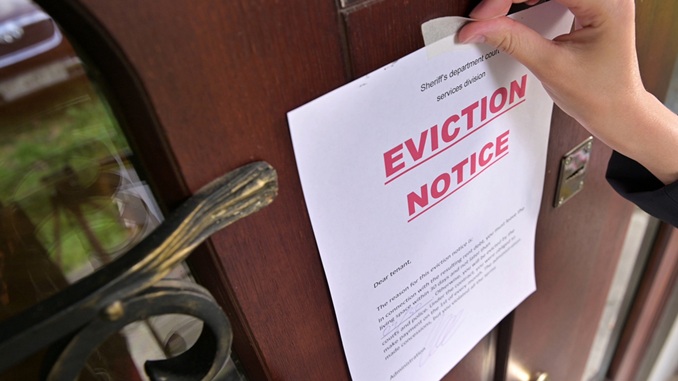
Maricopa County taxpayers will pay up to two months of rent for those facing eviction for nonpayment.
Maricopa County has partnered with the city of Phoenix to launch a pilot program aimed at preventing evictions. The county allocated $800,000 from its fiscal year 2027 budget to pay for the pilot program, and the board of supervisors approved it in May.
Board Chair Kate Brophy McGee said the program was modeled after the Texas Eviction Diversion Program, a pandemic-era relief program established via emergency order by the Texas Supreme Court which ended in 2023.
“For three straight years, Maricopa County Justice Courts have processed more than 80,000 eviction filings. That’s 80,000 individuals or families on the brink of homelessness each year, at a time when that population is already high,” said Chair Kate Brophy McGee, District 3. “This pilot, modeled after a successful program in Texas, aims to address our eviction crisis head-on with interventions that are sustainable and effective. They are a hand up, not a hand out.”
Eligible residents may receive as much as $3,000 to cover two months of rental arrears; those with rental arrears exceeding three months past due and those with rental arrears exceeding $3,000 don’t qualify. Should every program participant qualify for the maximum relief amount, approximately 265 individuals would receive rental assistance.
Residents must reside in zip codes 85008, 85040, 85041, 85042; have citizenship or lawful permanent residency; have experienced a temporary emergency or financial setback; and can demonstrate ability to pay monthly rent moving forward.
Proof of ability to pay rent in the future includes an individual’s last two pay stubs, employment verification letter, Social Security income verification letter, a job offer letter, “other income verification,” or self-attestation.
The program also accepts on self-attestation from a resident to indicate financial hardship impacting their ability to make future rental payments. Verifiable evidence of the nature of the professed temporary hardship must be provided: terminated employment, reduced work hours, business closure, short-term illness or disability, medical bills, funeral expenses, car repairs, natural or manmade disaster, victimization by crime or domestic violence, or a self-attestation describing the temporary hardship.
Further, the program requires property owner participation. Property owners must provide documentation of the rental agreement, a tenant ledger, and other forms to include a W9.
“A key condition of receiving financial assistance includes the property owner agreeing that the amounts paid by the program fully satisfy the covered rental arrears and eligible charges,” stated the county press release.
The county’s application link sends users to an email with a domain name for HOM, an Arizona-based housing assistance and social services organization with operations in Colorado and Los Angeles, California.
On its website, HOM advertises as having assisted with the distribution of more than $9 million in monthly housing assistance, provision of monthly assistance to more than 6,900 households, and provision of housing subsidies for more than 3,000 properties.
AZ Free News reported earlier this month that the city of Phoenix is also considering the continuation of eviction legal services. That pilot program began in January 2025 with $1.2 million sourced from interest accrued from American Rescue Plan Act funds. City leaders say they would like to continue the program beyond its scheduled end date in June 2027.
AZ Free News is your #1 source for Arizona news and politics. You can send us news tips using this link.
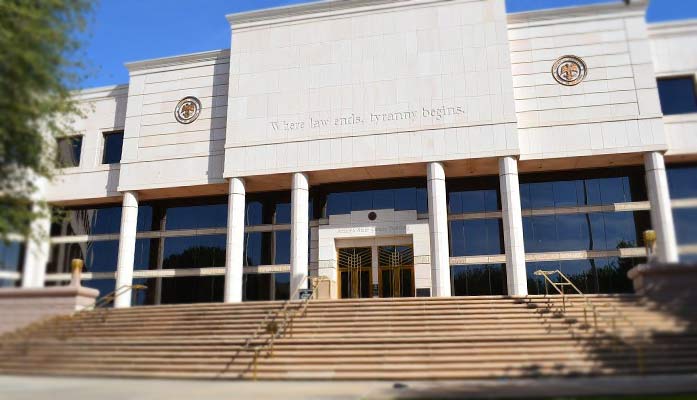
Teachers’ union activists were once again dealt a serious blow after the Arizona Supreme Court issued an order effectively removing an initiative from the ballot that aimed to undo the state’s universal school choice program.
Nearly four years ago to date, a similar initiative was removed from the ballot for failing to have the required number of signatures. Katie Hobbs, secretary of the state at the time and now the governor, held out on invalidating the ballot initiative.
The court’s order to recalculate the signature totals using the trial court’s formula, issued on Tuesday, is projected to have brought Proposition 212, the Protect Education Act, below the required signature total following a legal challenge filed by the Goldwater Institute in Clark v. Fontes.
Protect Education Accountability Now, the political action committee (PAC) behind the Protect Education Act, confirmed that the Arizona Supreme Court order meant their initiative would not qualify for the ballot.
The PAC blamed “big money in partnership with Republican lawmakers and the anti-public education lobby” for the initiative’s demise.
A spokesperson for the PAC stated that the initiative should have been included on the ballot regardless of the invalid signatures.
“This does not reflect what Arizona voters want. It does not reflect the overwhelming support of educators, parents and public school advocates across the state who volunteered their time and demanded a voice in reforming a program that abused taxpayer money and pulled funding from their neighborhood public schools,” said the spokesperson. “Instead, the hard-earned resources educators raised to fund this were buried under a mountain of big money, political power, and a system that consistently sides with special interests.”
— Protect Education Ballot Initiative (@ProtectEdAct) August 18, 2026
Activists submitted around 420,000 signatures to qualify for the ballot. Pending a review incited by the Goldwater Institute’s court challenge, the number of valid signatures will fall to a projected total of approximately 245,000. The initiative needed approximately 256,000 to qualify for the ballot.
Nearly 70,000 signatures were invalidated due to their discovery as duplicates or having been collected by legally ineligible circulators, like felons. The court also upheld the trial court ruling which invalidated entire sheets of signatures due to the petition circulator providing an address at which they weren’t living.
The ballot measure would have rolled back the universality of the Empowerment Scholarship Account (ESA) program by imposing an income cap.
The union-backed Protect Education Act appears to have fallen short of the valid signatures needed to make the November ballot.
In this special Keep Arizona Free Update with @Darla4freedom:
➡️ The campaign submitted roughly between 416,000-421,000 signatures, but after trial… pic.twitter.com/l7886cgtT9
The court also agreed with a lower court ruling that the ballot language drafted by Secretary of State Adrian Fontes was false and misleading because it used the term “voucher” to describe the ESA program. Vouchers must be spent immediately and only at certain approved schools, whereas ESA program funds may be rolled over and applied to various schooling types and educational resources.
The PAC behind this second failed initiative to end universal school choice raised more than $7.5 million and spent more than $7.2 million.
More than $6.5 million, or 87%, came from the National Education Association. $810,000, or nearly 11%, came from the Arizona Education Association.
Other major donors included $50,000 from the United Food and Commercial Workers Active Ballot Club, the PAC of a D.C.-based union; and $50,000 from Arizonans for Quality Education, a corporation or LLC based in Phoenix.
The latter entity was formerly known as Friends of ASBA, with ASBA standing for the Arizona School Boards Association, and was registered as a domestic nonprofit corporation, according to Arizona Corporation Commission (ACC) records.
AZ Free News is your #1 source for Arizona news and politics. You can send us news tips using this link.
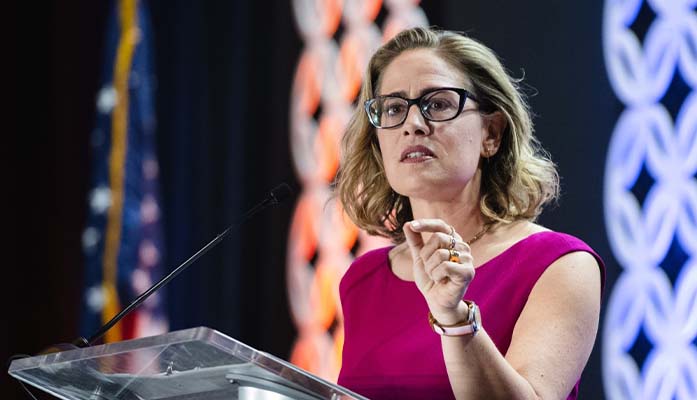
Former U.S. Senator Kyrsten Sinema revealed more details into her affair with a married veteran who had been her bodyguard while in office.
A new narrative of the affair was made available through depositions filed in the ongoing lawsuit initiated by the bodyguard’s ex-wife under North Carolina’s homewrecker law, which enables an individual to sue the person they believe to be the cause of their divorce.
Matthew Ammel (Ammel), Sinema’s former bodyguard, had been married to the plaintiff, Heather Ammel (Heather), for 14 years. The Ammels had three children together. Ammel began working for Sinema in the spring of 2022.
Sinema admitted in her July 31 deposition that despite knowing Ammel was married with children, she and Ammel had sex for the first time on May 27, 2024, while on a Memorial Day trip in Napa, California. Prior to that date, Sinema denied having ever flirted with him, let alone held or touched him in any way that could be considered romantic in nature.
The former senator is seeking to dismiss the lawsuit on the claim that the affair never took place in North Carolina, physically or electronically.
At one point in Sinema’s deposition, evidence was discussed which reflected that Sinema’s phone registered her location in Southern Pines, North Carolina, when she called Ammel on the afternoon of Nov. 1, 2024. Sinema denied having been in that location on that date and insisted that she was in New York City.
Both Ammel and Sinema admitted to their affair occurring in Arizona, Washington, D.C., and other states — including New York and Colorado — but not North Carolina.
Heather admitted in her deposition that she possessed no evidence that Ammel and Sinema engaged in their affair in North Carolina, and that she didn’t believe they had a sexual encounter in the state. However, Heather stated that she didn’t acquire a computer forensics expert to investigate if there was anything deleted or hidden that would prove otherwise.
According to the latest court filings, Sinema and Ammel often communicated through Signal, an encrypted messaging app which allows for automatic message deletion according to user settings. Ammel stated in his deposition that their messages were deleted after eight hours.
Sinema denied that she caused or directed the Signal messages to be deleted, automatically or manually.
However, Heather testified in her deposition that Ammel and Sinema’s messages weren’t set to auto-delete prior to the discovery of their affair.
Ammel claimed in his deposition that he was a victim of “domestic abuse violence,” and that was the reason for initiating his affair with Sinema and later separating from his wife. Despite conflicting testimony from his ex-wife, Ammel denies continuing his relationship with her following their separation date in October 2024.
Ammel also disclosed in his deposition — which he took from “his home office” in a house in Arizona where Sinema was also present — that prior to sitting down for questions, he and Sinema had prayed together beforehand. Ammel testified that he presently works as a “cowboy” at Cross Creek Ranch in San Luis Obispo, California.
AZ Free News is your #1 source for Arizona news and politics. You can send us news tips using this link.