by Staff Reporter | Dec 17, 2025 | News
By Staff Reporter |
Wealthy leftists outside the state are paying big money to deepen the blue in Arizona.
An investigative report by the Arizona Free Enterprise Club (AFEC) and AZ Liberty Network (AZLN) documented the way national organizations are funding to strengthen Democratic politics in Arizona: Donor Advised Funds, dark-money intermediaries, and teachers’ unions.
AFEC and AZLN found the flow of funds totaled over $1 billion, at least.
Per the report, these tax-advantaged funds don’t arrive in Arizona directly. The millions change hands between different organizations before coming into the state, sometimes multiple times, effectively turning the money dark.
“Money enters the system tax-free, travels invisibly, and reemerges as ‘local’ influence with national fingerprints erased,” reads the report. “The result is a tax-advantaged, publicly underwritten, and union-fueled political machine that dwarfs traditional party structures, and it has reshaped Arizona’s civic landscape. It is not organic, spontaneous, or homegrown—it is manufactured, calculated, and imported, creating an institutionalized system of progressive infrastructure.”
The money flow begins with what the report calls “Upstream Sources.” Two cost-saving vehicles make the funding flows a reality: tax-advantaged Donor Advised Funds (DAFs) and direct taxpayer subsidization available through federal grantmaking. The former includes funds like Fidelity Charitable, Silicon Valley Community Foundation, and Rockefeller Advisors. The latter vehicle largely operates through USAID. This agency gave the Tides Center $25 million to combat “misinformation.”
In 2024, the report found the Upstream Sources spent over $33 million in Arizona in non-federal races — a key year for determining which party would control the state legislature.
Altogether, Upstream Sources sent over $1 billion to organizations that acted as intermediaries — “Intermediary Organizations” — such as Sunflower Services (until recently, Arabella Advisors), Tides Nexus, and networks backed by billionaires George Soros or Hansjörg Wyss. Soros and Wyss also act as Upstream Sources.
From there, these funds finally make their way into Arizona. Top recipients that received millions include One Arizona, LUCHA, ACE, Chispa, Arizona Mirror, and the Copper Courier: the “Arizona Groups,” per the report.
The report alleged that the last two nonprofits listed, Arizona Mirror and Copper Courier, are news sites run by “Democratic operatives.”
Arizona Groups spent over $7 million to support down-ticket legislative Democrats, and nearly $5 million against the Republicans.
Further on the report mapped out how teachers’ unions fund local political action committees to influence Arizona races.
“These taxpayer-funded transfers, ostensibly for professional development or services, ultimately help free funds to support the same partisan infrastructure advancing the Left’s political objectives across Arizona,” stated the report.
Additionally, the report noted that the Arizona Education Association shares its headquarters building with other progressive organizations, such as One Arizona.
AFEC’s press release on the report interpreted the flow of funds as national influencing of local issues.
“This isn’t activism, it’s a professional, tax-advantaged political operation designed to look local but controlled from afar,” stated AFEC. “Arizona isn’t changing — it’s being engineered. Conservatives need a clear roadmap, strong counter-infrastructure, and strategic engagement to protect the state’s future and preserve local control.”
AFEC President Scot Mussi told “Winn Tucson” that the report was inspired by the USAID scandal around the time of President Donald Trump’s inauguration. That prompted curiosity about the origins of funding for Arizona’s major progressive political organizations.
AZ Free News is your #1 source for Arizona news and politics. You can send us news tips using this link.
by Staff Reporter | Dec 16, 2025 | Education, News
By Staff Reporter |
The leadership at one BASIS Charter School allegedly told families they were required to honor one of their coach’s new transgender identity.
Community members shared an email they claimed to have obtained a copy of from Basis Chandler Primary North, an elementary school, which advised parents to have themselves and their children abide by nondiscrimination policies in relation to the physical education coach, Michael Jahrman — now “Lily” Jahrman.
The email allegedly told parents that they should tell their children not to question Jahrman’s gender or gender identity.
“Coach Jahrman has recently undergone a personal transition and will now be known as Lily Jahrman. Students may continue to use ‘Coach’ when addressing this staff member,” stated the email. “BASIS follows all nondiscrimination policies, including those related to gender, and remains committed to providing a respectful and supportive environment for every student and employee. Please take a moment to let your child know that Coach’s appearance has changed so that PE classes can continue smoothly without unnecessary questions. Coach’s focus remains on teaching and supporting students in PE.”
School policy provides further context for the implications of this email. The policy indicates that an elementary school student who misgenders or deadnames Jahrman would be subject to discipline. “Deadnaming” refers to calling an individual by their given name that preceded their gender transition.
BASIS Charter Schools’ code of conduct clarifies it maintains “a zero tolerance policy toward any language or behavior that intimidates, belittles or causes physical or emotional injury to others.” This zero tolerance policy allows each school to have discretion over the disciplinary consequence(s) administered.
The code of conduct also prohibits an undefined, non-comprehensive list of “certain behaviors,” including “derogatory statements” referencing any individual’s “sexuality [or] gender expression.”
Further on, the code of conduct clarifies that nondiscrimination policy expands to “actual or perceived classification protected by law.” Associated training materials clarify that the Title IX sex discrimination prohibition extends to gender identity and expression.
“Students must observe the school’s policies pertaining to behavior, respect, and anti-harassment/non-discrimination in all interactions with peers and school staff,” states the code of conduct. “Students may not engage in speech that is threatening, vulgar, or harassing.”
Court records revealed that Jahrman filed an application for change of name of an adult back in mid-September before the Maricopa County Superior Court. A judge signed the order several days before Thanksgiving.
Jahrman’s social media activity shows that he has frequently interacted with Occupy Democrats.
In one post by Occupy Democrats comparing President Donald Trump to a dictator in 2020, Jahrman expressed disappointment with the federal government.
“None of this would be happening, the corruption, incompetence, manipulation, or destruction if Trump were not elected. The day he was elected was the day this was all put into action,” said Jahrman. “I hope people have learned what they did and never make this mistake again.”
In a post by OK! Magazine covering Vice President J.D. Vance’s post-COVID-19 vaccine illness in February, Jahrman said Vance couldn’t have been sick because he doesn’t possess a heart.
“Lie, he doesn’t have a heart,” commented Jahrman.
AZ Free News is your #1 source for Arizona news and politics. You can send us news tips using this link.
by Staff Reporter | Dec 14, 2025 | News
By Staff Reporter |
A Republican state lawmaker is urging the Arizona Department of Health Services (ADHS) to follow the new federal guidance on hepatitis B shots for newborns.
State Representative Lisa Fink (R-LD27) published a press release directing ADHS to align its guidance on hepatitis B newborn vaccinations with the newly updated federal recommendation.
The new recommendation by the CDC’s Advisory Committee on Immunization Practice (ACIP) suggests only newborns born to women who test positive for hepatitis B should receive the vaccination. Mothers who test negative are advised to consult their doctor otherwise.
“Arizona’s health department should not stand alone defending an outdated one-size-fits-all policy when the federal advisory panel and the President are urging a more cautious, evidence-based approach,” said Fink. “For healthy babies born to hepatitis B-negative mothers, the updated guidance returns the decision to parents and their doctors, who can determine what is best for that child without pressure to accept an automatic birth shot.”
The updated recommendation reflects a return to a risk-based approach for the vaccine.
ACIP favoring an updated recommendation emerged from the cited lack of trial data and serious tracking on adverse events to prove safety and efficacy beyond simple real-world observation. ACIP did discuss the smattering of adverse reactions that resulted from the few, limited trials that did occur back in the late 20th century.
ACIP first recommended hepatitis B vaccines for all newborns in 1991.
Per ACIP research, the Vaccine Injury Compensation Program has paid out $18 million for hepatitis B vaccine injuries in combination with other vaccines for children.
Joel Terriquez — ADHS medical director of the Bureau of Infectious Diseases Services as well as the Bureau of Immunization Services — told KTAR on Monday that the agency rejects the new federal guidance.
“We would like to make sure that parents understand the importance of this birth dose of hepatitis B vaccine based on the safety, efficacy as well as historic benefits associated with prevention of infection,” said Terriquez. “That will create a window period where we could potentially have transmission of infection without having the ability to protect these babies based on that knowledge of a positive test.”
Terriquez argued that some women may become infected during their pregnancy, and the nine weeks it would take for the disease to show up in a test result would result in a false negative for the mother.
Most Hepatitis B carriers are individuals who engage in sex with multiple partners — mainly males who have sexual intercourse with males — and intravenous drug users. Transmission from mother to child mainly occurs within countries with high rates of hepatitis B. America was not one of these countries prior to 1991 and didn’t become one after 1991. The disease is most common throughout Asia, Africa, and the Middle East.
Ahead of ACIP’s changes to the recommendation, ADHS issued a press release advocating for the continued practice of universal hepatitis B vaccinations.
Likewise, other health organizations and state health authorities are rejecting ACIP’s new recommendation.
The American Academy of Pediatrics described ACIP’s recommendation as “irresponsible,” and claimed delayed hepatitis B vaccine administration “has no clear benefits” but only makes children vulnerable to the disease.
AZ Free News is your #1 source for Arizona news and politics. You can send us news tips using this link.
by Staff Reporter | Dec 13, 2025 | News
By Staff Reporter |
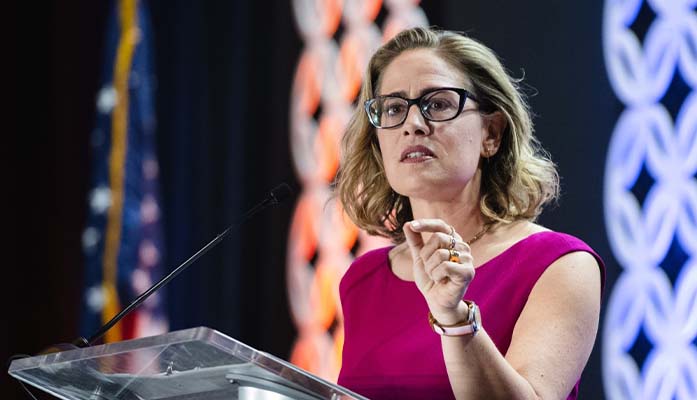
Former Senator Kyrsten Sinema claims she’s not a lobbyist, but her emails tell a different story.
Emails uncovered by FOIAzona revealed Sinema’s lobbying for a major new AI data center in Chandler.
When Sinema joined Hogan Lovells, global law and lobbying firm, as senior counsel back in March, she told reporters she wasn’t registering as a lobbyist. Sinema is also an advisory council member for Coinbase Global, a cryptocurrency company; and president and CEO of Arizona Business Roundtable.
Federal law requiring a “cooling off” period for former representatives and senators doesn’t apply to lobbying at local levels — only lobbying in Congress.
The federal lobbyist system doesn’t have Sinema registered. However it does have the registration of Hogan Lovell’s policy advisor: her former congressional aide, Daniel Winkler.
Emails revealed that Sinema met with Chandler council members in mid-June to discuss the data center. Following that meeting, Sinema used her Hogan Lovells email to push plan proposals for the data center to six city officials: a development agreement and a white paper advocating for AI data centers as an economic boon. Her emails to city officials were consistent thereafter.
“Single User – We demo the property and leave the front part open to attract the single use that [City Manager] Micah [Miranda] envisions. We build only the data center and the north building at the same time. R&D buildings along Dobson – We commence construction of these two eastern buildings within 18 months of C of O of data center. This gives Micah the time to attract a single user, but we still will process plans for these two buildings in the meantime to hit the 18 month mark. This leave the middle portion open to still attract a single user and build to suit. Full buildout – We commence spec construction of the middle building within 36 months of C of O of data center. This gives Micah the time to attract a single user, or a middle user but we still will process plans for all the buildings to hit the 36 month mark.”
Councilmember Matt Orlando then met with Sinema and Winkler in early August.
About a week later, Sinema was attempting to get the ear of another member of the council, Jennifer Hawkins.
In the days that followed, Orlando advised the city manager and economic development director that councilmembers were receiving constant communications about AI, and directed the pair to reach out to Sinema for possible development sites.
“We should not only look at the old Northrop Grumman site, but at the airport and other areas of our community for many AI clusters,” said Orlando. “We need to look at the economic model of such complexes. Please get with Kirsten [sic] Sinema, our existing companies and others in the industry and get us some ideas for a truly strategic plan to position our city for the future.”
The city’s economic development director advised in September that there wasn’t “any definitive cause relationship” between AI data centers and the desired location site for companies.
Then came the widely reported day in mid-October when Sinema argued for the data center at the Chandler Planning and Zoning Commission meeting.
It was there that Sinema threatened to use the power of the Trump administration against the city should they not approve the data center.
“[My coalition] works hand-in-glove with the Trump administration as we prepare for AI American dominance,” said Sinema. “We all know that the innovation campus has been vacant for over seven years. What I’d like you to know today is this: if we choose not to move forward with this development, the land will continue to sit vacant until federal preemption occurs.”
Sinema argued on behalf of the data center developer Active Infrastructure. She presented herself as the founder and co-chair of the AI Infrastructure Coalition (AIC), which formally launched with a swanky D.C. party last month.
AIC members include Andreeseen Horowitz, Cisco, ExxonMobil, Google, Lumen, Meta, Microsoft, and Pinnacle West. AIC’s executive director, Brian Walsh, formerly led the Congressional Leadership Fund and America First Action.
The Chandler City Council voted 7-0 against the data center in their meeting on December 11.
AZ Free News is your #1 source for Arizona news and politics. You can send us news tips using this link.
by Staff Reporter | Dec 12, 2025 | News
By Staff Reporter |
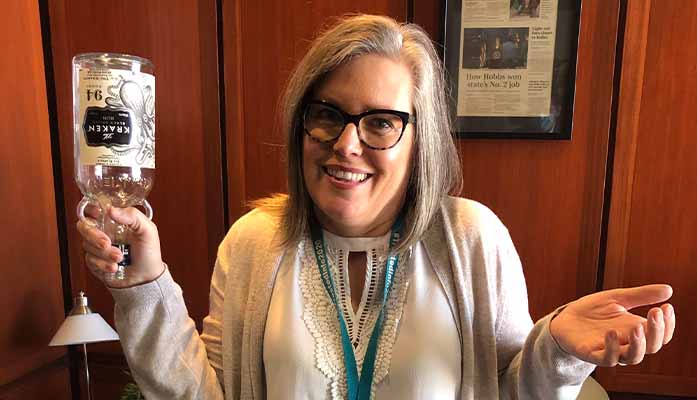
Governor Katie Hobbs is being accused of kicking black and disabled adults and children off an elevator so she didn’t have to wait in line at a football game.
The alleged incident was said to have occurred at the Territorial Cup: the post-Thanksgiving Day football game between Arizona State University (ASU) and the University of Arizona (U of A).
A local reverend and former political candidate, Jarrett Barton Maupin, Jr., accused Hobbs of forcing his group, which consisted of several handicap adults and disabled kids, off an elevator to the executive suites for the game. His group had waited in line for the elevator connecting to the suites. Maupin explained he had a delegation with him consisting of folks from the inner city who had never attended an ASU football game.
According to Maupin in a post to X and a subsequent interview on “The Afternoon Addiction with Garrett Lewis,” the displaced group was given the reason of “executive privilege” for their removal.
Others of equal or greater elected importance were present, per Maupin, waiting in line for the elevator connecting the executive suites at the game.
Here’s Maupin’s account of what occurred:
“Everyone was in line to leave. You had a U.S. Senator in there waiting in line behind us, you had the governor of the River Indian community, you had so many people there, congressmen, even people like Karrin Taylor Robson, candidates. Lots of what people might consider special people, but everyone waiting and understanding that there’s one elevator up to the suites and one elevator down. So we get in, it’s our turn to get in, and it’s about 15 people, and we all happen, just happened to be African American, it wasn’t planned, including the elevator operator who was a black woman. And we get in, she’s getting ready to press the button and everything, and suddenly they say, ‘You gotta get off the elevator! Clear the elevator!’ I thought there was a problem, I said, ‘What’s going on?’ And they said, ‘Well, there’s somebody with executive privilege. You gotta get off the elevator.’ So we get off. And, lo and behold, our governor and her security detail, it’s like maybe five or six people, get on this elevator, and so they took this elevator.”
When others countered that Hobbs required that elevator ride for security reasons, Maupin shared that he and almost every other attendee within the suites had a security detail, but he didn’t observe others forcing the evacuation of an elevator as Hobbs was alleged to have done. Maupin also disclosed that Senator Ruben Gallego shared a subsequent elevator ride with them.
“No, it was not [a call made by her security team]. Funny thing is a U.S. Senator and staff/security rode down after us,” said Maupin. “I have a security detail. Almost everyone in the suites did, besides guests. Electeds, candidates, business leaders. What she did was rude and unnecessary. It was a lame move. But only her latest.”
Maupin questioned whether Hobbs had the authority to order people off elevators, and what about the football game triggered an executive privilege.
“What was the emergency?” said Maupin. “We all have pressing business. I’m pretty busy. I know Senator Gallego is pretty busy and [Governor] Stephen Roe Lewis, and everyone that was up there[.]”
Later, Maupin said he was assured by Representative Andy Biggs that the congressman wouldn’t use executive privilege to oust constituents, especially not minorities or disabled individuals. Biggs is vying to unseat Governor Hobbs in 2026.
“I have also been assured that he would have ‘jumped right in [the elevator] with us,’” said Maupin.
Maupin questioned whether this was a consistent pattern of behavior with Hobbs, citing the racial discrimination allegations put forth by Talonya Adams, her former staffer, which were twice affirmed in court.
AZ Free News is your #1 source for Arizona news and politics. You can send us news tips using this link.