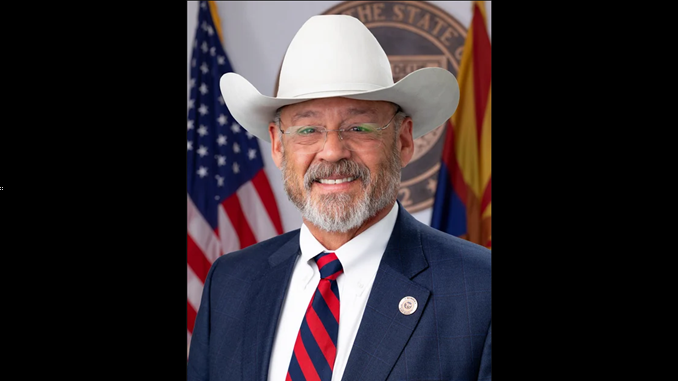
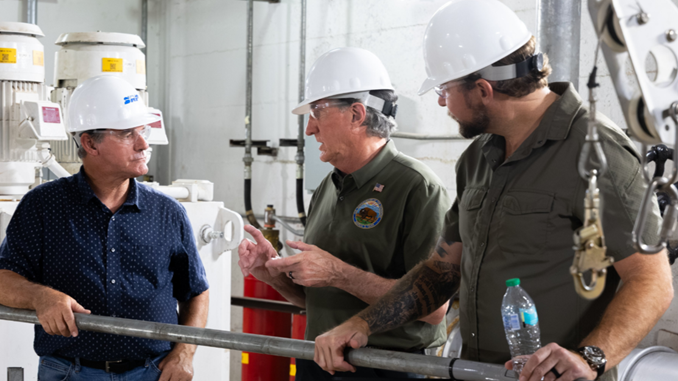
State Representative Walt Blackman (R-LD7) is asking the Arizona Department of Corrections, Rehabilitation, and Reentry (ADCRR) to provide records detailing cooling system failures reported at correctional facilities in Arizona throughout August.
Blackman, who chairs the Arizona House Government Committee, said he plans to review the outages to determine which prison facilities experienced cooling failures, how long the systems were offline, and how the conditions affected correctional officers, employees, and inmates.
The review will also examine the cost of emergency repairs and whether continuing to maintain aging cooling systems is the most cost-effective option for taxpayers.
“Arizona’s prisons must remain safe, secure and operational through the summer,” stated Blackman. “Correctional officers should not be working in dangerous temperatures because critical equipment is failing, and taxpayers should not be repeatedly paying for emergency repairs without knowing whether there is a better long-term solution. Before we consider additional spending or legislative action, I want the facts.”
Rep. Walt Blackman Seeks Review of Prison Cooling Failures, Officer Safety and Taxpayer Costs Government Committee Chairman seeks records on August cooling outages and aging correctional infrastructure
Blackman intends to request information covering August 1 through August 31, including records of cooling system outages, affected facilities, the duration of outages, temperature readings, and emergency cooling measures implemented by ADCRR.
The request will also seek maintenance requests, work orders, and repair costs, as well as information about any heat-related impacts on correctional officers, employees, and inmates.
Blackman is specifically seeking information about any medical incidents or inmate relocations resulting from excessive heat. The review will also include conditions at the Lewis Prison Complex, including the Bachman, Barchey, and Stiner units.
Another focus will be the age and expected service life of existing cooling equipment. Blackman said he wants to compare the projected cost of continuing to repair aging systems with the potential cost of replacing or modernizing them.
ADCRR has an extreme heat strategy in place for the 2026 summer season that calls for regular temperature monitoring, additional checks of HVAC performance, and the use of temporary cooling equipment when air-conditioning systems become inoperable.
The department’s strategy also provides for portable fans, ice, air-conditioned cooling centers, and increased health monitoring in heat-affected areas.
Blackman said the information he receives from ADCRR will help determine whether the department’s current maintenance practices are adequately protecting employees and inmates and whether continued repairs to aging equipment remain the most cost-effective approach.
“Our correctional officers perform one of the toughest public-safety jobs in state government, and they deserve facilities where they can safely do their jobs,” said Blackman. “Conservative government means taking care of the infrastructure taxpayers already own and making sound decisions before small problems become expensive emergencies. If we are spending substantial sums every summer repairing the same aging equipment, we need to know that. If replacement would save money over the long term, we need those numbers too.”
The records will help shape Blackman’s next steps, depending on what the review finds. He said the legislature could consider additional oversight, hearings, budget discussions, or changes to how the state approaches maintenance and replacement of aging prison infrastructure.
Ethan Faverino is a reporter for AZ Free News. You can send him news tips using this link.
Arizona State Senator Mark Finchem (R-LD11) is questioning a request by the Arizona Health Care Cost Containment System (AHCCCS) to pause 30 pending administrative appeals involving a healthcare provider while the agency pursues a separate lawsuit over the same disputes.
AHCCCS filed the motion September 2 with the Arizona Office of Administrative Hearings, asking an administrative law judge to stay the pending proceedings involving Prorenata Labs and six AHCCCS-contracted health plans.
The request has drawn scrutiny from Finchem, co-chair of the Joint Legislative Audit Committee, who argues that the move raises broader questions about whether Arizona residents and businesses can rely on the state’s administrative hearing process when challenging government decisions.
“This is bigger than one laboratory and one billing dispute. It is about whether Arizonans can trust the process when they challenge the government,” stated Senator Finchem.
🚨FOR IMMEDIATE RELEASE: Senator Finchem Sounds Alarm Over AHCCCS Attempt to Sidestep Provider Appeals Process
The underlying dispute concerns reimbursement for certain COVID-19 tests. Among the questions being litigated is whether the tests are subject to a maximum reimbursement rate, typically $100 per test, and whether an out-of-network laboratory can receive payment for non-emergency services provided without prior authorization or documented urgent medical need.
According to Finchem, AHCCCS acknowledges that hundreds of similar cases have already proceeded through administrative hearings and were resolved in favor of AHCCCS and its contracted health plans.
“The Legislature has already paid for an independent hearing system so people and businesses can challenge government actions without being forced into a more expensive court fight,” said Finchem. “AHCCCS says it has already prevailed in hundreds of these cases through that process. If it worked hundreds of times, the agency must explain why it now wants 30 pending appeals frozen while it pursues a different legal strategy in court.”
AHCCCS argues that temporarily pausing the administrative hearings would reduce costs, prevent duplicative litigation, and avoid potentially inconsistent rulings between the administrative and judicial proceedings.
An administrative law judge has not yet ruled on the agency’s request.
The Office of Administrative Hearings was established to provide an independent forum for individuals and businesses challenging decisions made by state agencies.
Finchem said the Legislature needs to determine whether AHCCCS’s request could undermine that process or establish a precedent that other state agencies could use when facing administrative challenges.
“We are not deciding whether this laboratory is owed money,” added Finchem. “We are asking why an executive agency wants to halt established proceedings and shift the legal question to a lawsuit it initiated.”
Finchem said he intends to use the Joint Legislative Audit Committee’s oversight authority to examine the circumstances surrounding AHCCC’s request.
Among the questions he wants answered are how long the 30 appeals could be delayed, how much the Superior Court litigation could cost taxpayers, why AHCCCS changed its approach after prevailing in hundreds of administrative cases, and whether the agency considers its strategy a potential precedent for other disputes involving state agencies.
“Without a full and public explanation, this smells like another attempt by the Hobbs administration to cover up agency actions,” said Finchem. “If this becomes a playbook for state agencies, the consequences will reach far beyond this case. I intend to use the Joint Legislative Audit Committee’s oversight authority to get the facts, demand answers, and determine whether legislative or audit action is necessary. Due process cannot exist only when it is convenient for the government.”
Ethan Faverino is a reporter for AZ Free News. You can send him news tips using this link.
A majority of Arizona voters oppose additional large data center development, with opposition becoming even stronger when voters are asked to weigh economic benefits against concerns over water, electricity, and infrastructure, according to a new poll from Noble Predictive Insights.
The Arizona Public Opinion Pulse (AZPOP), conducted August 10-13, among 1,040 registered Arizona voters, including 923 likely voters, found that 57% of registered voters oppose additional large data centers in the state. Thirty percent support additional development, while 13% remain unsure.
Opposition was particularly strong, with 35% of voters saying they strongly oppose additional large data centers compared with 9% who strongly support them.
The poll also found that voters become substantially more opposed when presented with the potential tradeoffs associated with data center development.
Sixty-one percent said Arizona should limit additional data center development because of concerns over water use, electricity demand, and infrastructure costs. Just 18% said the state should encourage additional development because of potential investment and tax revenue.
The poll found support for limiting additional data center development across all major political groups.
Fifty-four percent of Republicans, 71% of Democrats, and 61% of Independents said Arizona should limit additional development when water, electricity, and infrastructure concerns were included in the question.
The preference for limits also crossed ideological lines. Seventy-eight percent of liberals, 60% of moderates, and 52% of conservatives favored limiting additional development.
Even among Republicans who identify more strongly with President Trump than the Republican Party, 51% favored limits, compared with 32% who favored encouraging additional development.
The divide among Republicans was more pronounced when voters were simply asked whether they supported or opposed additional data centers.
Among registered Republicans, 42% supported additional development and 46% opposed it.
Trump-first Republicans supported additional data centers 49% to 37%, while Republicans who identified more closely with the party than Trump opposed additional development 53% to 37%.
However, both groups shifted toward limiting development when the question included concerns about water, electricity, and infrastructure.
The results were also similar across different types of communities. Fifty-nine percent of urban voters, 62% of suburban voters, and 64% of rural voters favored limiting additional data center development.
The Center Square reported that at least six Arizona local governments — Chandler, Marana, Phoenix, Mesa, Mohave County, and Tucson — have enacted regulations governing data centers.
Founder and CEO of Noble Predictive Insights, Mike Noble said the findings could make data center development an increasingly important issue for Arizona policymakers and candidates, particularly as voters weigh the industry’s economic benefits against concerns over the state’s water, electricity, and infrastructure capacity.
“Data centers have moved from an economic-development talking point to a test of governing competence,” Noble said. “The candidate who can show voters a credible plan for water, electricity, and infrastructure will have the advantage on this issue.”
Despite the polling results, supporters of continued data center development argue that Arizona should not respond to public concerns by restricting an industry they say can bring investment, jobs, and tax revenue into the state.
Jen Springman, coalition’s manager for the Goldwater Institute, told The Center Square that Arizona should continue its traditional approach of encouraging economic development and innovation.
“We don’t hold back entrepreneurs with overregulation,” Springman said. “That’s been Arizona’s recipe for success. Arizona cannot and should not turn away from that. That’s exactly what will happen if we allow fear of data centers to scare us into shutting down development.”
Springman argued that some of the opposition to data centers has been driven by misinformation and said existing facilities are already operating in Arizona while providing jobs and contributing to the state’s economy.
She acknowledged concerns about electricity, water, and land use but argued that those issues should be addressed without halting development.
Regarding water use, Springman said newer data centers can use closed-loop recycling systems and dry-air cooling to reduce consumption. She also pointed to the potential for data centers to generate significant tax revenue and provide high-paying jobs.
The debate comes as Arizona faces growing pressure over how to accommodate the rapidly expanding demand for data centers while balancing their effects on power, water, and other infrastructure.
Ethan Faverino is a reporter for AZ Free News. You can send him news tips using this link.
Congressman Juan Ciscomani (R-AZ-06) voted Tuesday in favor of a bipartisan continuing resolution to fund the federal government through December 11, citing the potential consequences of another shutdown for military personnel, law enforcement, and Arizona veterans.
The House passed H.R. 6500, the “Continuing Appropriations and Extensions Act, 2027” by a 370-48 vote. The measure was previously passed on August 8, by the Senate with a 90-6 vote before being sent to President Donald Trump, who signed it into law, September 2.
The legislation provided fiscal year 2027 funding for federal agencies generally at current levels through December 11 and extends authorities for a range of federal programs, including surface transportation and veterans programs.
Ciscomani, who serves on the House Appropriations Committee, said he supported the temporary measure to prevent another shutdown while Congress continues negotiations over full-year appropriations bills.
“Today, I voted for a bipartisan, temporary Continuing Resolution (CR) to prevent another government shutdown. A government shutdown is not a political game; it has REAL consequences,” stated Ciscomani.
He pointed to the potential impact on military personnel, Customs and Border Protection agents, law enforcement officers, and veterans.
“It disrupts pay for our troops, leaves CBP agents and law enforcement working without pay, and disrupts services for the nearly 80,000 veterans I have the privilege of representing,” he added.
The Arizona congressman also acknowledged that continuing resolutions are not a substitute for completing the annual appropriations process.
“As an appropriator, I know CRs are not ideal and can delay critical bipartisan work, including the $42.7 million in funding that has cleared the first major legislative hurdles to deliver critical investments to Arizona’s Sixth Congressional District,” said Ciscomani.
Today, I voted for a bipartisan, temporary Continuing Resolution (CR) to prevent another government shutdown. A government shutdown is not a political game; it has REAL consequences. It disrupts pay for our troops, leaves CBP agents and law enforcement working without pay, and…
Among the funding priorities he highlighted were $42.7 million in funding that he said has cleared the first major legislative hurdles and would provide investments in Arizona’s 6th Congressional District.
Ciscomani said he has opposed government shutdowns and argued that federal funding disputes should not result in disruptions for Arizona families.
“I have NEVER supported a government shutdown—partial or full,” said Ciscomani. “Arizona families should not have to pay the price for Washington’s dysfunction.”
The temporary funding measure comes after Congress faced the possibility of another funding lapse when the federal fiscal year ends September 30.
Lawmakers have sought to avoid another prolonged shutdown after the federal government experienced two major shutdowns during the previous year. One lasted a record 43 days, while a separate shutdown of the Department of Homeland Security lasted 76 days.
The new CR gives Congress additional time to negotiate and pass full-year appropriations legislation for Fiscal Year 2027.
Ciscomani said the House’s approval of the measure would allow the government to remain operational while lawmakers continue working on longer-term funding legislation.
“The House did the right thing today by coming together to keep the government open, keep essential services running, and continue delivering for Arizona,” Ciscomani said.
Ethan Faverino is a reporter for AZ Free News. You can send him news tips using this link.
Congressman Eli Crane (R-AZ-02), spent the final days of the congressional district work period visiting communities and key infrastructure sites across Arizona, focusing on rural health care, the recovery of the Grand Canyon’s North Rim, water security, and domestic mineral production.
Crane was joined during portions of the visits by Interior Secretary Doug Burgum and Rep. Andy Biggs (R-AZ-05).
The engagements included stops with the Gila River Indian Community, Grand Canyon National Park, Salt River Project, and Freeport-McMoRan as Crane highlighted what he described as efforts to strengthen Arizona’s long-term economic and infrastructure needs.
Crane visited the Gila River Indian Community following the University of Arizona and Gila River Health Care’s announcement of a new partnership to expand medical education and physical recruitment in the community.
The partnership will establish a Doctor of Medicine-granting program that the university describes as the first rural regional branch of its kind established in partnership with a federally recognized Tribe on Tribal land.
Students will begin their foundational science coursework in Phoenix before moving to Gila River Health Care and other regional sites for clinical training.
The program is intended to encourage medical students to establish careers in rural and Tribal communities, where access to physicians and other health services can be limited.
Crane said the program could help create a long-term physician workforce within the community.
The partnership is expected to support construction of a new health center providing primary care, dental services, behavioral health, and specialty care.
Crane also pointed to more than $160 million recently directed to Arizona through the Rural Health Transformation Program for health care clinics, workforce development, and infrastructure.
On August 25, Crane accompanied Burgum to both the North and South Rims of the Grand Canyon National Park.
At the North Rim, park personnel and other stakeholders briefed the officials on recovery efforts following the 2025 Dragon Bravo Fire, which severely damaged critical facilities.
The fire has left the North Rim facing additional challenges, including erosion, flash flooding, and disruptions to its water system, along with longer-term infrastructure and rebuilding needs.
Crane discussed his North Rim Restoration Act of 2025, which would streamline federal contracting procedures to allow the National Park Service to move more quickly on rebuilding efforts.
He also highlighted an amendment he introduced to the 2026 Farm Bill aimed at expediting recovery efforts related to the White Sage Fire.
Both measures passed the U.S. House unanimously and are awaiting further consideration in the Senate.
This week, I had the honor of joining @SecretaryBurgum for critical meetings with leaders across Arizona's vital industries.
The following morning, Crane and Burgum traveled to Theodore Roosevelt Dam, located northeast of Phoenix.
The dam and Roosevelt Lake are operated by the Salt River Project (SRP) and provide water storage, flood control, hydropower, and recreation.
SRP officials briefed Crane and Burgum on the effects of recent dry winters, changing runoff patterns, and the importance of maintaining reliable water storage within the state.
Officials also discussed a 2024 decision by the U.S Army Corps of Engineers that allows SRP to retain water in a portion of Roosevelt Dam’s Flood Control Space for up to 120 days, compared with the previous 20-day limit.
The additional flexibility allows more water to remain stored following qualifying runoff events rather than being released downstream before it can be put to beneficial use.
SRP estimates the change could help support the water needs of hundreds of thousands of households during eligible periods.
Although Roosevelt Dam is not part of the Colorado River system, Crane said the reservoir remains important as Arizona prepares for potential reductions to Lower Basin water allocations beginning in 2027.
During the visit, Crane and Burgum discussed several issues surrounding the negotiations, including avoiding costly litigation, maintaining adequate water storage capacity, and supporting potential desalination projects.
While Governor Hobbs’ administration is leading the state’s interstate negotiations, Crane said he believes the federal government may need to intervene if the state cannot reach an agreement.
This morning, I joined @SecretaryBurgum at Theodore Roosevelt Dam to discuss water security.
I was able to use this opportunity to advocate for Arizona’s long-term water needs.
That afternoon, Crane, Burgum, and Biggs visited the Miami Smelter in Claypool, a copper processing facility operated by Freeport-McMoRan.
The century-old facility processes copper concentrate from Freeport’s Arizona mines and is the company’s largest U.S. source of sulfuric acid for its copper leaching process.
Freeport officials briefed lawmakers on the facility’s operations and recent maintenance work.
According to the company, the smelter processed approximately 821,000 metric tons of copper concentrate in 2025 and produced roughly 209,300 metric tons of copper anodes.
The 2025 maintenance turnaround was associated with approximately $73 million in maintenance and idle-facility costs.
Company officials also discussed the possibility of expanding the facility, arguing that using the existing infrastructure could be more practical than securing permits and constructing an entirely new domestic smelter.
Crane focused on federal regulations affecting the facility’s competitiveness, including Environmental Protection Agency standards finalized in 2024 for primary copper smelters.
Freeport had previously warned that complying with the standards could require significant equipment changes and additional costs.
Crane praised a two-year regulatory exemption granted to the facility by the Trump administration in October 2025, but said he believes a permanent solution is needed.
Crane said the series of visits provided an opportunity to examine challenges facing several of Arizona’s major industries and communities while working with state, federal, Tribal, and private-sector leaders.
“To our friends at Grand Canyon National Park, Salt River Project, Freeport-McMoRan, as well as the Gila River Indian Community and the University of Arizona, thank you for your generous hospitality,” stated Crane. “This past week and a half has been invaluable in terms of briefings, new partnerships, and progress toward recovery and growth.”
Crane also thanked Burgum for traveling to Arizona and meeting with leaders across the state.
“I’m also grateful to Secretary Burgum for taking the time to visit our state and meet with leaders across our vital industries. It was a tremendous honor to host the Secretary and his team as we worked to strengthen our blueprint for long-term stability,” Crane added.
Ethan Faverino is a reporter for AZ Free News. You can send him news tips using this link.