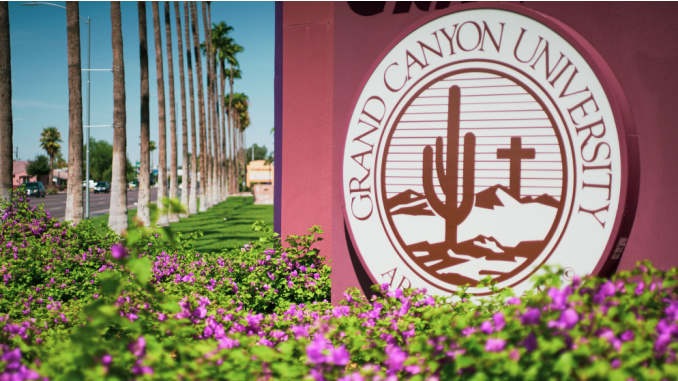
Grand Canyon University (GCU) is moving forward with plans to establish two new colleges focused on law and skilled trades as the university begins another record-breaking year.
GCU announced this week that it expects to serve approximately 141,000 students during the 2026-2027 academic year, representing a 6% increase from the previous year.
The university said the growth comes as it works to expand its academic offerings and respond to workforce demands in Arizona and across the country.
The planned College of Law and College of Construction and Industrial Technologies would become GCU’s 11th and 12th colleges.
“At a time when higher education is facing enormous disruption and uncertainty, GCU continues to grow because students and families are looking for something different,” said GCU President Brian Mueller. “They want a quality education grounded in Christian worldview principles that prepares them for a meaningful career, but they also want to be part of a community that helps them grow as people and understand the purpose behind their work.”
“Whether a student wants to become a lawyer, an engineer, an electrician, a nurse, a pastor, a teacher or a construction professional, we believe all work is sacred and has purpose,” he added.
A record 141,000 students are expected to delve into their studies at GCU in the 2026-27 academic year! GCU has also announced plans to establish the College of Law and the College of Construction and Industrial Technologies. Read more: https://t.co/I2vuoH5k5v
GCU is moving forward with plans to establish a College of Law that would incorporate a Christian worldview into its curriculum while emphasizing Constitutional law, free-market principles, and the rule of law.
The proposed law school has not yet received all of the necessary approvals. Its establishment remains subject to approval or accreditation from the Arizona Supreme Court justices, the Higher Learning Commission, the Arizona Board for Private Postsecondary Education, and the American Bar Association.
If those approvals are obtained, GCU said it would welcome its first law students as early as fall 2027 or spring 2028.
If the program ultimately receives American Bar Association accreditation, GCU would become the third ABA-accredited law school in Arizona, joining Arizona State University and the University of Arizona.
The university is currently conducting final interviews for the founding dean of the College of Law and expects to make a selection in the coming weeks.
“The legal profession plays a critical role in preserving the institutions and principles that make a free society possible,” Mueller said. “We believe there is an opportunity to create a law school that produces outstanding attorneys while also grounding students in a Christian worldview, a deep understanding of the Constitution and an appreciation for the principles of free markets, individual liberty and the rule of law.”
The proposed college would expand GCU’s focus beyond undergraduate education and provide students with a pathway into the legal profession while emphasizing service and leadership.
GCU is also preparing to launch its College of Construction and Industrial Technologies (CCIT), which will focus on workforce development and skilled trades.
The college is designed to offer multiple pathways into the workforce, ranging from short-term credentials and apprenticeships to bachelor’s degrees and eventually graduate-level education.
GCU said the goal is to allow students to enter the workforce after completing shorter-term programs and potentially return later to pursue additional education while already employed.
“For decades, students have been told they had to choose between college or the trades,” Mueller said. “CCIT is unique in that we offer both — an opportunity to experience life on a major college campus while also getting instruction specifically devoted to manufacturing, electrical work, micro-chip technology and construction. Those students might enter the workforce immediately after completing short-term credentials or an apprenticeship, then return later with a job in hand to pursue a four-year degree.”
The college will focus on fields including manufacturing, electrical work, microchip technology, and construction.
GCU mentioned it is working with companies including Taiwan Semiconductor Manufacturing Company (TSMC), Amkor, Lux Precision Manufacturing, Benchmark, and McCarthy Building Companies as part of its workforce-development efforts.
The partnerships are intended to help address labor shortages by combining academic instruction with hands-on technical training.
Mueller said Arizona’s continued growth in semiconductor manufacturing, advanced manufacturing, and construction has created demand for workers at multiple levels, including engineers, technicians, electricians, machinists, and construction professionals.
“Arizona is attracting billions of dollars in investment in advanced manufacturing, semiconductor production, construction and other industrial sectors,” Mueller said. “Those investments are creating significant demand not only for engineers and other professionals with four-year degrees, but also for thousands of highly skilled technicians, electricians, machinists, construction professionals and other tradespeople.”
The expansion comes as GCU prepares for another record enrollment year.
The university projects approximately 141,000 students for the 2026-27 academic year, including more than 24,000 students on its Phoenix campus and approximately 117,000 online students.
GCU said fully admissible students entering its Phoenix campus in 2025 had an average GPA of 3.6, while the Honors College reported an average weighted incoming GPA of 4.1.
The Honors College now has more than 3,400 students.
The university currently offers approximately 400 degrees, emphases, and certificates across 12 colleges.
As GCU expands its academic offerings, university officials said the two proposed colleges are intended to address different areas of eduction while supporting the same broader goal, preparing students for careers and encouraging them to contribute to their communities.
“America has historically been a nation of builders, and we want to help bring that back,” added Mueller. “These are high-skilled, in-demand, good-paying professions that can provide tremendous opportunities for students and their families while strengthening the communities and economy around them.”
Ethan Faverino is a reporter for AZ Free News. You can send him news tips using this link.
Republican gubernatorial candidate Andy Biggs is calling for a statewide ban on Flock automated license plate reader cameras, putting him at odds with Democratic Governor Katie Hobbs, who said she trusts individual law enforcement agencies to decide whether they want to use the surveillance technology.
The disagreement came during a public safety forum hosted by the Arizona Police Association on Tuesday at Arizona State University’s Downtown Phoenix campus.
Biggs and Hobbs answered questions separately and did not share the stage, with both candidates addressing issues including border security, police funding, and automated license plate readers (ALPRs).
According to Fox 10, the forum was intended to allow voters and Arizona law enforcement officials to hear each candidate’s position on public safety issues ahead of the November gubernatorial election.
Biggs said he would ban Flock cameras throughout Arizona if elected governor.
This isn’t a partisan issue, but it’s a clear difference between me and Katie Hobbs.
We can find ways to support law enforcement without putting our civil liberties in danger. https://t.co/POoqxvCiaU
Hobbs took a different position. According to KTAR News, Hobbs claimed she trusts individual law enforcement agencies to determine whether they want to use surveillance technology such as Flock cameras.
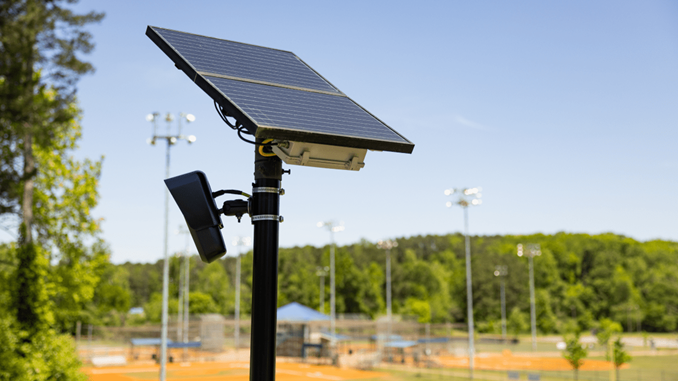
The disagreement came as several Arizona cities and police departments have recently suspended, investigated, or terminated their use of Flock cameras following concerns over the potential misuse of the technology.
The debate over Flock cameras gained new significance on Wednesday when the City of Tempe announced it had shut down its entire network of Flock automated license plate readers and would terminate its contract with the company.
Tempe has turned off its Flock automated license plate reader system and will end its contract with the company. The cameras are no longer collecting license plate data, and Tempe will not seek another company to replace the system.
The city previously ended automatic data sharing from its Flock cameras earlier this month.
Although the city said its own audits did not uncover improper use of the system, officials said recent incidents involving other Arizona law enforcement agencies raised concerns about the potential for misuse.
A Chandler police officer recently resigned after admitting to improperly using the department’s Flock system to locate a family member. The city subsequently discontinued its 40-camera Flock system and said it would not renew its current agreement with the company.
In Apache Junction, former officer Joshua McDaniel also resigned after an investigation found that he had used the Flock system to search for his wife’s vehicle. Two dispatchers who assisted with the search were also disciplined.
Goodyear has also launched a criminal investigation after an internal-affairs audit identified potential misuse of its Flock system by an officer. That officer was placed on administrative leave and had access to department computer systems restricted.
Surprise initially suspended its Flock system after an audit identified an anomaly and placed an officer on administrative leave. The city then canceled its Flock contract and requested that the company’s equipment be removed.
However, the officer was cleared of wrongdoing on after investigators determined the apparent anomaly was caused by a technical issue rather than improper use.
The Surprise Police Department has concluded a formal Professional Standards Unit investigation into an anomaly found during a routine audit of its Automated License Plate Reader (ALPR) system, fully clearing the involved police officer of any system misuse.
Sedona, Flagstaff, South Tucson, Pinal County, and Cave Creek have also ended or announced plans to end their Flock contracts within the last year.
With Flock cameras becoming an increasingly controversial issue across Arizona, the technology is expected to draw further debate at the state Capitol during the upcoming legislative session.
Lawmakers have already attempted to establish statewide regulations governing automated license plate readers, with several proposals introduced and debated earlier this year.
Senator Kevin Payne (R-LD27) introduced SB 1111, which sought to establish statewide requirements for ALPR use, including restrictions on data access, mandatory training, and regular audits.
The bill advanced through the Senate but ultimately did not become law.
Senator Mark Finchem (R-LD11) introduced SB 1138, which also sought to establish restrictions on ALPR use, including requirements governing access, training, and data retention. The bill was later amended into an unrelated measure.
Ethan Faverino is a reporter for AZ Free News. You can send him news tips using this link.
Arizona Senate President Pro Tempore T.J. Shope (R-LD16) is accusing Attorney General Kris Mayes of providing political cover for Governor Katie Hobbs after Mayes declined to prosecute the governor following a two-year investigation into alleged pay-to-play activity involving Sunshine Residential Homes.
Shope is also challenging Mayes to publicly support legislation aimed at increasing transparency around political contributions and state contracts, measures he said her office has previously declined to support.
Last week, Mayes announced that her office found insufficient evidence to establish that political contributions made by Sunshine Residential Homes and individuals connected to the company were exchanged for rate increases approved by the Arizona Department of Child Safety (DCS).
The attorney general’s decision does not close the matter entirely. A separate investigation being led by the Arizona Auditor General, with assistance from the Maricopa County Attorney’s Office, remains ongoing.
The Arizona House of Representatives has also commissioned an independent investigation into the allegations.
Shope originally requested the investigation in 2024 after Sunshine Residential Homes and individuals associated with the company made combined political contributions of $580,840 benefitting Hobbs, her inaugural fund, her legal defense fund, and the Arizona Democratic Party, according to the senator’s office.
🚨FOR IMMEDIATE RELEASE: President Pro Tem Shope Condemns AG Mayes' Election-Year Cover for Governor Hobbs' Pay-to-Play Scandal
Sunshine founder Simon Kottoor and his wife Elizabeth also contributed to Hobbs’ campaigns. Kottoor even served on Hobbs’ inaugural committee and became a gold-level sponsor of her inauguration.
Sunshine initially sought a DCS rate increase in December 2022 but was denied in February 2023. The company reapplied several months later and received a mid-contract increase in May 2023. Its rate was subsequently increased again during its April 2024 contract renewal, making it the state’s highest paid group-home provider per child.
Internal DCS communications that surfaced during the controversy also acknowledged Sunshine’s political connections and discussed keeping the company’s special rate increase from competitors.
Despite the scrutiny, Hobbs did not agree to an interview with investigators. Instead she provided two written statements through her attorneys.
Shope said Mayes’ decision is particularly concerning because he previously introduced legislation intended to address the types of conflicts raised by the Sunshine investigation.
“For two years, Kris Mayes had every opportunity to support meaningful pay-to-play reforms, and she chose silence,” Shope said. “She allowed Hobbs to avoid questioning, ignored the growing trail of political contributions, and then cleared her fellow Democrat after a two-year investigation. Only after the Legislature adjourned did Mayes suddenly discover that reform was necessary. That’s not leadership. It’s political damage control.”
Shope sponsored SB 1612 in 2025, legislation that would have required companies seeking state contracts or certain grants to disclose political contributions and other items of value connected to the governor, political committees, and affiliated organizations.
The bill also included requirements for state agencies to retain records used in evaluating contract proposals.
Hobbs vetoed the bill.
Shope introduced similar legislation again this year through SB 1186. The bill retained requirements for companies seeking state contracts or grants to disclose political contributions and for state agencies to preserve records used to evaluate contract proposals.
Hobbs again vetoed the measure in June, amid the continuing investigation into Sunshine Residential Homes.
“Katie Hobbs took the political money, her administration approved the rate increases, she refused to answer investigators’ questions, and then she vetoed the reforms designed to prevent this from happening again,” added Shope. “Now her political ally wants Arizonans to believe the matter is closed. It isn’t.”
Mayes has called for legislative action following her decision not to prosecute Hobbs, saying changes to state law are needed to address potential conflicts involving political contributions and government contracting.
Shope said he plans to bring his legislation back during the next legislative session and intends to challenge Mayes to publicly testify in support of the reforms she is now calling for.
“If Mayes is sincere, she can endorse the legislation, appear before lawmakers, and demand that Hobbs sign it,” continued Shope. “If she refuses, Arizonans will know her call for reform was nothing more than election-year cover for the governor. The other investigations must continue without interference, and their complete findings must be made public,” Shope concluded.
Ethan Faverino is a reporter for AZ Free News. You can send him news tips using this link.
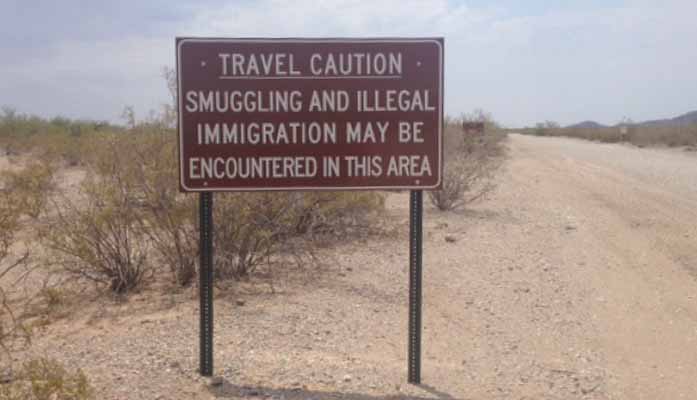
Three criminal illegal aliens accused of sex offenses against children were arrested in Virginia in late July, including one who entered the United States through Arizona before being released into the country by the Biden administration, according to the U.S. Department of Homeland Security (DHS).
The arrests come less than two months after another criminal illegal alien who entered the United States through Arizona was also arrested in Virginia on charges involving alleged attempted abduction and indecent exposure.
All three suspects arrested in July are currently being held at the Middle River Regional Jail in Staunton, Virginia, where U.S. Immigration and Customs Enforcement (ICE) has lodged immigration detainers.
The three men are:
Efren Ramirez Escobedo, a Mexican national who was arrested on July 24 and charged with sexual assault involving a victim age 13-14 and sexual assault involving forcible intercourse. DHS says he illegally entered the United States at an unknown date and location.
Santos Bautista-Molina, a Honduran national who was arrested on July 27 and charged with nine counts of child solicitation and attempted sex offenses with a child under 15. DHS says he illegally entered the United States through Texas in September 2005.
Bayron Jose De Paz-Lopez, a Guatemalan national who was arrested on July 28 and charged with nine counts of child solicitation and attempted sex offense with a child under 15. DHS says De Paz-Lopez illegally entered the United States through Arizona in 2021 and was released into the country by the Biden administration.
Under Sanctuary Spanberger, Virginia has become the Commonwealth of Criminals.
ICE has lodged detainers for THREE illegal aliens who have all been arrested for sex crimes against CHILDREN in Staunton. @GovernorVA must cooperate with us and commit to NOT RELEASING these… https://t.co/OvmjLzLdJkpic.twitter.com/bkxrYmZiRh
On June 21, police in Annandale, Virginia, responded to reports that a man had exposed himself to a woman walking on a trail in a park. Police also received a report that a man had attempted to abduct a woman in the same park by stepping in front of her bicycle, forcing her to dismount, and attempting to drag her into the woods. The woman was able to escape.
Two days later, Fairfax County Police announced the arrest of Moises Domingo Rico Rosales, a Nicaraguan national. He was charged with abduction of a person with intent to defile and indecent exposure.
According to DHS, Rico Rosales had previously been arrested in 2024 on felony drug trafficking charges. ICE lodged an immigration detainer at the time, but Fairfax County officials did not honor the detainer and released him back into the community.
DHS says Rico Rosales had illegally entered the United States through Arizona in 2022, where he was arrested by U.S. Border Patrol. The Biden administration subsequently released him back into the country.
This illegal alien who EXPOSED HIS GENITALS to one woman and then tried to ABDUCT another was previously RELEASED by Fairfax County sanctuary politicians.
In the latest cases, ICE has lodged detainers for all three men arrested in July and is asking Virginia authorities to maintain custody of the suspects rather than release them.
“ICE has lodged detainers for three illegal aliens accused of sex crimes against children, all being held at the same jail in Staunton, Virginia,” stated DHS Secretary Markwayne Mullin. “DHS is calling on Governor Abigail Spanberger and her fellow sanctuary politicians to commit to not releasing these criminals from jail and to instead hand them over to ICE. Under Spanberger, the Commonwealth of Virginia has become a magnet for illegal alien crime. These reckless sanctuary policies are putting American lives at risk.”
Ethan Faverino is a reporter for AZ Free News. You can send him news tips using this link.
Congressman Juan Ciscomani (R-AZ-06) highlighted a $1.6 million federal investment aimed at moving forward the long-planned construction of an air traffic control tower at Pinal Airpark.
Ciscomani visited the airpark last Thursday to discuss the funding and the next steps toward developing a dedicated tower at the facility, which currently operates without one.
The preliminary funding will help cover several stages of the project, including selecting a site, completing environmental reviews, developing the tower’s design, and beginning early construction-related work.
“Since 2023, I have worked in Congress to deliver an air traffic control tower to Pinal Airpark,” stated Congressman Ciscomani. “As Arizona’s only appropriator in the House or Senate, I have a unique responsibility to bring meaningful federal investments back home. This $1.6 million represents a major step toward building a tower that will enhance safety, support continued growth, and unlock new economic opportunities for Pinal County.”
The effort to bring a tower to Pinal Airpark has been a priority for Ciscomani since he entered Congress.
In 2023, he successfully secured language in the federal aviation reauthorization package intended to accelerate the process for developing an air traffic control tower at the airpark.
That provision was included in the House-passed FAA reauthorization legislation, helping lay the groundwork for the project now receiving federal funding.
The need for improved air traffic control infrastructure comes as Pinal Airpark continues to handle significant activity. According to the funding announcement, the facility accommodates more than 100,000 commercial and military flight operations annually.
Without a dedicated control tower, the airpark faces operational and safety challenges that could also affect its ability to accommodate future growth.
Pinal County Supervisor Stephen Miller credited Ciscomani with helping advance the project and pointed to its potential impact beyond aviation.
“Representative Ciscomani has led successful efforts in Congress to advance approval, design and construction of an air traffic control tower at Pinal Airpark to enhance aviation safety, strengthen military readiness, and drive job creation and economic growth throughout the region,” said Miller. “We are deeply grateful for Representative Ciscomani’s leadership and support in moving this critical project forward.”
The tower project also comes as Ciscomani seeks to bring additional federal dollars to Arizona’s Sixth Congressional District. Through this year’s federal funding bills, he is pursuing approximately $42.7 million for 20 projects throughout the district.
The Pinal Airpark funding is part of a broader effort to direct federal investment toward local infrastructure and development projects.
Ciscomani also highlighted the funding and partnership with Marana during an interview with KVOI.
Proud to advocate for bringing $42.7M back home to #AZ06 and to be one of the TOP members of Congress bringing these federal resources home to #AZ06.
Marana has been a great partner, and I am proud to work together to deliver RESULTS for our local community! 🌵 pic.twitter.com/5gB9E2b2UQ
— Congressman Juan Ciscomani (@RepCiscomani) August 20, 2026
Ethan Faverino is a reporter for AZ Free News. You can send him news tips using this link.