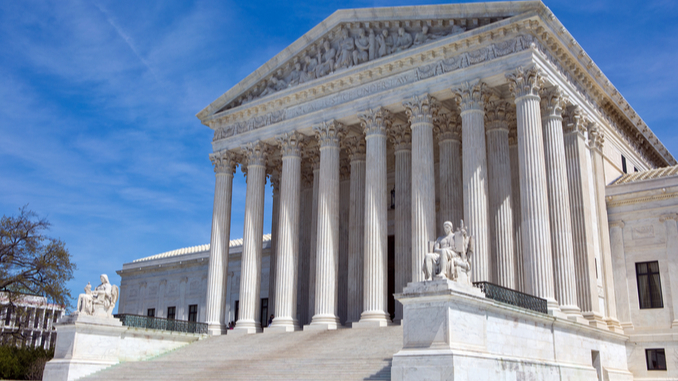
Congressman Andy Biggs (R-AZ-05) joined dozens of members of Congress in filing an amicus brief with the U.S. Supreme Court in a case involving an Orthodox Jewish man who was ordered by local officials to stop hosting prayer gatherings in his Ohio home without zoning approval.
The brief, filed in Grand v. City of University Heights, supports Daniel Grand in his legal challenge against University Heights, Ohio, and argues that protections under the Religious Land Use and Institutionalized Persons Act of 2000 (RLUIPA) allow individuals to seek relief in federal court once government action substantially burdens their religious exercise.
The dispute dates back to 2021, when Grand sought to host an informal Jewish prayer group at his home. City officials sent Grand a cease-and-desist letter after learning about the gatherings, maintaining that the use required approval under the city’s zoning rules.
Grand applied for a special-use permit but later withdrew the application.
According to Biggs’ office, Grand learned during the process that obtaining approval as a house of worship would require his family to move out of the residence.
Grand subsequently sued the city and several officials, raising claims under RLUIPA and the First and Fourteenth Amendments, among other federal and state claims.
The U.S. Court of Appeals for the Sixth Circuit affirmed the dismissal of several of Grand’s claims as unripe, concluding that he had withdrawn his permit application before the city reached a final decision.
The Supreme Court agreed to hear the case, with oral arguments scheduled for December 9, 2026.
Biggs said the case raises broader questions about constitutional protections for religious exercise and the ability of local governments to regulate religious activity through zoning laws.
“Religious liberty was one of the foundational principles our Founders sought to protect when establishing our constitutional system of government,” stated Biggs. “The First Amendment and subsequent federal laws have protected generations of Americans in the free exercise of their faith without government intrusion or interference.”
“No local government should be permitted to undermine or eliminate that fundamental right,” added Biggs. “I am honored to stand with Daniel Grand in his fight to freely exercise his religion within his own home, just as our Founders intended.”
At the center of the case is RLUIPA, a federal law unanimously passed by Congress in 2000 that provides protections for religious exercise in certain land use and institutional settings.
Among other provisions, the law prohibits governments from imposing or implementing land-use regulations that substantially burden religious exercise unless the government can satisfy the statute’s requirements.
RLUIPA also directs courts to construe the law broadly in favor of protecting religious exercise.
The congressional amicus brief argues that the lower courts imposed an additional requirement not contained in the statute by requiring Grand to obtain a final zoning decision before pursuing his RLUIPA claim.
According to lawmakers, Congress designed RLUIPA to make it easier for individuals and religious organizations to challenge government actions burdening religious exercise, particularly in disputes involving local land-use decisions.
“Congress designed RLUIPA to enhance—not restrict—religious freedom,” the lawmakers wrote. “Courts that impose an atextual finality requirement turn that design on its head.”
The brief traces RLUIPA’s origins to earlier Supreme Court decisions concerning the Free Exercise Clause and Congress’ subsequent attempts to establish stronger statutory protections for religious exercise.
The lawmakers argue that Congress specifically intended the law to address problems involving local zoning decisions affecting churches, synagogues, home prayer meetings, and other forms of religious exercise.
They also contend that requiring individuals to complete potentially lengthy local zoning proceedings before going to federal court can leave them subject to the disputed restrictions for months or years.
The brief cites previous cases involving religious organizations in Michigan and California in which courts required additional local zoning proceedings before federal religious liberty claims could move forward.
The lawmakers maintain that RLUIPA instead permits a claim once a government imposes a substantial burden on religious exercise and the ordinary requirements for federal court jurisdiction are satisfied.
The Supreme Court’s eventual ruling could clarify when a RLUIPA land use dispute is sufficiently developed for a federal court to hear it and whether a claimant must first obtain a final decision from local zoning authorities.
Ethan Faverino is a reporter for AZ Free News. You can send him news tips using this link.
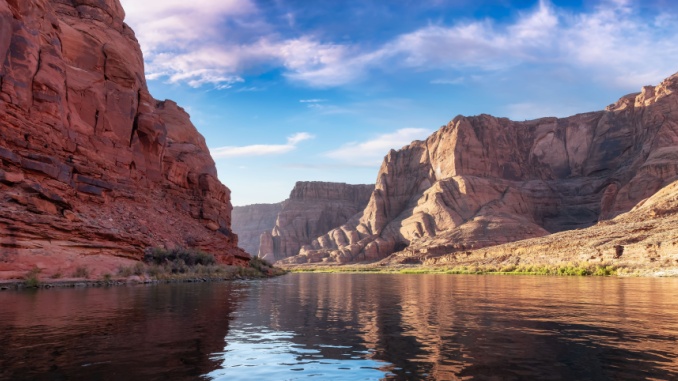
Arizona Republican legislative leaders are backing Congressman Andy Biggs’ proposed $19 billion plan to expand water supplies and accelerate infrastructure projects throughout the Colorado River Basin.
The Colorado River Basin Water Security and Infrastructure Act, introduced by Biggs (R-AZ-05) last week, would authorize funding for water augmentation, desalination, storage, treatment, recharge, and conveyance projects across the seven Basin states.
The goal of the legislation I introduced this week is simple: add new water, strengthen the Basin, and protect the farms, communities, and military installations that depend on the Colorado River.
My bill offers a path forward by investing in new water, modernizing critical…
Senate President Warren Petersen (R-LD14), House Speaker Steve Montenegro (R-LD29), and several Republican committee leaders have announced their support for the proposal, arguing that Arizona needs to focus on developing additional water supplies as uncertainty continues over the Colorado River.
“Arizona can’t make it rain or snow, but we can take action to secure our water future,” said Petersen.
Petersen said state lawmakers worked with Biggs to ensure Arizona priorities were incorporated into the federal proposal.
“Arizona has known for years that shortages could put the Central Arizona Project at risk, Petersen said. “Valuable time to develop alternative supplies has already been lost, and we cannot afford to lose any more. That’s why we worked with Congressman Biggs to make sure Arizona’s priorities helped shape this federal plan.”
One of the bill’s central provisions would establish a $5 billion Colorado River Basin Water Augmentation Program for projects that increase, store, treat, or transport water.
States, tribes, municipalities, utilities, nonprofit organizations, and private entities could seek funding under the program.
The federal government would provide $2 for every $1 in non-federal funding, with priority given to projects that increase available water supplies, benefit multiple states, address municipal water needs, or reduce dependence on the Colorado River.
Montenegro said the proposal represents a shift from negotiations over how existing Colorado River supplies should be divided toward projects intended to increase available water.
“Congressman Biggs has put forward a serious proposal that addresses the problem Arizona should have started preparing for years ago: we need more water,” Montenegro said. “For too long, the discussion has centered on how to divide a declining supply. This legislation takes a better approach by removing unnecessary federal delays and putting real resources behind projects that can increase supply. Long-term water augmentation is the path forward.”
✅Arizona Republicans Applaud Federal Legislation to Expand Colorado River Water Supplies Biggs’ plan would speed new water projects, direct $19 billion in supply and infrastructure, and restore the Yuma Desalting Plant
The proposal would also change the federal permitting process for qualifying water projects. Agencies would have 30 days to determine whether an application is complete and 180 days to make a final decision, with a limited 90-day extension.
Certain qualifying projects would also be exempt from review under the National Environmental Policy Act while remaining subject to other applicable federal requirements.
Senate President Pro Tempore T.J. Shope (R-LD16), who chairs the Senate Natural Resource Committee, said increasing the Basin’s overall supply should be part of the long-term response to Colorado River shortages.
“Our job is to make sure Arizona families and businesses have reliable water without driving up costs,” said Shope. “We cannot solve a water shortage by arguing over smaller and smaller shares of the river. We need to make the pie bigger, and this bill gives Arizona and the other Basin states practical ways to bring more water into the system.”
Another major component of the legislation involves the Yuma Desalting Plant.
The bill would direct the U.S. Department of the Interior to restore the plant to operational status within 180 days and authorize $1 billion for restoration, operation, modernization, and expansion.
According to a press release from the Legislature, treating agricultural drainage water at the facility could help meet U.S. treaty obligations to Mexico while preserving an equivalent amount of Colorado River water in the system.
An additional $1 billion would be authorized to support seawater desalination facilities that could be used toward U.S. treaty obligations, potentially reducing the amount of Colorado River water delivered from the United States.
House Speaker Pro Tempore Neal Carter (R-LD15) said the provisions are intended to focus on developing additional sources rather than relying solely on managing existing supplies.
“We need to stop trading paper around and start bringing new, real wet water into the state. Congressman Biggs’ plan prioritizes just that,” Carter said. “Instead of focusing on scarcity, as Governor Hobbs has done by instituting water-use moratoriums and vetoing bills designed to authorize access to new water, Biggs’ bill plans for prosperity and abundance through the development of new water sources.”
The proposal would additionally authorize $12 billion for federal water infrastructure projects throughout the Basin, including potential water capture projects in California, augmentation and storage projects serving Arizona and Nevada, and infrastructure and forest restoration projects in the Upper Basin.
According to the legislation and the Arizona Legislature’s summary, the proposal would preserve existing Colorado River entitlements and state water priorities and would not modify state water rights, interstate compacts, or the Arizona v. California decree.
House Natural Resources, Energy and Water Committee Chairwoman Gail Griffin (R-LD19) called expanding the water supply a priority that should receive support across party lines.
“Expanding water supply should be a bipartisan priority,” Griffin said. “We need a long-term solution that protects the Colorado River system and works for everyone who depends on it. House and Senate Republicans support Congressman Biggs’ legislation and will continue working on state policies that protect existing residents, increase supply, and support rural economies.”
Biggs introduced the legislation to confront long-term questions over Colorado River operations and water availability. His office has characterized the proposal as an effort to supplement conservation and allocation negotiations with projects designed to add or preserve water supplies throughout the system.
Ethan Faverino is a reporter for AZ Free News. You can send him news tips using this link.
Legislation cosponsored by Arizona Congressman Abe Hamadeh (R-AZ08) that would establish a permanent fraud enforcement division within the U.S. Department of Justice passed the House last week.
The House approved H.R. 9576, the National Fraud Enforcement Division Act of 2026, in a 352-72 vote.
The legislation, sponsored by Rep. Brad Finstad (R-MN), would formally establish the National Fraud Enforcement Division within the Justice Department and place it under the leadership of an assistant attorney general appointed by the President and confirmed by the Senate.
Hamadeh is one of four cosponsors of the legislation, alongside Reps. Derek Schmidt (R-KS-02), Harriet Hageman (R-WY-At Large), and Michelle Fischbach (R-MN-07).
“I want to thank my colleagues for passing this critical legislation,” said Hamadeh. “The criminals, who have created the need for this enforcement effort, have not only stolen taxpayer dollars, but have victimized the most vulnerable in our society by depleting the resources allocated for their needs.”
The legislation would give the division responsibility for leading DOJ efforts to investigate, prosecute, and remedy fraud affecting the federal government, federally funded programs, and U.S. citizens.
The division would also oversee multi-district and multi-agency fraud investigations, assist U.S. Attorneys’ Offices with fraud-related cases, coordinate with federal agencies to identify organized fraud schemes, and develop national fraud enforcement priorities.
Under the bill, the assistant attorney general leading the division could also propose legislative and regulatory changes intended to address vulnerabilities that allow fraud to occur and advise the attorney general and deputy attorney general on significant fraud investigations and prosecutions.
The Justice Department established the National Fraud Enforcement Division earlier this year as part of a broader federal effort to combat fraud involving taxpayer-funded programs.
Acting Attorney General Todd Blanche issued a memorandum in April directing the division to coordinate with agencies administering benefit programs and with federal, tribal, state, territorial, and local law enforcement.
The House legislation would give the division a statutory basis rather than leaving its existence solely to executive branch action.
Hamadeh pointed to a recently announced Arizona Medicaid fraud case as an example of the type of alleged fraud federal authorities are targeting.
Federal prosecutors announced in early September that a Peoria man was charged with health care fraud and money laundering after allegedly billing the Arizona Health Care Cost Containment System (AHCCCS) more than $33 million between May 2022 and May 2023.
This week, an Arizona man was charged with fraudulently billing AHCCCS more than $33 million in a single year. He targeted American Indian Health Care Program enrollees and spent the money on property and luxury items.
That money was meant for people who need care, not a…
According to the U.S. Attorney’s Office for the District of Arizona, Maurice Marcell Williams, 48, owned and operated a behavioral treatment provider and allegedly submitted claims to AHCCCS for services that were never provided.
Prosecutors allege Williams targeted members enrolled in the American Indian Health Care Program.
Although more than $33 million was billed, federal prosecutors said AHCCCS actually paid approximately $19.7 million on the allegedly fraudulent claims.
The indictment also seeks forfeiture of two residential properties, a Rolls-Royce Cullinan, and brokerage accounts.
Williams has been charged but not convicted.
Hamadeh said the case demonstrated how fraud involving federal benefit programs can affect resources intended for vulnerable populations.
“He specifically targeted AHCCCS enrollees who were covered under the American Indian Health Care Program,” said Hamadeh. “He exploited vulnerable people to buy expensive property and luxury items. These federal funds are finite, so not only did he target a vulnerable population, but his thievery also serves to weaken the crucial safety net Americans need for education, medical care, retirement, and more.”
The DOJ says the National Fraud Enforcement Division uses data-driven investigative methods and coordinates with government agencies and law enforcement partners to identify and prosecute fraud.
Its work also supports the Trump administration’s Task Force to Eliminate Fraud, chaired by Vice President J.D. Vance.
H.R. 9576 was introduced by Finstad on July 2. Following Wednesday’s House Passage, the legislation would need Senate approval before it could be sent to the President.
Ethan Faverino is a reporter for AZ Free News. You can send him news tips using this link.
A top federal health official is scheduled to testify before Arizona lawmakers on September 21 as the state faces scrutiny over repeated delays in completing a federally required audit and potential consequences for federal funding.
The Joint Legislative Audit Committee, chaired by State Rep. Matt Gress (R-LD4), will hold a public hearing to examine Arizona’s failure to submit its required Single Audit by federal deadlines and what steps are being taken to return the state to compliance.
Gustav Chiarello, Assistant Secretary for Financial Resources at the U.S. Department of Health and Human Services (HHS), is scheduled to testify before the committee. HHS notified Governor Katie Hobbs in July that Arizona was not in compliance with federal Single Audit requirements.
A Single Audit is an annual examination of a government entity’s financial statements and its compliance with requirements governing federal awards.
Under federal rules, entities that meet the applicable threshold for federal expenditures are required to undergo a Single Audit, which serves as an oversight mechanism for the use of federal funds.
According to the Arizona House of Representatives, the state has missed its federal Single Audit deadline for four consecutive fiscal years.
Arizona’s fiscal year 2025 audit was due March 31, 2026 but remains outstanding. The Arizona Auditor General has projected the audit may not be issued until March 5, 2027, less than a month before the fiscal year 2026 audit is due.
HHS has warned that continued noncompliance could result in federal enforcement measures, including additional conditions on federal awards, temporarily withheld payments, disallowed costs, or the suspension or termination of federal awards.
HHS has recently increased its focus on Single Audit compliance nationwide.
The department announced an initiative earlier this year examining years of Single Audit information from states and federal grantees, saying its initial review identified repeated unresolved findings and hundreds of grantees that had failed to submit required audits.
According to the PHX Reporter, Gress said the continuing delays have moved beyond a paperwork issue and require greater attention to management and accountability.
“I’m deeply concerned,” Chairman Gress said. “This is something we’ve been raising since I became Chairman of the Joint Legislative Audit Committee in 2023, and the Auditor General has now made clear that the State’s current timeline is not realistic.”
Gress said that addressing the delays will require greater accountability from state agencies responsible for Arizona’s financial reporting.
“The Governor should be driving a coordinated corrective plan across the agencies the Auditor General identified, with clear deadlines and accountability for each one,” said Gress.
“The Auditor General has laid out what has to happen for the audit to be completed by March 5, 2027, so the administration should be treating those milestones as an urgent management priority and doing everything possible to protect federal funding,” he added.
Other Republican lawmakers have also publicly questioned the state’s failure to complete the audit on time.
State Senator Janae Shamp (R-LD29) questioned the delays publicly on X, saying, “@HHSGov just put it in writing: Arizona is NOT compliant on the FY25 Single Audit. Due March 31. Not filed. Why? Hiding something? @katiehobbs @GovernorHobbs what is your action plan to ensure vulnerable, innocent Arizonas do not suffer from your administration’s incompetence?”
@HHSGov just put it in writing: Arizona is NOT compliant on the FY25 Single Audit. Due March 31. Not filed. Why? Hiding something?
@katiehobbs@GovernorHobbs what is your action plan to ensure vulnerable, innocent Arizonas do not suffer from your administration's incompetence? pic.twitter.com/wZhOweLqnB
— Former Majority Leader of the AZ State Senate (@AZSenatorShamp) September 12, 2026
State Representative John Gillette responded to Shamp’s post, alleging problems involving the commingling of funds, noncompliant spending and unauthorized payments.
Gress, however, told the PHX Reporter that he would not speculate about whether the delays indicated information was being concealed without evidence.
“I’m not going to speculate that something is being hidden without evidence,” he said. “But the Auditor General documented inaccurate financial information, delayed responses, significant errors requiring revised financial statements, and unresolved reconciliation issues.”
“So there are legitimate questions that deserve rigorous oversight and clear answers,” he added.
The September 21 hearing is expected to examine the causes of the delays, Arizona’s corrective action plan, which federal funding could potentially be affected, and what changes are necessary to prevent another missed deadline.
In addition to Chiarello, lawmakers are scheduled to hear from the Arizona Auditor General, representatives from Arizona’s three public universities, the Arizona Health Care Cost Containment System, the Arizona Department of Education, the Department of Economic Security, the Department of Administration, and the Governor’s Office.
The hearing is scheduled for 9 a.m. Monday in House Hearing Room 1 at the Arizona State Capitol.
Ethan Faverino is a reporter for AZ Free News. You can send him news tips using this link.
The federal government recorded a nearly $167 billion budget deficit in August, bringing the total shortfall for Fiscal Year 2026 to nearly $2 trillion with one month remaining in the fiscal year.
According to the latest Monthly Fiscal Update released by the Joint Economic Committee (JEC), federal spending exceeded revenues by $166.8 billion in August.
The cumulative deficit from October 2025 to August 2026 reached approximately $1.966 trillion.
Federal outlays have totaled $6.811 trillion so far this fiscal year, while the government has collected approximately $4.845 trillion in revenue. Based on those figures, about 28.9% of federal spending has not been covered by revenues.
The government has spent approximately $1.41 for every $1 collected.
Despite approaching $2 trillion, the year-to-date deficit is slightly below the comparable period last year. Through August of Fiscal Year 2025, the federal government had accumulated approximately $1.973 trillion in deficits, putting the current fiscal year’s total about 0.4% lower.
The federal government ultimately finished FY25 with a $1.775 trillion deficit. The Congressional Budget Office’s (CBO) latest projections estimated a $1.853 trillion deficit for FY26, followed by $1.887 in FY27, and $2.080 in FY28.
The current fiscal-year deficit has already surpassed that $1.853 trillion projection with September still remaining.
Spending has continued to increase compared with last year. Federal outlays totaled $526.8 billion in August and reached $6.811 trillion for the fiscal year through the end of the month. That represents an increase of approximately 2.2% from the $6.664 trillion spent during the same period of FY25.
Social Security remains one of the largest areas of federal spending, accounting for $1.526 trillion in outlays through August. Net interest costs have surpassed $1 trillion for the fiscal year, reaching approximately $1.017 trillion.
Other major spending categories include roughly $1.041 trillion for income security and veterans benefits, $979 billion for Medicare, $833 billion for defense, and $655 billion for Medicaid. Foreign aid accounted for $32 billion through August.
Federal revenues have also increased.
The government collected approximately $360 billion in August, bringing FY26 receipts through August to $4.845 trillion. That is about 3.3% higher than the $4.691 trillion collected during the comparable period last year.
Individual income taxes have provided the largest share of federal revenue this fiscal year, totaling $2.548 trillion, or more than half of all receipts. Social security insurance and retirement taxes generated another $1.663 trillion.
Corporate income tax receipts totaled $295 billion through August, while customs duties generated about $167 billion.
The CBO’s February budget outlook projected federal spending of approximately $7.449 trillion and revenues of $5.596 trillion for FY26. Its projections also anticipated deficits remaining near or above $2 trillion in the coming years as federal spending and interest costs continue to rise.
With one month left of FY26, the final September figures will determine the government’s full-year deficit and how it ultimately compares with both FY25 and the CBO’s earlier projections.
Ethan Faverino is a reporter for AZ Free News. You can send him news tips using this link.