by Staff Reporter | Mar 23, 2026 | Education, News
By Staff Reporter |
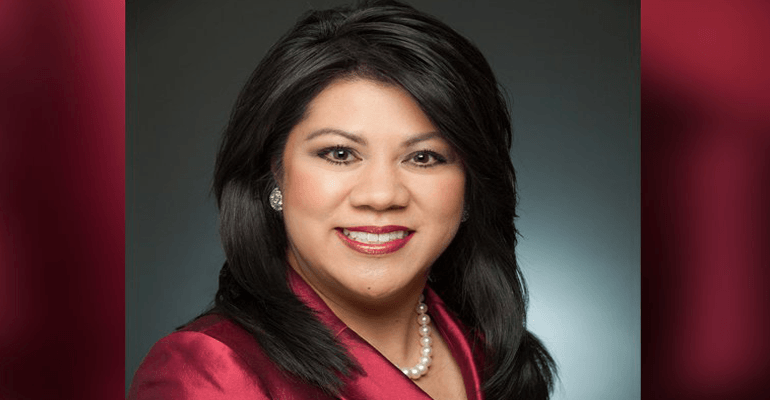
Arizona Treasurer Kimberly Yee is advocating for reforming the Empowerment Scholarship Account (ESA) Program to reduce improper spending.
The treasurer’s office manages the contract with the vendor operating the portal through which ESA holders submit reimbursement payments.
Yee shared that she directed her office to seek out vendors proposing to innovate better means of facilitating the expanding ESA program. The treasurer’s office will publish a formal request for information to secure a platform better suited to support the current scope of the program.
Over 100,000 families participate in the ESA Program.
“If there is a financial platform, or are updates to the current platform, that can provide families ESA program funds efficiently and identify any misspending or misuse, then Arizona taxpayers deserve to use that system,” said Yee.
Yee announced her RFI plan following a public dispute between Arizona Department of Education (ADE) Superintendent Tom Horne and the media over fraud, abuse, and waste within the ESA Program.
Horne maintains the program has low levels of those problems, but 12News argues they’re much higher.
12News claimed based on a risk-based audit that 20 percent of purchases under $2,000 within the ESA Program were fraudulent. Horne disputed that total as a “ridiculous” misunderstanding of data.
“Only 20 percent of that 20 percent were improper — that’s only four percent,” said Horne in an interview with KTAR News. “The other thing to know is, [those improper expenditures are] not all fraud. A lot of times it’s innocent mistakes, a paper that needs to be submitted, things that people think are okay but don’t fall into our standards. The amount of actual egregious purchases or fraud is 0.3 percent.”
The 0.3 percent figure came from a randomized study by a Stanford PhD, per Horne, which reviewed 3,000 random ESA orders between July 2025 and February 2026.
12News relied on public records to estimate in a report published last month that misspending “could” amount to 20 percent of all purchases in the ESA Program. According to their report, at least 18,000 of the 102,000 ESA Program participants had one or more unallowable purchases over the course of one year, which amounted to nearly 84,000 unallowable purchases.
Horne has demanded that 12News issue a retraction of their reporting perpetuating the 20 percent claim.
“A ridiculous figure of 20 percent fraud has been circulating concerning ESA purchases which resulted from a total misinterpretation of data provided to Channel 12. The 20 percent figure represented program participants that ADE had selected for risk-based auditing,” said Horne in a press release last week. “Continued use of the 20% fraud allegation is an outrageous misrepresentation to the public that must stop.”
AZ Free News is your #1 source for Arizona news and politics. You can send us news tips using this link.
by AZ Free Enterprise Club | Mar 20, 2026 | Opinion
By the Arizona Free Enterprise Club |
Arizona’s legacy media is at it once again—going after our state’s highly popular Empowerment Scholarship Account (ESA) program, which now sits at over 100,000 enrollments.
Last month, activist reporter Craig Harris, from 12 News, pushed his latest “investigation” claiming that the ESA program had fraud totaling 20 percent. Certainly, if such a level of fraud is accurate, it deserves a full investigation. But it didn’t take long before the truth—and the real data—revealed itself.
According to the Arizona Department of Education (ADE), Harris’s 20 percent fraud claim originated from a risk-based audit, which was not only limited in scope, but also targeted higher-risk participants and accounts. But it did not account for the entire ESA program. Instead, the ADE referred to a study by a Stanford PhD that showed a more accurate assessment of fraud at 0.3 percent. That’s quite a gap between the 12 News report and reality. Perhaps Harris is getting math lessons from his buddies in the teachers’ unions who, as we know, have never exactly been good at counting.
As Harris continued to push his vendetta against school choice on social media this past weekend, he was completely ratioed for his debunked ESA fraud claims. And the best part? He was also unmasked as a partisan liberal with Red for Ed conflicts of interest and a history of publishing defamatory stories that are still being litigated…
>>> CONTINUE READING >>>
by Staff Reporter | Mar 18, 2026 | Education, News
By Staff Reporter |
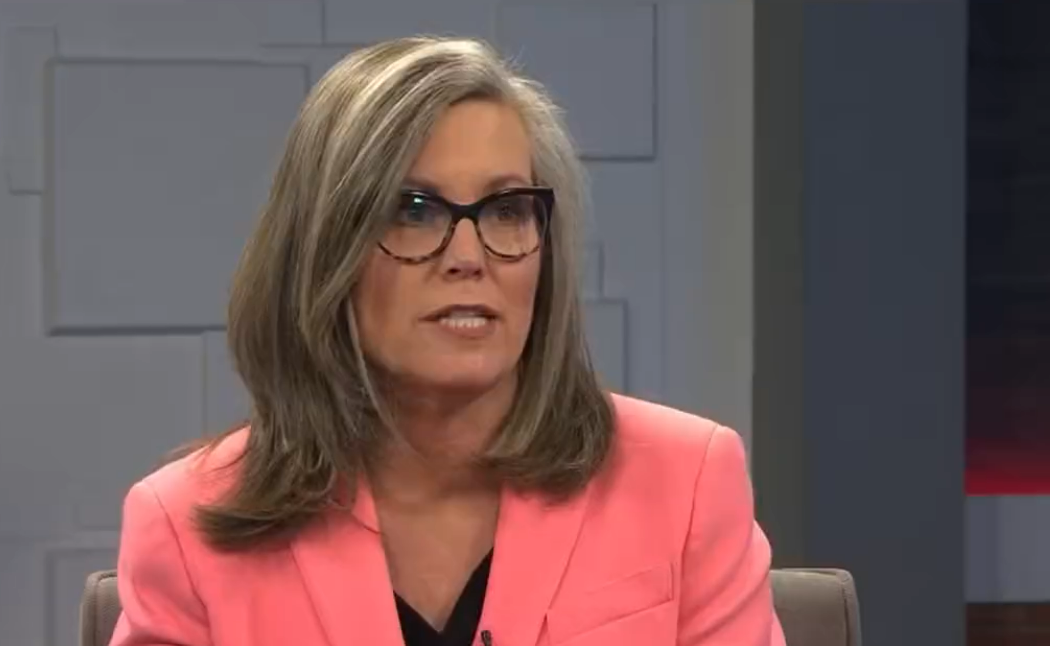
Gov. Katie Hobbs fired an Arizona State Board of Education (ASBE) member following pressure from a public school activist group, email records revealed.
The emails obtained and published by FOIAzona revealed that Hobbs heeded a demand from Save Our Schools Arizona (SOSAZ) to fire former ASBE member Jenny Clark due to her general support for school choice.
SOSAZ led a ballot initiative in 2022 in an attempt to overturn the legislation that universalized Arizona’s school choice within the Empowerment Scholarship Account (ESA) Program. The effort was unsuccessful after SOSAZ far overestimated their signature numbers when they turned in their signature sheets.
SOSAZ lobbyist Beth Lewis emailed Hobbs chief of staff Chad Campbell and deputy chief of staff Lourdes Pena in January of last year with the demand to fire Clark and another board member, Katherine Haley. Lewis alleged the pair were “anti-public school” due to their school choice affiliations.
Lewis recommended Hobbs replace Clark with an ESA parent of a special needs student, suggesting Kathy Boltz, a member of the SOSAZ board. Haley’s recommended replacement was Alison Bruening-Hamati, an administrator with the Tempe Elementary School District.
Three days after that initial email, Lewis sent a follow-up email to stress the urgency of both Clark and Haley’s removals, citing an upcoming (at the time) ASBE meeting to update the ESA Parent handbook.
Pena responded that they had “a plan in place to replace Clark,” and that they were holding “more ongoing convos” about Haley. Not much later, the former would be given the boot. For unknown reasons, the latter was permitted to remain on the board.
A little over three weeks later, Clark announced on social media that Hobbs’ office ignored her refusal to resign and notified her of a forthcoming letter confirming the end of her term. When that letter hadn’t arrived six days later, Clark again posted online to notify of the absence of the letter. Within hours, the governor’s office sent a letter notifying Clark that she had been replaced since her term had expired.
Several other members of the board were serving on expired terms when Hobbs ousted Clark. However, in a letter last March announcing the appointment of Lupita Hightower to replace former ASBE board member Anna Tovar, Hobbs’ office claimed no other ASBE members were serving expired terms. However, that was not true.
Haley, now the president, had her term expire last January. Both vice president Scott Hagerman and Jason Catanese had their terms expire in January 2024.
At the time of Hobbs’ letter last March, Karla Phillips-Krivickas and Jacqui Clay had unexpired terms. However, both of their terms expired this January.
Hightower did not replace Clark. Kathleen Wiebke, whose term was set to expire in 2029, replaced Clark last March but passed away in December.
ASBE also has two vacancies at present, one seat for a public member and one seat for a charter school administrator.
In all, five of the 11 board members are serving on expired terms and two are vacant.
Lewis, the author of the emails, responded that the publishing of her emails was “hilariously stupid” and accused the women she sought to remove from ASBE as “working to destroy public education.”
“[Y]all are just pearl clutching — take luck!” said Lewis.
AZ Free News is your #1 source for Arizona news and politics. You can send us news tips using this link.
by Staff Reporter | Mar 16, 2026 | Education, News
By Staff Reporter |
The Arizona Department of Education (ADE) accused a major media outlet of misrepresenting the amount of fraud that occurs within the state’s school choice program.
Per ADE, 12News claimed the Empowerment Scholarship Account (ESA) Program had fraud totaling 20 percent. ADE said this figure was false, and that the true fraud rate sits at 0.3 percent.
The 20 percent claim originated from a risk-based audit — an audit of limited scope — which targeted specific higher-risk participants and accounts. It does not account for the entire ESA Program population, says ADE.
ADE presented the 0.3 percent figure from a study by Stanford PhD on a random sample to obtain a more accurate assessment of the entire ESA population. That study, which reviewed 3,000 random ESA orders between July 2025 and February 2026, also concluded that unallowable spending amounted to less than two percent of the total.
ADE Superintendent Tom Horne demanded 12News issue a retraction.
“A ridiculous figure of 20 percent fraud has been circulating concerning ESA purchases which resulted from a total misinterpretation of data provided to Channel 12. The 20 percent figure represented program participants that ADE had selected for risk-based auditing,” said Horne in a press release. “Continued use of the 20% fraud allegation is an outrageous misrepresentation to the public that must stop.”
By comparison, Horne noted, other government programs have higher rates of improper spending: Medicaid totals over seven percent, food stamps total over nine percent, and unemployment insurance totals over 14 percent.
Horne clarified that the unallowable purchases rate doesn’t constitute fraud necessarily. The superintendent said “most” of those purchases were confirmed as “innocent mistakes” such as improper form completions or viewing certain unpermitted educational items as permitted, like backpacks or lunch boxes.
Horne said ADE promptly recovers misspent funds, and has recovered over $1.2 million.
The disputed 20 percent figure was mentioned in multiple articles by 12News, including one of the latest pieces of coverage published on Wednesday.
“According to state records obtained by 12News Investigates, nearly 20% of ESA parents or at least 18,000 ESA account holders, have misused voucher funds,” read Wednesday’s article.
The original 20 percent figure by 12News stemmed from a report on public records reviewed by the outlet which estimated that misspending “could” amount to 20 percent of all purchases in the ESA Program. The report stated that over 18,600 out of the 102,000 ESA account holders had at least one unallowable purchase over the course of a year.
Horne said at the time that the percentage provided wasn’t totally representative of fraud; rather, the superintendent said “most of it” was attributable to mistakes by the parents.
While critics of the program highlight the millions ADE is forced to recover, mainly from misspending and marginally from fraud, supporters of the program highlight the millions saved by children entering the ESA Program rather than their designated public district school system.
Goldwater Institute director of education policy, Matt Beienburg, said in a press release that wrongful spending occurs just as much, if not more, in the public school district system.
“It’s also worth observing that just 52 cents of every dollar sent to Arizona district schools now makes it to classroom instruction according to the state auditor general,” said Beienburg. “Among the many uses of those funds outside the classroom: a $500,000 trip to Las Vegas by a school district that promptly cut bus services for students; a district spending $4,000 per person to send staff to Napa, California for a conference featuring wine tastings, a district spending $18,500 on ‘membership dues and for staff to attend golf tournaments,’ and more.”
AZ Free News is your #1 source for Arizona news and politics. You can send us news tips using this link.
by Jason Bedrick | Mar 13, 2026 | Opinion
By Matthew Ladner & Jason Bedrick |
It is said that a lie travels halfway around the world before the truth can get its pants on. But when the truth finally catches up, it tends to arrive with receipts.
In recent weeks, anti-school-choice activists have accused Arizona’s popular Empowerment Scholarship Account (ESA) program of having a ludicrously high rate of misspending. That narrative, repeated endlessly despite being repeatedly debunked, has now collided with an inconvenient reality: the Arizona Department of Education’s own data tell a starkly different story, one that exposes the “unaccountable ESA” myth for what it always was: a misleading talking point masquerading as journalism.
On Thursday, the Arizona Department of Education published the results of a random audit of the ESA program, finding very low rates of misspending relative to other publicly funded programs and even less fraud. Less than 2% of ESA funds were spent on unallowed items, and 0.3% of the funds were spent on items considered “egregious” or fraudulent. The department is in the process of recouping those funds.
The department’s audit has punctured the gross distortions of Phoenix-based journalist Craig Harris of Channel 12, who had misrepresented the ESA program as being rife with fraud. The department called Harris’s claims “ridiculous,” “reckless,” and “a total misinterpretation of data provided by [the department] to Channel 12.”
Harris had claimed that 20% of ESA purchases represented misuse of funds based upon an examination of only a small portion of total ESA purchases—384,478 of the 1.8 million total ESA transactions since December 2024, approximately 20% of the total.
But it was not a random sample. The Arizona Department of Education had selected these purchases under a risk-based audit for additional scrutiny, so it was not a random sample that one could use to extrapolate rates of misuse in the ESA program. Instead, the risk-based pool was far more likely to contain misuse than the average purchase.
In other words, among the 20% of ESA purchases flagged for additional scrutiny, the department found 20% to be misspending. Harris, however, extrapolated the risk-based results on to the entire universe of ESA purchases. This represented a blatant distortion because the remaining purchases outside of the risk-based sample were far less likely to involve misspending.
Think of it this way: imagine that a reporter read a study showing that 20% of Americans were obese and that 20% of obese Americans had diabetes, then he ran a story claiming that 20% of all Americans had diabetes. Such a claim would be a complete distortion of the data, a conclusion that is entirely unsupported by the facts.
Harris was warned both publicly and privately that his “analysis” was deeply misleading. Nevertheless, he continued to repeat his “20% misuse” claim on television and social media.
The Arizona Department of Education decided to set the record straight by auditing a random sample of thousands of Arizona ESA purchases. The audit’s conclusion: “About 2% of purchases are unallowable expenses and only 0.3% represent fraud or egregious purchases.”
In short, Harris’s “analysis” on misspending was off by a factor of 10, and his accusations of fraud were off by nearly a factor of 100.
And although Harris made it seem like one in five ESA parents were buying diamond rings, the reality is that egregious purchases represented a vanishingly small percentage of ESA spending. Most of the unallowed items appear to have been innocent mistakes.
The Arizona Department of Education explained the difference between unallowable purchases and egregious purchases/fraud in a press release:
The submission of a purchase that is deemed unallowable does not constitute fraud. Most are innocent mistakes, such as an error in a form that must be resubmitted, or educational items that are not on the allowable list but that the user could have in good faith believed were permitted. Some examples would be backpacks, lunch boxes and water bottles.
A ridiculous figure of 20% fraud has been circulating concerning ESA purchases which resulted from a total misinterpretation of data that we provided to Channel 12.
Cracking down on misspending is important, but so is keeping things in perspective. The rate of improper payments for the Arizona ESA program, at 1.9%, stands far below a variety of programs which ESA opponents support, such as Medicaid (7.4%), food stamps (9.3%), and unemployment insurance (14.4%). Moreover, the Arizona Department of Education actively recovers misspending, and refers serious cases for criminal prosecution to punish criminal activity and to deter fraud.
Indeed, the only reason we know about the miniscule level of unallowed purchases in the ESA program is because it is so transparent—far more transparent than district schools, which do not report transaction-level data to state officials, let alone the public. Given the rash of recent scandals in Arizona’s district school system, one can only imagine what we would find if given access to information about every purchase that district schools have made, as we have for the ESA program.
In the interests of transparency and accountability, state lawmakers should require the district schools provide the same level of information about purchases as ESA families.
Harris has not yet retracted his false reporting. Instead, he has doubled down on his errors, erroneously claiming that the department’s audit was “largely skewed” and based on “a miniscule sample.” This claim is particularly ironic given that Harris erroneously treated a risk-based sample—which is inherently skewed—as though it was representative of the entire population. A random sample, by contrast, is representative of the whole.
Facts are stubborn things. So too, apparently, are anti-school-choice activists who can’t let go of the false narrative they pushed in the face of overwhelming evidence to the contrary.
Matthew Ladner is a Senior Advisor for education policy implementation and Jason Bedrick is a Senior Research Fellow at the Heritage Foundation’s Center for Education Policy.