by Matthew Holloway | Oct 26, 2025 | News
By Matthew Holloway |
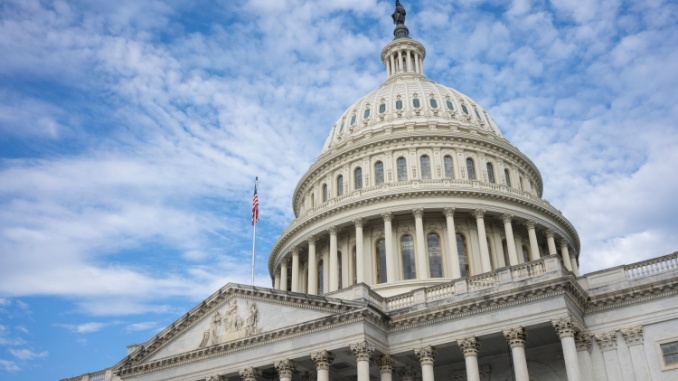
Rep. Abe Hamadeh (R-AZ08) condemned top Democrats on Wednesday for casually acknowledging the hardships Americans face during the ongoing government shutdown — one they’ve prolonged while using it for political leverage.
“It’s reprehensible to see top Democrats admit that they’re willing to inflict pain on hardworking Americans to achieve their priorities,” Hamadeh posted on X. “It’s even worse when you consider those priorities are handouts to illegal immigrants & taxpayer-funded fake news.”
Hamadeh’s remarks followed comments from House Minority Whip Katherine Clark (D-MA), who, in a Fox News interview, described the shutdown as a rare opportunity for her party despite its toll on families.
“Shutdowns are terrible. And of course, there will be families that are going to suffer. We take that responsibility very seriously, but it is one of the few leverage times we have,” Clark said.
The full government shutdown stems from Democrats’ refusal to support a clean continuing resolution to maintain current funding levels through November. Instead, they are demanding $1.5 trillion in new spending, including $500 million for public broadcasters like NPR and PBS, and changes to narrow eligibility restrictions for government health care benefits under the “One Big Beautiful Bill,” according to Speaker Mike Johnson’s office. Those restrictions currently limit benefits like Medicare and premium tax credits to U.S. citizens, lawful permanent residents, certain Cuban and Haitian immigrants, and Compact of Free Association migrants. Democrats seek to rescind them, potentially extending free health care to millions of Biden-era parolees from countries like Haiti and Venezuela—2.8 million of whom were admitted despite being “otherwise inadmissible,” per congressional testimony.
As of this report, Senate Democrats have now blocked shutdown-ending votes 11 times in the Senate alone, or 12 overall, including House actions, according to House Speaker Mike Johnson.
“This is now the longest full shutdown in American history. And yet again, Senate Democrats voted for the 11th time — 12 times overall, when you count House and Senate Democrats — to prolong the pain and keep the government closed,” Johnson said in a press conference on Tuesday.
President Donald Trump accused Democrats of “holding the entire federal government hostage” and vowed, “We will not be extorted on this crazy plot of theirs.”
The standoff has furloughed over 800,000 federal workers and contractors, delayed veterans’ benefits, and paused services such as FDA inspections, with ripple effects into the holiday season.
In an interview with KFYI host James T. Harris, Hamadeh stated, “There’s no way we’re going to give an inch on this… There’s nothing that we can negotiate,” when asked how long the Democrats might continue to block funding.
Democrat Senators under Minority Leader Chuck Schumer led the rejection of another clean bill Thursday that would have provided funding to pay the Armed Forces, Capitol Police, Border Patrol, Air Traffic Controllers, Congressional staffers, and “various essential federal workers,” according to Hamadeh. He wrote in a post to X, “It turns out that the ONLY people essential to the Democrats are their militant base and illegal immigrants.”
Later in the day, Hamadeh wrote, “The Democrats won’t support a clear CR, something they’ve done forever… why would you still think they’re going to honor the filibuster next time they’re in power? They’ll gut it so quickly and Republicans will look like fools. They’re unreasonable, manic, and controlled by the leftwing base that’s rewarding them with $$$ political donations. They have zero incentive. The uncomfortable truth is that we are no longer operating under the same rules — I wish we were, but it is not reality. It’s time for the Senate to exercise the nuclear option.”
Democrats previously supported 13 clean continuing resolutions during the Biden administration, a point Republicans have highlighted as inconsistent with their recent actions.
Matthew Holloway is a senior reporter for AZ Free News. Follow him on X for his latest stories, or email tips to Matthew@azfreenews.com.
by Matthew Holloway | Oct 24, 2025 | News
By Matthew Holloway |
President Donald Trump’s glowing endorsement of Rep. Paul Gosar (R-AZ09) for a safe CD-9 re-election is raising eyebrows in the 2026 Arizona primaries. The president’s move casts a spotlight on the unconfirmed Trump endorsement of AZGOP Chair Gina Swoboda’s jump into the toss-up CD-1 race.
“Dr. Paul Gosar has my Complete and Total Endorsement for Re-Election — HE WILL NEVER LET YOU DOWN!” Trump wrote on Truth Social, hailing the eight-term Congressman as a “fearless Warrior” who’s ridden with him “from the very beginning.”
In full, President Trump wrote:
“Congressman Paul Gosar, D.D.S., is an America First Patriot, who is doing a fantastic job representing Arizona’s 9th Congressional District!
A MAGA Warrior, who has been with us from the very beginning, Paul is working hard to Grow our Economy, Cut Taxes and Regulations, Promote MADE IN THE U.S.A., Advance American Energy DOMINANCE, Keep our now very Secure Border, SECURE, Support our Brave Military/Veterans, and Protect our always under siege Second Amendment.
Dr. Paul Gosar has my Complete and Total Endorsement for Re-Election — HE WILL NEVER LET YOU DOWN!”
The blast on Truth Social, posted on October 21st, lands amid murmurs that Gosar is likely to run unchallenged in his primary, with a recent 2024 margin of 22 points. No real competition has materialized for the incumbent Congressman as of this report. Still, President Trump has rewarded Gosar’s long-term loyalty, creating a solid fundraising basis for him and boosting the congressman’s campaign early on.
Contrast the President’s thunderous endorsement of Dr. Gosar, however, with his apparent radio silence around AZGOP Chair Gina Swoboda, despite her announcement of his backing at the launch of her candidacy.
As AZ Free News reported, the Arizona GOP leader vaulted into the open CD-1 race, controversially opting to chase Rep. David Schweikert’s seat in a district that was narrowly won by 3.8 points last cycle, while stating she is not stepping down as AZGOP chair until January. Swoboda publicly announced an endorsement from President Trump upon launching her campaign. However, it has yet to materialize on any of the President’s social media feeds or official campaign statements.
Swoboda shared a quote from the President stating, “Gina will be a tremendous champion… She will never let you down!” Outlets from AZCentral to The Hill ran with the endorsement as gospel.
In full, the quote attributed to President Trump reads, “Gina Swoboda has my complete and total endorsement for Arizona’s 1st Congressional District! Gina will be a tremendous champion for Arizona in Congress. She will never let you down!”
The last post on President Trump’s Truth Social account about Swoboda dates to January 26, 2024, in which he endorsed her for AZGOP Chair.
With no original post or official statement and no proxy quote from a campaign surrogate, online commenters are casting doubt on the validity of the endorsement.
The situation has not been lost on Arizona’s political movers. Tyler Bowyer, COO of Turning Point Action, posted a suggestion on Wednesday that former NFL player Jay Feely, already a declared candidate for Congressional District 5 since April, would be “great to run in CD-1 in Arizona.” Bowyer added, “He’s a great Christian, well-known name in AZ sports & supported by a ton in the business community. President Trump loves him and I think would really like to have both him AND Sheriff Lamb in Congress!”
Matthew Holloway is a senior reporter for AZ Free News. Follow him on X for his latest stories, or email tips to Matthew@azfreenews.com.
by Matthew Holloway | Oct 21, 2025 | News
By Matthew Holloway |
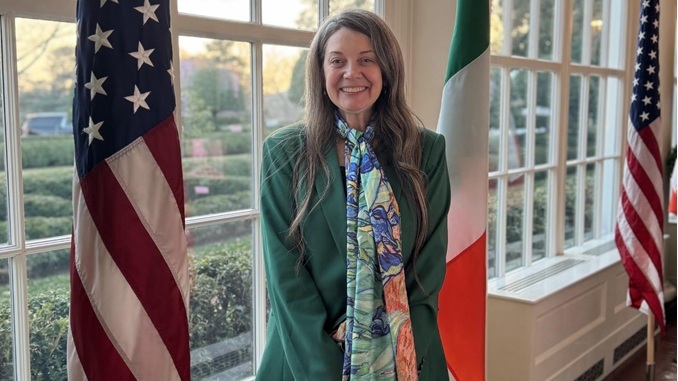
Arizona Republican Party Chairwoman Gina Swoboda is looking to fill the vacuum that will be left by Rep. David Schweikert in the state’s First Congressional District after the congressman entered the 2026 gubernatorial race. Swoboda’s announcement included an endorsement from President Trump, though that endorsement has not been confirmed by the President’s Truth Social as of filing.
Swoboda dropped the news on X with a statement touting her credentials as a mother of two, magna cum laude ASU grad, and national election integrity advisor. She stressed in her statement that her campaign will be centered around “commonsense conservative principles of economic growth and prosperity, strong and secure borders, and protecting taxpayers.”
Axios Phoenix called her entry the “first major GOP candidate” in a race that could test the power of President Trump’s endorsement in loosely held suburbs. Speaking to Axios, Swoboda said she is the “most viable candidate for the district” and emphasized a commitment to “low regulation, low taxes and equality of opportunity.”
Schweikert’s decision to engage in a gubernatorial run has left the northeast Valley district a ‘Toss-Up’ according to the Cook Political Report. Arizona’s First Congressional District, spanning Scottsdale, Paradise Valley, Fountain Hills and parts of Phoenix, is a GOP-leaning but swing-prone suburban district classed as an R+1 toss-up despite the Schweikert’s 3.8 point victory in 2024 over Democrat Amish Shah.
Merissa Hamilton, founder and chairwoman of Strong Communities Action/EZAZ.org, has launched an effort to request Swoboda’s resignation as AZGOP chair following her announcement, according to a post to X on Monday. Hamilton stated, “She (Swoboda) pledged to God on @GarretLewis’ radio show she wouldn’t run for office while serving as Chair. She needs to resign, and the body needs to hold a new election.”
Axios Phoenix reported that Swoboda said she will not vacate the AZGOP Chair until January to allow the state committee to elect a successor and added that she’s establishing a “firewall” for fundraising activities, to separate her campaign from the party treasury. Swoboda has, however, resigned from her role as policy adviser for the Arizona House Committee on Federalism, Military Affairs and Elections.
Matthew Holloway is a senior reporter for AZ Free News. Follow him on X for his latest stories, or email tips to Matthew@azfreenews.com.
by Matthew Holloway | Oct 19, 2025 | News
By Matthew Holloway |
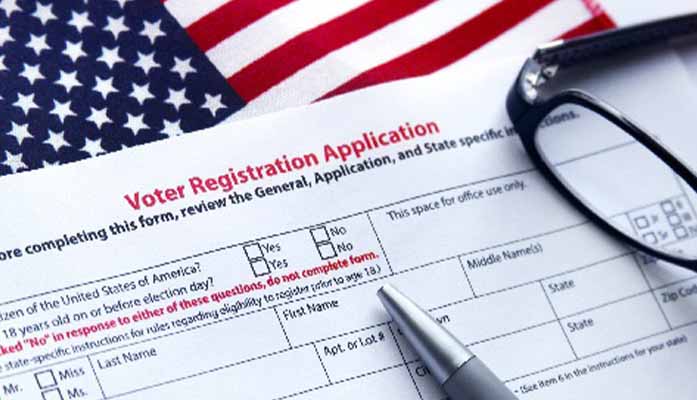
The U.S. Department of Justice (DOJ) has filed a brief in support of Arizona’s law requiring proof of citizenship to vote. The intervention comes in Mi Familia Vota v. Warren Petersen, a lawsuit filed by leftist groups against two laws passed by the Republican-controlled Arizona Legislature in 2022.
The laws require voters registering via the state form to provide documentary proof of U.S. citizenship to participate in state and local elections. The DOJ’s brief backs Senate President Warren Petersen’s defense of the laws following a Ninth Circuit Court of Appeals ruling that invalidated key provisions. The brief argues that Arizona’s birthplace attestation requirement “does not violate the Materiality Provision because it is generally important that an election official would consider important to the process of determining an applicant’s eligibility to vote.”
“We are thankful to again have a White House and Department of Justice committed to the rule of law and fair elections,” Petersen said in a statement. “The DOJ’s brief is appreciated in our fight to uphold a commonsense law and the will of the people. Given the clear precedent handed down from the U.S. Supreme Court, we are confident we will ultimately prevail. With the continued absence of our governor and attorney general, thankfully, the Arizona Legislature is again picking up the slack and is returning to our nation’s high court to defend election integrity.”
The case traces back to challenges by Mi Familia Vota and other groups, including some based outside Arizona, against House Bill 2492. The law bars enhances the legal guardrails of the Arizona voter registration process, ensuring that proof of citizenship is required to ensure only U.S. citizens are voting in our elections.
In August 2024, a three-judge Ninth Circuit panel vacated an emergency stay previously issued by another panel of the court. That decision permitted Arizona residents to register using the state form without proof of citizenship for federal races, such as U.S. president and Congress.
Petersen then sought emergency relief from the U.S. Supreme Court, which affirmed Arizona’s authority to reject incomplete registrations, marking the last binding order in the dispute until the Ninth Circuit’s latest deviation.
Eleven judges dissented from the Ninth Circuit’s most-recent majority opinion, saying, “Republican government serves as the keystone of the Constitution. In such a government, a majority of citizens who lawfully vote determines who represents us in the White House, Congress, and state legislatures. Courts must therefore defend the franchise—both by protecting the right of all citizens to vote, and by ensuring non-citizens do not vote. Arizona passed laws to protect the franchise… Sadly, the panel majority opinion undermines republican government, shreds federalism and the separation of powers, and imperils free and fair elections.”
The case now heads back to the U.S. Supreme Court for potential review, where Arizona will seek to enforce its citizenship verification requirements.
Matthew Holloway is a senior reporter for AZ Free News. Follow him on X for his latest stories, or email tips to Matthew@azfreenews.com.
by Staff Reporter | Oct 17, 2025 | Education, News
By Staff Reporter |
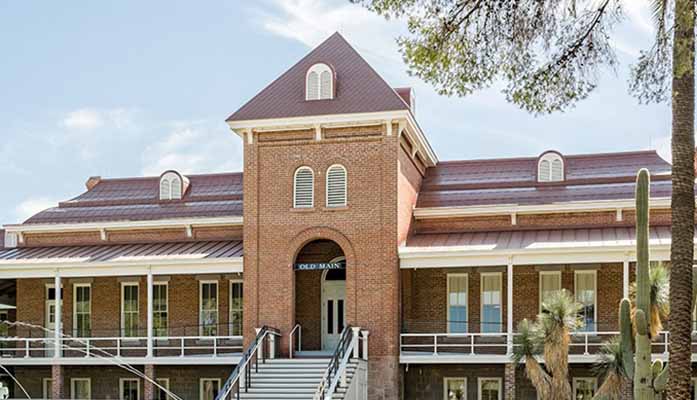
Over 80 of the top University of Arizona (U of A) professors pushed leadership to reject President Donald Trump’s higher education compact.
At the beginning of this month, the Trump administration sent universities across the country the Compact for Academic Excellence in Higher Education to encourage certain reforms in exchange for preferential federal funding. One major contentious point of the proposed compact would prohibit hostility to conservative viewpoints.
“To advance the national interest arising out of this unique relationship, this Compact for Academic Excellence in Higher Education represents the priorities of the U.S. government in its engagements with universities that benefit from the relationship,” read the compact. “Institutions of higher education are free to develop models and values other than those below, if the institution elects to forego federal benefits.”
The proposed reforms touch on improving equality in admissions, stabilizing the marketplace of ideas and civil discourse on campuses, ensuring nondiscrimination in faculty and administrative hiring, enforcing institutional neutrality on societal and political events, raising and standardizing student academic performance standards, establishing equal treatment of students, reducing the educational costs, and reducing foreign influences.
In response, 80 Regents Professors at U of A issued a letter to university President Suresh Garimella requesting denial of the compact. The professors said the compact contained “significant legal and practical flaws” which would threaten U of A’s academic freedom, institutional independence, and legal integrity.
The Regents Professor designation is an exclusive honoring of “faculty scholars of exceptional ability” with both national and international distinction in their respective fields. It is a recognition of the highest academic merit for faculty members who gave unique contributions to U of A through teaching scholarship, research, or creative work.
Their letter questioned the compact’s ambiguity, specifically the vagueness of the alleged benefits and preferential federal funding universities would receive. The professors stated multiple times that the compact offered no insight on how it would be operationalized and enforced.
“Without clarification, UA thus could be ceding authority over internal operations and academic policies for no enforceable, concrete new benefits,” said the professors.
U of A was one of nine institutions to receive the proposed compact, and the only one in Arizona. The others were Brown University, Dartmouth College, Massachusetts Institute of Technology, University of Pennsylvania, University of Southern California, University of Texas at Austin, University of Virginia, and Vanderbilt University.
These nine universities received the letter because the Trump administration judged them “good actors” based on their having “a president who is a reformer or a board that has really indicated they are committed to a higher-quality education,” per senior White House advisor May Mailman.
Last week, the Massachusetts Institute of Technology formally rejected participation in the proposed compact.
The Tucson City Council sent a similar message to U of A. The council passed a resolution urging the university president to reject the compact.
Garimella said in statements to the media that he and the Arizona Board of Regents are reviewing the compact together to determine a response.
These are the following Regents Professors who signed the letter opposing the compact (not listed: two anonymous signers):
- John J. B. Allen, Distinguished Professor of Psychology, Cognitive Science, and Neuroscience;
- Sama Raena Alshaibi, art professor; co-director of the Racial Justice Studio, and Regents Professor;
- J. Roger P. Angel, Regents’ Professor of Astronomy and Optical Sciences, Steward Observatory astronomer, director of Richard F. Caris Mirror Lab;
- Neal Armstrong, director of SPECS, Regents Professor (Emeritus) for Chemistry and Biochemistry, Regents Professor (Emeritus) for College of Optical Sciences;
- Victor Baker, Regents Professor of Hydrology and Atmospheric Sciences, Geosciences, and Planetary Sciences;
- Carol Barnes, Regents’ Professor of Psychology, Neurology and Neuroscience; Evelyn F. McKnight Chair for Learning and Memory in Aging; Director, Evelyn F. McKnight Brain Institute; Director, Division of Neural Systems, Memory and Aging;
- Chad Bender, Astronomer, Steward Observatory;
- Thomas Bever, Regents’ Professor, Linguistics, Psychology, Neuroscience, Cognitive Science, BIO5; Co-Director, Center for Consciousness Studies; Director, Cognition and Language Laboratory;
- Ronald Brieger, Regents Professor and a Professor of Sociology at the University of Arizona; Interdisciplinary Program in Applied Mathematics; Interdisciplinary Program in Statistics & Data Science; School of Government and Public Policy;
- David D. Breshears, Regents Professor Emeritus of Natural Resources and the Environment;
- Judith L. Bronstein, University Distinguished Professor; Joint Professor (Ecology and Evolutionary Biology);
- Judith K. Brown, Regents Professor, Plant Sciences; Research Associate Professor, Entomology; Professor, Entomology / Insect Science – GIDP;
- Gail Burd, Senior Vice Provost; Office of Academic Affairs, Teaching & Learning; Distinguished Professor, Molecular & Cellular Biology;
- Hsinchun Chen, Regents Professor of MIS; Thomas R. Brown Chair in Management and Technology; Director, Artificial Intelligence Laboratory; Director, AZSecure Cybersecurity Program;
- Peter Chesson, Regents Professor, Ecology & Evolutionary Biology;
- Albrecht Classen, University Distinguished Professor of German Studies;
- George H. Davis, Regents Professor (Emeritus) of Structural Geology; Provost Emeritus;
- Alison H. Deming, Regents Professor of English; Agnese Nelms Haury Chair of Environment and Social Justice;
- Celestino Fernandez, Distinguished Professor Emeritus, Sociology;
- Price V. Fishback, Regents Professor; APS Professor of Economics;
- Robert B. Fleischman, Professor of Civil Engineering and Engineering Mechanics;
- Robert Glennon, Regents Professor and Morris K. Udall Professor Emeritus;
- John Hildebrand, Regents Professor Emeritus of College of Neuroscience;
- Malcolm K. Hughes, Regents’ Professor Emeritus for the Laboratory of Tree-Ring Research;
- Chris Impey, Distinguished Professor of Astronomy; Astronomer, Steward Observatory; Associate Co-Department Head;
- Takeshi Inomata, Regents Professor for the School of Anthropology;
- Josephine D. Korchmaros, Director of the University of Arizona’s Southwest Institute for Research on Women (SIROW);
- Mary Koss, Regents’ Professor in the Mel and Enid Zuckerman College of Public Health;
- Etta Kralovec, Regents Professor of Teaching, Learning and Sociocultural Studies;
- Diana Liverman, Regents Professor for the School of Geography, Development, and Environment;
- Sallie Marston, Regents Professor Emerita for chool of Geography, Development, and Environment; Co-Founder and Consultant, School Garden Workshop;
- Oscar Martinez, Regents Professor Emeritus, History Department;
- Toni M. Massaro, Regents Professor of Law Emerita; Milton O. Riepe Chair in Constitutional Law and Dean Emerita; Executive Director of the University of Arizona Agnese Nelms Haury Program;
- William (Bill) McCallum, mathematics professor;
- Daniel McDonald, Director, Take Charge America Institute for Consumer Financial Education and Research; Extension Specialist, Financial Literacy;
- Alfred McEwen, planetary geologist and director of the Planetary Image Research Laboratory;
- Juanita L Merchant, Associate Director, Basic Sciences, Cancer Center; Chief, Division of Gastroenterology and Hepatology, College of Medicine; Regents Professor of College of Medicine;
- Pierre Meystre, Regents Professor Emeritus of Optical Sciences;
- Roger L Miesfeld, University Distinguished Professor of Chemistry & Biochemistry;
- Barbara Mills, Regents’ Professor Emeritus of Anthropology; Curator Emeritus of Archaeology, Arizona State Museum; Professor Emeritus, American Indian Studies;
- Lynn Nadel, Regents Professor Emeritus of Psychology;
- Alan C. Newell, Mathematics professor;
- Mimi Nichter, Professor Emerita of Anthropology;
- Janko Z. Nikolich, Professor, Basic Biomedical Sciences; Associate Dean for Research and Partnerships; Regents Professor; UA College of Medicine-Phoenix;
- John W. Olsen, Research Professor Emeritus of East Asian Studies;
- Jeanne E. Pemberton, Regents Professor of Chemistry & Biochemistry;
- Ian Pepper, Director, WEST Center; Regents Professor, Environmental Science;
- David A. Pietz, Regents Professor; UNESCO Chair in Environmental History; Director, School of Global Studies;
- George Rieke, Regents Professor for Lunar & Planetary Laboratory;
- Marcia J. Rieke, Professor, Astronomy; Regents Professor; Astronomer, Steward Observatory; Endowed Chair, Dr Elizabeth Roemer – Steward Observatory;
- Robert Robichaux, University Distinguished Professor Emeritus of Ecology & Evolutionary Biology;
- Jerzy W. Rozenblit, University Distinguished Professor; Professor of Electrical and Computer Engineering; Raymond J. Oglethorpe Endowed Chair; Professor of Surgery; Professor of the BIO5 Institute;
- Steven Schwartz, Regents Professor of Chemistry & Biochemistry;
- Beverly Seckinger, Distinguished Outreach Professor in the School of Theatre, Film & Television; former director of the School of Media Arts; Executive Committee of the Human Rights Practice graduate program; founded U of A LGBTQ+ Institute;
- Chris Segrin, Regents Professor, Steve and Nancy Lynn Professor of Communication;
- Thomas E. Sheridan, Professor Emeritus of Anthropology; Research Anthropologist, Southwest Center;
- Kathy G. Short, Regents Professor, Teaching, Learning & Sociocultural Studies;
- Kelly Simmons-Potter, Associate Dean of Academic Affairs, College of Engineering; University Distinguished Outreach Professor; Director AzRISE, the Arizona Research Initiative for Solar Energy; Professor of: Electrical and Computer Engineering, Optical Sciences, Materials Science and Engineering, and Indigenous Food, Energy and Water Systems Graduate Interdisciplinary Program;
- Marvin Slepian, Regents Professor and Associate Department Head, Clinical & Industrial Affairs, Biomedical Engineering; Director, Arizona Center for Accelerated Biomedical Innovation; Regents Professor of Medicine, Division of Cardiology; Regents Professor of Medical Imaging, Department of Medical Imaging; Regents Professor of Materials Science and Engineering
- David H. Soren, Regents Professor of Anthropology and Classics;
- Sally J. Stevens, Distinguished Outreach Professor in Gender and Women’s Studies; Research Professor with the Southwest Institute for Research on Women;
- Mary Stiner, Regents’ Professor Emeritus, Anthropology; ASM Curator Emeritus, Zooarchaeology; Fellow of the National Academy of Sciences;
- Peter A. Strittmatter, Regents Professor Emeritus of Astronomy;
- Tom Swetnam, Regents’ Professor, Emeritus of Laboratory of Tree-Ring Research;
- Bruce E. Tabashnik, Regents’ Professor & Department Head of Entomology;
- Vicente Talanquer, University Distinguished Professor of Chemistry & Biochemistry;
- Leslie Tolbert, Regents Professor Emerita of Neuroscience;
- Rebecca Tsosie, Regents Professor and Morris K. Udall Professor of Law;
- Todd Vanderah, Co-Director, MD/PhD Dual Degree Program; Department Head, Pharmacology; Director, Comprehensive Pain and Addiction Center; Professor of: Anesthesiology, BIO5 Institute, Neurology, Neuroscience – GIDP, Pharmacology and Physiological Sciences – GIDP;
- Marcela Vásquez-León, Professor, Anthropology; Research Anthropologist, Bureau of Applied Research in Anthropology; Director, Center for Latin American Studies;
- Donata Vercelli, Regents Professor, Cellular and Molecular Medicine; Director, Arizona Center for the Biology of Complex Diseases; Associate Director, Asthma and Airway Disease Research Center; Professor of BIO5 Institute and Genetics GIDP;
- Robert A. Williams, Jr., Regents Professor, E. Thomas Sullivan Professor of Law;
- Rod Wing, Director of Arizona Genomics Institute; Professor, Plant Science; Bud Antle Endowed Chair For Excellence, Agriculture & Life Sciences; Professor of BIO5 Institute and Ecology & Evolutionary Biology;
- Connie Woodhouse, Regents Professor Emerita of Geography, Development, & Environment;
- Jiang Wu, Regents Professor of East Asian Studies;
- Dennis Zaritsky, Deputy Director, Steward Observatory; Regents Professor, Astronomy;
- Ofelia Zepeda, Professor, American Indian Studies and Linguistics; and
- Lucy M. Ziurys, Regents Professor, CBC and Astronomy
AZ Free News is your #1 source for Arizona news and politics. You can send us news tips using this link.