During the latest marathon cabinet meeting on Dec. 2, Energy Secretary Chris Wright made news when he told President Donald Trump that “The biggest determinant of the price of energy is politicians, political leaders, and polices — that’s what drives energy prices.”
He’s right about that, and it is why the back-and-forth struggle over federal energy and climate policy plays such a key role in America’s economy and society. Just 10 months into this second Trump presidency, the administration’s policies are already having a profound impact, both at home and abroad.
While the rapid expansion of AI datacenters over the past year is currently being blamed by many for driving up electric costs, power bills were skyrocketing long before that big tech boom began, driven in large part by the policies of the Obama and Biden administration designed to regulate and subsidize an energy transition into reality. As I’ve pointed out here in the past, driving up the costs of all forms of energy to encourage conservation is a central objective of the climate alarm-driven transition, and that part of the green agenda has been highly effective.
President Trump, Wright, and other key appointees like Interior Secretary Doug Burgum and EPA Administrator Lee Zeldin have moved aggressively throughout 2025 to repeal much of that onerous regulatory agenda. The GOP congressional majorities succeeded in phasing out Biden’s costly green energy subsidies as part of the One Big Beautiful Bill Act, which Trump signed into law on July 4. As the federal regulatory structure eases and subsidy costs diminish, it is reasonable to expect a gradual easing of electricity and other energy prices.
This year’s fading out of public fear over climate change and its attendant fright narrative spells bad news for the climate alarm movement. The resulting cracks in the green facade have manifested rapidly in recent weeks.
Climate-focused conflict groups that rely on public fears to drive donations have fallen on hard times. According to a report in the New York Times, the Sierra Club has lost 60 percent of the membership it reported in 2019 and the group’s management team has fallen into infighting over elements of the group’s agenda. Greenpeace is struggling just to stay afloat after losing a huge court judgment for defaming pipeline company Energy Transfer during its efforts to stop the building of the Dakota Access Pipeline.
350.org, an advocacy group founded by Bill McKibben, shut down its U.S. operations in November amid funding woes that had forced planned 25 percent budget cuts for 2025 and 2026. Employees at EDF voted to form their own union after the group went through several rounds of budget cuts and layoffs in recent months.
The fading of climate fears in turn caused the ESG management and investing fad to also fall out of favor, leading to a flood of companies backtracking on green investments and climate commitments. The Net Zero Banking Alliance disbanded after most of America’s big banks – Goldman Sachs, J.P. Morgan Chase, Citigroup, Wells Fargo and others – chose to drop out of its membership.
The EV industry is also struggling. As the Trump White House moves to repeal Biden-era auto mileage requirements, Ford Motor Company is preparing to shut down production of its vaunted F-150 Lightning electric pickup, and Stellantis cancelled plans to roll out a full-size EV truck of its own. Overall EV sales in the U.S. collapsed in October and November following the repeal of the $7,500 per car IRA subsidy effective Sept 30.
The administration’s policy actions have already ended any new leasing for costly and unneeded offshore wind projects in federal waters and have forced the suspension or abandonment of several projects that were already moving ahead. Capital has continued to flow into the solar industry, but even that industry’s ability to expand seems likely to fade once the federal subsidies are fully repealed at the end of 2027.
Truly, public policy matters where energy is concerned. It drives corporate strategies, capital investments, resource development and movement, and ultimately influences the cost of energy in all its forms and products. The speed at which Trump and his key appointees have driven this principle home since Jan. 20 has been truly stunning.
David Blackmon is a contributor to The Daily Caller News Foundation, an energy writer, and consultant based in Texas. He spent 40 years in the oil and gas business, where he specialized in public policy and communications.
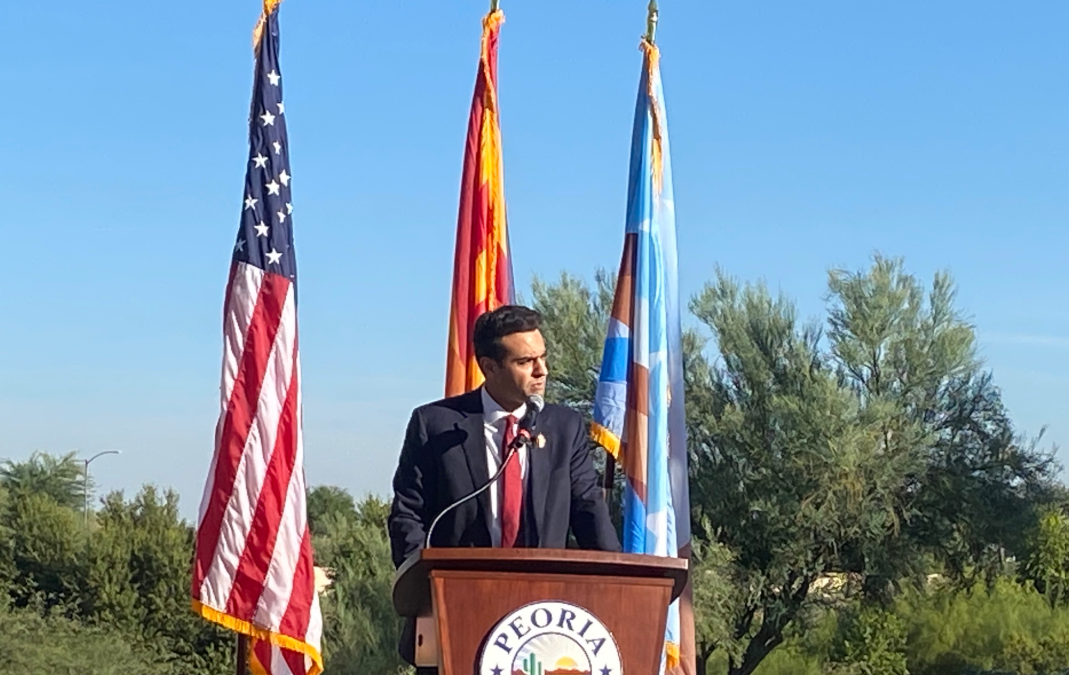
The murder and attempted murder of West Virginia National Guard Soldiers Sarah Beckstrom, 20, and Andrew Wolfe, 24, by Afghan national Rahmanullah Lakanwal, 29, in November is being investigated as a possible act of international terrorism. The attack on the soldiers seems to align with warnings the Biden administration was given in 2021 by then-prosecutor with the Maricopa County Attorney’s Office, Congressman Abe Hamadeh.
The latest reports from Washington, D.C., indicate that Beckstrom and Wolfe were shot in what law enforcement officials are calling a “targeted” attack near the Farragut West Metro station near the White House. U.S. Attorney for the District of Columbia Jeanine Pirro told a press conference that both Guard members had been sworn in to assist with the ongoing crime suppression efforts in the nation’s Capitol for less than 24 hours, according to Fox News. She described a “brazen and targeted attack,” and said the Guard members were “ambushed.”
“A lone gunman opened fire without provocation, ambush style,” Pirro told reporters. “Armed with a .357 Smith and Wesson revolver, one Guardsman is struck, goes down, and then the shooter leans over and strikes the Guardsmen again. Another Guardsman is struck several times.” Nearby Guard members rushed the assailant; one opened fire, and they quickly subdued the attacker.
Pirro told reporters, “This is what happens in this country when people are allowed in, who are not properly vetted.”
U.S. ATTORNEY JEANINE PIRRO: "This is what happens in this country when people are allowed in, who are not properly vetted."
"This was not just an attack, it was a direct challenge to law and order in our nation's capital." pic.twitter.com/zOWXsQ0DmB
President Donald Trump informed the nation last Thursday evening that U.S. Army Specialist Sarah Beckstrom of Summersville, one of the West Virginia National Guard members ambushed in Washington, D.C., had passed away from her injuries, in post to X.
.@POTUS announces that U.S. Army Specialist Sarah Beckstrom of Summersville, West Virginia, one of the National Guardsmen savagely attacked yesterday in Washington, D.C., has just passed away.
According to Reuters, the suspect first entered the U.S. in September 2021, as part of the Biden administration’s Afghan resettlement program: Operation Allies Welcome, the very program Hamadeh wrote about in a 2021 op-ed for the Arizona Republic. The suspect had worked with the CIA in Afghanistan as far back as at least 2011 and was granted asylum in April of this year. “In terms of vetting, nothing came up,” an unnamed senior U.S. official told Fox News. “He was clean on all checks.”
Hamadeh’s op-ed offered a troubling, almost prescient warning to the Biden administration after the disastrous U.S. withdrawal from Afghanistan. He cautioned that a string of incidents that year created “concern whether the Biden administration is doing enough to vet refugees arriving on American soil.” He noted, “We need to do more rigorous checks.”
The reports that Lakanwal passed “all checks” would seem to support Hamadeh and Pirro’s conclusion.
“By not properly vetting refugees, we do a disservice to the Afghans who served with us. No vetting is foolproof, and bad actors may still go undetected. However, a proper vetting process can greatly reduce the risk,” Hamadeh wrote. He added, “The State Department has identified Phoenix as a top destination for refugees. Arizonans are generous, and a vast majority of Arizonans agree that the United States should accept Afghan refugees who assisted us in the U.S.-led NATO mission.”
Hamadeh went on to describe newly implemented security vetting that included: “biometrics, biographical and social media data collection,” stating, “This process is rigorous and can take weeks and months to complete, and is similar to the process that Afghan refugees should be undergoing right now.”
He warned that the Biden administration instead insisted upon releasing the Afghan refugees “to their permanent states after only four weeks on U.S. military installations.” He commented, “Americans should be skeptical that tens of thousands of refugees here on humanitarian parole status could be thoroughly vetted in that short amount of time.”
Hamadeh concluded: “Arizona leaders should also demand answers from the federal government and require that the vetting process is shared between federal and state officials in order to ensure the safety of Arizonans.”
As of this report, West Virginia National Guard Member Wolfe remains hospitalized in serious condition. The suspect was also hospitalized due to his injuries and remains there under heavy guard.
President Trump has certainly shaken up, if not severely damaged, the climate hoax and Green New Scam in just 10 short months. Here’s a list of his 10 top climate-related accomplishments for which we should all be thankful this holiday season:
The Environmental Protection Agency (EPA) has proposed to end the government’s “scientific” basis for the climate hoax by rescinding the Obama EPA’s 2009 illegal and incorrect determination that emissions of greenhouse gases endanger the public welfare. As part of this effort, the Department of Energy issued a report by top climate scientists concluding that U.S. greenhouse gas emissions will have no detectable effect on global climate change.
President Trump, again, pulled the U.S. out of the 2015 Paris Climate Accord, an unconstitutional effort by Presidents Obama and Biden to adopt a United Nations treaty without ratification by the Senate.
The One Big Beautiful Bill Act terminated hundreds of billions of dollars of the climate-related “Green New Scam” spending of the (so-called) Inflation Reduction Act, including all subsidies for electric vehicle purchases.
President Trump has directed his administration to reduce Green New Scam spending that survived the One Big Beautiful Bill by means of bureaucratic review, red tape and delay. The rent-seeking and piratical thieves who want to steal from taxpayers played hardball to save some of their ill-gotten gains. The President is now showing, rather impressively, that he can play hardball right back.
President Trump signed into law a bill terminating California’s electric vehicle mandate. Greens had tried to mandate EVs in California to force carmakers to only make EVs for the entire nation. Thanks to the President, that will not happen in the foreseeable future.
The EPA scored an appellate court victory in its effort to reclaim $20 billion in Biden EPA Green New Scam panic spending made infamous by the Project Veritas video, “We’re Throwing Gold Bars Off the Titanic.”
President Trump halted a number of offshore wind projects and cut funding for many others. There are other projects that deserve to be terminated, such as the largest U.S. offshore wind farm being built by Virginia’s Dominion Energy, but a great start has been made so far.
Stunningly, President Trump stopped cold a U.N. treaty to implement a global tax on shipping emissions by threatening would-be signatories with tariffs. This treaty would have been the first global climate tax.
President Trump boycotted and sent no delegation to the United Nations climate conference (COP-30) in Brazil, rendering the annual meeting even more confused and meaningless than it usually is.
President Trump delivered a blistering speech to the United Nations blasting the climate hoax for about 15 minutes or so. The President summed up his views on climate in this one memorable sentence: “The carbon footprint is a hoax, made up by people with evil intentions and they’re heading down a path of total destruction.”
That’s quite a list. But much is left to be done. Some of the big items are as follows:
The EPA must finalize its rescission of the endangerment finding and then successfully defend the rescission in the Supreme Court.
All the Green New Scam spending must be terminated as soon as possible. Every dollar spent is a dollar stolen from taxpayers and invested in making us more energy dependent on Communist China.
It is not enough to withdraw only from the Paris Climate Accord. President Trump must withdraw the United States from the 1992 parent treaty, the United Nations Framework Convention on Climate Change (UNFCCC).
And it would be really awesome if President Trump also withdrew the U.S. from the 1987 Montreal Protocol, the bogus treaty allegedly addressing the imaginary “ozone hole.” That treaty, the follow-on Kigali Amendment ratified during the Biden administration, and language in the American Innovation and Manufacturing Act of 2020 signed by President Trump, has only been used to make refrigeration and air conditioning pointlessly more expensive.
I heard Al Gore tell a group of conservatives in January 2006 that the real purpose of the Montreal Protocol was to demonstrate that a global environmental treaty could be implemented. That “success” was then subsequently used as precedent for the UNFCCC and its spinoff climate treaties, the Kyoto Protocol and Paris Climate Accord. The ozone hole hoax paved the way for the climate hoax and Green New Scam. It’s all been a multi-trillion-dollar fraud on American consumers and taxpayers.
America became great before these pointless environmental treaties. It has been greatly harmed and dangerously hamstrung by them since their ratification. If MAGA means anything, it means exiting international efforts to cripple the U.S. with junk science-based environmental treaties. And it would make a great Christmas present to the nation. Just a suggestion.
The terroristic attacks and threats by Afghan nationals in recent weeks have renewed concerns about the vetting of those resettled in Arizona.
On the day before Thanksgiving last week, an Afghan national shot two National Guard members in Washington, D.C.; one of the two died, and the other remains in critical condition.
The shooter, Rahmanullah Lakanwal, remains in custody. He entered the country in late 2021 with his wife and five children under Biden’s resettlement program, Operation Allies Welcome, following the botched Afghanistan withdrawal in August 2021.
Volunteers who worked with Lakanwal’s family claimed in interviews with NPR that Lakanwal didn’t show signs of radicalization prior to the terrorist attack. Rather, they claimed Lakanwal showed signs of mental instability and struggles to adjust to life in the U.S.
These volunteers also revealed that Lakanwal would drive away from his Washington state residence for long stretches in the weeks leading up to his attack, traveling to other states without explanation given to those around him — including Arizona.
Similarly, sources told ABC News that Lakanwal’s mental health was in decline leading up to the attack. Lakanwal was allegedly stressed by family finances, since his work permit expired and he was unable to find steady work.
However, sources advised ABC News that Lakanwal was granted asylum in April of this year, which grants automatic work authorization, after applying last year.
Approval of Lakanwal’s asylum petition occurred on the basis of the previous administration’s vetting procedures, which have been in question from the start of the resettlement program.
Another Afghan citizen — Mohammad Dawood Alokozay residing in Fort Worth, Texas — was charged on Tuesday for terroristic threats. Alokozay threatened to commit a suicide bombing as part of a jihad against Americans.
Like Lakanwal, Alokazay passed allegedly thorough vetting procedures under the previous administration.
According to the archived Operation Allies Welcome webpage, the Department of Homeland Security deployed 400 personnel from U.S. Customs and Border Protection, Immigration and Customs Enforcement, Transportation Security Administration, the Coast Guard, and Secret Service to multiple locations abroad to conduct processing, screening, and vetting alongside other federal agencies.
Screening and vetting consisted of biometric and biographic screenings.
About 200,000 Afghans were granted asylum under the initial resettlement program, Operation Allies Welcome, and its successor, Operation Enduring Welcome. A little under 4,000 Afghan refugees have been brought into Arizona as part of the resettlement program since 2022, per the Arizona Department of Economic Security’s Arizona Refugee Resettlement Program.
The Trump administration is reexamining these Afghan asylees following this latest terrorist attack.
Back in 2021, congressional leaders questioned the thoroughness of these procedures.
This resettlement program had red flags from the start.
Officials identified numerous incidents concerning Afghan men arriving at intake centers and claiming female children as their wives. These child brides reported being raped by these men and forced to marry them.
Congressman Andy Biggs asked about these incidents and others in a letter to the Department of Homeland Security. Biggs also addressed the claims of refugee status given to Afghan men with criminal records or past terrorist organization associations.
In January, less than a week after taking office, Vice President J.D. Vance told CBS News that the Biden administration hadn’t properly vetted those awarded refugee status.
“Now that we know we have vetting problems with a lot of these refugee programs, we absolutely cannot unleash thousands of unvetted people into our country,” said Vance.
Last October, two Afghan nationals were arrested for planning an Election Day terrorist attack inspired by ISIS. Abdullah Haji Zada and Nasir Ahmad Tawhedi; the latter individual was brought into the country days after the Biden administration withdrew from Afghanistan.
These individuals were also alleged to have been properly vetted.
President Trump paused migration from third-world countries following the terrorist attack. In the Sunday press gaggle aboard Air Force One, Trump said Americans don’t need or want these foreigners.
Effective immediately, processing of all immigration requests relating to Afghan nationals is stopped indefinitely pending further review of security and vetting protocols.
The protection and safety of our homeland and of the American people remains our singular focus and…
“We don’t want those people. Does that make sense?” said Trump. “You know why we don’t want them? Because many have been no good and they shouldn’t be in our country.”
The federal government spent over $14 billion on the Afghan resettlement program.
AZ Free News is your #1 source for Arizona news and politics. You can send us news tips using this link.
Arizona Congressman Eli Crane (R-AZ-02) blasted Democrat Senator Ruben Gallego for posting what he called a “profanity-laced” video on X defending the controversial “Don’t give up the ship” message to U.S. service members. The message, released November 19th, also featured Sen. Mark Kelly (D-AZ).
In the ad first posted by Senator Elissa Slotkin (D-MI), Sen. Kelly is seen with Slotkin and Reps. Jason Crow (D-CO), Chrissy Houlahan (D-PA), Maggie Goodlander (D-NH), and Chris Deluzio (D-PA). Kelly is addressing “members of the military” directly and stating, “This Administration is pitting our uniformed military,” against the American people and advising that “from right here at home: our laws are clear. You can refuse illegal orders.”
We want to speak directly to members of the Military and the Intelligence Community.
The American people need you to stand up for our laws and our Constitution.
Many Republican critics, including President Donald Trump, Secretary of War Pete Hegseth, and Rep. Eli Crane and have argued that Kelly’s comments violated the law governing conduct of former service members still subject to the Uniform Code of Military Justice.
Kelly is now under investigation by the Department of War (DOW), which stated in part, “In accordance with the Uniform Code of Military Justice, 10 U.S.C. § 688, and other applicable regulations, a thorough review of these allegations has been initiated to determine further actions, which may include recall to active duty for court-martial proceedings or administrative measures.”
OFFICIAL STATEMENT:
The Department of War has received serious allegations of misconduct against Captain Mark Kelly, USN (Ret.). In accordance with the Uniform Code of Military Justice, 10 U.S.C. § 688, and other applicable regulations, a thorough review of these allegations…
Gallego released a 55-second video in a post to X on November 24th in which he stated:
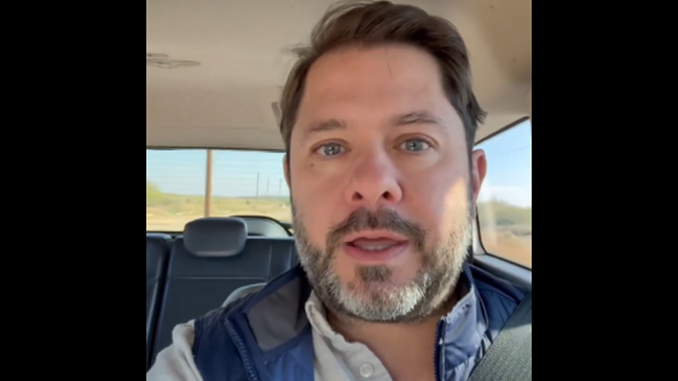
“This is f***ing insane. We should all point out how f***ing insane this is. Hey, this is Ruben Gallego. I’m traveling through Arizona right now and I just received the news that the Department of Defense is starting an investigation against my seatmate Mark Kelly. This is f***ing insane. We should all just point out how f***ing insane this is. And you know: these guys are trying to say that they’re not acting like fascists. They’re not trying to give as much power to this president as a King. And they should start …stop acting like it. Mark Kelly is a patriot. There’s no reason why they’re going after him. He was doing his duty and just reminding people about their rights as service members.
And you know: Secretary Hegseth, all these guys: f*** you guys.
You’re not going to scare us. We have a right to defend the Constitution of the United States. We have a right to tell other service members that they have a right to ignore illegal orders. And you’re not going to intimidate us.”
In a statement posted to X on Friday, Rep. Crane blasted Kelly for his comments and Gallego’s attempts to defend them.
“Ruben, in your profanity laced video you state that there is no reason that this administration is going after Senator Kelly. You are either lying or unaware of 18 U.S.C. § 2387 in the Uniform Code of Military Justice. This section prohibits inciting or abetting mutiny or sedition in the U.S. armed forces. Sedition is speech or conduct that incites rebellion or insurrection against a government or authority. I have noticed how the group who made this video have all agreed publicly that no unlawful orders have been given. They have then all stated that it’s just a reminder to our armed forces of their rights and responsibilities.
As servicemen ourselves we are both aware that all servicemen and women are already trained and educated of these rights and responsibilities in basic training. If the intention of your colleagues was solely to remind our service members of their rights and responsibilities then why didn’t they make this video when Joe Biden was CIC? You remember him right? The guy who didn’t know where he was half the time and who could barely string together a coherent sentence. The fact of the matter is that we all know why the video was made. If/when Senator Kelly is recalled to active duty for a court martial the American people will get educated themselves regarding the UCMJ and the provisions within it to deter this very conduct.”
Ruben, in your profanity laced video you state that there is no reason that this administration is going after Senator Kelly.
You are either lying or unaware of 18 U.S.C. § 2387 in the Uniform Code of Military Justice.
In a post to Truth Social on November 20th, President Trump responded to the video, writing: “SEDITIOUS BEHAVIOR, punishable by DEATH!” In a follow-up on November22nd, President Trump wrote, “THE TRAITORS THAT TOLD THE MILITARY TO DISOBEY MY ORDERS SHOULD BE IN JAIL RIGHT NOW, NOT ROAMING THE FAKE NEWS NETWORKS TRYING TO EXPLAIN THAT WHAT THEY SAID WAS OK. IT WASN’T, AND NEVER WILL BE! IT WAS SEDITION AT THE HIGHEST LEVEL, AND SEDITION IS A MAJOR CRIME. THERE CAN BE NO OTHER INTERPRETATION OF WHAT THEY SAID!”