After 45 years of existence, the Department of Education (ED) is coming to an end.
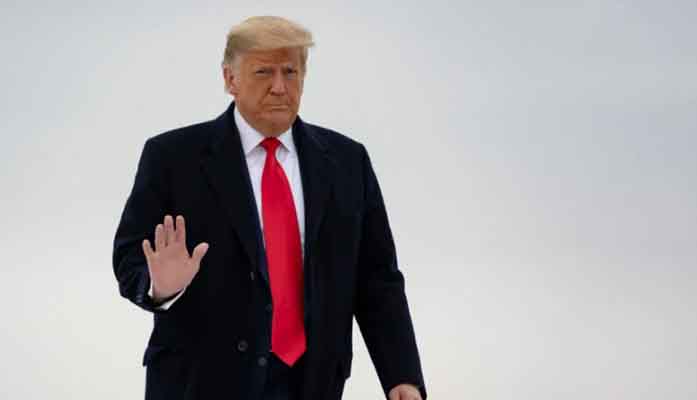
President Donald Trump signed an executive order on Thursday dismantling ED: “Improving Education Outcomes by Empowering Parents, States, and Communities.” The historic order stops short of total abolition of the agency, since law dictates that Congress must be the one to close it.
The order cited historic lows of reading and math scores among children as proof of ED’s decades-long failures, and contrasted the poor educational outcomes with ED’s high budget and massive staffing.
“While the Department of Education does not educate anyone, it maintains a public relations office that includes over 80 staffers at a cost of more than $10 million per year,” said the order. “Closing the Department of Education would provide children and their families the opportunity to escape a system that is failing them.”
The order further accused ED of operating like an inefficient bank with its management of over $1.6 trillion in student loan debt.
Trump directed Secretary of Education Linda McMahon to undertake measures to close ED and return authority to the states, as well as terminate funding to programs and activities engaged in progressive ideologies including diversity, equity, and inclusion (DEI) and gender theory.
Reactions among Arizona leadership fell largely along party lines.
Arizona Superintendent of Public Instruction (SPI), Tom Horne, praised the executive order, calling the agency an “unnecessary” entity dedicated to heaping more bureaucracy on the states.
“The Federal Department of Education was unnecessary and added bureaucracy for states,” said Horne. “Thank you President Trump for bringing education back to the states where it belongs.”
The Federal Department of Education was unnecessary and added bureaucracy for states. Thank you President @realDonaldTrump for bringing education back to the states where it belongs.
Congressional efforts to codify the executive order are also underway. South Dakota Senator Mike Rounds revealed to Fox News that he’s been in discussions with Trump to do just that.
“I am working on legislation that would return education decisions to states and local school districts while maintaining important programs like special education and Title I,” said Rounds. “We are discussing this legislation with Secretary McMahon, and we believe there is a very good path forward.”
Earlier this month, the Trump administration slashed ED’s workforce by nearly half (over 1,300 staffers). Thursday’s executive order will further reduce the remaining 2,200 employees.
Although Trump’s order does not close ED totally, Mayes claimed the executive order was “illegal.”
“The Department of Education cannot be dismantled via executive order,” said Mayes. “This chaos is not about efficiency — it’s destruction.”
Another day, another illegal action by the Trump administration. The Department of Education cannot be dismantled via executive order. This chaos is not about efficiency — it’s destruction. https://t.co/GRse4zJ096
— AZ Attorney General Kris Mayes (@AZAGMayes) March 20, 2025
Governor Katie Hobbs said Arizona stands to lose $1 billion in federal funds for certain programs, like special education, with the dismantling of ED.
Arizona could lose nearly $1 billion in vital education funding if the U.S. Department of Education is dismantled. This funding supports low-income schools, special education, Tribal and rural communities, and programs like FAFSA & Pell Grants. As Governor, I will do everything…
Senator Mark Kelly rejected Republican predictions of ED’s abolition leading to better schools and student outcomes.
“It will further undermine public schools, making it harder for kids from working families like mine or who need a little extra help to get a good education,” said Kelly.
I’m the proud product of a good public school education.
Getting rid of the Department of Education won’t improve schools or help kids in Arizona get ahead.
It will further undermine public schools, making it harder for kids from working families like mine or who need a little… https://t.co/f69s11Rebo
Senator Ruben Gallego claimed Trump was abolishing ED to enrich “his billionaire friends” and reduce school funding.
“He wants fewer resources for teachers and fewer opportunities for our kids — just so his billionaire friends can get richer,” said Gallego.
Donald Trump just gave the order to dismantle the Department of Education. He wants fewer resources for teachers and fewer opportunities for our kids—just so his billionaire friends can get richer.
— Senator Ruben Gallego (@SenRubenGallego) March 20, 2025
Rep. Eli Crane called the continuance of ED an “insanity,” referencing the decades-long decline of student outcomes.
“Thank you to President Trump for having the courage to do this,” said Crane.
Insanity is doing the same thing over and over again and expecting different results.
The Department of Education has failed our nation's students for decades. It's time to chart a new path.
Rep. Andy Biggs also touched on the disparity of high funding and low outcomes. Biggs said Trump was right to be “returning power” to Arizona and its parents.
“Taxpayer funding for public schools is at an all-time high, but test scores are at an all-time low,” said Biggs. “The radical Biden-Harris regime weaponized the Department of Education against their opponents.”
Taxpayer funding for public schools is at an all-time high, but test scores are at an all-time low.
The radical Biden-Harris regime weaponized the Department of Education against their opponents.
President Trump is rightfully returning power to the States and parents. https://t.co/Svw5fLSa9B
Rep. Yassamin Ansari predicted that children would be forced out of schools, teachers would be fired, and special education services would cease.
“This reckless and irrational move will devastate our future — all to give tax breaks to billionaires at the expense of our kids,” said Ansari. “We’re going to fight this illegal EO with every tool we have.”
With the support of Republicans in Congress, Donald Trump just followed through on his plan to gut the Department of Education.
This means kids kicked out of kindergarten, special education slashed, and teachers fired. This reckless and irrational move will devastate our future…
— Congresswoman Yassamin Ansari (@RepYassAnsari) March 20, 2025
Rep. Greg Stanton called the order “a direct attack on Arizona kids,” and asserted it was illegal.
Trump's executive order to eliminate the Department of Education is a direct attack on Arizona kids. pic.twitter.com/tONhDthSXr
Senate President Warren Petersen reposted remarks made by Secretary McMahon to Fox News. McMahon echoed Trump’s questioning why federal education spending only continues to increase while outcomes have decreased.
“We have to let teachers teach. I have such respect for teachers. I think it is the most noble profession in the world, and I have seen what can happen when teachers are allowed to teach and be innovative and creative in our classrooms,” said McMahon. “For every dollar that goes into the school system, it’s been reported to me that almost 47 cents of that dollar is spent on regulatory compliance. Teachers they don’t want to stay, they’re leaving the profession, because they’re bogged down by regulation. Let’s lift that burden and let them do what they do best, which is teach.”
Let the states tailor education to local communities—and get results.
Let parents choose the best educational fit for their children.
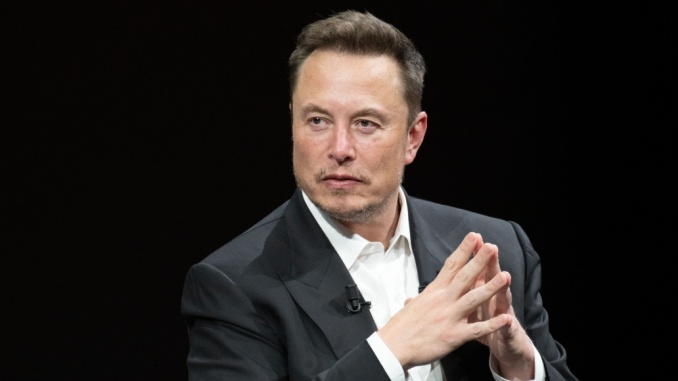
One of, if not the, highlights of President Donald Trump’s first months in office has been the Department of Government Efficiency (DOGE), headed by entrepreneur (and the world’s richest man) Elon Musk. Under Musk’s leadership, DOGE has not just exposed wasteful spending— but worked to reduce spending by eliminating entire agencies and even cabinet departments.
For example, DOGE pulled back the curtain on the United States Agency for International Development (USAID). Before DOGE exposed it, most Americans thought of USAID (if they thought of it at all) as an agency that provided humanitarian aid and development assistance to impoverished people in other countries. DOGE revealed that USAID’s humanitarian work was a cover for their true mission: making political and cultural change overseas. This is why USAID has spent millions on absurd “development” projects like transgender plays in Colombia, DEI schemes in Serbia and electric car subsidies in Vietnam.
Eliminating USAID would not mean the end of overseas development and humanitarian aid. It would mean that the aid would come from private charities. These charities can do a better job of providing aid than a government bureaucracy. As outrageous as USAID’s spending is, it is a drop in the bucket compared to the Pentagon’s over $800 billion (and on track to exceed $2 trillion by 2033) budget.
The “defense” budget is the third largest item in the federal budget, behind Social Security and Medicare. Few politicians will risk the wrath of senior citizens by voting to make any changes to these programs unless the changes are phased in such a way as to not affect those currently on, or close to, relying on the programs. Thus, any serious plan to reduce spending and debt must cut the bloated “defense” budget. Savings from reductions in military spending can be used to help support those dependent on federal programs as Congress unwinds the welfare state. Cutting military spending would be politically popular as most polls show a majority of Americans— including Republicans—support reducing America’s military commitments.
The poster child for wasteful Pentagon spending, which is thankfully already in Elon Musk’s crosshairs, is the F-35 —a $1.7 trillion disaster of delays, breakdowns and runaway costs. The plane, the most expensive military program ever, often sits grounded. The F-35 may be the most obvious example of wasteful Pentagon spending, but it is hardly alone. After all, this is the agency that brought us the $500 toilet seat. Shutting down boondoggles like the F-35 could provide revenue to help pay down the debt and protect those currently dependent on federal programs. It could also help ensure the forthcoming tax bill does not further increase the deficit.
DOGE is not the first effort to identify and eliminate wasteful spending. President Ronald Reagan had the Grace Commission, a sort of DOGE 1.0 that unearthed billions in waste—from the Department of Energy to the IRS. Their findings were buried by entrenched interests and a cowardly Congress. The lesson of the Grace Commission is that reducing even the most obvious wasteful spending requires the courage to stand up to the entrenched interests in both parties that benefit from the current system.
Trump and Musk may have the necessary convictions to make serious changes in the ways Washington works. However, they need to be prepared for the swamp to fight back. Democrats and their allies are already waging war against DOGE. To them, trying to identify and eliminate wasteful spending or even asking federal employees what they actually do is an assault on democracy. Most Democrats will join hawkish Republicans in seeking to protect the Pentagon’s budget. It would not be surprising if Congress’s bipartisan military-industrial complex caucus smeared those advocating cuts in the bloated military budget as “Putin’s puppets.”
The federal debt is growing by approximately $1 trillion every three months. To put that in perspective, consider that the federal debt did not reach the $1 trillion mark until 1981. Unless action is taken soon to reduce spending, pay down the federal debt and roll back the welfare-warfare state—America will face a serious economic crisis. Therefore, it is important that everyone who understands the stakes do what they can to support Trump and Musk’s efforts.
A bill asking President Trump and Congress to prevent the Environmental Protection Agency (EPA) from imposing sanctions on Arizona is currently making its way through the Arizona legislature.
House Concurrent Memorial (HCM) 2010, sponsored by Rep. Michael Carbone (R-LD25) urges the federal government to prevent the EPA from imposing what lawmakers call “coercive and likely unconstitutional” penalties on Arizona regarding ozone pollution standards. The resolution also calls for maintaining the existing 2015 air quality standard rather than implementing stricter regulations.
The federal Clean Air Act requires the EPA to set and periodically review air quality standards to protect public health. In 2015, the EPA lowered the National Ambient Air Quality Standard for ground-level ozone to 70 parts per billion to reduce harmful pollution linked to respiratory illnesses. However, Arizona officials argue that some areas struggle to meet the standard due to factors beyond their control, such as emissions from outside the state or even outside the country.
The Arizona Department of Environmental Quality (ADEQ) is responsible for implementing and enforcing air quality regulations at the state level. Under federal law, state air quality plans must prevent emissions that significantly contribute to pollution in neighboring states or interfere with visibility protections.
The resolution, if passed, would formally request that:
The President and Congress intervene to stop the EPA from penalizing Arizona for failing to meet ozone standards deemed unattainable with current technology.
The EPA revise its regulations to allow Arizona’s air quality plan to account for cross-border emissions when determining compliance.
The EPA maintain the 2015 ozone standard rather than implement stricter limits that the resolution claims lack sufficient scientific backing.
Additionally, the measure directs the Arizona Secretary of State to send copies of the memorial to federal officials, including the President, congressional leaders, and Arizona’s U.S. Senators and Representatives.
The measure passed the Arizona House with a 32-27-1 vote and was approved by the House Natural Resources, Energy & Water Committee in a 6-4 vote.
Supporters of the resolution argue that Arizona should not be penalized for ozone levels influenced by external sources beyond state control. If approved by the Legislature, HCM 2010 will serve as an official request for federal action but will not carry the force of law.
Jonathan Eberle is a reporter for AZ Free News. You can send him news tips using this link.
When Donald Trump assumed the presidency, two allies of the U.S., Israel and Ukraine, were mired in bloody wars with ancient enemies. Both desperately needed more military aid in the effort to defeat their heavily armed foes.
Biden had granted both only enough military aid to enable them to not lose, but not enough to win. Moreover, the arms they received came with the condition that they not be used to inflict serious damage to their enemy. Trump could have helped turn the tide, but instead he snatched defeat from the jaws of victory.
The Oct. 7 surprise attack by jihadists on innocent Israelis was just the latest in a centuries long string of atrocities inflicted by Muslim terrorists who devote their lives to killing Jews. Bitter experience had taught Israelis that agreements with terrorists were essentially useless so, for the safety of his people, President Netanyahu resolved to destroy Hamas.
Soon after hostilities began, the Biden government and other erstwhile friends began demanding a cease-fire, thwarting the original war aims. Grief-stricken Israelis understandably became restive over their families and friends being held hostage and demanded negotiations to secure their release.
Yet for terrorists, hostages are a key tactic in waging successful warfare. Because of the sharp contrast in how the two sides value human life, jihadists are able to command one-sided hostage swaps of up to 100 terrorists returned to duty for each civilian exchanged, plus other concessions.
But help was on the way. Our new president posted that none of this would have happened had he been in office and that he would now personally end the conflict. Ignoring the established wisdom of not negotiating with hostage takers, he vowed to apply his famed dealmaking skills to the problem, earning short term praise while simultaneously ensuring that there would be more hostages in the future.
So far, the promises aren’t working out. The war hasn’t ended. Hamas shamefully cheated on the hostage swap, retaining live hostages to maintain pressure on Israel. Worse, the Israelis will almost certainly not be free from the threat of attacks by Hamas and other Iranian proxies.
Meanwhile, Ukraine had suffered an unprovoked attack three years earlier by Russian strongman Vladimir Putin, who correctly surmised that the fearful and weak Biden administration would not provide robust aid and that without U.S. support, “Ukraine could not win a prolonged war against Russia”.
When Trump was elected, victory was at least thinkable with some additional aid because Ukraine’s troops had fought so courageously to defend their nation and their freedom.
Trump, however, saw it differently. This was another dealmaking opportunity. In January, he had told Putin, “We can do it the easy way or the hard way.” Yet a month later he was putting greater pressure on Kyiv to make concessions than on Moscow
When Zelenskyy balked at prospectively agreeing to ultimatums produced by the Trump-Putin negotiations, from which he was excluded, his relationship with Trump cratered. Suddenly, according to Trump, Zelensky was a badly dressed “modestly successful comedian” who had talked Biden out of $350 billion in military aid (a huge exaggeration).
Zelensky was charged with showing insufficient “respect” and “gratefulness” to his new masters. More preposterously, Trump wrote that Zelensky shouldn’t have started the war in the first place, which of course he didn’t do.
Luckily, Trump wrote, “We are successfully negotiating an end to the war with Russia, something all admit only ‘TRUMP’ and the Trump administration can do.” To teach Zelensky a lesson, Trump temporarily shut off all munitions and intelligence aid to Ukrainian troops.
Zelensky is being forced into the defeat option, which had been available to him all along. He stands to lose a big chunk of his country and the goals for which his people sacrificed so much.
Netanyahu was also put in a difficult position by Trump’s “rescue” and the relentless pressure to settle with his oppressors. He can now look forward to a future of more jihadist attacks and more hostage-taking. Tehran and Moscow are reportedly happy with the results.
We may come to regret insisting on domination rather than support of our allies. In a changing world, you can’t have too many friends.
Dr. Thomas Patterson, former Chairman of the Goldwater Institute, is a retired emergency physician. He served as an Arizona State senator for 10 years in the 1990s, and as Majority Leader from 93-96. He is the author of Arizona’s original charter schools bill.
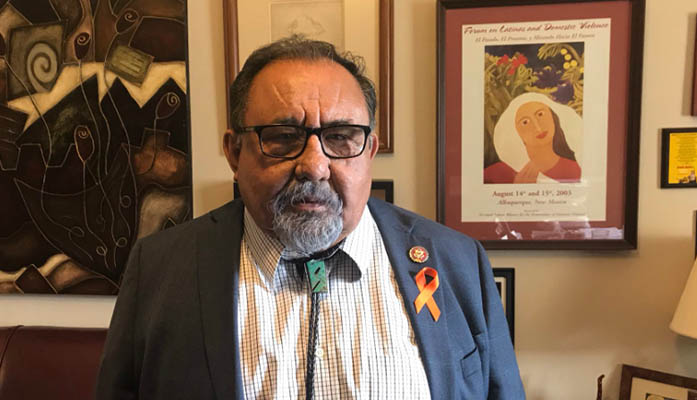
Democratic Congressman Raúl Grijalva passed away from complications with cancer on Thursday morning.
Grijalva was 77 years old at the time of his passing. The representative took up his congressional seat in 2003. This term was promised to be Grijalva’s last, per the congressman.
It appears staff didn’t get the memo about Grijalva’s passing. Hours before Grijalva’s office issued an official statement on X about his passing, Grijalva’s staff published a post criticizing the Trump administration.
The last post on Grijalva’s account prior to the announcement of his passing concerned the mass layoffs essentially halving the Department of Education (ED) workforce. Grijalva’s staff criticized President Donald Trump’s ED cleanup as “reckless,” “selfish,” and “illegal,” claiming students’ aid programs, civil rights protections, and disability supports were jeopardized.
Grijalva’s staff claimed, specifically, the ED firings would deprive 26 million students of critical funding, 12 million students of career and technical education resources, 10 million low-income students of higher education assistance, and 7.5 million Individualized Education Plan (IEP) students of special education services.
These estimates were pulled directly from the American Federation of Teachers (AFT), the affiliated international union of the American Federation of Labor and Congress of Industrial Organization (AFL-CIO). The AFT consists of over 1.3 million members and 3,000 local affiliates nationwide. However, these estimates were not based on ED layoffs but rather a complete abolition of ED — something that has not yet taken place.
The posting raises concerns over who was representing Grijalva’s constituents during his last few years in office after his announced lung cancer diagnosis in 2023 — especially due to the fact Grijalva missed a vast majority of major votes since then.
President Trump’s latest reckless decision to fire thousands of employees at the Department of Education jeopardizes critical student aid programs, weakens protections for students’ civil rights, and undermines essential support for students with disabilities. This move severely…
Not only did Grijalva step down from key leadership positions — he remained absent from Congress for most of this last legislative session and was absent for this session with the exception of the first day (69 out of 71 roll call votes, or about 97 percent of votes). Grijalva didn’t cast a vote on legislation this session, save for his vote for Democratic Rep. Hakeem Jeffries for House Speaker at the start.
Grijalva previously defended his lack of voting in remarks to the press because “Republicans are in charge” and his vote wouldn’t matter anyway.
“They’re inconsequential because the Republicans are in charge and it’s the worst performing Congress in decades, if not a hundred years,” said Grijalva.
Although Grijalva’s health was in decline amid his ongoing cancer treatments last summer, Grijalva was among the early few Democratic leaders to call on former President Joe Biden to step down from his reelection bid last year. Grijalva said it was a duty for those unfit to serve to preserve the seat for their party by dropping out of the race.
“If he’s the candidate, I’m going to support him, but I think that this is an opportunity to look elsewhere,” said Grijalva to the press. “What he needs to do is shoulder the responsibility for keeping that seat — and part of that responsibility is to get out of the race.”
These remarks to the media were reported at the time to be a sharp and inexplicable departure from Grijalva’s messaging on social media supporting Biden and criticizing naysayers of Biden’s candidacy just the week prior.
In light of the fact that Grijalva’s staff posted on X under his name hours after he died on Thursday, it seems Grijalva’s staff may have been more in charge of the office for longer than most constituents were aware.
Following the passing of Grijalva, Governor Katie Hobbs issued a proclamation calling for a special primary election to fill the vacancy for Congressional District 7 on Tuesday, July 15, 2025, and a special general election on Tuesday, September 23, 2025.
Federal law (2 U.S.C. § 8) provides that special elections to fill vacancies in the U.S. House of Representatives are held under applicable state laws.
Under A.R.S. § 16-222(B), if the next regular general election is not to be held within six months from the date of the occurrence of the vacancy, the Governor shall call a special primary election to be held 120 to 133 days after the vacancy and a special general election to be held 70 to 80 days after the special primary election.
AZ Free News is your #1 source for Arizona news and politics. You can send us news tips using this link.