by Matthew Holloway | Oct 8, 2026 | News
By Matthew Holloway |
Congressman Eli Crane (R-AZ-02) introduced legislation this week that would reduce a federal disaster assistance benchmark for counties where less than 15% of the land is subject to county property taxes.
The Rural Disaster Fairness Act of 2026 (H.R. 10754), would require the Federal Emergency Management Agency (FEMA) to lower its county per capita damage indicator by 50% for qualifying counties nationwide. The indicator helps FEMA evaluate the local impact of a disaster when reviewing requests for federal assistance.
Crane’s office said counties with extensive federal land ownership can have limited property tax revenue to support infrastructure maintenance, emergency response, and recovery. The congressman argues that a population-based damage benchmark does not adequately reflect those limitations.
“The federal government owns vast swaths of land out West, which limits the tax base for rural counties. In turn, they often have less money to spend on critical infrastructure, mitigation efforts, and response operations. My legislation would reform FEMA’s evaluation process to take into account how much land these jurisdictions are able to tax,” Crane said.
Under FEMA’s existing regulations, the agency considers several factors when recommending whether the president should approve a governor’s request for major disaster assistance.
For its Public Assistance Program, those factors include estimated assistance costs, localized damage, insurance coverage, hazard mitigation efforts, recent disasters, and assistance available through other federal programs.
The regulations expressly recognize that concentrated damage at the county, local, or tribal level can warrant federal assistance even when a statewide per capita indicator is not met. Damage to critical facilities is among the circumstances FEMA considers.
Crane’s proposal would amend Section 1232 of the FAA Reauthorization Act of 2018. That existing provision directed FEMA to give greater consideration to severe local impacts or multiple recent disasters when evaluating requests for major disaster declarations.
The county per capita indicator is part of FEMA’s broader evaluation of disaster impacts. Under existing regulations, the agency considers multiple factors when recommending whether federal public assistance is warranted.
Under the Stafford Act’s declaration process, a governor’s request must be based on a determination that a disaster exceeds the capabilities of the state and affected local governments and requires federal assistance. The president makes the major disaster declaration.
Matthew Holloway is a senior reporter for AZ Free News. Follow him on X for his latest stories, or email tips to Matthew@azfreenews.com.
by Matthew Holloway | Oct 7, 2026 | News
By Matthew Holloway |
Arizona Rep. Eli Crane (R-AZ-02) and Kansas Democratic Rep. Sharice Davids introduced bipartisan legislation this week to help tribal communities access unused federal housing vouchers for Native American veterans.
The Tribal Veterans Voucher Flexibility Act would establish a voluntary process for returning and reallocating assistance through the Tribal Housing and Urban Development–Veterans Affairs Supportive Housing program, known as Tribal HUD-VASH.
According to Crane’s announcement, tribes and tribally designated housing entities could notify HUD of vouchers they expect to leave unused during the following fiscal year. Returning vouchers would not affect their consideration for future allocations. Communities needing additional assistance could request available vouchers.
HUD would have 180 days after enactment to establish the process and submit a congressional report examining unused vouchers, reallocations, shortages, and whether the overall supply should increase. Participants could report unused assistance electronically, by telephone, or through the mail.
“Some Tribes have leftover vouchers they cannot use while others lack the resources to take care of our veterans,” Crane said. “Our legislation aims to resolve this longstanding issue by getting unused vouchers into the hands of Tribes that can put them to use. This is a sensible approach that makes better use of existing support without expanding the size and scope of the federal government.”
The existing program provides rental assistance for eligible Native American veterans experiencing homelessness or at risk of becoming homeless. HUD’s program guidance explains that the Department of Veterans Affairs (VA) determines initial veteran eligibility, including requirements involving access to VA health care and a need for case management.
Tribal housing providers determine whether participating households meet income requirements. HUD’s guidance generally sets the income threshold at 80% of the applicable area median income and excludes certain VA disability and survivor benefits from that calculation.
Rental assistance can support several housing arrangements, including single-family homes, apartments, shared housing, and residential treatment housing. Associated medical expenses must be covered through other funding sources.
The proposal follows earlier cooperation between Crane and Davids on tribal economic-development legislation.
Crane has been heavily involved in tribal health care initiatives. In December, Ak-Chin Indian Community leaders credited his support for the tribe’s selection for an Indian Health Service partnership supporting a new health center. In August, Crane joined Rep. Greg Stanton and Gila River Indian Community officials to mark a University of Arizona partnership establishing a medical school branch on tribal land in Sacaton.
In June, the House unanimously passed the Native American Entrepreneurial Opportunity Act, which the lawmakers supported alongside Republican Rep. Jake Ellzey of Texas and Democratic Rep. Kelly Morrison of Minnesota.
That legislation would place the Small Business Administration’s Office of Native American Affairs into statute and define its responsibilities, including outreach involving business development, contracting, and access to capital. An earlier version passed the House during the previous Congress but stalled in the Senate.
Matthew Holloway is a senior reporter for AZ Free News. Follow him on X for his latest stories, or email tips to Matthew@azfreenews.com.
by Matthew Holloway | Oct 6, 2026 | Education, News
By Matthew Holloway |
The Maricopa County Attorney’s Office (MCAO) found that Scottsdale Unified School District (SUSD) violated Arizona’s Open Meeting Law, according to a Sept. 22 letter that directly contradicts the district’s subsequent claim that no violation had been found.
“MCAO concluded that an Open Meeting Law violation has occurred,” Deputy County Attorney Caitlyn Mitchell wrote to complainant Michael Bengert in the letter.
The investigation concerned SUSD’s Phase II Design Advisory Team, whose work involved proposals for repurposing, consolidating, or closing district schools. Mitchell said investigators reviewed Governing Board meeting recordings, accompanying agendas, and supplemental information provided by Bengert.
SUSD General Counsel Renee Osipov subsequently disputed statements that MCAO had found a violation.
“Scottsdale Unified School District has received communication and a public comment indicating that the Maricopa County Attorney’s office found the District in violation of the Open Meeting Law (OML) with respect to the operation of the Phase II Design Team. This is inaccurate,” Osipov wrote in a correspondence with Bengert shared with AZ Free News.
“The County Attorney did not issue adverse findings, did not cite the District for an OML violation, and did not initiate any corrective action,” she added.
The district also published that position on its website Oct. 1.
MCAO’s Sept. 22 letter expressly states that the office informed SUSD of its conclusions.
“MCAO has informed SUSD of its findings and conclusions, recommended that SUSD revise its future use of superintendent appointed committees, and requested that the SUSD Governing Board acknowledge the results of this investigation publicly at the open meeting to discuss the Phase II Team’s recommendations,” Mitchell wrote.
The office said the team had completed its work, making it too late to require corrective action concerning future team meetings. The letter stated that the investigation was closed and did not announce a penalty.
An earlier letter to district counsel on Sept. 16 detailed the office’s reasoning.
“Although the creation of SUSD’s Phase II Design Advisory Team (‘Phase II Team’) does not—as a purely technical matter—fall under the statutory definition of an ‘advisory committee or subcommittee,’ the purpose and subsequent operation of the Phase II Team does,” prosecutors wrote.
The disagreement centers on the Governing Board’s involvement in the team’s creation and whether its work served the board or district administrators.
Osipov said the superintendent formed the team to conduct an analysis for the administration. She said it was not charged with making recommendations to the Governing Board regarding repurposing, consolidating, or closing schools.
“The team’s work was intended to inform the administration’s development of options for Governing Board consideration,” she wrote.
MCAO’s Sept. 16 letter said the board discussed creating an advisory body during 2025 and considered the issue Jan. 6, 2026. Although the board declined to amend its policy to establish a standing advisory board, prosecutors said the superintendent subsequently created the Phase II team and tasked it with making recommendations to the board.
“The timing of these events suggests the Governing Board’s implicit direction to the superintendent to create an advisory board for the purpose of advising the Governing Board,” the letter states.
Prosecutors described the team as the board’s “brainchild” and said its recommendations concerned matters the board would vote on.
Osipov challenged MCAO’s interpretation, saying portions of the Sept. 16 letter conflicted with opinions issued by the Arizona Attorney General’s Office. She also said SUSD posted materials after each meeting to support transparency.
The amended Attorney General Opinion, issued June 23, 2025, explains that a superintendent-created committee does not automatically become subject to Open Meeting Law because its work leads to recommendations reaching the board.
The opinion says the law typically does not apply when the superintendent develops a proposal without board direction or other close involvement. It also cautions that a governing board cannot evade public meeting requirements by informally establishing a committee or directing a superintendent to establish one. A committee’s subsequent work can become subject to the law when the board tasks it with developing policy recommendations.
MCAO’s Sept. 16 letter relied on its assessment of the board’s involvement and the team’s function. It recommended that SUSD avoid an overly narrow interpretation of the law when determining whether future advisory bodies must hold public meetings.
Prosecutors also cited A.R.S. § 38-431.09, which directs those interpreting Arizona’s Open Meeting Law to favor open and public meetings.
The complaint was initially submitted to Attorney General Kris Mayes’ office, which referred it to MCAO July 17 after citing a conflict of interest. The complaint concerned public access to the advisory team’s meetings.
Bengert has also raised broader concerns about district leadership and public participation, criticizing SUSD’s academic outcomes, enrollment losses, and financial management while questioning whether its governing board provided sufficient scrutiny of Superintendent Scott Menzel’s administration. He argued that parents and residents needed opportunities to hear opposing views on district policies and decisions.
Bengert has asked MCAO to respond publicly to SUSD’s characterization of the investigation. In correspondence shared with AZ Free News, he disputed Osipov’s statements and asked the county attorney’s office to clarify its findings directly to the district.
An MCAO spokesperson said the office was reviewing additional questions and checking whether other correspondence existed.
AZ Free News requested additional comment from Scottsdale Unified School District and General Counsel Renee Osipov regarding the county attorney’s findings and the district’s characterization of the investigation. Neither had responded to those inquiries by the time of publication.
Matthew Holloway is a senior reporter for AZ Free News. Follow him on X for his latest stories, or email tips to Matthew@azfreenews.com.
by Matthew Holloway | Oct 3, 2026 | News
By Matthew Holloway |
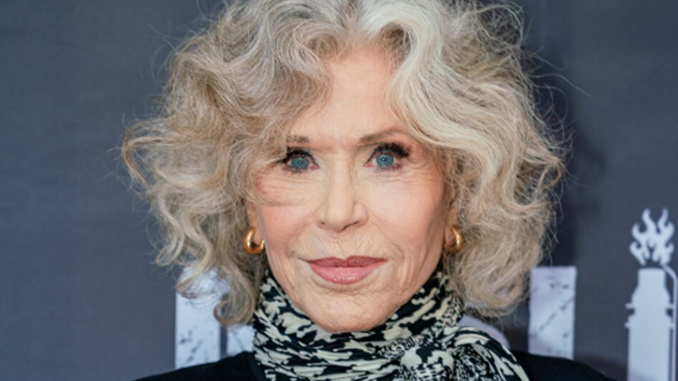
Arizona Republican Party Chairman Sergio Arellano is calling on Attorney General Kris Mayes to reject fundraising support from actress and activist Jane Fonda, pointing to her controversial visit to North Vietnam during the Vietnam War. Fonda is scheduled to headline an Oct. 7 fundraiser for the Democratic incumbent.
Arellano, a U.S. Army combat veteran, issued the demand in a statement from the Arizona Republican Party. He urged Arizona veterans to press Mayes to disassociate herself from Fonda and apologize for accepting her support.
“As a U.S. Army combat veteran, I am calling on all of my fellow Arizona veterans to demand that Attorney General Kris Mayes rebuke Jane Fonda and refuse her fundraising support,” Arellano said.
The party’s statement identifies an invitation it says Mayes shared on X advertising Fonda as a special guest. The invitation names Dawna and Dan Calderone as hosts and places the event in North Central Phoenix.
A VIP reception is scheduled from 6 to 7 p.m., followed by a general reception from 7 to 8 p.m. The advertised contribution levels are $250 for the general reception, $1,000 for VIP admission, $2,500 for co-hosts, and $5,500 for hosts. The invitation lists the highest level at $5,500, although the party’s accompanying release describes a $5,000 maximum.
Mayes’ campaign website also lists the Jane Fonda Climate PAC among the organizations endorsing her. Other listed supporters include the Sierra Club, the League of Conservation Voters-aligned NRDC Action Fund, labor organizations, and abortion rights groups.
Arellano’s criticism centers on Fonda’s July 1972 visit to North Vietnam, where she was photographed seated at an anti-aircraft gun emplacement and participated in Radio Hanoi broadcasts.
“We have all seen images of Fonda in July 1972, when she mocked our nation and our warfighters as she posed for photographs seated on a North Vietnamese anti-aircraft gun,” Arellano said. “This was the same type of weapon used against American aircraft.”
“As our American heroes suffered in Vietnamese prison camps, Fonda also recorded multiple broadcasts on Radio Hanoi that North Vietnam aired as propaganda aimed at our U.S. pilots,” he continued.
Arellano argued that those actions harmed American servicemembers and said Fonda had not disavowed the trip or broadcasts.
“Those actions gave aid and comfort to the enemy while Americans were still fighting and dying,” he said.
Fonda has publicly apologized for the anti-aircraft gun photograph. In an account on her website in 2011, she described allowing the photograph as something she would regret for the rest of her life and acknowledged the pain it caused servicemembers and their families. The account also defended her antiwar activism and explained her reasons for traveling to North Vietnam.
Her position on the broader trip and broadcasts was addressed in a CBS announcement of her 2005 interview with “60 Minutes.” CBS reported that she regarded the gun site appearance as a major lapse in judgment while continuing to defend visiting Hanoi and speaking on its radio service.
According to CBS, Fonda appeared on Radio Hanoi at least 10 times, addressing American pilots and criticizing the bombing of North Vietnam. She maintained that she had sought to help end the war and denied asking pilots to disobey orders.
Arellano’s statement calls for Mayes to refuse Fonda’s fundraising support but does not identify a specific contribution from the actress or an amount already raised through the upcoming event.
“Mayes should publicly disassociate herself from Fonda and apologize to all veterans, especially Vietnam veterans, for her decision to accept that support,” Arellano said. “If you served, make your voice heard. We have not forgotten.”
Matthew Holloway is a senior reporter for AZ Free News. Follow him on X for his latest stories, or email tips to Matthew@azfreenews.com.
by Matthew Holloway | Oct 2, 2026 | News
Matthew Holloway |
Democrat Attorney General Kris Mayes is facing criticism from Arizona Republicans after calling for a pause in new data center development, with critics circulating earlier remarks in which she described access to renewable electricity as a factor in attracting technology companies and jobs to Arizona.
The Arizona Republican Party’s post to X accused Mayes of changing her positions to win votes. The criticism followed a post by Brian Anderson highlighting a Phoenix Business Journal excerpt discussing Mayes’ views on renewable energy and corporate investment.
“Kris Mayes is a fraud. She will say whatever she needs to say to get your vote,” the party wrote.
The excerpt comes from a 2018 Phoenix Business Journal article examining the debate over Proposition 127 and the potential employment effects of expanding renewable energy.
In the excerpt, Mayes pointed to Facebook’s selection of New Mexico for a data center after seeking a location that could provide entirely renewable power. She also cited renewable energy requirements and emissions goals at Apple, Amazon, and Microsoft.
“These companies are not going to put jobs in Arizona unless they can get renewable power,” Mayes said.
Anderson characterized the remarks as support for additional data centers and green energy tax subsidies, questioning Mayes’ subsequent support for a moratorium. The circulated excerpt discusses renewable electricity availability and company location decisions without identifying a specific tax-subsidy proposal.
Mayes called for a statewide pause in August, urging the Legislature and Gov. Katie Hobbs to halt approvals and construction of new data centers, particularly hyperscale artificial intelligence projects, until Arizona develops a plan to manage the industry’s growth.
“The only sane thing to do is to pause the approval of new data centers,” Mayes said.
Her announcement cited rising electricity costs, pressure on water supplies, and infrastructure needed to serve the facilities. Mayes’ office argued that additional development could strain the electric grid and increase residential power bills. The office also announced an October 14 town hall concerning Menlo Digital’s planned hyperscale data center in Ahwatukee.
The proposal has drawn intra-party disagreement from Hobbs. The governor opposed a statewide development moratorium while acknowledging concerns about the industry’s demands on water and electricity.
“I don’t believe that a state moratorium is the right approach,” Hobbs said.
Data center policy also surfaced during the attorney general debate between Mayes and Republican Senate President Warren Petersen. Petersen expressed conditional support for data centers and emphasized community involvement in decisions about their development. Mayes supported a moratorium and attributed utility rate pressures to data center growth.
Separately, Pima County’s decision to suspend certain new data center development has prompted a legal challenge from the Goldwater Institute. The organization demanded the county rescind its 120-day moratorium, arguing that supervisors had failed to satisfy state law requirements and could expose the county to property rights claims.
Matthew Holloway is a senior reporter for AZ Free News. Follow him on X for his latest stories, or email tips to Matthew@azfreenews.com.