Six Phoenix-area hospitals received federal warning notices or requests for corrective action plans over compliance with hospital price transparency requirements, according to a report released by the health care watchdog group Hospital Watch.
The facilities named were Banner Gateway Medical Center, BH Newco Hospital LLC, College Medical Center Phoenix, Phoenix Specialty Hospital, Quail Run Behavioral Health, and Valley Hospital.
BH Newco Hospital operates as Via Linda Behavioral Hospital in Scottsdale. Banner Gateway Medical Center is located in Gilbert, while the remaining facilities serve patients in Phoenix.
The six Arizona facilities were among 519 hospitals nationwide that received letters from the Centers for Medicare and Medicaid Services (CMS) between April and early June, according to a national list obtained by the Associated Press.
The list included hospitals in every state except Alaska. Texas had the most facilities receiving letters with 42, followed by California with 38, and Indiana with 34.
The letters included warning notices and, in cases CMS considered more serious, requests for hospitals to submit formal corrective action plans. Hospitals that fail to address cited deficiencies can face civil monetary penalties that may reach approximately $2 million annually, depending on the size of the facility.
“Patients should not have to guess what a hospital visit is going to cost,” Hospital Watch spokesman Adam Buckalew said. “If hospitals are serious about affordability, they should start by following the basic transparency rules already on the books. Instead, too many major hospital systems are hiding prices, protecting inflated rates, and leaving families to deal with surprise bills they cannot afford.”
TODAY: @HouseCommerce is looking for solutions to increase price transparency across the healthcare industry. Any honest conversation about healthcare affordability must look at the #1 culprit preventing it: corporate hospital systems.
Federal hospital price transparency rules have been enforced since Jan. 1, 2021. Most hospitals are required to publish a comprehensive machine-readable file containing their gross charges, discounted cash prices, rates negotiated with individual insurers, and the highest and lowest negotiated prices for each service.
Hospitals must also provide a consumer-friendly display covering at least 300 services that patients can schedule in advance, or all such services if the hospital offers fewer than 300. The display must include plain-language descriptions and pricing information or be provided through an online cost-estimator tool.
CMS can issue a warning, require a corrective action plan, impose a civil monetary penalty, and publicly identify hospitals that remain out of compliance.
The public list of hospitals receiving letters does not by itself disclose the specific deficiency identified at each Phoenix-area facility or establish whether the issue has since been corrected. Hospitals elsewhere on the list have said their notices involved technical or formatting problems rather than missing price information.
The University of Texas MD Anderson Cancer Center, for example, told the Associated Press that its notice concerned a date-field formatting issue that was corrected. Ascension said letters sent to several of its hospitals involved a minor technical error. CMS later accepted corrected documentation from some facilities.
A 2024 audit by the Department of Health and Human Services Office of Inspector General found that 37 of 100 sampled hospitals failed to meet one or more federal transparency requirements. The office estimated that 46 percent of the 5,879 hospitals covered by the rule were not fully compliant at the time of the audit.
Hospital Watch said inaccessible or incomplete pricing information prevents patients, employers, and families from comparing costs before receiving care. The organization also called for greater federal enforcement and additional scrutiny of hospital consolidation in the Phoenix market.
“The hospital market in the Phoenix area is dominated by a handful of powerful systems,” Buckalew added. “When hospitals buy up competitors and face little real competition, patients lose. Prices go up, premiums rise, and families are left with medical bills they cannot afford.”
A January report from the Arizona Health Care Cost Containment System (AHCCCS) identified Banner Health as the state’s largest hospital system with 18 hospitals, followed by Dignity Health and HonorHealth. AHCCCS listed Abrazo/Tenet among 11 hospital systems operating at least three facilities in Arizona.
Hospital Watch said private insurers and patients frequently pay hospitals approximately three times the rates paid by Medicare.
A nationwide RAND Corporation study found that employers and private insurers paid hospitals an average of 254 percent of Medicare rates for comparable services at the same facilities in 2022. Inpatient facility prices averaged 254 percent of Medicare rates, while outpatient hospital facility prices averaged 279 percent.
Hospital industry representatives have argued that commercial payments help cover costs that Medicare and Medicaid reimbursement rates do not fully address. The American Hospital Association has also said most hospitals comply with federal requirements and has called for clearer, more standardized rules that produce information patients can readily use.
“We need real enforcement of hospital price transparency and stronger scrutiny of hospital consolidation,” Buckalew said. “Sunlight is the first step toward accountability. Patients and employers deserve to know what they are being charged, why prices are so high, and whether hospitals are giving them a fair deal.”
Hospital Watch launched in February as a project of Better Solutions for Healthcare. The group advocates for hospital price transparency, limits on facility fees and markups, and increased oversight of hospital consolidation.
Arizona Republicans selected their nominees for several of the state’s highest-profile offices on Tuesday, with several races called later in the evening. Additional ballot counting continued Wednesday in closely divided legislative, congressional, and county races.
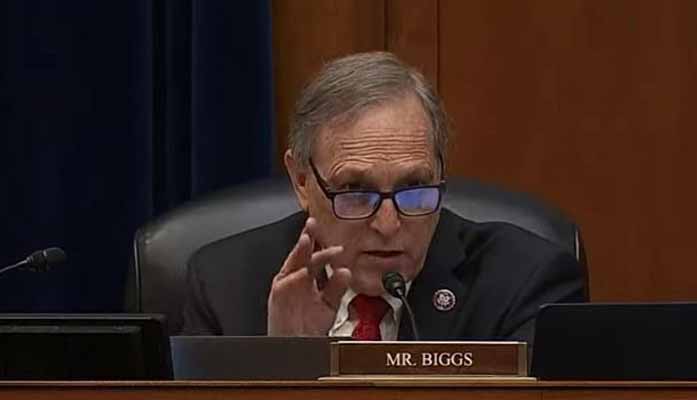
The Associated Press called Rep. Andy Biggs (R-AZ05) the winner of the four-way Republican primary for governor, setting up a November contest against Democrat Gov. Katie Hobbs. The AP also called the Republican secretary of state primary for state Rep. Alexander Kolodin.
The attorney general primary race was subsequently called for State Senate President Warren Petersen shortly before midnight in Arizona. Petersen led attorney Rodney Glassman by 56.4 percent to 43.6 percent as of publication.
WASHINGTON (AP) — Warren Petersen wins Republican nomination for attorney general in Arizona. #APRaceCall at 2:58 a.m. EDT. https://t.co/TS3eIpQI5W
Republican Elijah Norton defeated Katherine Haley for the state treasurer nomination, leading 56.1 percent to 43.9 percent at the time of publication. Norton will now face Democrat nominee Nick Mansour.
Decision Desk HQ called State Treasurer Kimberly Yee the winner of the Republican primary for superintendent of public instruction. Yee led incumbent Superintendent Tom Horne 53.2 percent to 46.8 percent with approximately 89 percent of the expected vote counted in the highly competitive race. Former state lawmaker, Democrat Teresa Leyba Ruiz, had nearly 80 percent of the vote against Brett Newby and will advance to the general election.
Decision Desk HQ projects Kimberly Yee wins the AZ Superintendent of Public Instruction Republican Primary#DecisionMade: 8:18 AM EDT pic.twitter.com/hCr78WcgTt
Commissioner Kevin Thompson secured one Republican nomination for the Arizona Corporation Commission, while former lawmaker Ralph Heap appeared set to secure the second after Commissioner Nick Myers conceded the race in a statement posted to X. Thompson led with 291,934 votes, or 35.89 percent. Heap followed with 267,085 votes, or 32.84 percent, while Myers had 254,321 votes, or 31.27 percent, leaving Heap ahead by 12,764 votes at the time of publication.
Congressional Primaries
Former state Rep. Amish Shah has won the Democratic nomination for U.S. House in Arizona’s 1st Congressional District against former television journalist Marlene Galán-Woods, 39.8 percent to 34.1 percent, according to the AP. Jonathan Treble held 17.62 percent, and Rick McCartney had 8.51 percent. Shah will face Thomas “Jay” Feely in one of Arizona’s most competitive congressional districts.
WASHINGTON (AP) — Amish Shah wins Democratic nomination for U.S. House in Arizona's 1st Congressional District. #APRaceCall at 10:07 p.m. EDT. https://t.co/TS3eIpQI5W
Rep. Greg Stanton held a commanding lead over progressive challenger Kai Newkirk in the Democratic primary for the Fourth Congressional District, 63.5 percent to 36.5 percent.
Former Pinal County Sheriff Mark Lamb won the Republican primary for Biggs’ open Fifth Congressional District seat, defeating Daniel Keenan 58.3 percent to 41.7 percent. The Associated Press also called the Democrat primary for Elizabeth Lee, who received 65.5 percent. Chris James received 21.2 percent, and Brian Hualde received 13.28 percent.
WASHINGTON (AP) — Elizabeth Lee wins Democratic nomination for U.S. House in Arizona's 5th Congressional District. #APRaceCall at 11:18 p.m. EDT. https://t.co/TS3eIpQI5W
Bernadette Greene-Placentia defeated Raymond Keeler approximately 65 percent to 35 percent in the Democratic primary for the Eighth Congressional District. She will challenge Republican Rep. Abe Hamadeh in November.
WASHINGTON (AP) — Bernadette Greene-Placentia wins Democratic nomination for U.S. House in Arizona's 8th Congressional District. #APRaceCall at 11:20 p.m. EDT. https://t.co/TS3eIpQI5W
Republicans currently hold narrow majorities in both chambers of the Arizona Legislature, giving several down-ballot primaries consequences extending well beyond the individual districts.
In Legislative District 2, Republican Sen. Shawnna Bolick led Timothy Ferrara 71.4 percent to 28.6 percent. Democrat Amelia Gallitano led Daniel Toporek 77.3 percent to 22.7 percent in the same district.
Republican Sen. John Kavanagh led Robert Wallace 85.2 percent to 14.8 percent in Legislative District 3.
In the Democratic primary for Legislative District 6, former Sen. Jamescita Peshlakai led Rep. Myron Tsosie 54.8 percent to 45.2 percent.
Sen. Lauren Kuby, a former Tempe city councilwoman, led Deborah Nardozzi 76 percent to 24 percent in the Legislative District 8 Democratic primary.
Christopher King led Anthony Dunham 63.2 percent to 36.8 percent in the Republican primary for Legislative District 17.
Rep. Alma Hernandez led Rocque Perez 53.8 percent to 46.2 percent in the Democratic primary for Legislative District 20.
The closest contested Senate primary was in Legislative District 27, where Republican Sen. Kevin Payne led former Sen. Anthony Kern with 8,368 votes to 8,096, a margin of only 272 votes.
State House Primaries
Arizona House districts elect two representatives, meaning the two leading candidates in each party primary generally advance to November.
In Legislative District 1, Republican Reps. Selina Bliss and Quang Nguyen held the two qualifying positions. Bliss led with 42.45 percent, Nguyen followed with 42.04 percent, and Shawn Wildman trailed with 15.51 percent.
George Khalaf led the four-candidate Republican contest in Legislative District 3 with 33.69 percent. Cody Reim held the second nomination position with 27.12 percent, only 612 votes ahead of Jay Schlum, who received 26.21 percent. Thomas Walsh held 12.8 percent.
Republican Rep. Matt Gress led Legislative District 4 with 45.28 percent, while Pamela Carter held the second position with 33.67 percent. Sandra Christensen trailed with 21.05 percent.
In Legislative District 6, Democratic Rep. Mae Peshlakai led with 42.5 percent. Ian Teller held the second qualifying position with 29.76 percent, followed by Angela Maloney with 27.73 percent.
Rep. Walt Blackman led the Legislative District 7 Republican primary with 34.73 percent. Rep. David Cook held second with 27.25 percent, followed by Andrew Costanzo with 21.34 percent and Barby Ingle with 16.67 percent.
Brian Garcia and Janeen Connolly held the two Democratic nomination positions in Legislative District 8 with 42 percent and 32 percent, respectively. Claudia Kline trailed with 26 percent.
Rep. Justin Olson, a former corporation commissioner, led the Republican primary in Legislative District 10 with 43.82 percent. James Rogers held second with 34.41 percent, followed by Ciara Anderson with 21.77 percent.
Chandler Mayor Kevin Hartke led the Legislative District 13 Republican primary with 43.31 percent. Janet Weninger held the second nomination position with 34.62 percent, while Debra Schinke trailed with 22.07 percent.
In Legislative District 14, Tyler Farnsworth led with 41.63 percent, and Rep. Laurin Hendrix followed with 38.29 percent. Jed Lyons received 20.08 percent.
Sen. David Gowan, a former Senate president, led the Legislative District 19 Republican House primary with 43.98 percent. Rep. Lupe Diaz held the second position with 32.09 percent, followed by Cheryl Caswell with 23.93 percent.
On the Democrat side, Rep. Sally Ann Gonzales led the Legislative District 20 House primary with 33.37 percent. Rep. Betty Villegas, a former Pima County supervisor, held second with 31.81 percent, followed by Genoveva Diaz with 19.41 percent and Ben Koehler with 15.42 percent.
Rep. Consuelo Hernandez led the four-way Democrat primary in Legislative District 21 with 30.21 percent. Miranda Lopez held the second nomination position with 24.92 percent, ahead of Rep. Stephanie Stahl Hamilton at 24.24 percent. Maritza Higuera held 20.63 percent.
Rep. Elda Luna-Nájera led the five-candidate Democratic primary in Legislative District 22 with 29.36 percent. Betsy Munoz held second with 27.60 percent, followed by Veronica Bejarano-Malone with 24.78 percent, Steve Chapman with 9.86 percent, and Gwen Johnston with 8.4 percent.
Rep. Mariana Sandoval led the Legislative District 23 Democratic primary with 38.35 percent. Emilia Cortez held the second nomination position with 25.49 percent, followed by Juan Manuel Guerrero at 18.3 percent and Naomi Miguel at 18.19 percent.
In Legislative District 24, Alberto Flores and Lisbeth Arescurenaga held the two qualifying positions with 39.87 percent and 37.02 percent. Democratic Rep. Lydia Hernandez trailed with 14.34 percent, followed by Rosa Cantu with 8.77 percent.
Republican Reps. Beverly Pingerelli and David Livingston led the Legislative District 28 contest with 41.72 percent and 38.98 percent, respectively. Heather Rooks received 19.30 percent.
Mike Gannuscio led the five-candidate Republican primary in Legislative District 30 with 33.97 percent. David Rose held the second nomination position with 29.16 percent, followed by Grace Hecht with 19.89 percent, Catherine Lopez-Rajaniemi with 10.68 percent, and Caroline Strecker with 6.29 percent.
County Races
Most countywide offices on Tuesday’s ballot had only one candidate seeking each party’s nomination. Contested county and local races included the Apache County clerk of the Superior Court primary, the Santa Cruz County school superintendent primary, the Yavapai County Board of Supervisors District 2 primary, and the Yuma County clerk of the Superior Court primary.
In Apache County, Samceita Begay led Wendy Shepherd in the Democratic primary for clerk of the Superior Court. Begay received 5,653 votes to Shepherd’s 4,195 at the time of publication.
In Santa Cruz County, incumbent County School Superintendent Maya Donnelly led Sonia Sanchez by 2,545 votes to 2,222 in the Democratic primary. Miguel López also led Adriana Olaiz by 2,754 votes to 2,066 in the Democratic primary for justice of the peace at the time of publication.
Camp Verde Mayor Marie Moore led Wiley Cline in the Republican primary for the Yavapai County Board of Supervisors District 2 seat. Moore received 3,633 votes, approximately 57 percent, while Cline received 2,746 votes or approximately 43 percent.
In Yuma County, Chief Deputy Clerk Bobbie Jo Daily led Malba Alvarez by 6,801 votes to 2,530, or 72.9 percent to 27.1 percent, in the Republican primary for clerk of the Superior Court. The Arizona Secretary of State’s county-results portal continued to list Yuma County’s results as pending Wednesday afternoon, although the county had opened its separate online results system.
Additional Ballots Remain
The results remained unofficial on Wednesday as county election officials continued processing ballots. The Arizona Secretary of State’s Office estimated that voters deposited 93,368 early ballots at polling locations on Election Day. That figure represents Election Day ballot drop-offs and does not represent the number of ballots remaining to be counted. The Secretary of State’s Office reports outstanding ballots separately through its ballot-progress reports.
The early results demonstrated President Donald Trump’s continued influence in Arizona’s Republican statewide and congressional primaries. The legislative contests followed a more localized pattern, with incumbency, district organizations, and candidate-specific disputes producing several close races beneath a decisive statewide result.
Margins of only a few hundred votes in several legislative primaries could shape the composition of Arizona’s Republican and Democrat legislative caucuses as the parties prepare for the larger fight over control of the House and Senate in November. The statewide canvass is scheduled for Aug. 6.
Vote totals and percentages are current as of 8 p.m. MST on July 22.
Yavapai County officials are proposing 2.9 percent increases in the county’s primary property tax levy and the Yavapai County Free Library District’s secondary property tax levy as part of the fiscal year 2027 budget process.
The two proposed increases would generate a combined $2.1 million beyond the prior year’s levies, excluding revenue from new construction. The Yavapai County Board of Supervisors will hold a public hearing on the proposals at 9 a.m. on July 27, concurrently with the county budget hearing.
The county is proposing a $1,942,974 increase in primary property taxes over the prior year’s level, excluding taxes generated by new construction.
Under the county’s example, the primary property tax on a home valued at $100,000 would be $164.43 under the proposal. The tax would have been $159.84 without the increase, a difference of $4.59.
The Yavapai County Free Library District is separately proposing a $160,856 increase in secondary property taxes, also representing a 2.9 percent increase over the previous year’s level.
The library district’s secondary property tax on a $100,000 home would rise from $13.08 to $13.46, an increase of 38 cents.
Under the two notices’ examples, the county and library district taxes on a $100,000 home would total $177.89, which is $4.97 more than the $172.92 that would be owed without the proposed levy increases.
The proposed increases do not include additional tax revenue generated by new construction. The county’s calculation also excludes changes associated with voter-approved bonds, budget overrides, and other property tax levies, while the library district’s calculation excludes voter-approved bonded indebtedness.
Including revenue attributable to new construction, the county’s tentative fiscal year 2027 budget lists a total primary property tax levy of approximately $69.6 million, up from $66.2 million in fiscal year 2026. The Free Library District’s total secondary levy would increase from approximately $5.42 million to $5.7 million.
The proposed county primary property tax rate would remain at $1.6443 per $100 of net assessed valuation. The Free Library District rate would also remain unchanged at 13.46 cents per $100 of net assessed valuation.
The levies can increase while the rates remain unchanged because the taxable value of property within the county has grown. Arizona’s truth-in-taxation laws compare the proposed levy on existing property with the prior year’s levy after excluding the amount attributable to new construction.
Under Arizona Revised Statutes §42-17107, counties must publish a notice and hold a public hearing when a proposed primary property tax levy on existing property exceeds the previous year’s amount. The governing body must consider the increase through a roll-call vote.
A similar requirement applies to county free library districts under Arizona Revised Statutes §48-254. The statute requires the library district’s truth-in-taxation hearing to be held concurrently with the county’s budget adoption proceedings.
The county’s tentative budget lists approximately $491.3 million in expenditures across all funds for fiscal year 2027, compared with an adopted or adjusted fiscal year 2026 budget of approximately $424.4 million. The proposed budget includes $185.2 million in general fund expenditures and $301.8 million in special revenue fund expenditures.
The hearing will be held in the Board of Supervisors Hearing Room at 1015 Fair Street in Prescott, with a second location available at 10 S. Sixth Street in Cottonwood.
Congressman Andy Biggs is projected to win the Republican nomination for Arizona governor. The Associated Press also called several of the state’s closely watched primary races, including the Republican secretary of state contest for Rep. Alexander Kolodin.
Biggs led Rep. David Schweikert and businessmen Ken Miceli and Scott Neely when the AP called the four-way Republican primary in his favor. He will face Democratic Gov. Katie Hobbs, who ran unopposed for her party’s nomination, in the Nov. 3 general election.
The AP declares a winner when its decision team determines that trailing candidates no longer have a path to victory. The election results remain unofficial, pending the official statewide canvass on August 6.
Biggs has represented Arizona’s Fifth Congressional District since January 2017 and previously served as president of the Arizona Senate. He chaired the House Freedom Caucus from 2019 to 2022 and entered the gubernatorial primary with endorsements from Turning Point USA and President Donald Trump.
Schweikert has represented Arizona in Congress since 2011 and currently holds the First Congressional District seat. He remained in Washington during Tuesday’s election as the House considered a government funding bill.
In the secretary of state race, Republican state Rep. Alexander Kolodin defeated former Arizona Republican Party Chair Gina Swoboda for the GOP nomination. Kolodin will face Democratic Secretary of State Adrian Fontes, who ran unopposed in his party’s primary, in the Nov. 3 general election. The secretary of state serves as Arizona’s chief election officer and oversees statewide election administration, business filings, and state records and archives.
WASHINGTON (AP) — Alexander Kolodin wins Republican nomination for secretary of state in Arizona. #APRaceCall at 11:17 p.m. EDT. https://t.co/TS3eIpQI5W
The AP also called the Republican primary for Schweikert’s open First Congressional District seat for former Arizona Cardinals kicker and sportscaster Thomas “Jay” Feely IV.
Feely defeated former state Rep. Joseph Chaplik and technology and telecommunications executive John Trobough. President Trump endorsed Feely after he moved from the Fifth District race into the contest to succeed Schweikert.
WASHINGTON (AP) — Thomas Feely wins Republican nomination for U.S. House in Arizona's 1st Congressional District. #APRaceCall at 11:13 p.m. EDT. https://t.co/TS3eIpQI5W
The First District includes northeast Phoenix, Scottsdale, Fountain Hills and Paradise Valley. Republicans hold a voter-registration advantage in the district, although the seat has become increasingly competitive in recent elections. Schweikert defeated Democratic nominee Amish Shah with 51.9 percent of the vote in 2024.
Former television journalist Marlene Galán-Woods led the initial Democratic First District results against Shah, publisher Rick McCartney, and entrepreneur Jonathan Treble. The Associated Press had not called the Democratic contest Tuesday night.
The Democratic Congressional Campaign Committee supported Galán-Woods in the primary. Shah won the party’s nomination for the district in 2024 before narrowly losing the general election to Schweikert.
Former Pinal County Sheriff Mark Lamb won the Republican nomination to succeed Biggs in the Fifth Congressional District. Lamb defeated construction company owner Daniel Keenan.
WASHINGTON (AP) — Mark Lamb wins Republican nomination for U.S. House in Arizona's 5th Congressional District. #APRaceCall at 11:11 p.m. EDT. https://t.co/TS3eIpQI5W
President Trump endorsed Lamb, who previously sought the Republican nomination for U.S. Senate in 2024. The Associated Press described the Fifth District as a safely Republican seat.
The Democratic Fifth District primary included Elizabeth Lee, Chris James and Brian Hualde. The Associated Press had not called that contest at the time of publication.
Republican Rep. Juan Ciscomani and Democratic challenger JoAnna Mendoza advanced without primary opposition in the Sixth Congressional District, establishing the general-election matchup in one of Arizona’s most competitive congressional seats.
The results remain unofficial while Arizona counties continue processing ballots and complete their required canvasses. County boards of supervisors face an Aug. 3 deadline to canvass the primary results, followed by the official statewide canvass on Aug. 6.
Several races, including the GOP nominations for Attorney General, Treasurer, Corporation Commission, and Superintendent of Public Instruction, remained too close to call as of 10 PM Tuesday.
The Republican National Committee (RNC) is pursuing lawsuits in Arizona and five other states challenging laws that allow some United States citizens who have never lived in those states to register and vote through a parent’s former or current residency.
The RNC has active cases in Arizona, Nevada, Colorado, New Jersey, Virginia, and Nebraska, according to a report from the Daily Signal. The legal campaign follows a June ruling in North Carolina that invalidated a similar provision under that state’s constitution.
“If you’ve never lived in a state, you shouldn’t be voting in its elections,” RNC Chairman Joe Gruters told the outlet.
🚨 NEW in @DailySignal: “After a victory in the battleground state of North Carolina, the Republican National Committee has pending litigation against six other states to stop U.S. citizens who never lived in those states from voting in their elections.”
— RNC Election Integrity (@RNCVoteProtect) July 19, 2026
“The RNC already put a stop to this unconstitutional loophole in North Carolina, and we’re taking Nebraska, Colorado, Nevada, and New Jersey to court to do the same,” Gruters added. “We’ll keep fighting to ensure elections are only decided by legal residents.”
The lawsuits focus on state laws extending voting eligibility to some citizens born abroad who have never established residency in the state where they vote. The RNC said the cases do not challenge absentee voting protections for military personnel, diplomats, or other overseas citizens who previously lived in the state.
Arizona law permits a United States citizen who has never resided anywhere in the country to register in Arizona if the person’s parent is a United States citizen registered to vote in the state. The voter may use a federal write-in early ballot under Arizona Revised Statutes Section 16-103. The statute governing that ballot authorizes voting for presidential electors, the U.S. Senate, and the U.S. House.
The provision creates an exception to Arizona’s general voter residency requirements. Under A.R.S. Section 16-101, a registrant must ordinarily have lived in Arizona for at least 29 days before an election. State law defines a resident as a person with an actual physical presence in Arizona combined with an intent to remain.
The Arizona Republican Party, the RNC, and then-Arizona GOP Chair Gina Swoboda filed their lawsuit against the state and Secretary of State Adrian Fontes on June 30, 2025, in Maricopa County Superior Court.
The complaint, filed as Republican Party of Arizona v. State of Arizona, asks the court to declare A.R.S. Section 16-103(E) unconstitutional and prohibit the state from accepting voter registrations and ballot requests from people who have never resided in Arizona.
The complaint states, “By permitting such ‘never resident’ registrants, who, upon information and belief, are disproportionately non-Republican in their political party affiliations relative to the Arizona electorate as a whole, to cast votes in Arizona elections, A.R.S. § 16-103(E) illegally structures the competitive environment in which the RPAZ and RNC participate, and also unlawfully dilutes the voting power of constitutionally eligible qualified electors.”
Republicans argue that the statute conflicts with Article VII, Section 2 of the Arizona Constitution, which requires voters to be United States citizens, at least 18 years old, and residents of Arizona for the period established by state law.
The state, represented by attorneys from Attorney General Kris Mayes’ office and Fontes, moved to dismiss the case in July 2025, arguing that the plaintiffs lacked standing and that the law was enacted to provide voting access for overseas citizens under the federal Uniformed and Overseas Citizens Absentee Voting Act. The state noted that the provision was approved without opposition by the Republican-controlled Legislature in 2005 and signed by Democratic Gov. Janet Napolitano.
Maricopa County Superior Court Judge Michael Herrod denied the motion to dismiss in October. Herrod found that all three plaintiffs had standing to pursue the case, although Swoboda could not rely on the complaint’s vote-dilution theory. He also ruled that the complaint stated a legally sufficient claim, writing that Article VII, Section 2(A) “can be argued to refer to time periods, not the definition of residence.” The ruling allowed the constitutional challenge to proceed without deciding whether the statute is unconstitutional. The case remains pending.
Arizona’s current Elections Procedures Manual recognizes the statutory exception and notes the ongoing constitutional challenge.
Republican lawmakers attempted to repeal the exception legislatively in 2025 through Senate Bill 1052. The measure would have removed eligibility for citizens who had never lived in the United States, but Gov. Katie Hobbs vetoed the bill.
In her veto letter, Hobbs wrote that the bill would “prevent U.S. citizens from registering to vote, including the children of Arizona servicemembers born overseas.”
Arizona Secretary of State guidance continues to state that a citizen who has never lived in the United States may register in Arizona when the person’s parent is also a United States citizen registered in the state. The guidance distinguishes those voters from civilian overseas voters who previously established Arizona residency and military personnel or their family members stationed outside the state.
The RNC’s broader effort follows a ruling from Wake County Superior Court Judge Hoyt Tessener, who held that a North Carolina law allowing some overseas citizens who had never lived in the state to vote violated North Carolina’s constitutional residency requirement, according to The News & Observer. The court granted summary judgment to the Republican plaintiffs in June.
The Department of Defense’s Federal Voting Assistance Program lists 38 states that provide some form of absentee-voting eligibility to United States citizens who have never resided in the country. Eligibility commonly depends on the residence or voter registration of a parent or legal guardian. Arizona allows a qualifying citizen to register through a parent registered in the state. Federal guidance says Arizona voters must provide documentary proof of citizenship to receive a full ballot containing state and local races; voters who do not provide that documentation remain eligible for federal contests.