Rep. Abe Hamadeh (R-AZ08) praised a new $100 billion investment by Taiwan Semiconductor Manufacturing Company (TSMC) that will add four advanced semiconductor fabrication plants at the company’s north Phoenix campus and raise its total planned Arizona investment to $265 billion.
The White House and Department of Commerce announced the expansion Thursday, saying it resulted from a trade and investment agreement reached between the United States and Taiwan earlier this year.
The four additional facilities will bring TSMC’s planned American footprint to 12 advanced semiconductor manufacturing and packaging facilities, all located in Arizona. The Arizona Commerce Authority said the expanded Phoenix campus is now expected to include 10 semiconductor fabrication plants, two advanced packaging facilities, and a research and development center.
Hamadeh, whose Eighth Congressional District includes the TSMC campus, praised President Donald Trump’s manufacturing agenda and said the project would create new employment opportunities for residents of the West Valley.
“These targeted investments in Arizona’s Eighth Congressional District aren’t just welcome — they’re exactly the kind of bold, America-First moves our district needs,” Hamadeh said in a Thursday announcement.
“My constituents are ready to work, ready to build, and hungry for the high-paying jobs these projects will deliver right here in the Grand Canyon State,” he added.
Hamadeh said he believes veterans should receive priority for employment opportunities connected to the expansion. His office has made economic development and workforce growth central parts of what it describes as a “Peace through Prosperity” agenda.
Commerce Secretary Howard Lutnick said the investment would create tens of thousands of American jobs. The Commerce Department said the expansion is expected to generate significant construction and high-technology employment while increasing domestic production of advanced semiconductors.
TSMC Chairman and CEO C.C. Wei said the expansion is intended to meet growing demand from the company’s American customers and strengthen the domestic semiconductor supply chain. The latest commitment follows a $100 billion expansion announced in March 2025, which raised TSMC’s planned Arizona investment from $65 billion to $165 billion. That expansion added three fabrication plants, two advanced packaging facilities, and an R&D center to the company’s original plans.
TSMC initially announced a $12 billion Phoenix facility in 2020. The company expanded the project to $40 billion in 2022 with plans for a second fabrication plant and increased the commitment to more than $65 billion in 2024 by adding a third plant. The two initial facilities were projected to create approximately 4,500 direct TSMC jobs, while the first three were projected to create 6,000 direct manufacturing jobs and more than 20,000 construction jobs.
TSMC currently employs more than 3,500 people in Arizona. The company’s first Arizona fabrication plant began high-volume production using its N4 manufacturing process during the fourth quarter of 2024. Construction of the second plant’s main structure was completed in 2025, with production using N3 technology targeted for the second half of 2027.
Construction of the second plant’s main structure was completed in 2025, with production using N3 technology targeted for the second half of 2027.
The company broke ground on its third plant in April 2025. That facility is scheduled to manufacture semiconductors using TSMC’s N2 and A16 process technologies, with production targeted to begin by the end of the decade. Before the newest expansion, the Commerce Department finalized an award of up to $6.6 billion in direct funding and made up to $5 billion in loans available under the federal CHIPS incentive program to support TSMC’s first three Arizona plants. The facilities are intended to produce some of the world’s most advanced semiconductors and provide American technology companies with access to domestically manufactured chips.
Hamadeh’s office said the expansion would help establish Arizona’s Eighth Congressional District as the “Silicon Desert” and strengthen the country’s position in semiconductor and artificial intelligence manufacturing.
“This major investment is further proof that the Trump Administration is laser-focused on restoring American manufacturing dominance,” Hamadeh said.
The annual inflation rate in the Phoenix metropolitan area slowed to 2.8% in June, remaining below the national rate as falling energy prices and comparatively modest shelter-cost growth eased pressure on the region’s Consumer Price Index (CPI).
The Phoenix-area CPI increased 2.8% during the 12 months ending in June, down from 3% in April, according to a new Common Sense Institute (CSI) analysis of federal inflation data. National consumer prices increased 3.5% over the same annual period.
CSI attributed much of the local decline to energy prices, which fell 6.4% during June after increasing 26.5% between February and May. The earlier increase helped drive Phoenix’s annual inflation rate from 1.7% in February to 3% in April, according to CSI.
Inflation has slowed but prices are still much higher than they were five years ago.
Since June 2019, prices in the Phoenix metro have increased 33.4%, adding an estimated $1,673 per month to the budget of a typical Arizona household.
— Common Sense Institute Arizona (@CSInstituteAZ) July 15, 2026
Energy remained more expensive than it was one year earlier. The U.S. Bureau of Labor Statistics reported that Phoenix-area energy prices were up 14.1% year-over-year in June, while gasoline prices were 26.2% higher. The local energy index declined 4.4% over the two-month period ending in June, including a 10.7% decrease in gasoline prices.
Nationally, the CPI declined 0.4% from May to June on a seasonally adjusted basis, marking the largest monthly decrease since April 2020, according to the BLS national inflation report. The national energy index fell 5.7% during June, including a 9.7% decline in gasoline prices. National consumer prices remained 3.5% higher than one year earlier, while energy prices were up 15.7%.
Shelter costs also helped keep Phoenix inflation below the national rate. Shelter prices increased 1.4% year-over-year in the Phoenix area, compared with 3.3% nationally. CSI said home prices have cooled in Arizona during the past two years while national home prices continued to increase, reducing shelter’s contribution to Phoenix-area inflation.
CSI said the gap between Phoenix and national shelter inflation has narrowed during the past six months as housing markets elsewhere began to cool. When shelter costs are excluded, CPI growth in Phoenix and across the country is nearly identical, according to CSI.
Phoenix-area food prices increased 2.2% year-over-year in June. The local index excluding food and energy rose 2%, while the comparable national index increased 2.6%. CSI separately calculated that the Phoenix index for all items excluding energy increased 2% from the previous year, up from 1.7% in April.
Among the 23 metropolitan areas compared by CSI using the latest available BLS data, Phoenix recorded the fifth-slowest year-over-year inflation rate. The region had posted the fourth-slowest rate among the 14 metropolitan areas reporting April figures.
The recent slowdown follows several years of substantial price increases. CSI calculated that Phoenix-area prices have risen 33.4% since June 2019, compared with a 30.3% national increase. According to the institute, the increase is “adding approximately $1,673 in monthly expenses to the average Arizona household.”
From June 2024 through June 2026, cumulative Phoenix-area inflation was 3%, below the approximately 4% increase that would result from prices growing steadily at an annual rate of 2%, according to CSI.
CSI cautioned that changes in individual categories can have an outsized effect on the headline CPI because the index is a weighted average of price movements across goods and services. CSI identified volatile energy prices as a significant driver of both the local and national figures and estimated that alternative measures place the Phoenix area’s underlying inflation rate closer to 2% than the 2.8% headline figure.
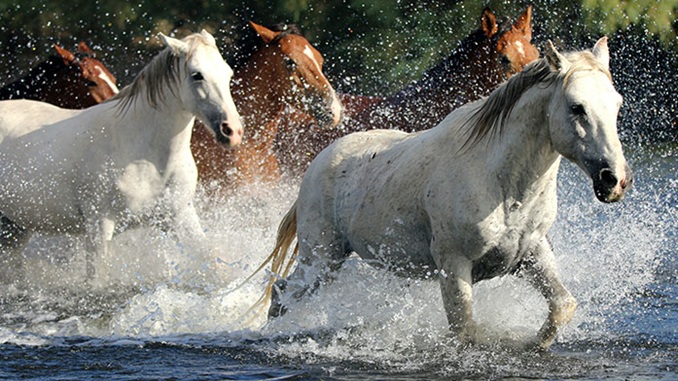
Wildlife ecologist and wild horse advocate Craig C. Downer will join a rally at the Arizona State Capitol next week as opponents of a planned reduction in the Salt River horse herd call for an independent scientific review before removals begin.
Friends of the Salt River Wild Horses announced that Downer will appear at the “Preserve the Herd, Follow the Science” rally on Wednesday, July 22, at 8 a.m. in front of the state Senate building. The group’s event page lists the rally for July 22 and 23.
Downer has conducted field investigations of the Salt River herd and its habitat, including studies in 2012 and 2015 involving interviews, ecological transects, and a literature review. In a 2019 letter published by High Country News, he argued that wild horses contribute to the ecosystem by transporting nutrients from the river into the surrounding Sonoran Desert.
The advocacy group said Downer is concerned that reducing the herd to approximately 125 horses could leave the population without sufficient genetic diversity to remain healthy and adaptable.
“Such an artificially low population will interfere with maintaining sufficient genetic diversity to adapt to the rigors of survival in the wild,” Downer said.
The state’s current management agreement sets a goal of reducing the herd from approximately 274 horses to 120 over five years. The Arizona Department of Agriculture said when it announced the contract that the gradual reduction was intended to balance limited resources within the horses’ range while maintaining the herd’s genetic integrity.
The Salt River Wild Horse Management Group, which received the state contract, has said approximately 25 horses are scheduled for removal in September. The organization has expressed opposition to the reductions while stating that it will fulfill the terms of the agreement and relocate removed horses to protected sanctuaries.
The Agriculture Department previously said it did not independently mandate the 120-horse target. The department said the management group proposed that figure during the contracting process. State officials said sustainable management requires balancing the size and diversity of the herd with the amount of forage, water, and habitat available along the Salt River.
Downer and Friends of the Salt River Wild Horses are requesting an independent review by wildlife ecologists, equine geneticists, and other specialists before any horses are removed. The group is also asking state officials to release the genetic, forage, habitat, and population data used to support the planned reduction.
Arizona Department of Agriculture Deputy Director Sheldon Jones said the management plan requires adopted horses to be relocated to department-approved sanctuaries and expressly prohibits their sale, donation, trade, or slaughter.
Dr. E. Gus Cothran, an equine population geneticist and professor emeritus at Texas A&M University, released a statement warning that reducing the Salt River wild horse population to 120 could threaten the herd’s long-term survival.
“At the most basic level, 150 to 200 animals is a minimum number,” Cothran said. “This is the number that, if everything goes right and only population genetics is involved, should maintain genetic health for 200 years or so.”
The rally follows an unsuccessful legislative effort to pause removals and require additional genetic testing.
Senate Bill 1199, as amended in the House, would have imposed a three-year moratorium on population-control removals while the Department of Agriculture contracted for an independent genetic assessment. The proposed testing would have examined effective population size, genetic diversity, and inbreeding within the herd.
The House approved the measure with bipartisan support on June 9, but the bill did not receive a final concurrence vote in the Senate before lawmakers adjourned.
Current Arizona law prohibits harassing, shooting, injuring, killing, or slaughtering horses belonging to the Salt River herd. It also bars people from interfering with, taking, chasing, capturing, or euthanizing the horses without written authorization from the Department of Agriculture or the Maricopa County sheriff.
Friends of the Salt River Wild Horses is inviting members of the public, elected officials, and horse advocates to attend the rally at 1700 W. Washington St. in Phoenix.
The organization said in a statement, “Before a single horse is removed, the State of Arizona should be able to demonstrate that its approach to herd reduction is based on peer-reviewed science and will preserve the Salt River wild horse herd for generations to come.”
Rep. Paul Gosar’s reelection campaign reported more than $303,000 in cash on hand, giving the Republican incumbent a substantial financial advantage over Democratic challenger Danielle Sterbinsky ahead of Arizona’s 2026 congressional election.
Gosar for Congress reported $303,213.70 in available campaign funds through July 1, according to newly filed Federal Election Commission (FEC) data. Sterbinsky’s campaign reported $25,744.84 over the same election cycle, leaving Gosar with approximately $277,469 more in reserve.
Gosar’s campaign described the financial advantage as evidence of support for the congressman’s positions on border security, inflation, federal spending, and other issues.
We’re in a very strong position!
My campaign has $303,000 cash on hand compared to my opponent’s weak $25,744.
“Voters are clearly behind our movement,” Gosar said in the campaign announcement. “This financial lead puts us in a dominant position heading into the general election.”
The FEC figures show Gosar’s campaign has collected $580,042.50 in total receipts since the beginning of the 2025-2026 election cycle. That includes approximately $490,056 in individual contributions and $85,000 from other political committees.
The Gosar campaign reported spending $368,425.78 during the cycle and listed $6,958.18 in outstanding debts or obligations. The campaign began the cycle with approximately $91,597 in cash on hand, according to the FEC financial summary.
Sterbinsky’s campaign reported receiving $354,382.57 and spending $332,315.71 since July 2025. Her committee reported no outstanding debts or loans in its latest FEC summary.
The filings give Gosar an advantage in both total receipts and remaining cash, although the difference between the campaigns’ available funds is considerably larger than the gap between their total fundraising.
President Donald Trump offered his endorsement of the congressman on Truth Social in late 2025, ahead of an unopposed 2026 primary.
In full, President Trump wrote:
“Congressman Paul Gosar, D.D.S., is an America First Patriot, who is doing a fantastic job representing Arizona’s 9th Congressional District!
A MAGA Warrior, who has been with us from the very beginning, Paul is working hard to Grow our Economy, Cut Taxes and Regulations, Promote MADE IN THE U.S.A., Advance American Energy DOMINANCE, Keep our now very Secure Border, SECURE, Support our Brave Military/Veterans, and Protect our always under siege Second Amendment.
Dr. Paul Gosar has my Complete and Total Endorsement for Re-Election — HE WILL NEVER LET YOU DOWN!”
Gosar was first elected to Congress in 2010 after working as a dentist for 25 years. He currently represents the Ninth Congressional District, which covers portions of western Arizona, including communities in Maricopa, Mohave, La Paz, and Yuma counties.
According to his congressional biography, Gosar entered Congress without previously holding elected office and has made limited government, immigration enforcement, natural resources, and federal spending central issues during his tenure.
Arizona Senate President Warren Petersen (R-LD14) has widened his lead over attorney Rodney Glassman in the Republican primary for attorney general according to a new statewide poll released by NextGen Polling.
The survey found Petersen leading Glassman 43.4 percent to 28.2 percent, with 28.5 percent of likely Republican primary voters undecided. The poll was conducted July 8-9 among 1,707 likely voters and had a margin of error of plus or minus 2.5 percentage points.
Petersen’s advantage increased from approximately six points in a June survey conducted by the same firm. That poll placed Petersen at 25.8 percent and Glassman at 19.5 percent, while 54.6 percent of respondents remained undecided.
ATTORNEY GENERAL
JUNE 18TH: Petersen: 26% (+6%) Glassman: 20%
JULY 9TH: Petersen: 43% (+15%) Glassman: 28%
The most genuinely competitive race of the five down-ballot contests, but @votewarren's structural depth means he has a floor that Glassman cannot easily breach. Glassman… pic.twitter.com/QrZb1us5VB
Between the two surveys, Petersen’s support increased by nearly 18 percentage points, while Glassman gained approximately nine points. The undecided share fell by more than 26 points.
“This race proves again that Arizona voters continue to reject political charlatans who attempt to buy their seats in public office,” Petersen said in a statement released by his campaign. “I am truly grateful for the trust voters have placed in my candidacy for Attorney General. These polls demonstrate that Republicans understand we need a candidate who can defeat liberal Kris Mayes in November.”
Petersen’s campaign pointed to Glassman’s spending advantage while announcing the polling results. Campaign finance data compiled by Transparency USA through March 31 showed Glassman reporting nearly $284,000 in expenditures, compared with approximately $107,000 by Petersen, a ratio of about 2.7-to-1.
The same records showed Glassman reporting more than $2.3 million in contributions and Petersen reporting approximately $1.2 million. Those figures cover activity through the end of March and do not include spending during the final months of the primary campaign.
The July 21 primary will determine which Republican advances to face Democratic Attorney General Kris Mayes in the Nov. 3 general election. Mayes is seeking a second term and faces no opposition in the Democratic primary.
Petersen and Glassman have centered much of their campaign on their respective qualifications to oversee the Attorney General’s Office and their ability to defeat Mayes in November.
Petersen represents Legislative District 14 and has served as president of the Arizona Senate since 2023. He earned his law degree from Arizona State University in 2019 and was admitted to the State Bar of Arizona in December 2023.
Glassman is a private attorney, former Tucson City Council member, and lieutenant colonel in the U.S. Air Force Reserve Judge Advocate General’s Corps. He was the Democratic nominee for the U.S. Senate in 2010 and has since sought several offices as a Republican, including attorney general in 2022 and the Arizona Corporation Commission in 2018.
Both candidates have said they would place greater emphasis on working with law enforcement, prosecuting crime, addressing border security, and cooperating with the Trump administration. A May primary debate between the candidates focused heavily on their legal experience and political records.