Gov. Katie Hobbs has signed a package of child welfare bills sponsored by Sen. Carine Werner (R-LD4) aimed at strengthening Arizona’s response to abuse reports, improving Department of Child Safety (DCS) case review procedures, and increasing protections for children in dependency proceedings and state care.
Werner said the measures followed months of legislative oversight and investigation into Arizona’s child welfare system.
The Senate Republican Caucus said the hearings examined weaknesses in how abuse reports are reviewed, how allegations are investigated, and how children already known to DCS are protected. The hearings were launched after multiple high-profile child deaths exposed breakdowns in the state’s child safety system, including the deaths of Emily Pike, Rebekah Baptiste, and Zariah Dodd.
🚨FOR IMMEDIATE RELEASE: Senator Werner Strengthens Child Welfare System with Package of Bipartisan Reforms Signed Into Law
All together, Arizona enacted 13 new child welfare laws this year.
SB 1127 amends Arizona’s mandatory reporting statute for child abuse and neglect. The bill requires a person who has a duty to report and who has direct knowledge that a minor is or has been the victim of abuse or neglect to immediately report it to DCS and bars that person from delegating the report to someone else.
Under existing statute amended by the bill, mandatory reporters include physicians, physician assistants, optometrists, dentists, osteopathic physicians, chiropractors, podiatrists, behavioral health professionals, nurses, psychologists, counselors, social workers, peace officers, child welfare investigators, child safety workers, school personnel, domestic violence victim advocates, sexual assault victim advocates, clergy, parents, stepparents, guardians, and others with responsibility for the care or treatment of a minor.
SB 1174 requires the DCS centralized intake hotline to take steps to identify and locate prior communications and DCS reports related to a current abuse or neglect communication using the department’s data system and the state’s central registry system.
The bill requires the hotline to quickly and efficiently show in a single report the entire history of a child and the child’s siblings who have been the subject of prior hotline calls or DCS investigations. The hotline worker must review the narrative of every call received for that child from the previous 90 days.
SB 1174 also allows a hotline worker to review hotline calls received in the previous 90 days that did not meet the criteria for a DCS report and use information contained in prior calls when deciding whether a new allegation meets the criteria for a DCS report. The law takes effect after Dec. 31, 2026.
SB 1496 makes broader changes to DCS policies and procedures involving children in dependency cases, federal benefits for children in DCS care, kinship placement searches, missing or runaway children, and central registry hearings.
The bill requires courts to appoint an attorney for a child in dependency and termination of parental rights proceedings before the first hearing. It also directs the attorney to determine whether the child has diminished capacity that would affect the child’s ability to express an opinion or make decisions.
The measure requires DCS to determine within 60 days after a child enters care whether the child is receiving or may be eligible for benefits administered by the Social Security Administration or Veterans Administration. If DCS is appointed as the child’s representative payee, the department may not use the child’s federal benefits, other benefits, savings, or assets to pay for or reimburse the state for the child’s care.
The bill requires DCS to use due diligence to identify and notify adult relatives and persons with a significant relationship to a child within 30 days after the child is taken into temporary custody. The search must include interviews with the child’s parent, the child, identified adult relatives, and others likely to have information about possible relatives or significant contacts.
For missing, abducted, or runaway children in state care, SB 1496 requires DCS to notify law enforcement immediately or within 24 hours, request that law enforcement enter the child into state and national missing-person systems, and report the child to the National Center for Missing and Exploited Children within 24 hours.
The bill also requires DCS to provide local law enforcement with identifying information within 48 hours, including a physical description, last known location, clothing description, vehicle information if applicable, current photos, a law enforcement phone number, and information about any offered rewards. Law enforcement must provide that information to local media outlets and post it to social media platforms.
SB 1631 requires that when a child alleges sexual abuse, or when a report of abuse or neglect includes an allegation of sexual abuse, a person trained in forensic interviewing must conduct a forensic interview with the child immediately or within 72 hours.
The 72-hour requirement does not apply if DCS shows good cause for the delay. The bill lists several examples of good cause, including when the child is receiving inpatient physical or mental health care, is not physically present in Arizona, has not been located by the department, or is unavailable because a parent or guardian who is not the subject of the allegation is unresponsive or unable or unwilling to make the child available for the interview.
The bill defines sexual abuse for the purposes of the requirement to include sexual abuse, sexual conduct with a minor, sexual assault, molestation of a child, commercial sexual exploitation of a minor, sexual exploitation of a minor, incest, and child sex trafficking.
“Protecting vulnerable children is one of government’s most important responsibilities, and there have been far too many cases where that responsibility was not met,” Werner said. “These new laws address real problems we uncovered through legislative oversight, and they strengthen the safeguards that exist to protect children from abuse, neglect, and exploitation. Arizona families deserve confidence that when warning signs appear, the system will respond appropriately and children will not be forgotten.”
The latest signed bills follow two other Werner-sponsored DCS measures Hobbs signed earlier this year. SB 1125 requires DCS to make annual efforts to enter into memorandums of understanding with Arizona tribes that do not already have current agreements with the department. The agreements must address information sharing, training materials, operational standards, tribal liaisons, and access to regulatory and enforcement information involving DCS-licensed group homes where tribal children are placed.
SB 1126 requires schools, upon request by a DCS caseworker, to identify any school that has requested a pupil’s educational records and any person who has withdrawn the pupil from school. The law also requires schools to provide other requested information or records related to a pupil who is or was enrolled at the school and bars public and private schools from prohibiting employees, contractors, or volunteers from speaking with a DCS caseworker investigating abuse or neglect allegations.
The Governor’s Office listed SB 1127, SB 1174, SB 1496, and SB 1631 among the bills Hobbs signed in a June 19 legislative action update.
A separate Werner measure, SB 1175, was vetoed by Hobbs. The proposal would have required DCS caseworkers to photograph children during abuse and neglect investigations and review the photographs when assessing a child’s safety. DCS Director Kathryn Ptak said the department would adopt the requirement administratively.
Gov. Katie Hobbs vetoed 88 bills in a single day last week, rejecting Republican-backed legislation dealing with gender-transition procedures for minors, immigration enforcement, election administration, medical mandates, civics instruction, religious instruction, photo radar penalties, parents’ rights, and local business regulations.
The Governor’s Office listed 72 bills signed and 88 bills vetoed in a June 19 legislative action update.
The vetoes were wide-ranging, from mundane measures to controversial ones: from refusing to lower Arizona’s learner’s permit age to 15 to refusing to prohibit the application of Sharia law in Arizona courts to prohibiting illegal immigrants from accessing banking services.
Among the highest-profile vetoes were the three measures dealing with gender-transition procedures. Hobbs vetoed SB 1015, dealing with provider liability for gender-transition procedures; SB 1094, dealing with civil liability for gender-reassignment surgery; and SB 1095, dealing with gender-transition procedures for minors.
In her veto letter, Hobbs wrote, “It is already unlawful to perform gender transition surgery on minors in Arizona; therefore, this legislation is unnecessary.”
Potentially one of the most politically significant vetoes was SB 1186, sponsored by Senate President Pro Tempore T.J. Shope (R-LD16), which would have required companies holding or seeking state contracts and certain state grants to disclose anything of value provided during the previous five years to the Governor, campaign-related entities, inaugural funds, joint fundraising committees, and organizations supporting the Governor or opposing the Governor’s political opponents.
Senate Republicans said the veto came as Hobbs remains under investigation over allegations involving donations connected to Sunshine Residential Homes and a subsequent rate increase approved by the Department of Child Safety. Hobbs dismissed the legislation as a “political stunt.”
🚨FOR IMMEDIATE RELEASE: Hobbs Blocks Transparency Reform for State Contracts Worth Billions While Facing Ongoing Investigation into Alleged Pay-to-Play Scheme
Hobbs also vetoed SB 1055, sponsored by Sen. Wendy Rogers (R-LD7), which would have required U.S. Immigration and Customs Enforcement or U.S. Customs and Border Protection to be immediately notified when an unlawfully present alien is arrested by a state or local law enforcement agency for a violation of state or local law.
In her veto letter, Hobbs said existing law already allows law enforcement officers to contact immigration enforcement when they have reasonable suspicion regarding a person’s immigration status. She said the bill could strain resources, increase workload, and divert law enforcement attention from public safety duties.
Another immigration-related measure, SB 1520, would have dealt with immigration data sharing by state agencies. Hobbs wrote in her veto letter that the bill was “unconstitutional” and risked violating federal and state privacy laws.
Rogers responded in a statement from the Arizona Senate GOP Caucus, saying:
“Governor Hobbs continues to show just how disconnected she is from the reality many Arizona families face every day. These bills were not extreme. They were practical steps to help enforce existing laws, improve cooperation with federal authorities, ensure taxpayer-funded benefits go to those legally entitled to receive them, and prevent Arizona from becoming a magnet for illegal immigration. Arizonans have already spoken.”
The veto list also included several election-related measures. Hobbs vetoed SB 1057, which dealt with fraud countermeasures for paper ballots. In her veto letter, Hobbs said she remained confident in Arizona election officials’ ability to administer free and fair elections “without added expense and complexity.”
Hobbs also rejected SB 1429, sponsored by Sen. J.D. Mesnard (R-LD13), which would have required ballot measure petition circulators to disclose whether they were paid circulators, volunteers, or out-of-state residents. In her veto letter, Hobbs wrote that the bill “would further narrow the pathway for citizens’ initiatives and referenda at the local level.”
Additional election-related vetoes listed by the Governor’s Office included SB 1037, dealing with voting equipment, internet access, and custody; SB 1038, dealing with cast vote records as public records; SB 1040, dealing with voter registration rolls and internet access; and SB 1060, dealing with voter registration and temporary absence.
Hobbs vetoed two measures dealing with vaccines, masks, and medical interventions. HB 2086 dealt with vaccination mandates and masks, while HB 2248, titled the “Arizona Medical Freedom Act,” would have barred businesses, schools, and state or local government entities from requiring certain medical interventions as a condition of services, entry, employment, government benefits, or transportation, with exceptions.
In her veto letter, Hobbs wrote, “Vaccines save lives,” and said Arizona law already provides robust exemptions to immunization requirements. She added that diseases once eliminated are “making a comeback in Arizona’s playgrounds and classrooms because of dangerous misinformation.”
Education-related vetoes included SB 1572, sponsored by Sen. Mark Finchem (R-LD1), which dealt with public school civics instruction requirements. Hobbs wrote in her veto letter that she was confident the curriculum outlined in the bill was already adequately covered during the school year, including through the Sandra Day O’Connor Civics Celebration Day and the Arizona Civics Test. “Changes to civics education should go through experts, not the legislature,” Hobbs wrote.
Hobbs also vetoed SB 1741, which dealt with released-time courses for public school students. The measure would have expanded access to off-campus religious instruction during the school day if a student’s parent provided written consent and the course provider met statutory requirements. In her veto letter, Hobbs wrote that Arizona has “a robust school choice system,” and said public school instructional time should be used for standards-aligned instruction.
Hobbs vetoed SB 1624, sponsored by Sen. David Gowan (R-LD19), which would have capped civil penalties for photo radar speeding violations at $75. The measure also would have barred the Motor Vehicle Division from reporting certain speed-camera violations to insurers and prevented those citations from being used as points for license suspension. Hobbs wrote in her veto letter that the bill undermined cities’ ability to make their own decisions about law enforcement policies.
Another vetoed bill, HB 2460, sponsored by Rep. Nick Kupper (R-LD25), would have barred municipalities and counties from imposing penalties on businesses for stolen or abandoned movable property, including shopping carts and hand-held baskets. In her veto letter, Hobbs wrote that the bill “delves into a truly local issue that is best resolved between businesses and their local elected leaders.”
The Governor’s Office also listed vetoes of HB 2249, a parents’ bill of rights remedy, and HB 2830, a bill on fetal and prenatal development instruction. Hobbs said in her HB 2249 veto letter that parents already have the right to direct their children’s education and upbringing, and that the bill would threaten schools and educators with “exorbitant financial penalties.” In her HB 2830 veto letter, Hobbs wrote that instructional requirements should be left to experts rather than “politicians trying to force mandates on our teachers.”
The 88-bill veto sweep drew criticism from Republicans, including gubernatorial candidate Andy Biggs. In a post to X, Biggs wrote, “The Katie Hobbs record: 541 vetoes, 45th in Affordability, 0 victories for Arizonans. We cannot afford four more years of the Veto Queen!”
The Biggs War Room account wrote, “Katie Hobbs just vetoed 88 bills in one day, bringing her near 150 vetoes this session.”
🚨THE HOBBS FILES JUST DROPPED🚨
Katie Hobbs just vetoed 88 bills in one day, bringing her near 150 vetoes this session.
But what exactly did she veto? Here are the highlights:
-She vetoed a bill banning gender-affirming care for minors. -She vetoed a bill to cap photo radar…
“This is not leadership,” the War Room added. “This is the Hobbs agenda in black and white. Arizona does not need another four years of common-sense reform dying under a veto pen. It needs a Governor’s Office that will sign real reform, protect families, defend taxpayers, and put Arizona voters first.”
The Governor’s Office also announced 72 signed bills on June 19, including measures dealing with candidate financial disclosures, worker death benefits, law enforcement reinstatement costs, health care licensing, missing and kidnapped children reporting requirements, assisted living facilities, and Department of Child Safety procedures.
The Pinal County Attorney’s Office has closed its review of allegations involving former Pinal County Sheriff Mark Lamb after determining that the evidence reviewed did not establish a violation of Arizona criminal law.
Pinal County Attorney Brad Miller announced Monday that his office completed its review of allegations and materials submitted regarding Lamb and concluded that “no abuse of power or other crime occurred.” The matter is now closed.
The review followed allegations involving Lamb that were submitted to the Pinal County Board of Supervisors in 2020. According to the preliminary inquiry released by Miller’s office, Tim Gustafson delivered a packet of information to the Board of Supervisors on Jan. 29, 2020, regarding allegations against Lamb, who was then serving as Pinal County sheriff.
🚨NEWS RELEASE: Pinal County Attorney Closes Mark Lamb Matter; Preliminary Inquiry Finds No Abuse of Power or Criminal Violation pic.twitter.com/Se7O8ALnuB
— Pinal County Attorney's Office (@PCAOAZ) June 23, 2026
“Public officials are entitled to the same due process and the same scrutiny as every other citizen. Not more. Not less,” Miller said. “When allegations are presented to this office, our responsibility is to determine whether a crime occurred, not whether a narrative is politically convenient. This office does not prosecute rumors, politics, social media campaigns, or headlines. We prosecute crimes. We follow the facts, we follow the law, and we follow the evidence. In this case, the evidence does not establish that any law was broken.”
The inquiry states that in May 2026, former Pinal County Attorney Kent Volkmer told the media that he had conducted a cursory investigation into the Lamb matter from 2020. Miller said he directed staff to locate the investigation so he could review it, but no investigation was found.
“No investigation was found, and not a single investigator at the Pinal County Attorney’s Office, including the former Chief of Investigations, could recall that such an investigation had ever been conducted,” the preliminary inquiry states.
Chief Hank Mueller then requested the materials provided by Gustafson, or any other individual, to the Pinal County Board of Supervisors. Those materials were provided on May 29, according to the inquiry.
On June 3, an alleged victim came forward and provided more than 3 gigabytes of additional materials for review, including audio, video, documents, and social media materials. Miller said he reviewed all of the materials in preparation for the preliminary inquiry.
The Pinal County Attorney’s Office said it reviewed records, witness statements, text messages, social media posts, recorded calls, and other communications before concluding that the evidence did not establish criminal conduct.
The inquiry listed three conclusions: that there was no evidence Lamb acted in a criminal manner; that there was no evidence Volkmer performed any investigation into the matter despite what he told the Arizona Republic in May; and that there was no evidence Lamb was a victim of a crime or asked Volkmer to investigate a crime on his behalf.
“Based upon all the materials provided I find that Mark Lamb committed no acts that would be considered criminal under Arizona law,” Miller wrote. “This matter is concluded.”
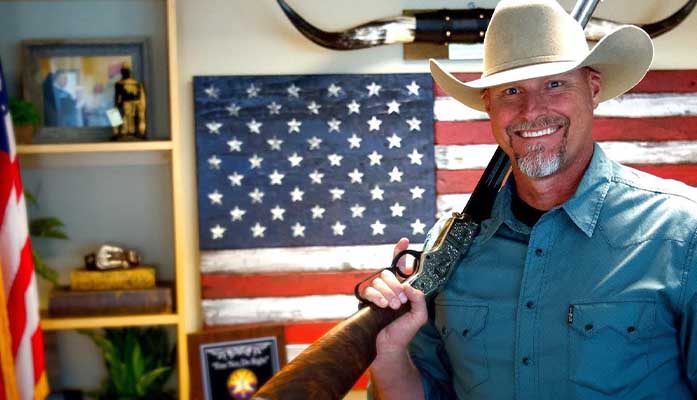
Lamb served as Pinal County sheriff from 2017 through 2024 and is now running for Congress in Arizona’s 5th Congressional District.
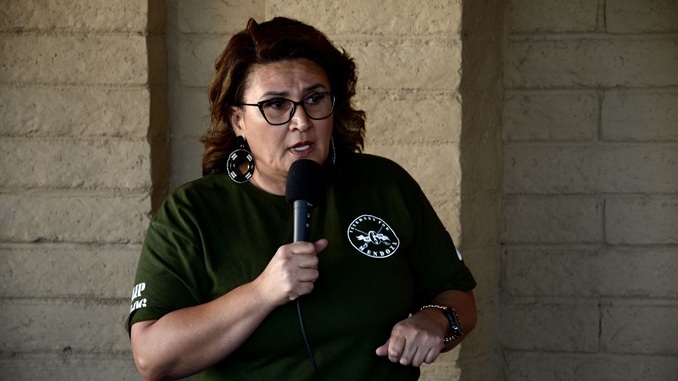
The Republican National Committee is targeting Democratic congressional candidate JoAnna Mendoza over salary payments from her campaign account, arguing the payments, combined with her other reported income and assets, undercut her campaign messaging as a working-class anti-corruption candidate. Federal rules allow nonincumbent candidates to receive compensation from campaign funds under certain conditions.
Mendoza is running for Arizona’s 6th Congressional District seat held by Republican U.S. Rep. Juan Ciscomani. The FEC identifies Mendoza as a Democratic House candidate in Arizona’s 6th District and lists Mendoza for Congress as her principal campaign committee.
“JoAnna Mendoza lines her own pockets instead of thinking about Arizonans,” RNC Western Regional Communications Director Nick Poché told AZ Free News. “The only person Mendoza cares about is herself, and it’s clear as day that she can’t be trusted to not abuse her position to enrich herself.”
According to her 2026 candidate financial disclosure filed June 15, Mendoza reported receiving $35,602.50 in salary from her campaign committee, Mendoza for Congress, during the reporting period spanning Jan. 1, 2025, through May 15, 2026.
The RNC pointed to campaign finance filings showing regular payroll payments to Mendoza, estimating her compensation at approximately $102,000 annually before taxes. Separately, federal campaign finance data compiled by OpenPolitical show Mendoza for Congress reported payroll-related expenditures, including $298,781 paid to Gusto Payroll Services.
Her campaign’s FEC summary shows that Mendoza for Congress reported $5,341,037.68 in total receipts, $1,830,458.04 in total disbursements, and $3,510,579.64 in cash on hand through March 31.
The Federal Election Commission states that a federal officeholder may not receive compensation as a candidate from campaign funds, but a nonincumbent candidate may receive compensation from the candidate’s principal campaign committee if the payments meet FEC limits and conditions.
The FEC’s candidate salary guidance says the campaign committee must reduce the maximum amount of permissible candidate compensation from campaign funds by the amount of income earned by the candidate from outside sources after the candidate files a Statement of Candidacy. Mendoza filed her Statement of Candidacy on Feb. 3, 2025, according to the FEC.
Mendoza’s 2026 disclosure lists other income sources in addition to her campaign salary. The filing reports $34,736 in current-year-to-filing military retired pay from the Defense Finance and Accounting Service, $28,350 in salary from VetsForward in the preceding year, and $506 from Poderoza Strategies LLC in the preceding year.
The disclosure also lists a Tucson rental property valued between $250,001 and $500,000, with current-year-to-filing rent of $5,001 to $15,000 and $15,001 to $50,000 in rent for the preceding year. Mendoza’s 2025 candidate financial disclosure, filed Aug. 13, 2025, listed rental property income from Genesis Real Estate & Management, but did not list a real property asset in Schedule A.
Mendoza’s business disclosures also changed between the two filings, as reported by The Washington Free Beacon. Her 2025 disclosure listed Radar Strategies LLC as an asset valued between $1,000,001 and $5,000,000. Her 2026 disclosure listed Radar Strategies LLC as an asset valued between $50,001 and $100,000 and included a note stating that Mendoza was a partner in Radar Strategies from February 2024 to April 2025, that “ownership was forfeited back to partner stakeholders,” and that the “valuation updated to reflect prior year and as of partnership exit.”
Millionaire JoAnna Mendoza now claims she voluntarily gave up her millions (yeah sure) to her business partners. Mendoza was also forced to reveal half a million in assets she was hiding from the public.
The change was noted by Poché in a post to X on June 18. He wrote, “Millionaire JoAnna Mendoza now claims she voluntarily gave up her millions (yeah sure) to her business partners. Mendoza was also forced to reveal half a million in assets she was hiding from the public. Oh, & she’s paying herself from her campaign.”
The RNC argued that the salary payments and financial disclosures conflict with Mendoza’s public campaign messaging. Mendoza’s campaign website says she believes “public service is about accountability, integrity, and looking out for ordinary people,” and that she has “zero tolerance for corruption.” The same campaign page says she supports banning members of Congress, their families, and other top government officials from trading individual stocks while in office.
In an April interview with the American Journal News, Mendoza said she wanted to “fight corruption and get our money back.” She also said, “We need to make sure that money isn’t being mishandled, or find out if there’s corruption there.”
Mendoza’s campaign biography describes her as a retired Marine, single mother, and rural Arizonan raised in a farmworker family in Pinal County. Her campaign says she “experienced firsthand the realities of rural poverty,” and later served in the Navy and Marine Corps before returning to Arizona to raise her son.
Mendoza announced in April that her campaign raised more than $2.3 million in the first quarter of 2026, calling it an “impressive fundraising quarter for a first-time congressional candidate.” Her campaign said the fundraising came as she joined the Democratic Congressional Campaign Committee’s “Red to Blue” program and built momentum against Ciscomani.
Census Reporter lists Arizona’s 6th Congressional District at a median household income of $80,251. The RNC compared Mendoza’s estimated annualized campaign salary to district income levels and said the salary issue is likely to become part of the broader campaign over trust and accountability in the competitive district.
Scottsdale is stepping up enforcement against nuisance parties, illegal events, and criminal activity at short-term rentals after police issued 56 charges and citations linked to the properties in May.
According to a press release from the city, Scottsdale Police responded to 48 nuisance-related calls at short-term rental properties in May, as well as calls involving property crimes, crimes against persons, welfare checks, and other incidents. Officers generated 31 department reports and issued 56 charges and citations during the month.
The Scottsdale Police Department told the Scottsdale Progress that officers responded to 239 calls for service at short-term rental locations between January and March 2026. The department noted that 31% were classified as “nuisance complaints;” 185 charges were filed, and 88% were related to non-compliance.
The city said the May enforcement activity included violations tied to nuisance parties, criminal investigations, and licensing compliance. Scottsdale officials said that, for the first time in recent memory, enforcement actions from active short-term rental incidents exceeded administrative compliance violations.
“We will not allow a small number of bad actors to jeopardize the safety and character of our neighborhoods,” City Manager Greg Caton said. “Residents deserve to feel safe in their homes, and we are committed to using every tool available to address nuisance activity, unlawful events and criminal behavior associated with short-term rentals.”
The enforcement push comes as Scottsdale continues to regulate short-term rentals under its local licensing program. The city stated that all properties offered for rent for less than 30 days require a Scottsdale license, and property owners or operators must obtain a license for each property and comply with safety, health, and neighborhood notification requirements.
Scottsdale’s website states that vacation rentals and short-term rentals are dwelling units rented for less than 30 days to transient guests and are allowed by-right in all residential districts. The city also states that non-residential uses, including retail, restaurant, banquet space, event center, or similar uses, are prohibited.
The city’s release cited a shooting investigation stemming from a party at a short-term rental in the Maya complex as one of the incidents resulting in enforcement action. According to the city, the investigation led to multiple arrests on charges that included aggravated assault, weapons violations, and trespassing.
The property owner was cited for operating without a required city license, while the renter was cited for hosting and promoting a nuisance party and operating an event venue.
Police also responded to multiple large parties involving underage alcohol consumption, investigated assaults and domestic disturbances, and handled several alcohol-related medical emergencies, including incidents requiring hospitalization, the city said.
Scottsdale officials also said two large promoter-sponsored events advertised through social media were identified and stopped before they could occur after coordination between police and property owners.
“Our officers are taking a proactive approach because we know the impact these incidents can have on surrounding neighborhoods,” Police Chief Joe LeDuc said. “When short-term rentals become venues for criminal activity, large disruptive parties or unsafe behavior, we will take enforcement action. Our goal is simple: protect residents, preserve neighborhood quality of life and hold violators accountable.”
Scottsdale’s public guidance for residents says short-term rentals are subject to the same limits as private residences and may not be used for nuisance parties, unlawful gatherings, or criminal activity. The city defines nuisance activity as conduct that exceeds normal residential use and causes serious neighborhood disruption, including large parties, loud amplified music, DJs or live bands, commercial or for-profit events, excessive vehicle traffic, parking problems, or disturbances affecting neighboring properties.
State law limits local regulation of short-term rentals; however, under A.R.S. § 9-500.39, cities and towns may regulate vacation and short-term rentals for public health and safety, nuisance control, and licensing requirements. The statute also prohibits using a vacation rental or short-term rental for nonresidential uses, including special events that would otherwise require a permit or license, retail use, restaurant use, banquet space, or similar uses.
City officials said Scottsdale’s increased enforcement follows years of work by the city’s multidisciplinary Short-Term Rental Working Group, which includes the Police Department, Code Enforcement, Tax and Licensing, Constituent Services, the City Attorney’s Office, and the City Manager’s Office.
Recent efforts have included expanded officer training focused on nuisance-party investigations, improved coordination among city departments, accelerated identification of unlicensed operators, and increased focus on repeat offenders and property owners who fail to comply with licensing requirements, according to the city.
Scottsdale officials said responsible short-term rental operations remain supported in the city, but properties associated with nuisance activity, illegal events, or criminal behavior may face enforcement action.