Friends of the Salt River Wild Horses is calling on Gov. Katie Hobbs to meet with advocates, saying more than 70 requests for a meeting have gone unanswered as the planned September removal of horses from the Salt River herd draws closer.
The organization issued the appeal Monday, one week after Hobbs formally launched her “Arizona Over Party” coalition, which her reelection campaign described as a group of Republican and Independent leaders, community members, and business leaders supporting her campaign.
“My focus has always been on delivering results for Arizona families,” Hobbs said when announcing the coalition. “That’s what Arizona Over Party is all about: putting the people of Arizona ahead of partisan politics.”
Friends of the Salt River Wild Horses cited the coalition in its Monday press release, saying its members span the political spectrum and have repeatedly sought an opportunity to speak with Hobbs before horses begin being permanently removed from the herd.
“We are not asking Governor Hobbs to agree with us,” a spokesperson for the group said. “We are simply asking her to listen before an irreversible decision is made.”
The organization said it has submitted more than 70 requests for a meeting with the governor through letters, emails, and other channels over the past several months.
During the group’s July 22 “Preserve the Herd — Follow the Science” rally at the Arizona State Capitol, advocates displayed more than 50 written requests seeking a meeting or assistance from the governor. Organizers said at the time that the requests had gone unanswered.
The dispute centers on a five-year herd management agreement awarded by the Arizona Department of Agriculture (AZDA) to the Salt River Wild Horse Management Group in February. The management group has said the plan calls for reducing the herd from approximately 274 horses to 120 through fertility control, natural attrition, and gradual relocation of horses to sanctuaries.
The Salt River Wild Horse Management Group said it plans to relocate approximately 25 horses annually to protected sanctuaries, with the first relocations planned for September. The group has opposed reducing the herd to 120 while saying it agreed to the plan as a compromise that would limit the number of horses removed each year and keep family bands together.
Friends of the Salt River Wild Horses said Monday that the herd currently numbers approximately 269 horses and reiterated its request that Hobbs pause permanent removals until an independent scientific review determines whether the population remaining along the Salt River would be genetically viable and self-sustaining.
“The burden should be on the state to show the science before taking an irreversible action,” the organization said. “The public should not have to accept assurances when the future of a protected herd is at stake. We are asking to see the independent scientific evidence supporting these reductions.”
The group has previously raised concerns over the proposed population level alongside wildlife ecologists and equine genetics specialists. In July, equine population geneticist and Texas A&M University professor emeritus Dr. E. Gus Cothran warned that a population of 120 could pose long-term genetic concerns, saying a population of approximately 150 to 200 animals is generally considered a minimum for maintaining genetic health over an extended period.
The Agriculture Department has defended the management process. When the contract was announced, AZDA said the proposal was evaluated by a panel that included veterinarians, a rangeland management scientist, and a federal wild horse manager, and said the gradual reduction was intended to balance available resources within the herd’s range while preserving its genetic integrity.
The department also told the Arizona Capitol Times in April that it had not independently established or mandated a 120-horse target. According to AZDA, the Salt River Wild Horse Management Group proposed reducing the herd to 120 over the five-year contract period. The department said sustainable management requires considering both the ecosystem’s capacity and the size and genetic diversity of the herd.
A spokesperson for Hobbs’ office said at the time that AZDA conducted a thorough procurement process and that the state was committed to sustainably managing the herd to protect the long-term health of the horses and their habitat.
The question of whether additional scientific review should precede removals also reached the Legislature earlier this year. A House-amended version of SB 1199 would have required AZDA to contract for an independent genetic assessment examining effective population size, allelic diversity, and inbreeding coefficients within the herd. It also would have temporarily prohibited population control removals while the herd maintained a negative growth rate, except when necessary to prevent or alleviate the suffering of an individually assessed horse and not for population control.
The House approved the amended legislation 43-10 on June 9 and returned it to the Senate, but senators did not take a final concurrence vote before the Legislature adjourned.
Current Arizona law prohibits harassing, shooting, injuring, killing, or slaughtering members of the Salt River herd and prohibits interfering with, taking, chasing, capturing, or euthanizing the horses without written authorization from the Department of Agriculture or Maricopa County sheriff, which may be granted only for humane purposes. The statute also authorizes the state to enter agreements with private entities concerning management of the herd.
Friends of the Salt River Wild Horses said its request to Hobbs remains open ahead of the September removals.
“Before the September removals, please meet with us,” the organization said. “And before another healthy horse is removed, please show Arizonans the independent science supporting that decision.”
AZ Free News requested comments from Gov. Hobbs’ Office and the Arizona Department of Agriculture; as of publication, no responses were received.
Republican secretary of state nominee Rep. Alexander Kolodin (R-LD3) accused Democratic incumbent Adrian Fontes of trying to avoid a general election debate after Fontes proposed holding the debate on Sept. 21, which falls on Yom Kippur.
In a post on X, Kolodin wrote, “Adrian Fontes is trying to duck out of debating me.” He said Fontes had requested a change to the debate date and made himself available on Sept. 21, which Kolodin described as the “one and only date” offered. Kolodin also shared an image of an email from Gina Roberts, Voter Education Director with the Citizens Clean Elections Commission, showing September 21st at 6 PM as the only date and time.
Adrian Fontes is trying to duck out of debating me.
And he’s doing it in the most pathetic and religiously insulting way possible.
Adrian Fontes has requested a change in the debate date and made himself available on the one and only date that religious obligation would prevent… pic.twitter.com/L1L0VYcex9
Yom Kippur, which means the Day of Atonement, begins at sunset on Sunday, Sept. 20, and ends at nightfall on Monday, Sept. 21, in 2026. It’s the holiest day on the Jewish calendar and work is prohibited during its observance. Kolodin said he observes the holiday and would be unable to debate that day because of his religious obligations.
He wrote:
“Adrian Fontes has requested a change in the debate date and made himself available on the one and only date that religious obligation would prevent me from debating him.
“September 21st is Yom Kippur, a religious holiday that is adhered to by Jewish residents of the State of Arizona, including myself. Jews are forbidden from performing work of any kind on that day. Adrian Fontes already knows this, which is why the singular date he offered up was that date.
“This is cowardly, pathetic, and un-American.”
Hey Alex, the day Phoenix freezes over is the day I refuse to debate you. Stop lying to Arizonans.
We’re working to lock in a date that works for the production team and gives voters a chance to tune in.
I already beat you at the Farm Bureau. Can’t wait to do it again on TV.
Fontes responded on X later Tuesday, rejecting Kolodin’s accusation that he planned to avoid the debate.
“Stop lying to Arizonans. We’re working to lock in a date that works for the production team and gives voters a chance to tune in,” he wrote.
The Arizona Media Association’s current public schedule lists the 2026 secretary of state debate date as “TBD.” The Arizona Citizens Clean Elections Commission, which is producing the statewide debate series with the association, said candidate coordination would guide the final schedule and that the debates would be produced at SNEAKY BIG studios.
The published schedules leave the previously proposed date and the candidates’ private scheduling exchanges unspecified. Kolodin’s post included no correspondence from Fontes, Clean Elections, or the production team. Fontes’ response gave no proposed dates.
Kolodin said he would clear his calendar for a debate on another day. He also used the post to renew campaign allegations concerning Fontes’ handling of proof-of-citizenship requirements, voting eligibility for law-enforcement officers, county election canvasses, and voter security. His post included no supporting documents for those four allegations, and Fontes’ scheduling response did not address them.
Kolodin, a Republican state representative for Legislative District 3, defeated former Arizona Republican Party Chair Gina Swoboda in the Republican primary. Fontes, a Democrat, has served as Arizona’s secretary of state since 2023 and is seeking a second term.
The state’s election calendar sets Oct. 5 as the voter-registration deadline and Oct. 7 as the start of early voting in Arizona’s general election.
As of Tuesday afternoon, the secretary of state debate remained without a publicly announced date.
The campaign supporting Proposition 318 filed a campaign finance complaint with Arizona Secretary of State Adrian Fontes on Monday, alleging an opposition website copied its name and visual presentation while failing to disclose who paid for the site.
The two-page complaint accuses the unidentified operators of ProtectGirlsSportsAZ.vote of violating Arizona campaign disclosure requirements and attempting to mislead voters about the November ballot measure.
The complaint compares the opposition site with the Yes campaign’s ProtectGirlsSportsInAZ.vote, including screenshots showing similar turquoise, pink, black, and white branding and versions of the phrase “Protect Girls’ Sports in Arizona.” La Sota alleged the opposition site copied the Yes campaign’s “trade dress” and selected a web address closely resembling the campaign’s own domain.
“In addition, the website address itself is meant to mislead,” La Sota wrote in the complaint.
According to the complaint, the opposition site uses ProtectGirlsSportsAZ.vote, while ProtectGirlsSportsAZ.com redirects visitors to the same website. The Yes campaign operates ProtectGirlsSportsInAZ.vote.
“The group I chair has existed since June,” La Sota wrote. “What these fraudsters obviously did was go to our website and copy our trade dress and even our name, and intentionally found a website address that was as close to ours as possible.”
The complaint alleges that the opposition website does not identify a person or organization that paid for it.
Under A.R.S. § 16-925, a person other than an individual who makes an expenditure for an advertisement or fundraising solicitation must include the words “paid for by” followed by the name of the person making the expenditure. Electronically delivered advertisements are required to make the disclosure clearly readable.
Arizona campaign finance law defines an “advertisement” as information or materials, excluding nonpaid social media messages, that are published, displayed or otherwise placed in a communication medium for the purpose of influencing an election. A “ballot measure expenditure” is an expenditure that expressly advocates support for or opposition to an identified ballot measure.
“The only conceivable way that there would be no disclosure requirement would be if a single individual person was behind this shameful effort,” La Sota wrote. He added that publicly available registration information did not reveal the identity of the person who registered the domain.
Whether the website violates state campaign finance law has not been determined. The identity of its operator and the amount spent to create or maintain the site were not established in the complaint.
La Sota also cited A.R.S. § 16-905, writing that registration and campaign finance reporting requirements could apply depending on how much money has been spent on the effort.
Arizona law requires an entity to register as a political action committee when its primary purpose is influencing an election, and it crosses the applicable contribution or expenditure threshold. The Secretary of State lists the adjusted threshold for the 2025-2026 election cycle at $1,500.
The complaint also cites A.R.S. § 16-1006, which makes it unlawful to use specified corrupt means to influence an elector and prohibits deceiving an elector into voting for a different measure than the voter intended. A violation is a class 5 felony.
La Sota acknowledged in the complaint that the Secretary of State does not have criminal enforcement authority and cautioned against broad application of the statute because of its potential effect on protected political speech.
“Obviously this statute must be used with the utmost caution because it could easily be turned into a weapon against protected speech,” La Sota wrote. “But this is about as compelling a case under this statute as I have seen given the obvious attempt to defraud voters.”
The Yes campaign separately said it is asking Attorney General Kris Mayes to investigate whether the opposition website violates state consumer protection laws. The campaign did not include a separate Attorney General complaint among the materials provided to AZ Free News. Its Monday press release described the campaign finance complaint as filed with the Secretary of State and said the campaign was “asking the Attorney General to investigate.”
The campaign announced the complaint during an event at the Arizona State Capitol, where it also named Christine Jones and former Arizona State Treasurer Jeff DeWit as honorary co-chairs of the Yes on 318 campaign. State Senate President and Republican Attorney General nominee Warren Petersen, Republican gubernatorial nominee Rep. Andy Biggs, and Republican Secretary of State nominee state Rep. Alex Kolodin also voiced support for the measure in the campaign announcement.
“Arizona parents should not have to wonder whether a political website is deliberately deceiving them or who is hiding behind it,” Petersen said. “Attorney General Kris Mayes must immediately investigate these allegations and determine whether Arizona’s campaign finance and consumer protection laws were violated.”
The campaign also released a 39-second advertisement titled “Pretending”, which places screenshots of the Yes and No websites side by side and draws a comparison between the dispute over the opposition site and the campaign’s arguments concerning transgender participation in female sports. The advertisement ends with a disclosure stating that it was paid for by Protect Girls Sports in Arizona, received zero percent of its funding from out-of-state contributors and was not authorized by any candidate or candidate committee.
Glad to see my bill to protect girls’ sports and female spaces has been given a title and is now known as Prop 318. But now seeing a disgraceful trick by the opponents to copy our official website – Protect Girls’ Sports in Arizona. With look-alike graphics and no “Paid for”… pic.twitter.com/zHqIGDiZty
Proposition 318, referred to voters by the Legislature as HCR 2003, would amend Arizona law governing student athletics.
According to the Secretary of State’s official ballot language, the measure would require public schools, private schools and athletic associations to designate athletic teams as male, female, or coed based on biological sex as recorded at birth and would prohibit males from participating on female teams. It would also prohibit schools and athletic associations from authorizing individuals to use private spaces, including restrooms, that are not designated for that individual’s sex.
Current Arizona law applies the athletic-team designation requirements to public schools and private schools whose teams compete against public schools. Proposition 318 would broaden the statute to additional schools and athletic associations and expressly add restrictions governing restrooms, locker rooms, shower rooms, and other private athletic spaces.
A “yes” vote would enact those changes beginning Jan. 1, 2027, while a “no” vote would maintain current Arizona student-athletics law, according to the Secretary of State.
“Today we celebrate sports for all, as we begin the campaign to protect both girls’ sports and the right for everyone to participate,” Jones said Monday. “Prop 318, the Protect Girls Sports in Arizona Act will designate sports Male – Female – Co-Ed, ensuring fairness for females, and the opportunity for everyone to play.”
The complaint urges Fontes to take action on the alleged disclosure violations and ensure transparency surrounding the opposition website. La Sota asked the secretary to give the matter his “utmost attention,” writing that voters should not “unwittingly lose their vote on this ballot measure.” As of publication, no determination that a campaign finance violation occurred had been announced.
Rep. Abe Hamadeh (R-AZ-08) is calling for greater accountability over decisions by four prosecuting offices to decline charges against a hacker who admitted to exploiting a Maricopa County website and extracting approximately 633,000 voter registration records shortly before the 2020 election.
During an interview with Just the News, Hamadeh said he wants to know which prosecutors were responsible for the decisions after the FBI investigated the breach, identified the suspect, and obtained an admission.
“I’m still curious to know, you know, which attorneys at the U.S. Attorney’s Office, at the Arizona Attorney General’s Office, in Maricopa County, Pinal County, declined charges, especially when the FBI referred it and had this case pretty much handed on a platter to these prosecuting agencies, and they all refused,” Hamadeh said.
Every week, more election vulnerabilities get exposed.
Thank God @POTUS, the most transparent president in American history, is finally getting the truth out.
Congressman Hamadeh joined @jsolomonReports to break down the latest Arizona election integrity bombshell.
The…
— Office of Congressman Abe Hamadeh (@RepAbeHamadeh) August 8, 2026
The comments followed the release of declassified FBI records detailing the investigation into the 2020 intrusion. In an Aug. 4 letter, FBI Director Kash Patel said investigators confirmed voter records were illegally extracted from a Maricopa County site and identified a suspect who admitted committing the offense.
According to the FBI, the suspect discovered a vulnerability in the county’s voter registration system, wrote a PowerShell script to exploit it, and illegally scraped approximately 633,000 voter files. About 930 contained sensitive, nonpublic information, Patel wrote.
The affected records included full names, voter identification numbers, and party affiliations. Approximately 930 contained sensitive information involving domestic violence victims, judges, and law enforcement officers. The document said Social Security numbers were not included in the information obtained.
The vulnerability allowed an intruder to place voter identification numbers directly into the website URL and bypass its normal authentication process, according to the FBI. The PowerShell script then automated sequential requests for voter registration information.
Hamadeh said the scale of the breach raises questions about the cybersecurity capabilities of less-populous jurisdictions.
“Maricopa County, which isn’t just the biggest county in Arizona, it’s the fourth biggest county in the entire country,” Hamadeh said during the interview. “So if you have these people, these hackers able to exfiltrate into the data systems of a big county like Maricopa, imagine what they can do to some of these smaller counties that don’t have the cyber tech and the counter cyber measures that Maricopa County may have.”
An FBI interview summary said the suspect first discovered the vulnerability around September 2020 after noticing that his voter identification number appeared in the website URL. He tested other seven-digit numbers and discovered that he could access other voters’ registration information.
The suspect then developed the PowerShell script and initially downloaded between 100 and 1,000 records during a trial run before expanding the operation, according to the FBI. He estimated that he ultimately downloaded between 1 million and 2 million records, while investigators documented approximately 633,000 exfiltrated voter records.
The suspect stored information on personal hard drives and a Google Cloud account before deleting it after becoming concerned about law enforcement consequences, according to the FBI report. He described himself to investigators as a “hacker or tinkerer” and accepted responsibility for his actions.
FBI agents executed a search warrant at the suspect’s Fountain Hills residence on Nov. 5, 2020. According to the bureau’s May 2023 case-closure document, investigators analyzed seized devices and obtained records involving the suspect’s bank, social media, and email accounts.
Investigators concluded that he had developed and operated the PowerShell script and later deleted the extracted information. The FBI said investigators found no indication of domestic or foreign influence over his actions.
The U.S. Attorney’s Office for the District of Arizona declined prosecution. The Maricopa County Attorney’s Office also declined the case and advised the FBI that it had presented the matter to the Arizona Attorney General’s Office, which also declined. Investigators then presented the case to the Pinal County Attorney’s Office, which likewise declined prosecution, according to the closure memorandum.
The federal declination occurred July 12, 2021. The released documents do not identify when the other three offices made their decisions.
Because all four prosecuting offices declined the matter, investigators requested closure of the case in May 2023.
Hamadeh said accountability in the case remains unresolved.
“The win that the American people had here in Arizona, especially what we’re still trying to get, is justice,” Hamadeh said during the interview.
Hamadeh also described the intrusion as a “direct attack on democracy” and referred to manipulation of voter files during his remarks. The released FBI documents establish that voter registration information was accessed and exfiltrated; they do not show that the suspect altered voter records, accessed ballots, or changed votes. Just the News also reported that there is no evidence votes were changed as a result of the intrusion.
The newly released records contrast with what Maricopa County officials publicly said about the incident during the aftermath of the 2020 election. In July 2021, county officials told Capitol Media Services that the intruder had accessed a voter registration website but had not penetrated the server storing voter registration records, and said only voter registration numbers had been obtained without access to personal information. The FBI records released this week state that approximately 633,000 voter registration records were exfiltrated and that about 930 contained sensitive voter information.
Hamadeh has made election security a legislative priority in Congress. He urged the Senate in July to pass the SAVE America Act, after the House previously passed the measure and subsequently advanced its provisions through other legislative vehicles. The legislation would require proof of U.S. citizenship for federal voter registration and identification to cast a ballot in federal elections.
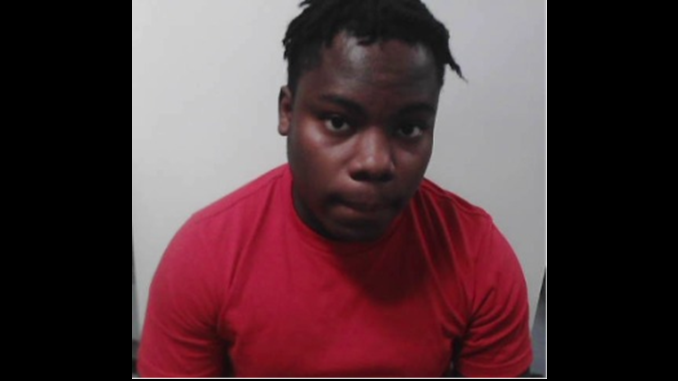
Federal immigration officers arrested a Haitian national in Massachusetts who entered the United States through the Arizona border during the Biden administration. He had been released into the country and now faces pending charges involving child pornography, indecent assault, and extortion.
U.S. Immigration and Customs Enforcement (ICE) announced that officers from its Boston field office arrested Pierre Andy Jean-Louis, 20, during a vehicle stop in Fall River, Massachusetts, on July 18.
Jean-Louis has pending Massachusetts charges for possession of child pornography, indecent assault and battery on a person over the age of 14, and extortion by threat of injury, according to ICE. The agency has not reported that Jean-Louis has been convicted of the charges.
“There is no person more disturbing than one who stands accused of preying upon the most innocent members of our communities,” acting ICE Enforcement and Removal Operations Boston Field Office Director David Wesling said in a statement. “ICE Boston will continue to prioritize public safety by working tenaciously to remove alleged child sex predators from our New England neighborhoods.”
ICE said U.S. Customs and Border Protection (CBP) apprehended Jean-Louis after he entered the country near Nogales, Arizona, on Sept. 24, 2024.
CBP subsequently released him into the country under a two-year grant of immigration parole.
Immigration parole allows the Department of Homeland Security to temporarily permit a noncitizen applying for admission to enter the United States on a case-by-case basis for urgent humanitarian reasons or a significant public benefit. Federal law states that parole does not constitute formal admission into the United States.
Jean-Louis’ release occurred approximately four months before former President Joe Biden left office in January 2025.
Following the July vehicle stop, ICE officers took Jean-Louis into custody and served him with a notice to appear before a Department of Justice immigration judge.
Fox News correspondent Bill Melugin highlighted the Arizona connection, reporting that Jean-Louis had been “caught and released” at the border before his arrest in Massachusetts.
NEW: ICE Boston announces they've arrested a Haitian illegal alien alleged pedophile who has pending charges for possession of child porn, indecent assault, and extortion by threat of injury. Pierre Andy Jean-Louis, was caught and released at the AZ border by the Biden admin on… pic.twitter.com/QugKxM7uS5
ICE described Jean-Louis as an illegal alien from Haiti. The agency did not identify the circumstances under which CBP approved the two-year parole or provide additional information concerning his travel from Arizona to Massachusetts.