Arizona House Minority Whip Stacey Travers (D-LD12) is pledging to renew her effort to require clergy to report suspected ongoing or future child abuse disclosed through confidential religious communications. Her legislation failed to advance this year, while the Arizona Supreme Court recently issued a ruling defining the scope of the state’s clergy reporting exemption.
Travers introduced HB 2039 in December. The bill would have amended Arizona’s clergy reporting exemption to require members of the clergy, Christian Science practitioners, and priests to report when there is reasonable suspicion that abuse is ongoing, will continue, or may threaten other minors.
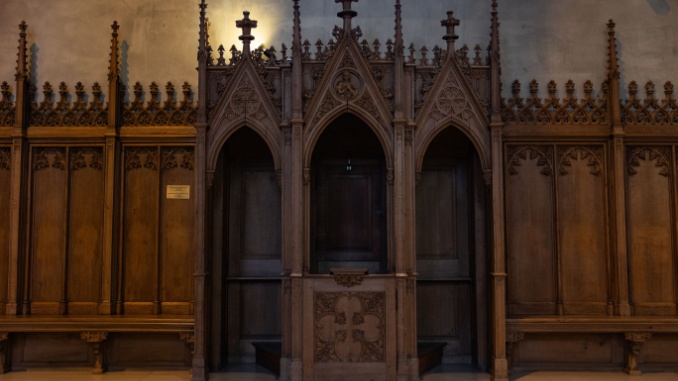
House Judiciary Committee Chairman Quang Nguyen (R-LD1) has opposed Travers’ proposals and has said he will not give the measure a hearing while he remains chairman. Nguyen, who is Catholic, said that Travers would have to wait until 2029, when he is no longer a legislator, for the bill to receive a hearing.
“I’m going to be very frank about this,” he said, “this bill has absolutely zero to do with reporting crimes because duty to report already exists in the state of Arizona, just not in the confessional booth,” Nguyen previously told LifeSiteNews. “That is all.… This is a way to go out and destroy our Church. Nothing more, nothing less.”
Congressman and GOP gubernatorial nominee Andy Biggs described the bill at the time as “a terrible attack on Catholics in Arizona by, of course, a Democrat. This bill should never see the light of day.”
A terrible attack on Catholics in Arizona by, of course, a Democrat. This bill should never see the light of day.
Current Arizona law requires specified mandatory reporters who reasonably believe a minor has been abused or neglected to report that information. Clergy may currently withhold a confession or confidential communication when they determine that maintaining confidentiality is “reasonable and necessary within the concepts of the religion.” The exemption applies to the confidential communication itself and does not cover a clergy member’s independent observations of a minor.
HB 2039 would have narrowed that exemption. Under the proposed language, clergy could withhold information concerning abuse that had already occurred unless there was reasonable suspicion that the abuse remained ongoing, would continue, or could threaten other minors. It also would have amended Arizona’s civil clergy-penitent privilege to permit examination of a priest or clergyman concerning a confession when the clergy member determined it involved ongoing abuse.
Under the state’s existing reporting statute, failure to make a required report is generally a class 1 misdemeanor. Failure to report a statutorily defined “reportable offense,” which includes several sexual offenses involving minors, is a class 6 felony.
HB 2039 was assigned to the House Judiciary and Rules committees and received its second reading in January. It did not advance before the Legislature adjourned.
Travers said that she distinguishes between protected religious confession and circumstances in which someone discloses continuing abuse.
“There is a special case when you’re confessing to somebody in your religious organization,” Travers said, describing a confession involving a search for “absolution and contrition.”
She described an admission of ongoing child abuse made with the expectation that clergy will not report it as a “conditional” confession and said she intends to continue pursuing legislation addressing those circumstances.
Nguyen also blocked a similar proposal by Travers in 2023. At the time, Travers said the legislation grew out of the case involving Paul Adams, a Bisbee man, after he disclosed abuse to leaders of the Church of Jesus Christ of Latter-day Saints (LDS).
That case eventually reached the Arizona Supreme Court.
According to the court, Adams disclosed sexual abuse to Bishop John Herrod around 2011 and later repeated the disclosure during a meeting involving his wife. Herrod subsequently informed Bishop Robert Mauzy, who convened a church disciplinary council. Adams again disclosed the abuse during that proceeding and was excommunicated.
The abuse came to the attention of federal authorities in 2017 after the Department of Homeland Security discovered a video online. Adams and his wife were subsequently indicted. Adams died by suicide in jail before trial, while his wife pleaded guilty and was sentenced to prison, according to the Supreme Court’s opinion.
Three of the children later sued the church and several church officials, alleging in part that they failed to comply with Arizona’s reporting law.
The Arizona Supreme Court ruled that the First Amendment generally prevents courts and juries from deciding whether clergy correctly applied religious doctrine when determining that withholding a report was reasonable and necessary under their religion, absent fraud or collusion for a secular purpose.
The court also held that religious institutions are entitled to substantial deference in defining what constitutes a “confession,” a “confidential communication,” and who qualifies as clergy. The justices vacated a Court of Appeals decision and affirmed summary judgment for the church defendants.
The court emphasized that its decision concerned interpretation of Arizona law and federal constitutional protections rather than the factual merits of the children’s abuse allegations.
A separate unanimous Arizona Supreme Court ruling issued Aug. 12 further defined the limits of clergy privilege.
In Rodriguez-Ramirez v. State of Arizona, the court held that a communication between a Phoenix pastor accused of sexually abusing his co-pastor’s teenage niece and the co-pastor did not qualify as a protected “confession” under Arizona’s criminal clergy-penitent privilege.
The justices defined a confession as a confidential admission of a crime, sin, or fault to clergy for the purpose of seeking spiritual absolution, consolation, or guidance. Because the communication in that case did not meet the court’s standard, the justices affirmed the superior court’s decision allowing a secretly recorded conversation to be used in the criminal case.
The dispute over Travers’ proposal has particular implications for Catholic priests because Catholic canon law declares the sacramental seal of confession inviolable and prohibits a confessor from disclosing what a penitent reveals during the sacrament.
The Arizona Legislature is scheduled to begin its next regular session in January, when Travers said she intends to renew the proposal.
The University of Arizona and Gila River Health Care have announced a long-term partnership to establish what the university says will be the nation’s first MD-granting medical school branch located on the lands of a sovereign Tribal Nation.
The University of Arizona College of Medicine – Phoenix Regional Medical Branch will operate in Sacaton within the Gila River Indian Community and place medical students inside the community’s tribally operated healthcare system for part of their training.
Beginning in July 2027, the branch will admit 10 students each year to the College of Medicine – Phoenix’s three-year Primary Care Accelerated Program. Students will complete the first 18 months of their medical education in Phoenix before moving to Sacaton for another 18 months of clinical education.
Gila River Health Care will provide full-tuition scholarships to participating students and has committed more than $25 million through 2034 for scholarships, faculty positions, and educational infrastructure supporting the branch.
U.S. Reps. Eli Crane (R-AZ-02) and Greg Stanton (D-AZ-04) joined Gila River Indian Community, university, and healthcare officials at Tuesday’s announcement.
Crane praised the agreement Wednesday, saying the partnership would strengthen healthcare in his district.
“It was great to visit the Gila River Indian Community yesterday with @RepGregStanton to celebrate an important agreement between @uarizona and @Gilariverhealth,” Crane wrote. “This partnership will strengthen healthcare in #AZ02 for years to come.”
It was great to visit the Gila River Indian Community yesterday with @RepGregStanton to celebrate an important agreement between @uarizona and @Gilariverhealth.
This partnership will strengthen healthcare in #AZ02 for years to come.
The program is intended to increase the number of physicians working in tribal, rural, and medically underserved communities, where officials say recruiting and retaining healthcare professionals has remained difficult. The University of Arizona said Arizona ranks 42nd nationally for primary care access and cited projections from the Association of American Medical Colleges that the United States could face a shortage of as many as 86,000 physicians by 2036.
University President Suresh Garimella said the program combines accelerated medical education, scholarships, and potential residency opportunities aimed at keeping physicians in the communities where they train.
“Tribal and rural communities have some of the nation’s greatest unmet primary care needs,” Garimella said. “This partnership to establish the country’s first medical school branch within a Tribal Nation will train physicians through an accelerated three-year MD program, support them with full scholarships to free them of debt burden and provide residency opportunities that anchor them to the places and patients they know. That is how you build a physician workforce that remains in the communities that need them most.”
Gila River Indian Community Gov. Stephen Roe Lewis said the program could allow members of the community interested in medicine to pursue careers closer to home.
“For too long, many of our young people who dreamed of becoming doctors had to leave home to pursue that goal,” Lewis said. “This partnership with the University of Arizona changes that. It gives them the opportunity to learn, train and build their careers right here in the Community, where they can make a real difference for the people they serve.”
Students will work under faculty supervision across multiple clinical settings within Gila River Health Care while learning about historical, cultural, and social factors affecting healthcare in Native communities. Officials are also exploring the development of primary care residency programs within Gila River Health Care in an effort to retain graduates in underserved communities.
Dr. Fredric Wondisford, dean of the University of Arizona College of Medicine – Phoenix, told Arizona’s Family that patients in some rural communities can face drives of two to three hours to obtain healthcare.
“The tribal community has unique ways of viewing Western medicine, all of which requires students to be in that community to learn about the community,” Wondisford said. “If they don’t learn about the community, they’re not really going to reach their patients, and they’re not really going to deliver good healthcare.”
Gila River Health Care Board Chairman Robert Pablo said rural healthcare facilities continue to face difficulties attracting trained medical professionals.
“There’s a real challenge for rural health hospitals to recruit trained professionals to come and work in their communities,” Pablo said. “We are very fortunate to launch this first-of-its-kind partnership between Gila River Health Care and the University of Arizona, which will establish a starting ground for these young doctors to jumpstart their careers.”
The Gila River initiative follows another community-based medical education partnership announced by the University of Arizona with Onvida Health in Yuma last year.
The Gila River medical school branch is scheduled to enroll its first 10 students in July 2027.
Arizona’s state-sponsored education savings program has reached a record $3.2 billion in managed assets, with the Arizona Treasurer’s Office reporting a 96.9 percent increase since Treasurer Kimberly Yee assumed administration of the plan in October 2020.
The Arizona Treasurer’s Office announced Tuesday that the AZ529 Education Savings Plan has also added 74,995 new accounts during the 69 months it has operated under Yee’s administration.
The latest figures represent continued growth from the beginning of the year. In January, the Treasurer’s Office reported that the plan held $2.87 billion in assets and had added 63,586 accounts since its transfer to the office. The new figures represent approximately $330 million in additional assets and another 11,409 accounts compared with those totals.
Under the leadership of Arizona Treasurer Kimberly Yee, the @AZ_529 Education Savings Plan has increased assets under management by 96.9% to a new record high of $3.2 billion after 69 months of operation with 74,995 new accounts. | @AZTreasurerYeepic.twitter.com/mPXFB7rDQJ
— Office of the Arizona State Treasurer (@AZTreasury) August 18, 2026
AZ529 came under the administration of the Treasurer’s Office on Oct. 1, 2020, after then-Gov. Doug Ducey signed SB 1528, transferring administration of the program from the Arizona Commission for Postsecondary Education to the State Treasurer and establishing the State Board of Investment as trustee. The plan itself was created by the Legislature in 1997 and launched in 1999.
Two years after the transfer, the Treasurer’s Office reported that the plan had added 22,326 accounts and held approximately $1.67 billion in assets. At that time, assets had increased 3.1 percent since the Treasury took control of the program.
By January 2026, assets had risen 76.7 percent from the October 2020 level to $2.87 billion. The Treasurer’s Office said at the time that 63,586 new accounts had been opened during the first 63 months of Treasury administration.
The program allows parents, grandparents, and other account owners to invest money for a beneficiary’s education through tax-advantaged accounts. Funds may be used for qualified expenses including college and university costs, community college, vocational and trade programs, registered apprenticeships, and certain other educational expenses.
Arizona taxpayers may deduct contributions made to any qualifying state 529 plan from state taxable income, up to $2,000 per beneficiary for single filers and heads of household and $4,000 per beneficiary for married couples filing jointly. Earnings grow tax-free, while qualified withdrawals are exempt from federal and Arizona income taxes.
Families can begin saving with as little as $15 per month, depending on the plan provider. The program currently offers a direct-sold plan through Fidelity Investments and an advisor-sold plan through Goldman Sachs.
Federal changes have also expanded the ways some unused 529 funds can be handled. AZ529 beneficiaries may roll qualifying unused funds into the beneficiary’s Roth IRA, subject to federal requirements and a $35,000 lifetime limit.
The plan has received national recognition during its growth. In January, the Treasurer’s Office announced that Forbes named AZ529 one of six plans selected from 70 evaluated for its 2026 list. The program has also received a Silver rating from Morningstar for 2023, 2024, and 2025.
Yee, who is running for Arizona Superintendent of Public Instruction and serving her final year as state treasurer, has made expansion of the 529 program and financial-literacy outreach part of her office’s priorities. In her 2025 accomplishments report, the Treasurer’s Office said its outreach included communities across Arizona’s 15 counties, along with Spanish and Navajo-language materials promoting the education savings program.
Lisa Everett, a Dysart Unified School District Governing Board candidate who describes herself as a Republican activist, has recently drawn attention for criticizing conservative candidates, including Arizona Corporation Commission nominee Ralph Heap, and the conservative groups that supported his campaign.
Everett has filed two campaign-finance complaints against Heap, one with the Arizona Citizens Clean Elections Commission and one with the Secretary of State’s Office while publicly defending his primary rivals, Kevin Thompson and Nick Myers. She has also repeatedly called on Heap to withdraw from the race, even after he advanced to the general election over Myers.
Everett’s public support for the two Republican incumbents Heap challenged predates the complaints. In her June 1 “Patriotnheels” newsletter, Everett published a section titled “Truth vs. Lies: The Record of Arizona Corporation Commissioners Kevin Thompson and Nick Myers.” The newsletter summarized Thompson and Myers’ defenses of their records on renewable-energy mandates, President Donald Trump’s energy agenda, utility rate mechanisms, and grid reliability.
Heap challenged Thompson and Myers for one of two Republican nominations to the Corporation Commission. In the July 21 primary, Thompson finished first with 35.8% of the vote, Heap finished second with 33%, and Myers finished third with 31.2%. Thompson and Heap advanced to the November general election.
After the primary, Everett escalated her public opposition to Heap. She announced her Secretary of State complaint, publicly thanked Clean Elections when commissioners denied Heap’s request to leave the public-financing program, and subsequently urged Republicans to call for Heap’s withdrawal. She has continued publishing updates about the campaign-finance proceedings through her Patriotnheels account.
Heap entered the Corporation Commission race with support from the Arizona Free Enterprise Club and Turning Point Action. Everett has previously criticized Turning Point’s influence in Arizona Republican primaries. In May, she told the Arizona Capitol Times that Turning Point “puts their money behind people, and that machine rolls, but it turns off the independent voters.”
Everett has also directly criticized the Arizona Free Enterprise Club’s involvement in Corporation Commission races. In a post to X on August 4 she wrote, “Some have asked me why I am pursuing this. – Accountability. Some are concerned a Democrat could get elected. My prayer is Heap removes himself from the ballot and the Party appoints a great candidate. If we lose this seat the blame lays at the feet of Arizona Free Enterprise Club and their partners. They ran candidates against two great incumbents simply because the incumbents could not be controlled. The blame also lies at the feet of Heap for violating campaign finance laws. This is truly a case of don’t blame the messenger.”
Some have asked me why I am pursuing this. – Accountability. Some are concerned a Democrat could get elected. My prayer is Heap removes himself from the ballot and the Party appoints a great candidate. If we lose this seat the blame lays at the feet of Arizona Free Enterprise… pic.twitter.com/VbzS6qRbhH
In an August 7 reply on X, she added, “Arizona Free Enterprise Club continues to recruit candidates that know nothing about utilities. They do this because they want a puppet at the ACC. Nick and Kevin follow statutes and understand the issues.”
Everett describes herself as a conservative Republican. Her Patriotnheels website identifies her as a longtime Republican organizer and describes the outlet as a West Valley platform that promotes conservative viewpoints and candidates. The same site also features an essay written by Everett titled, “The Republican Party Is Still A Big Tent — Let’s Start Acting Like It.” In that piece, she criticized Republican “purists” and “RINO” labeling and argued against isolating “McCain Republicans” and “moderate Republicans.” She also urged Republicans to engage with political opponents rather than limit their political activity to people who already agree with them.
Everett has applied that argument to disputes over Republican political figures as well. During an August 7 discussion on X over whether former Mesa Mayor John Giles (now the running mate for Democrat Governor Katie Hobbs) should be described as a leftist, Everett wrote, “The far right does not understand that concept. If you fail their purity test – you are a leftist.”
The far right does not understand that concept. If you fail their purity test – you are a leftist.
Everett drew attention for that approach in 2025 while serving as chair of the Legislative District 29 Republican Committee. In April of that year, Everett organized Republican counter-protests against Northwest Valley Indivisible demonstrations targeting President Donald Trump and Rep. Abe Hamadeh (R-AZ-08). Everett told AZ Free News at the time that she organized supporters after seeing the anti-Hamadeh demonstrations and said the Republican participants supported the Trump administration’s agenda.
Four months later, Everett joined Brent Peak, co-chair of Northwest Valley Indivisible, in advocating for Peoria-area restaurant owner Lai Kuen “Kelly” Yu after Yu was detained by U.S. Immigration and Customs Enforcement. AZ Free News reported in August 2025 that Everett and Peak were working on Yu’s behalf even as Democratic Senators Ruben Gallego and Mark Kelly, along with Rep. Greg Stanton (D-AZ-04), also supported Yu. Everett told The Center Square that Yu came to the United States while pregnant, sought asylum, and became active in the Peoria community. Department of Homeland Security Assistant Secretary Tricia McLaughlin said Yu had entered the country illegally in 2004 and had exhausted her legal avenues to remain. Court records cited by AZ Free News showed the Ninth Circuit denied Yu’s asylum appeal in 2016.
The Maricopa County Republican Committee subsequently censured Everett by a 23-6 vote over her advocacy for Yu and her work with Peak. It also called for her resignation from her district leadership position. Everett defended her actions and later wrote on X that the county party was increasingly controlled by people she considered extremists, describing them as “so far right they are turning left.”
MCRC Censures LD29 Chairwoman Lisa Everett
Last night, the Maricopa County Republican Committee voted to censure me, Lisa Everett, Chairwoman of LD29. With that vote, my name is now listed alongside an ever-growing roster of Republicans who have been censured by MCRC: County… pic.twitter.com/5hvdhA5iTZ
Everett is now campaigning for the Dysart Unified School District Governing Board, where her campaign lists protecting the district’s A rating, supporting teachers and staff, and maintaining facilities among her priorities.
Heap and Thompson will appear on the Nov. 3 Corporation Commission ballot alongside Democrats Clara Pratte and Jonathon Hill and Green Party candidate Mike Cease.
Rep. Abe Hamadeh (R-AZ-08) recently blasted the Arizona Republic as a “dying newspaper. The congressman accused the outlet of “covering for” Democratic congressional candidate JoAnna Mendoza through its framing of a report about property-tax benefits she received on two homes.
“The Arizona Republic, a dying newspaper, is at it again!” Hamadeh wrote. “This time they’re covering for Democrat candidate JoAnna Mendoza, Congressman Juan Ciscomani’s opponent.”
The Arizona Republic, a dying newspaper is at it again!
This time they’re covering for Democrat candidate JoAnna Mendoza, Congressman Juan Ciscomani’s opponent.
They use these words and framing in the headline to cover for her.
Hamadeh criticized the newspaper’s use of the terms “mistake” and “acknowledged the error” in its coverage of Mendoza’s receipt of Arizona’s State Aid to Education property-tax reduction on two residences categorized as her primary home.
“If I sneezed the wrong way 20 years ago, these propagandists would write a nasty story about me,” Hamadeh wrote. “But all they do is cover for DEMOCRATS. Because they are an unofficial arm of the Democrat Party.”
Hamadeh said the article should have been presented under the headline: “Democrat candidate JoAnna Mendoza unlawfully takes tax benefit and claims primary residency in two counties, drawing scrutiny.”
“These people aren’t journalists, they’re activists and propagandists — and have zero credibility,” Hamadeh wrote.
The criticism followed an Aug. 13 Arizona Republic report by Laura Gersony. The version republished by the Arizona Daily Star carried the headline, “House candidate Mendoza wrongfully took home tax credit.” The report described the dual property classifications as an error and quoted Mendoza’s campaign calling it an honest mistake.
A tax filing mistake is drawing attention in a Southern Arizona House race after a candidate acknowledged the error. https://t.co/Lpb6fFZ4EB
According to the report, Mendoza purchased a central Tucson home for approximately $330,000 in 2021 and received the State Aid to Education reduction on that property. She purchased another home in Red Rock for approximately $337,000 in 2023 and later began renting the Tucson residence.
Both properties remained categorized as primary residences, leading Pima and Pinal County officials to apply the reduction to each property. The Tucson classification saved Mendoza $404.29 in 2024 and $415.87 in 2025, a combined $820.16. Her 2026 property-tax bill was not yet publicly available.
Arizona’s State Aid to Education program reduces qualifying school-district property taxes on owner-occupied residential property. The reduction is calculated through a parcel’s property classification and is generally capped at $600 under.
Arizona law classifies residential property occupied by its owner as a primary residence as Class Three property. Residential property used solely as a rental is classified as Class Four property.
County assessors are required to review residential property classifications and investigate parcels that may be rented while classified as primary residences. If an owner fails to respond to the notices prescribed by law, the assessor must reclassify the property and could impose a civil penalty equal to the additional state aid paid on the parcel during the preceding tax year.
Mendoza acknowledged to the Republic that she did not submit the necessary paperwork after she began renting the Tucson property and moved to Red Rock. Records cited by the Republic showed that she contacted Pima County officials on Aug. 10 to have the Tucson home reclassified.
“JoAnna is already in touch with the county assessor to correct the filing mistake,” campaign spokesman Kyle McCarthy told the Republic. The campaign said Mendoza would pay the amount county officials determine she owes.
The Republic also reported that Mendoza disclosed approximately $20,000 in rental income when filing her congressional financial disclosure.
Mendoza is challenging incumbent Rep. Juan Ciscomani (R-AZ-06) in the general election. Federal Election Commission records showed Mendoza had raised approximately $7.35 million through July 1, compared with approximately $6.17 million raised by Ciscomani.