Fountain Hills Councilman Allen Skillicorn says he has filed a report with the Maricopa County Sheriff’s Office (MCSO) alleging that signs supporting a school district budget override are blocking signs opposing the measure.
In an Oct. 9 news release, Skillicorn criticized the Fountain Hills Chamber of Commerce for supporting the override.
“I have filed an incident report with the Maricopa County Sheriff’s Office regarding the signs,” Skillicorn said. “The Chamber is free to advocate for higher taxes. But voters should be allowed to see both sides of the debate,” he added.
The release did not identify specific sign locations, who installed them, or any law enforcement determination that a violation occurred. AZ Free News requested more information from MCSO about the incident report but received no response by publication.
Responding to AZ Free News, Chamber President and CEO Betsy LaVoie rejected the allegation that the organization intentionally obstructed opposing signs:
“The Fountain Hills Chamber of Commerce stands firmly behind its support of the Fountain Hills Unified School District override, and we categorically reject Councilman Allen Skillicorn’s suggestion that our signs were intentionally placed to obstruct opposing viewpoints. If Councilman Skillicorn claims our signs are blocking his, I challenge him to produce photographic evidence showing exactly where that obstruction exists. We support everyone’s right to express their position, whether they agree with us or not.
“It is deeply disappointing to see an elected official devote law enforcement resources and taxpayer dollars to what appears to be a politically motivated and baseless complaint in his ongoing campaign against our local school district. Our deputies have far more important responsibilities than refereeing political disagreements over campaign signs.
“The Chamber’s position has always been about supporting our schools, protecting the quality of education in Fountain Hills, and maintaining a strong community that attracts families, businesses, and investment. Rather than manufacturing controversy over signs, perhaps Councilman Skillicorn should focus on the very real challenges facing our schools and the students who depend on them. We will not allow political distractions to overshadow what this election is actually about: the future of education in Fountain Hills.”
Skillicorn cited A.R.S. § 16-1019, which makes knowingly removing, altering, defacing or covering qualifying political signs a Class 2 misdemeanor during the statutory election period. For ballot measure signs, that period begins 71 days before the election and ends 15 days afterward.
The statute includes exceptions for actions authorized by the candidate or ballot measure committee responsible for the sign, actions by private property owners or their authorized agents, and other specified circumstances.
The dispute concerns Fountain Hills Unified School District’s maintenance and operations override election. The official voter pamphlet describes the proposal as a seven-year continuation of the district’s existing 15% override, financed through property taxes within the district.
The district estimates the full override would provide $1,198,017 in fiscal year 2027–28. Its estimated tax rate is $0.1675 per $100 of net assessed valuation, approximately equal to the existing override rate. The pamphlet estimates an annual cost of $78 for an owner-occupied home with a limited property value of $467,130.
Without approval, the existing override would decline by one-third in 2027–28, another third in 2028–29, and expire in 2029–30. The first-year difference between the proposed budget and the budget without renewal is estimated at $399,339.
The district describes the measure as a continuation of its existing override, with an estimated tax rate approximately equal to the current rate. Rejection would allow the existing override and its associated tax to phase out.
Skillicorn described the proposal as a “$6 million tax hike.” An AZ Free News calculation using the district’s estimated 2027–28 override amount and the ballot’s seven-year schedule puts the additional cumulative funding from renewal at about $5.99 million over a seven-year period compared with allowing the existing override to expire, assuming the district’s revenue control limit remains unchanged.
Source: AZ Free News calculations using the annual estimate on page 4 and ballot provisions on page 10 of theofficial voter pamphlet. Assumes the district’s revenue control limit remains unchanged; these are illustrative calculations, not district-issued seven-year revenue projections.
“Looking at the Chamber’s track record, the question is simple: Has the FH Chamber ever seen a tax hike it didn’t support?” Skillicorn said.
“The Chamber has supported the Town’s primary property tax, the last failed bond tax hike, high-density Daybreak apartments, and Sandor’s urban style single-bedroom apartments. At this point, the pattern is hard to miss: if it raises taxes or increases high-density/section 8 housing, the Chamber seems to be there.
“Now there’s another issue. Numerous pro-override Chamber signs appear to be blocking signs opposing this $6 million tax hike. Arizona law, A.R.S. § 16-1019, makes knowingly covering a political sign supporting or opposing a ballot measure a Class 2 misdemeanor.”
Press Release: Apparently, the Fountain Hills Chamber Has Never Met a Tax Hike It Didn’t Like
I’d like to welcome the Fountain Hills Chamber of Commerce to the $6 million override tax-hike campaign—with its new political signs. I guess they must have missed the Orange & Blue… pic.twitter.com/5psBbIkFEr
The chamber’s argument supporting the measure, signed by President and CEO Betsy LaVoie and Board Chair Julie Jones, says its board of directors supports continuing the funding.
“This measure continues existing, voter-approved funding,” the argument states. “It is not a new tax or a new program. Continued M&O funding is critical to maintaining the quality, stability and success of our local schools.” The chamber argues that strong schools help attract and retain families, support property values, and strengthen the local workforce.
The district’s statement in the pamphlet identifies teacher and staff salaries, campus safety, all-day kindergarten, career and technical education, and extracurricular activities among the services supported by the override.
Skillicorn also submitted an opposing argument in the pamphlet, contending that renewal would prevent anticipated property tax relief. He called for the district to demonstrate how it uses proceeds from property sales and reduce the cost of maintaining underused campuses.
Under the ballot language, approval would continue override authority at 15% of the district’s revenue control limit through 2031–32, followed by 10% in 2032–33 and 5% in 2033–34. A no vote would allow the existing authorization to phase out.
Democratic Attorney General Kris Mayes and Republican challenger Warren Petersen each received 45% support among likely voters in a newly released Equis Research survey, while Gov. Katie Hobbs led Republican Andy Biggs, 49% to 43%.
The Oct. 6 memo also showed Democratic Secretary of State Adrian Fontes at 46% against Republican Alex Kolodin’s 44%. The generic congressional ballot stood at 45% for each party.
The survey interviewed 1,214 registered Arizona voters Sept. 1–9, including 400 Latino registered voters, using equal shares of live telephone interviews and text-to-web responses. Equis reported a margin of error of 3.2 percentage points for the full sample and 4.9 points for Latino registered voters. The candidate results were reported for likely voters; the memo did not separately identify that subgroup’s sample size or margin of error.
Equis describes its work as researching Latino voters and increasing civic participation. The organization also identifies itself as a resource for the progressive political ecosystem.
The findings differ from earlier Arizona surveys that showed larger Democratic advantages in the attorney general and secretary of state contests.
An August poll from Noble Predictive Insights placed Mayes ahead of Petersen, 44% to 38%, with 16% undecided. Fontes led Kolodin, 41% to 35%, with 20% undecided.
That survey also showed Republican Kimberly Yee at 40% against Democrat Teresa Leyba Ruiz’s 37% in the superintendent of public instruction race, with another 20% undecided.
Noble conducted its survey Aug. 10–13 through an opt-in online panel of 1,040 registered voters, including 923 classified as likely voters through screening questions. The firm reported a margin of error of approximately 3.2 percentage points for its likely-voter results and weighted that group to its projected electorate.
A separate HighGround survey conducted Aug. 15–18 showed Mayes ahead of Petersen, 48.3% to 40.3%, and Fontes ahead of Kolodin, 43% to 35.3%.
HighGround also found Democrat Nick Mansour at 41.8% against Republican Elijah Norton’s 39% for state treasurer. Leyba Ruiz received 42.3% against Yee’s 41.2% for superintendent.
HighGround sponsored its survey of 400 likely voters, using live interviews and a turnout model with an eight-percentage-point Republican partisan advantage. It reported a margin of error of 4.9 percentage points.
The surveys used different respondents, interview methods, and turnout assumptions. Their results alone do not establish how much individual voters’ preferences changed between August and September.
Recent national coverage has also highlighted past differences between polling and election results. During a Sept. 30 CNN segment, chief data analyst Harry Enten said Republicans outperformed September polling in major 2024 races by nine percentage points in Iowa, six in Ohio and five in Michigan.
Dems have had a lot of very good polls from Iowa, Mich & Ohio.
But are polls underestimating the GOP again? In all 3 states, GOP did better by 5+ pt in 2024 than polls had at this point.
Enten also cited the 2018 midterms, when Republicans outperformed September polls in major statewide races by six points in Iowa, six in Ohio, and eight in Michigan. He cautioned that another Republican overperformance could alter the outlook for Senate control. Enten’s comparison concerned Iowa, Ohio, and Michigan and did not assess Arizona results.
Beyond candidate preferences, the Equis memo identified the economy and cost of living as the leading concern for 33% of likely voters, followed by water at 23%.
Although released in October, the survey’s voter-preference findings reflect interviews completed Sept. 9 and do not measure reactions to subsequent campaign developments.
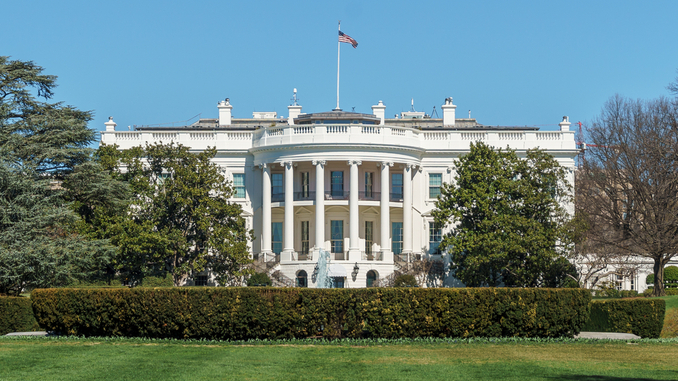
A Tucson man charged with threatening to bomb the White House allegedly sent an earlier message threatening an anthrax attack in Tucson. The message also threatened a bombing at a federal building, according to reporting on the federal criminal complaint.
Jacob Aaron Hicks, 46, was arrested on Oct. 7 and charged with making an interstate threat to injure. He made his initial appearance in federal court on Oct. 8.
The investigation began after Tucson television station KGUN9 received an email on Sept. 23 threatening an imminent attack against the White House and other Washington, D.C., locations. The station said it forwarded the message to authorities. The FBI confirmed to KGUN9 that its referral prompted the investigation.
TUCSON, Ariz. – Jacob Aaron Hicks, 46, of Tucson, was arrested yesterday and charged by criminal complaint with Making an Interstate Threat to Injure. Hicks is accused of sending an email on Sep.23, 2026, threatening to commit mass bombings at the White House and around the…
The email claimed an attack would occur within 12 hours and that bombs were positioned around Washington.
“Be advised. In 12 hours, there’ll be a strike against the White House. There’s bombs all around Washington D.C. This is not a joke. Be advised. You Americans will pay. Allah, to Allah,” a portion of the email read.
Hicks claimed he had loaned his phone to a homeless person when the email was sent.
Federal investigators identified Hicks as the alleged sender and located additional unsent drafts in the same email account, prosecutors said. Those drafts, also dated Sept. 23, were addressed to other news organizations and contained similar threats against the White House and surrounding areas.
The investigation also uncovered a Sept. 2 text message allegedly sent by Hicks to a Tucson-area number. The message threatened an anthrax attack against Tucson, claimed possession of C4 for a federal-building bombing and specified Sept. 11, 2026, at 5 a.m.
An announcement from the Justice Department did not report the discovery of explosives or anthrax.
Investigators also identified earlier threats Hicks allegedly made while living in New York against the Wayne County Department of Social Services. Authorities there reportedly visited his address and warned that further threatening contact could result in charges. The account did not identify a conviction stemming from those earlier incidents.
“We must take threats of violence like this one seriously,” U.S. Attorney Timothy Courchaine said.
“I am grateful to our local news station for referring this threat to law enforcement, and to the FBI for addressing the situation quickly, professionally, and with the level of commitment it required.”
The FBI is conducting the investigation with assistance from the U.S. Secret Service. Federal prosecutors in Tucson are handling the case.
The Justice Department identified the prosecution as part of the National Security Presidential Memorandum 7 initiative, describing it as a White House-directed interagency effort addressing political violence while protecting First Amendment rights. The department said Joint Task Force Vanguard leads the initiative.
Tucson Man Criminally Charged for Bomb Threat Against the White House
Jacob Aaron Hicks, 46, of Tucson, was arrested yesterday and charged by criminal complaint with Making an Interstate Threat to Injure. Hicks is accused of sending an email on Sep.23, 2026, threatening to… pic.twitter.com/peLomtfTWX
“The FBI remains steadfast in its mission to defend the United States against criminal and national security threats and will investigate them to the fullest extent of the law. We appreciate the community partner who reported the threat to law enforcement,” said FBI Phoenix Special Agent in Charge Rebecca Day. “Cooperation and partnership are essential to protecting the American people.”
Arizona Public Service (APS) plans to keep the Four Corners Power Plant operating beyond its previously planned 2031 exit, citing reliability needs. Preliminary modeling estimates that extending operations through 2038 would reduce revenue requirements by approximately $1.02 billion from 2026 through 2041.
In a recent presentation to its Resource Planning Advisory Council, APS disclosed that it had signed an agreement with Navajo Transitional Energy Company (NTEC) allowing continued operation beyond 2031. The presentation compared a 2038 extension with a base case incorporating a 2031 exit and a new pipeline in 2030.
APS told KJZZ it signed the confidential agreement in September. The utility is preparing an updated resource plan amid growing electricity demand, including demand from data centers.
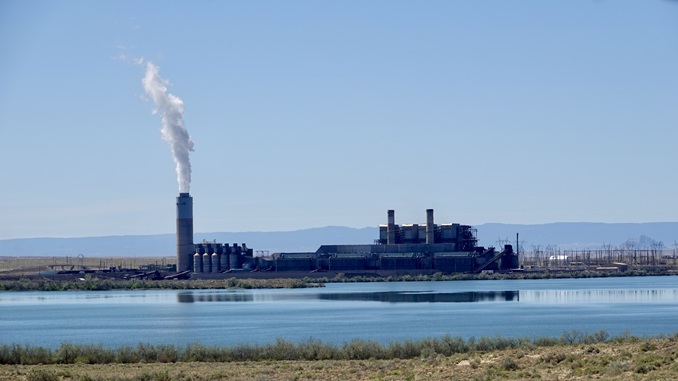
Located on the Navajo Nation in New Mexico, Four Corners is APS’s last remaining coal-fired power plant. Its two units provide approximately 1,540 megawatts of generating capacity. APS owns 63%, representing about 970 megawatts, and the facility employs approximately 250 APS employees.
The utility said its lease with the Navajo Nation permits operations through 2038 and that future decisions will continue through its integrated resource-planning process. APS cited the value of existing generation as it adds resources to meet Arizona’s growth.
The company said its analysis showed the potential for a “meaningful reduction in costs to customers” compared with retiring the plant in 2031. Its announcement did not specify an individual customer’s projected bill savings.
APS previously outlined a 2031 departure from Four Corners during an Arizona Corporation Commission resource planning workshop, where commissioners emphasized reliability and affordability as utilities prepared for growing electricity demand.
By September 2025, the utility’s planning documents contemplated a Four Corners exit between 2031 and 2038. The newly announced agreement advances APS’s plans to continue operating beyond the earlier date.
APS’s coal-generation decisions have also drawn attention from President Donald Trump. In April 2025, the President directed Energy Secretary Chris Wright to save APS’s Cholla Power Plant in northeastern Arizona, drawing support from Rep. Eli Crane (R-AZ-02). APS had stopped coal operations at Cholla the previous month.
In August 2026, APS began pursuing a natural gas conversion for that facility. The Four Corners agreement separately advances continued coal generation at APS’s remaining coal-fired plant.
In its September presentation, APS showed a $1,023.5 million reduction in net-present-value revenue requirements compared with its base case. The analysis covers 2026–2041 and is labeled as draft modeling.
APS’s planning scenarios also examine higher natural gas prices, construction costs, different levels of electricity demand, and pipeline delays. The utility’s proposed resource strategy includes continued Four Corners operations alongside additional natural gas, renewable generation, battery storage, and transmission development.
Navajo Transitional Energy Company, whose Navajo Mine supplies the plant’s coal, welcomed APS’s decision.
“It helps extend the FCPP, in turn bringing more reliability to the electric grid in our region,” NTEC Board Chairman Tim McLaughlin said. He also cited continued employment and revenue for the Navajo Nation.
NTEC reported that Navajo Mine employs more than 350 people, predominantly Navajo Nation members and members of other Native American tribes. The company said annual taxes and royalties from the mine and power plant account for approximately 35% of the Navajo Nation’s General Fund.
The company also reported more than $128 million in annual economic impact and more than $1.7 million in contributions to Navajo Nation communities during 2025. Those figures were reported by NTEC.
Environmental organizations opposed the extension. The Sierra Club argued that continued operations would prolong air pollution, water consumption, and climate impacts. It also disputed the economic case for keeping the plant operating.
Tó Nizhóní Ání Director Nicole Horseherder criticized the extension’s effects on Navajo communities, while Sierra Club Grand Canyon Chapter Director Sandy Bahr questioned whether APS’s coal and natural gas plans were consistent with its carbon neutrality goal.
APS previously announced plans for seasonal operations as part of its anticipated transition away from coal by 2031. That proposal called for one unit to operate June through October, with the other available year-round, subject to market conditions and maintenance. APS estimated that arrangement would reduce annual carbon emissions by 20% to 25%.
APS has scheduled a virtual public stakeholder meeting for Oct. 14, from 9 to 11 a.m., to discuss its 2026 Integrated Resource Plan.
APS develops that plan every three years to evaluate electricity needs and resources over a 15-year period, then files it with the Arizona Corporation Commission.
Democratic congressional nominee Amish Shah is criticizing Republican opponent Jay Feely’s support for data centers, despite having voted as a state legislator to extend Arizona’s data-center tax incentive program and clarify its tax refund process.
Shah supported House Bill 2649 in 2021, which extended the deadline for new applications to the incentive program by 10 years. He also voted for Senate Bill 1274 in 2023, which clarified the refund process for taxes covered by the program.
In a post on X, Shah criticized Feely’s position on the facilities, citing Arizona’s water supply.
“Arizona is 30 years into a drought and bracing for deeper Colorado River cuts. Jay Feely’s plan? More data centers in the desert. It’s disqualifying,” Shah wrote.
Arizona is 30 years into a drought and bracing for deeper Colorado River cuts.
Jay Feely’s plan? More data centers in the desert.
His campaign has separately specified that he opposes building data centers within Arizona’s First Congressional District, where he is running against Feely.
Campaign manager Eve Zhurbinskiy told the Copper Courier that Shah’s position reflects concerns about water shortages and utility costs. The outlet subsequently published a correction narrowing its description of his opposition from statewide to the First Congressional District.
During his legislative service, Shah voted for HB 2649 on Feb. 24, 2021, when it passed the House 41–17, and again on April 14, when the House approved the amended measure 46–13.
The enacted legislation moved the Arizona Commerce Authority’s application cutoff for certifying new computer data centers from Dec. 31, 2023, to Dec. 31, 2033. It became law April 20, 2021.
The measure also addressed tax treatment of work involving qualifying data center equipment. A Joint Legislative Budget Committee analysis explained that the House-engrossed bill would exempt installation, assembly, repair, and maintenance from the prime-contracting transaction privilege tax when the equipment could perform its function independently of real property.
Legislative analysts said the potential ongoing revenue loss could not be quantified because industry-specific installation-cost data were unavailable. They also noted uncertainty about how broadly the tax had previously been paid.
Two years later, Shah voted for SB 1274, which passed the House 47–10 on April 11, 2023. The measure became law April 18.
That legislation amended the refund provisions of the 2021 law. It preserved the earlier $10,000 statewide aggregate cap for specified older claims while clarifying that specified later claims follow the standard refund process without that cap.
The JLBC fiscal analysis of SB 1274 anticipated no additional General Fund impact. Analysts said the Department of Revenue viewed the measure as explicitly codifying an existing refund process, which generally required the vendor that remitted the tax to seek repayment within the applicable statute of limitations.
Shah’s campaign also told the Copper Courier that he supports technological development needed for global competitiveness. “We shouldn’t be building data centers in the middle of the desert,” campaign manager Eve Zhurbinskiy said.
Feely has defended data-center development as important to American competitiveness in artificial intelligence. He has also said developers should invest in surrounding communities, use recirculated water, and operate off the electrical grid to address resource concerns.