by Matthew Holloway | Jan 20, 2026 | News
By Matthew Holloway |
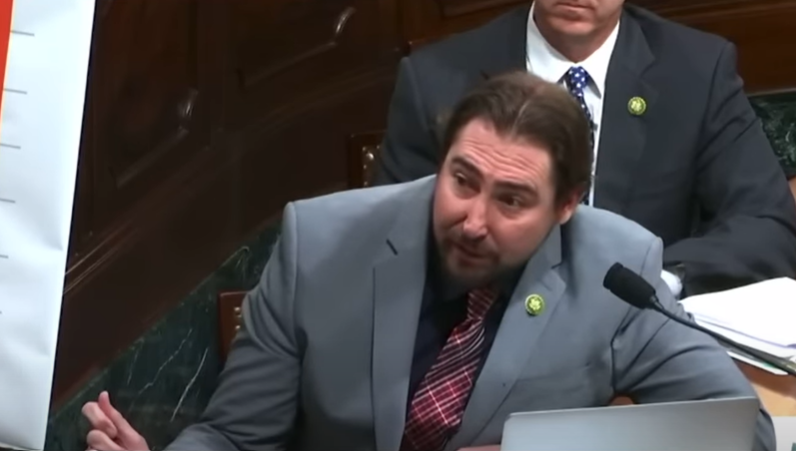
U.S. Representative Eli Crane (R-AZ-02) has introduced H.R. 6931, the Yavapai-Apache Nation Water Rights Settlement Act. The bill would ratify and authorize the Yavapai-Apache Nation Water Rights Settlement Agreement reached in 2024 between the Tribal Nation, the State of Arizona, the Salt River Project, the U.S. Department of the Interior, and local stakeholders.
The agreement, approved by the Yavapai-Apache Nation Tribal Council on June 26, 2024, resolves water rights claims that have been pending in Arizona courts for over four decades.
A central component of the settlement is the Cragin-Verde Pipeline, a roughly 60-mile-long pipeline that will deliver surface water from the C.C. Cragin Reservoir on the Mogollon Rim to the Verde Valley. The pipeline will provide reliable drinking water to the Nation, reduce groundwater pumping, support housing and economic development on the reservation, and contribute to the sustained health of the Verde River, as explained by the ASU Arizona Water Innovation Initiative.
H.R. 6931 would codify the Nation’s water rights, authorize federal funding for construction of the Cragin-Verde Pipeline and the Yavapai-Apache Drinking Water System, and establish dedicated trust funds for water, wastewater, watershed restoration, operations, and maintenance.
Under the legislation, the U.S. Department of the Interior would oversee planning, design, and construction of the Cragin-Verde Pipeline as part of the Salt River Federal Reclamation Project. The bill also authorizes the Nation’s use of Central Arizona Project (CAP) water, establishes a permanent CAP delivery contract, and allows the Nation to store, lease, or exchange CAP water within Arizona.
The settlement would provide water reliability for the Nation’s more than 2,500 enrolled members across five tribal communities and enhance long-term water security throughout the Verde Valley, according to a press release from Crane’s office.
Yavapai-Apache Nation Chairman Buddy Rocha Jr. stated, “The passage of the Yavapai-Apache Nation Water Rights Settlement Act will finally resolve our water rights claims that have been pending in Arizona’s courts for over four decades, providing water certainty for the Nation and our neighbors throughout the watershed. On behalf of the Yavapai-Apache Nation, I want to thank Congressman Crane for his commitment to the Settlement and to his constituents here in the Verde Valley. We are also truly grateful to Congressman Crane for his recent visit to the Nation, where he, and Assistant Secretary of Indian Affairs Kirkland, saw first-hand how the Settlement will help support critically needed housing and economic development on our Reservation for years to come.”
Rep. Crane said in the press release, “I’m honored to introduce this legislation to help secure long-term water security for the Yavapai-Apache Nation, develop critical infrastructure, and finally move toward a permanent solution. After visiting and meeting with tribal leaders and surrounding communities, it was clear how much certainty and stability this bill would provide. I’m proud to fight for rural Arizona.”
Matthew Holloway is a senior reporter for AZ Free News. Follow him on X for his latest stories, or email tips to Matthew@azfreenews.com.
by Matthew Holloway | Jan 19, 2026 | Economy, News
By Matthew Holloway |
Arizona House Majority Whip Julie Willoughby (R-LD13) has introduced legislation to temporarily suspend the state gasoline tax in Maricopa and Pinal counties during the summer months, citing higher fuel costs tied to air-quality regulations.
According to a release from the Arizona House Republican Caucus, Willoughby’s House Bill 2400 would suspend the state’s 18-cent-per-gallon gas tax on the special Cleaner Burning Gasoline blend required in Maricopa and Pinal counties from May through September.
“Because of federal requirements, families in Maricopa and Pinal counties are forced to pay more at the pump than the rest of Arizona,” Willoughby said in a statement. “During the summer, these counties can only sell Cleaner Burning Gasoline—a boutique fuel blend refined in limited quantities, primarily in California. That limited supply drives up costs, and Arizona drivers pay the price.”
“In 2023, Phoenix drivers paid higher gas prices than Los Angeles,” she continued. “As California refineries shut down, supply constraints will increase—pushing prices higher at a time when families are struggling with rising costs. Arizona now ranks as the sixth most expensive state in the nation for gas.”
Because of the added production and transportation costs, drivers in Maricopa and Pinal counties often pay more for gasoline than motorists elsewhere in Arizona, according to the House GOP. The release cited comparisons showing Phoenix-area gas prices exceeding those in Los Angeles during parts of 2023.
Willoughby said lawmakers have previously worked with federal officials to explore lower-cost fuel alternatives, but federal environmental requirements have limited available options. Her proposal includes a provision to backfill lost revenue to the Highway User Revenue Fund, which supports transportation infrastructure and is shared by state and local governments.
“Republicans are focused on affordability,” Willoughby said. “Our Majority Plan is about upholding the American Dream and making sure the cost of living doesn’t keep climbing out of reach for working families.”
In addition to the state tax suspension, Willoughby is advancing House Concurrent Memorial 2008, which urges Congress to suspend the federal gas tax on Cleaner Burning Gasoline during the same May-to-September period.
Matthew Holloway is a senior reporter for AZ Free News. Follow him on X for his latest stories, or email tips to Matthew@azfreenews.com.
by Matthew Holloway | Jan 18, 2026 | News
By Matthew Holloway |
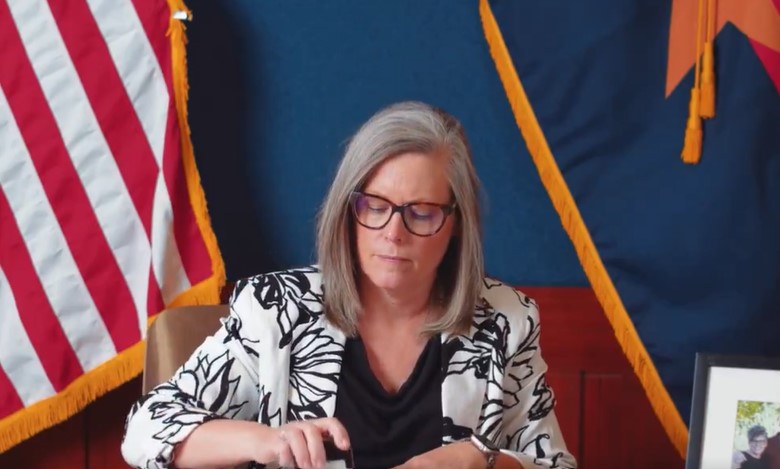
Gov. Katie Hobbs has vetoed Republican-backed tax conformity legislation approved Thursday by the Arizona Legislature.
The bill, SB 1106, would have provided $1.1 billion in tax relief over three years while maintaining a balanced state budget.
The legislation would have aligned Arizona’s tax code with recent federal changes and included provisions eliminating state income tax on tips and overtime pay, increasing the standard deduction, expanding the child tax credit, creating a deduction for childcare expenses, and providing additional tax relief for seniors.
Hobbs vetoed the bill without releasing a formal veto message as of the time of publication.
In response, House Speaker Steve Montenegro (R-LD29) issued a statement criticizing the governor’s decision and warning of potential impacts on taxpayers as the filing season approaches.
“Governor Hobbs’ veto of our tax relief act is a failure of leadership that will create unnecessary confusion and disruption for millions of Arizona taxpayers,” Montenegro said in a statement released Thursday.
Montenegro said House and Senate Republicans passed the legislation early to provide clarity and certainty for families, seniors, small businesses, employers, and tax preparers. He added that the bill conformed Arizona law to federal tax changes and removed provisions the governor had previously opposed.
“The Governor admitted swift action was needed. She asked for a bill to be sent quickly. We did exactly that,” Montenegro said. “What she did not do was offer a plan of her own. No bill. No alternative. No solution.”
Montenegro also listed several provisions included in the legislation that were rejected through the veto, including increases to the standard deduction, a childcare expense deduction, an expanded child tax credit, elimination of state taxes on tips and overtime, and additional tax relief for seniors.
Montenegro said the veto would lead to confusion for taxpayers, adding, “The chaos ahead is not accidental. It is the direct result of Governor Hobbs’ decision to veto a responsible tax conformity bill with no replacement plan.”
The veto also prompted reaction from other Republican lawmakers. State Rep. Nick Kupper (R-LD25) criticized the decision in a post on X. Kupper wrote, “Of course @GovernorHobbs vetoed the tax cuts we sent her because she doesn’t give a crap about working families. If she can’t give more handouts to non-working people then she won’t like whatever we send her.”
Arizona Congressman and 2026 gubernatorial candidate Andy Biggs, said, “Katie Hobbs vetoed a $1.1 BILLION tax cut for Arizona seniors, families, and workers. She is a weak and ineffective governor keeping Arizona from its full potential. She has no vision for the state. She has no ability to lead.”
Republicans do not hold the votes necessary to override the governor’s veto, leaving tax conformity unresolved unless lawmakers and the governor reach an agreement later in the legislative session.
Matthew Holloway is a senior reporter for AZ Free News. Follow him on X for his latest stories, or email tips to Matthew@azfreenews.com.
by Matthew Holloway | Jan 17, 2026 | News
By Matthew Holloway |
Arizona State Sen. Kevin Payne (R-LD27) has introduced legislation he claims will ensure law enforcement’s use of modern crime-fighting technology doesn’t slide into unchecked government surveillance. But critics say otherwise.
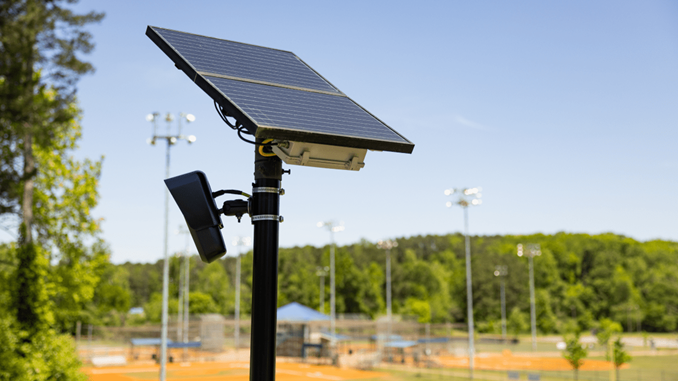
The bill, SB 1111, would create statewide standards governing how automated license plate readers, popularly known as Flock cameras, are used by police and other agencies across Arizona. The measure comes as concerns grow among residents and local leaders about the privacy implications of expanding surveillance tech in everyday life.
Under the proposal, data collected by these systems could only be used for legitimate law enforcement purposes, such as solving serious crimes or locating missing and endangered persons. The bill would explicitly ban the use of license plate data for general surveillance, political purposes, or non-law-enforcement activities. In an effort to ensure accountability, it also requires strict access controls, mandatory user training, detailed audit logs, and regular compliance reviews.
“This bill draws a clear line. We’re protecting innocent Arizonans from government overreach while making sure our law enforcement officers have the modern tools they need to keep our communities safe,” Payne said in a statement.
“Arizonans shouldn’t have to choose between their privacy and their security. This bill proves we can do both—defend individual freedom and back the men and women who put their lives on the line every day.”
Critics of the bill believe it is vaguely worded and would open the door to broad government surveillance with few safeguards.
“This is among one of the weakest bills I’ve seen when it comes to regulating license plate readers,” Dave Maass, director of investigations at Electronic Frontier Foundation (EFF), told the Arizona Mirror. “This bill is not going to do what the author says it is going to do.”
Flock cameras have been under heavy critcism from groups like the Arizona Free Enterprise Club, who wrote in an op-ed in November that “Arizona is home to some of the most Flock-saturated cities in the country.” The group warned that “Flock monitors your movement constantly, often without your knowledge, and always without your consent. You can turn off your phone. You can’t turn off a camera mounted on a pole. Every car you drive and every route you take is automatically logged, creating a permanent record you never agreed to.”
Flock Safety, the company behind the mass surveillance cameras used throughout Arizona, was compromised in December.
Supporters of the legislation argue that the absence of clear statewide guidelines has left residents uncertain about how and when sensitive data is collected, shared, and stored. Some cities and counties have already wrestled with local policies as questions about oversight and civil-liberty protections have surfaced.
Law-enforcement advocates say the technology has helped solve serious crimes and locate missing persons, while acknowledging that clear guardrails are necessary to maintain public trust.
Joe Clure, Executive Director of the Arizona Police Association, stated, “SB 1111 provides the tools law enforcement needs to keep our communities safe while putting firm protections in place against government overreach and privacy assurance to that same community. Cameras used to detect and apprehend suspects are invaluable in maintaining public safety and preventing criminal and terrorist activity. They also aid in the investigation and solving of crimes long after they were committed.”
SB 1111 will now proceed through the legislative process, where it is expected to draw fierce debate over how to strike a balance between crime-fighting effectiveness and individual privacy rights.
Matthew Holloway is a senior reporter for AZ Free News. Follow him on X for his latest stories, or email tips to Matthew@azfreenews.com.
by Matthew Holloway | Jan 16, 2026 | Education, News
By Matthew Holloway |
An Arizona State University faculty member, who also serves as an associate director, was captured on video acknowledging that diversity, equity, and inclusion (DEI) programming continues at ASU despite Executive Orders and U.S. Department of Education (DOE) policies directing the elimination of the programs.
In footage from Accuracy in Media (AIM) circulating online, an ASU official identified as Rebecca Loftus, Associate Teaching Professor and Associate Director of the School of Criminology & Criminal Justice, is shown discussing how DEI efforts persist at the university, saying the programming is now “just not as broadcast as it was before,” according to posts and videos shared on social media platforms.
In January 2025, the DOE announced it was dismantling DEI-related offices, removing DEI references from public-facing materials, and directing staff to eliminate related programs as part of a department-wide policy shift under the Trump administration. The department said the move was intended to end what it described as discriminatory or non-merit-based practices tied to DEI frameworks. It warned that institutions continuing such efforts could face scrutiny over federal funding.
The video, originally posted to YouTube, was later shared on X by Corey A. DeAngelis and circulated more broadly as Instagram Reels and X posts. In the footage, Loftus can be heard making statements that ASU’s diversity initiatives are still in effect, albeit with less public emphasis than in earlier years.
According to AIM, Loftus, speaking with an undercover investigator, was recorded stating that, “Most of our faculty do tend to be a little more on the liberal side. You have to be careful with the language that you use. We’re doing pretty much what we were doing before.”
The outlet reported that she went on to describe a body known as “the idea office,” an internal group responsible for “designing” criminology classes for a “majority-minority student body,” with AIM characterizing such groups as “how DEI-related instruction is being concealed through new internal structures.”
Loftus is later seen telling the investigator: “You’re not going to find very many programs that are going to broadcast it as before because the federal funding for universities, especially state-run universities like ASU… If you have federal funds that are withheld, it really makes a big impact.” She reportedly added that entire classes are still being devoted to race, ethnicity, and gender, and said that ASU has been bringing in outside figures to present these classes.
In a later clip, when confronted about the undercover video, she can be seen telling Adam Guillette, President of Accuracy in Media, that she has “no idea” what he’s talking about and urged him to “talk to our Director” before requesting he leave her office.
ASU’s use of diversity training and DEI programming has been the subject of a legal challenge in recent years.
In March 2024, the Goldwater Institute filed a lawsuit on behalf of an ASU faculty member challenging ASU’s “Inclusive Communities” training requirement as violating Arizona law prohibiting certain diversity trainings funded with public money. That lawsuit, Anderson v. Arizona Board of Regents, remains active in the state court system.
The Goldwater Institute’s online materials describe the training as covering systemic bias, privilege, and related concepts.
At the time of this report, ASU administrators had not issued a public response to the video clips widely circulated on social media, nor had the university clarified whether the recording was conducted with consent or in a sanctioned setting.
The footage has been reposted and commented on by multiple users, including calls for questions about the university’s DEI direction. One user suggested contacting the ASU Board of Trustees regarding the issue; however, no official response from the board has been posted publicly as of this report.
Matthew Holloway is a senior reporter for AZ Free News. Follow him on X for his latest stories, or email tips to Matthew@azfreenews.com.