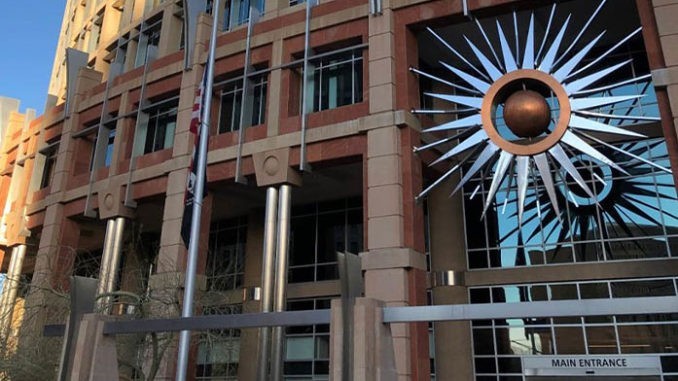
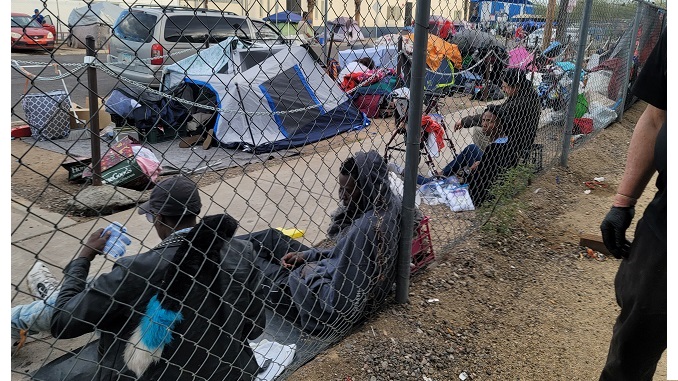
On Thursday, Phoenix had the grand opening of a $12 million community center, days after a court ruled that it had refused to clean up the massive homeless encampment downtown.
Phoenix Mayor Kate Gallego announced the 34,000-square-foot community center, noting that she’d been working on the project since her election in 2019. That was the same year that the homeless crisis began.
Funding for the community center came from the Parks and Preserve Initiative, which sets aside one cent of sales tax for every $10 spent to improve and renovate parks, as well as to expand and improve the city’s desert preserve system.
As AZ Free News reported in its investigative series on The Zone, the homeless crisis has a devastating impact on Phoenix’s ground and waterways.
The community center is located about eight miles south of the homeless encampment (The Zone). It has an elevated track, basketball court, kitchen, fitness center, gaming room, outdoor movie theater, art installation, and a sensory room.
I’ve been working to get the Cesar Chavez Community Center built since I was elected, and tomorrow is the grand opening! With a basketball court, outdoor theater and more, it’s guaranteed fun for the whole family.⁰⁰Come to the open house from 4 to 8 p.m. to see it for yourself! pic.twitter.com/dcQw2QayBZ
The city opened the community center a day before the holiday celebrating its namesake: the civil rights and union activist Cesar Chavez.
During the grand opening ceremony, Gallego called the community center a “showpiece” that represents city values. Gallego disclosed that the city had to jump through a lot of hoops to find the funding to finish the project.
“We put inclusivity at the forefront. This building really shows our values,” said Gallego. “[W]e really had to work as a team to find out how to fund this project. Most city projects have fairly simple funding resources, but this one was quite complex with bond funding, impact fees, [and] a little bit of federal funding.”
Funding this project wasn’t easy, but we never gave up — and now the Cesar Chavez Community Center in Laveen is finally open! Thank you to everyone who helped make it happen. pic.twitter.com/eI0RHHmE9H
The city held its groundbreaking for the community center in September 2020. That was eight months after the residents and business owners within The Zone, the massive homeless encampment downtown, presented a plan to mitigate the burgeoning homeless with outdoor shelter or camping spaces on city land. According to the Maricopa County Superior Court ruling, the city generally ignored their pleas and their plans.
The Maricopa County Superior Court ruled on Monday that the city of Phoenix was at fault for the homeless crisis, which began around 2019 after the city essentially stopped enforcing laws on the homeless.
The city initially projected the community center to be completed last spring or early summer. It’s the city’s first community center established since 2007.
Corinne Murdock is a reporter for AZ Free News. Follow her latest on Twitter, or email tips to corinne@azfreenews.com.
Following the latest two homicides to occur in The Zone, downtown Phoenix’s notorious homeless encampment, city leaders say they plan to convene to take action. There were no further details offered of when or where this meeting will occur; the next policy session, scheduled for April 11, was canceled.
A city spokesperson toldAZ Family that these latest violent acts prompted their pending meeting.
“Our urgent priority is helping connect unsheltered individuals around [the] Human Services Campus with safe, indoor housing options and resources to end homelessness,” stated the spokesperson.
The spokesperson also noted that the city added nearly 600 new shelter beds last year, and projected that 800 will be available through this year. There are over 1,000 estimated homeless individuals in The Zone.
The first victim of the latest murders, a man, was discovered around 8 am on Tuesday. Police toldFox 10 Phoenix that they were unable to identify the victim due to the burn injuries. Two men were arrested as suspects in the crime: 18-year-old Isaiah Baskin, and 22-year-old Larry Scott.
Baskin alleged that he played a role in the crime: he allegedly witnessed Scott and another, unidentified individual assault the victim, then assisted them in bagging, transporting, and dumping the victim into a dumpster. Baskin reportedly told police that he could hear the victim moaning inside the dumpster. Then, Baskin admitted that he retrieved a lighter which Scott used to set the victim on fire.
Around 48 hours after the first victim’s death, the second victim of the latest murders, a woman, was shot. Officers responded to a call from a man alleging that someone hit him in the head with a gun before shooting the woman. The woman later died due to her injuries at a hospital. A suspect has yet to be named.
Vice Mayor Yassamin Ansari, whose district encompasses The Zone, didn’t issue a public statement on the two murders. However, she did share a New York Times article highlighting the plights of several homeless and business owners in the area.
When I took office amid the pandemic & housing crisis, our homeless population was increasing rapidly- far outpacing available shelter beds.
Chipping away at this crisis has required a monumental community effort. And often, it’s been frustratingly slow.https://t.co/J28A0i8U6k
— Vice Mayor Yassamin Ansari (@District7PHX) March 21, 2023
There were over 700 homeless deaths in the area last year — an uptick of several hundred from 2021.
Per AZ Free News reporting on The Zone, the incessant daily crime has reached levels unmanageable by police. First responders have assessed the area as too dangerous to enter without police escort. Gangs run the streets, making the homeless pay for tent space and assaulting them as punishment.
Not all leadership appeared to be as fazed by the state of The Zone.
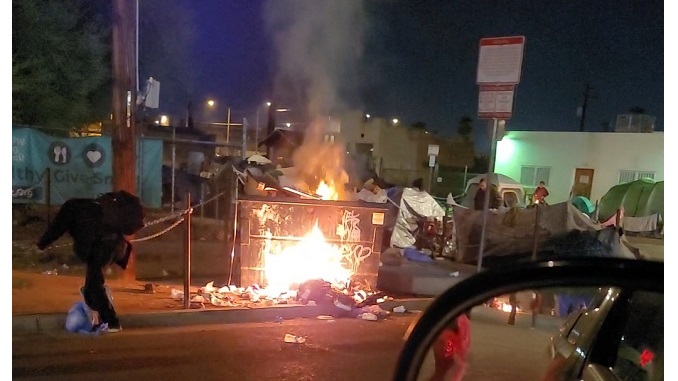
Secretary of State Adrian Fontes, hours after the initial murder — a man burned alive in a dumpster — called the area “not great” and suggested that constituents “go buy a sandwich” from a restaurant located within The Zone.
I had lunch at the Old Station today with a couple people from the office. Things are not great nearby, but the restaurant itself was pretty good. #6 Double meat Diet Coke Chips. Give them some love. Go buy a sandwich! https://t.co/Rek5cRLcgt
Comparatively, attorney general candidate Abe Hamadeh compared Phoenix to Gotham: the fictional, crime-ridden city of Batman lore.
Phoenix is now Gotham…
On March 21, a man was burned alive after at least two suspects placed his body in a dumpster and lit him on fire. According to sources, his moans could be heard by homeless individuals who occupy “The Zone”https://t.co/RBRUuT97oK
Secretary of State Adrian Fontes weighed in after the latest tragedy to hit The Zone, a dead man burned in a dumpster, by calling the area “not great” and recommending his favorite lunch order from a local sandwich shop.
“I had lunch at the Old Station today with a couple people from the office. Things are not great nearby, but the restaurant itself was pretty good,” said Fontes. “#6 Double meat. Diet Coke. Chips. Give them some love. Go buy a sandwich!”
I had lunch at the Old Station today with a couple people from the office. Things are not great nearby, but the restaurant itself was pretty good. #6 Double meat Diet Coke Chips. Give them some love. Go buy a sandwich! https://t.co/Rek5cRLcgt
The homeless encampment, nicknamed “The Zone,” covers an area spanning several miles in downtown Phoenix that has made headlines nationwide over the past year.
The sandwich shop, Old Station, resides in the heart of The Zone. Fontes retweeted an interview snippet from “The Gaydos and Chad Show” featuring the shop owner, Joe Faillace, discussing the dire state of the community due to the ongoing homeless crisis. Hours before Fontes sent that tweet, and likely around the same time Fontes was eating his sandwich, first responders were handling the latest dead body to be discovered in The Zone — a man thrown into a dumpster and burned.
The business owner whose property abutted the dumpster, Angie Ojile, told AZ Free News that she doesn’t know why the city or county isn’t taking a different approach with The Zone, considering the daily patterns of crime and death.
“It’s hard to imagine: a man found in this dumpster, burned,” said Ojile. “It’s like — are we invisible? They say they care, but what I see is indifference.”
Where a memorial may have been laid for the life lost, the city brought another dumpster instead. Ojile said that the residents almost mistook it for the same dumpster where the man was found.
“Instead of any kind of memorial — being that there was a burned body thrown in there — the city’s display of compassion is to replace it with another beat up, burnt-out dumpster with similar graffiti that most swear was the same. I can’t imagine that it was,” said Ojile.
As AZ Free News reported earlier this month, The Zone has become so overridden with crime that residents and business owners say that their calls to police go unanswered or unheeded. The Zone lies only around three blocks from the Phoenix Police Department headquarters: just over half a mile.
In the last year, there were over 700 homeless deaths in The Zone. One of those deaths was that of a premature baby, approximately 20 to 24 weeks old, whose remains were discovered burned by a dumpster just weeks before Thanksgiving. Several locals told AZ Free News they believed that the dumpster from that tragedy was the same one in which this most recent death occurred. Whether they were the same dumpster is unclear.
“If they put a memorial up for every person that’s died in The Zone, it would look more like a graveyard than an industrial and residential district,” said Ojile.
🧵INBOX: Welcome to The Zone, the epicenter of the homeless crisis that @CityofPhoenixAZ refuses to solve. This man is one of many that will likely live and die on these streets under the city's current approach to homelessness. I investigated & uncovered shocking details… pic.twitter.com/snb8QkvjsA
Home sellers and landlords may no longer refuse potential homebuyers or tenants based on their source of income. Those who dare to do so may face up to $2,500 in daily fines. If the city attorney takes action on the violations, the court may issue a $50,000 fine for a first violation and $100,000 for subsequent violations.
The ordinance mainly offers assurance of guaranteed housing for those who rely on government assistance to acquire housing, such as Section 8 participants. Those eligible for Section 8 housing vouchers include those who are homeless or low income.
The ban even received support from Councilman Sal DiCiccio, often the odd vote out on controversial council issues. DiCiccio was the first to put the proposed ban on the agenda, according to Mayor Kate Gallego.
However, DiCiccio noted that he was voting in favor of the ban only in spirit, not physically, since he gave his word to realtors that he wouldn’t support banning income discrimination for homebuyers.
DiCiccio said income discrimination was a form of institutionalized racism.
“People know I don’t use the race card, I just do not, unless I believe it’s true,” said DiCiccio. “I looked at it more when it came to dealing with the Homeowners Associations who create deed restrictions. Deed restrictions are made to keep people out, not keep people in.”
DiCiccio said that he sees these kinds of gatekeeping even within his own community, which is a majority white, liberal community.
“I was shocked by it. I live in a mixed household myself, and I feel very strongly about it. Diversity does improve your community, it just does. It’s an important factor in our lives. You want as many people around you that have differing viewpoints, differing ideas, different looks,” said DiCiccio. “[Source of income discrimination] is a type of institutionalized racism that I have strong concerns over.”
According to DiCiccio, the Arizona Multihousing Association (AMA) said they would sue the city over this ban. DiCiccio said that the AMA should be ashamed for considering that response. The AMA represents the apartment industry in the state, with over 2,000 members.
“I would be embarrassed if I were them, to threaten to sue the city of Phoenix after what we’ve done for them over the years and taken the lead on,” said DiCiccio. “My plea to you: don’t embarrass yourself.”
Courtney Gilstrap LeVinus, AMA president and CEO, said in a statement to reporters that these kinds of policies would only make the housing crisis worse. LeVinus was critiquing a proposed bills from State Rep. Analisa Ortiz (D-LD24) that would ban income discrimination (HB2085), prohibit landlords from evicting for partial rent payments (HB2083), and allow rent caps (HB2086).
“[These policies are] curtailing the rights of property owners, making it more difficult for companies and mom-and-pop owners to stay in business and to provide homes for individuals and families,” said LeVinus.
Instead, LeVinus proposed reducing bureaucratic rules to improve homebuilding speeds.
“We need to slash away layers of bureaucracy and fight the rampant NIMBYism that makes building new homes such a slow, torturous process,” said LeVinus. “Doing so would address the housing crisis, not make it worse, and help ensure the Arizona economy continues on a steady upward trajectory.”
DiCiccio further claimed that institutions exist which actively discriminate against people attempting to get housing based on the color of their skin.
“A lot of individuals that are poor or people of color in particular are locked out of certain areas. They just are. Either it’s an affordability issue, or you’ve got this institutionalized type of programming in place that does not allow them in there,” said DiCiccio. “I think that’s just sick, personally. I think people should have the ability, freedom to be able to go into those communities that they want to move into. That’s how God made us, they gave us the free ability to move.”
Vice Mayor Yassamin Ansari said that over 15,000 residents were on a waitlist for affordable housing assistance.
“We need to do everything in our power to ensure that our residents have access to adequate housing and that are actually able to utilize the programs that are intended to help them, like Section 8, disability, and others,” said Ansari.
Ansari criticized the state legislature for supporting income source discrimination, mainly referring to the Republican legislators leading an effort to prevent hotels and motels from being required to accept housing vouchers from the homeless. The vice mayor said that the legislators should be spending their time increasing funds for affordable housing projects.
“It’s time for the legislature to do its job so Phoenix can do its job to ensure housing affordability,” said Ansari.
Councilwoman Betty Guadardo said she empathized with the activists present at Wednesday’s council meeting. The councilwoman equated modern income discrimination with the discrimination that people faced during the Civil Rights Era, when homebuyers were discriminated against based on the color of their skin. A large group of activists showed up to speak in favor of the income discrimination ban.
“Discrimination has no place in the city of Phoenix,” said Guadardo.
Guadardo confirmed that the city of Phoenix was following the example of the city of Tucson, which banned landlords from discriminating against potential tenants’ source of income last September.
Ordinances have a 30-day wait period; however, the council is awaiting an opinion letter on the subject from Attorney General Kris Mayes. Should the opinion letter be unclear or unfavorable, then the city would have to reconcile any legal issues before enacting the ordinance. Councilwoman Laura Pastor expressed concern that the legal obstacles would leave the city without the capacity to enforce the ordinance.
“I have been briefed that there is a possibility that we don’t have the capacity to enforce it,” said Pastor.
City Manager Jeff Barton speculated that there may not be enough city staff to enforce the ordinance. However, Barton couldn’t say for sure.
Corinne Murdock is a reporter for AZ Free News. Follow her latest on Twitter, or email tips to corinne@azfreenews.com.
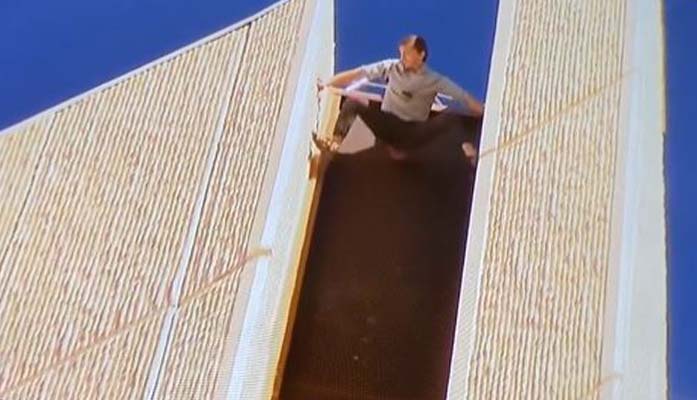
An activist who goes by the nickname “Pro-Life Spiderman” was arrested after climbing Phoenix’s tallest building.
The activist, Maison Des Champs, scales buildings to raise money and awareness for pro-life causes. Des Champs climbed the former Chase tower on Tuesday to raise awareness for Let Them Live, a charity that incentivizes women to cancel their abortions by providing financial support, as well as to fundraise for a pregnant mother named Hope, who reportedly has an abortion scheduled Friday, Feb. 10. Hope is 22 weeks along.
Des Champs has been a featured guest on a number of networks and media groups since he began this strain of activism last year.
Des Champs appeared on The Daily Wire host Michael Knowles’ show last month. He claimed that Knowles was the inspiration for his activism — specifically, the conservative pundit’s coverage of the “Justice for the Five” movement that arose after pro-life activists discovered the remains of five unborn children killed by potentially unlawful late-term abortion procedures last March.
Des Champs shared that he undertook these climbs because they attracted the media attention required to bring awareness of pro-life efforts and needs. He claimed that his first climb occurred the day after the Roe v. Wade decision was leaked last May, calling it a “divine timing.”
“I’m sitting at home and I’m thinking to myself, ‘If politics are downstream of culture, and I want to change the culture, then the best way to change culture is to somehow become part of it,” said Des Champs.
However, Des Champs stated on his website that he began scaling buildings in August 2021 to protest Nevada’s COVID-19 mandates.
Des Champs also posted about that climb on his Instagram. He said he was inspired to climb due to his passion for mental health, and the impact of pandemic lockdowns and mandates. Des Champs revealed that he’d struggled with suicidal ideation for about six years leading up to the pandemic, but used rock climbing as an outlet.
Des Champs encouraged others to join him in a protest he organized later that month at the Planet Hollywood Casino in Los Vegas, Nevada, attended by conservative radio pundit Joey Gilbert.
Then, for nine months, Des Champs didn’t post climbing or protest content on Instagram. He broke the dry spell in May after posting his climb of a California skyscraper, coming out as a pro-life climber that time around.
Des Champs has had a number of other media rounds and appeared on Fox News host Tucker Carlson’s show, “Tucker Carlson Tonight,” in November.
Des Champs also earned the ire and mockery of leftist networks, like Stephen Colbert’s “The Late Show.”
On his website, Des Champs calls for the arrest of the abortionist behind the five late-term babies’ deaths, Cesare Santangelo.
Des Champs has amassed tens of thousands of social media followers: over 18,500 on Instagram. His Twitter, which hasn’t been updated since last June, has just over 400 followers.
Corinne Murdock is a reporter for AZ Free News. Follow her latest on Twitter, or email tips to corinne@azfreenews.com.