by Daniel Stefanski | Oct 28, 2023 | News
By Daniel Stefanski |
A new council is renewing a political feud between Arizona’s Democrat Governor and a prominent state senator.
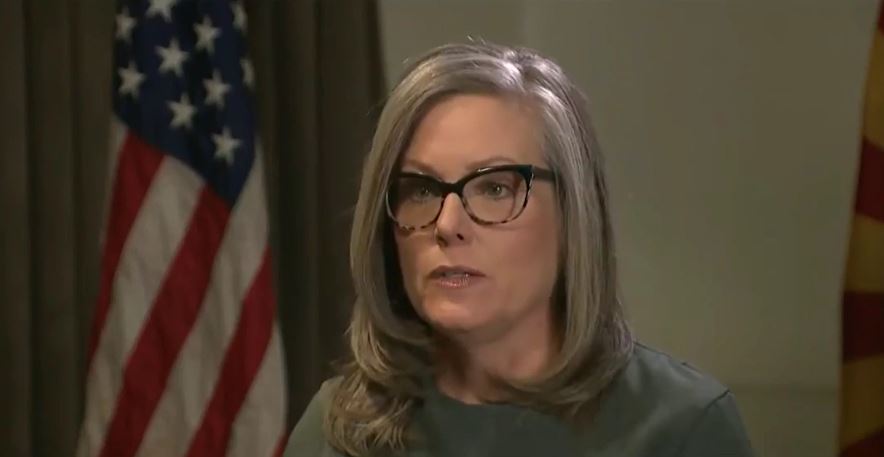
After Governor Katie Hobbs announced that she had established the Diversity, Equity, Inclusion & Accessibility (DEIA) Council and the Disability Community Advisory Council, Senator Jake Hoffman released a blistering statement against her latest action.
Hobbs made her announcement, citing her “commitment to building an Arizona for everyone.” She shared that the DEIA Council, “whose membership will mirror Arizona’s diversity, will work with state agencies to promote equity within the government, as well as deliver fair, community-centered services to traditionally underserved groups.” The governor also stated that the Disability Community Advisory Council would “meet with the Office of Outreach & Engagement and (her) quarterly to exchange the Disability Community’s priorities and keep the communication lines open between us.”
The first-year governor burnished her motivations behind the Councils’ creations, saying, “Diversity is Arizona’s greatest strength, and I’m proud to honor it by assembling these two councils. I look forward to working with them to uplift everyone.”
Senator Hoffman was quick to respond to the governor’s announcement, issuing a press release to accuse Hobbs of breaking Arizona State law with her “latest stunt.” His release pointed to a new Arizona law, A.R.S. 41-1494, which “prohibits this state, or any of its agencies, from using public monies for any training that ‘presents any form of blame or judgment on the basis of race, ethnicity or sex,’ which is a foundational concept of diversity, equity and inclusion theory.”
Hoffman warned Arizonans of the dangers of the expected efforts of this fledgling Council, writing, “I championed legislation in 2021 to prevent exactly what Katie Hobbs is trying to do. Not only may the state not spend any funds on this type of training, but it cannot require state employees to be subject to this type of indoctrination. Taxpayer dollars should never be used for anything other than public good. Diversity, equity, and inclusion training is divisive and racist progressive propaganda. It will harm our good-faith efforts to serve our citizens. It will also harm the culture of a hard work ethic established within our state agencies that rewards individuals based on qualifications, experience, and merit, not skin color.”
The East Valley lawmaker added, “Instead of focusing on the real issues hurting our Arizona citizens, like soaring inflation, outrageous gas prices, a major housing shortage, water security, and a border crisis threatening the safety of our communities, Katie Hobbs is attempting to once again appeal to her radical left supporters by pushing woke garbage down the throats of our public employees through her creation of the Diversity, Equity, Inclusion & Accessibility Council. This move is an obvious cover for her racist past of not only nominating an antisemitic to lead the Arizona Registrar of Contractors, but also for her wrongful firing of a black state employee that ended up costing Arizona taxpayers hundreds of thousands of dollars in damages.”
The release from Senator Hoffman encouraged State of Arizona government employees to file complaints if they experienced “this propaganda being presented or enforced” in their workplaces. He gave readers the link to the Arizona Ombudsman Citizens’ Aide and his legislative email for their quick references.
Daniel Stefanski is a reporter for AZ Free News. You can send him news tips using this link.
by Daniel Stefanski | Oct 27, 2023 | Education, News
By Daniel Stefanski |
The Arizona State Board of Education is welcoming a new member.
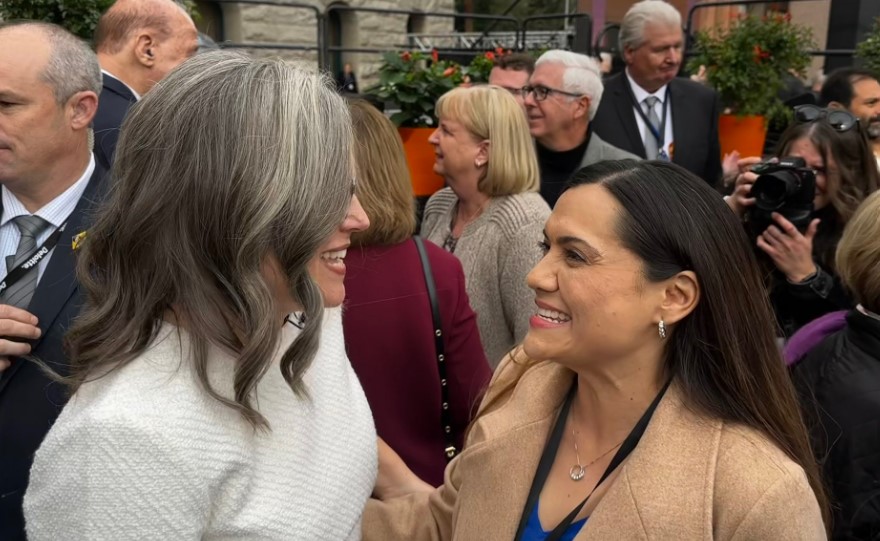
On Monday, Arizona Governor Katie Hobbs appointed Anna Tovar to the State Board of Education.
Tovar is a current member of the Arizona Corporation Commission. She previously served on the Tolleson City Council, including as Vice Mayor before being elected as Mayor. Tovar also served for several years in the Arizona Legislature, where she quickly ascended to leadership for the Democrat Party in both chambers.
“I have been a champion of the public school system my entire career. I started out as a kindergarten teacher in the Tolleson Elementary School District and I believe strong public schools are critical for the future of Arizona,” said Anna Tovar. “I thank Governor Hobbs for the opportunity to serve on the State Board of Education. I am excited to get to work for our students, parents, and educators.”
“Anna’s perspective as an educator and dedicated public servant makes her the ideal person to join the State Board of Education,” said Governor Katie Hobbs. “With her leadership and experience as an educator and mentor, I’m confident that the Board will be well positioned to protect public education and ensure every Arizona student has the tools they need to thrive.”
A spokesperson for the Arizona Department of Education told AZ Free News, “Superintendent Horne is looking forward to having a productive working relationship with Board Member Tovar.”
As the Arizona Superintendent of Public Instruction, Horne is a member of the eleven-person State Board of Education. Other members include Dr. Daniel P. Corr (President), Katherine Haley (Vice President), Jason S. Catanese, Dr. Jacqui Clay, Jennifer Clark, Dr. Scott Hagerman, Julia Meyerson, Karla Phillips-Krivickas, and Dr. Robert C. Robbins.
Daniel Stefanski is a reporter for AZ Free News. You can send him news tips using this link.
by Corinne Murdock | Oct 23, 2023 | News
By Corinne Murdock |
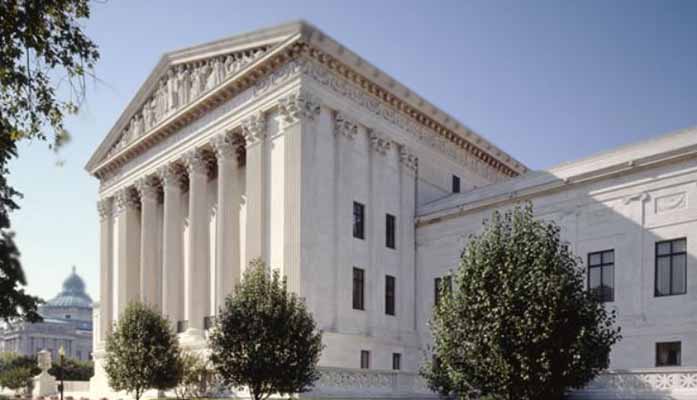
The Supreme Court (SCOTUS) has agreed to take up a case that would have an impact on Gov. Katie Hobbs’ past censorship activities.
The case, Murthy v. Missouri, focuses on the alleged coordinated campaign by government officials and social media companies to suppress and censor certain speech on major public issues, specifically the COVID-19 lab leak theory, pandemic lockdowns, vaccine side effects, election fraud, and the Hunter Biden laptop story. Hobbs, while secretary of state and during her gubernatorial campaign, coordinated with social media companies to remove certain speech online.
Hobbs’ then-chief of staff and former assistant secretary of state, Allie Bones, said in a statement prior to Hobbs’ inauguration that it was the job of governments to purge the public square of perceived misinformation and disinformation.
“One of the ways we [make sure that voters are informed] is by working to counter disinformation online that can confuse voters,” stated Bones. “This is yet another example of conspiracy theorists trying to create chaos and confusion by casting doubt on our election system. It’s unfair to Arizona voters and it’s harmful to our democracy.”
Although SCOTUS accepted consideration of Murthy v. Missouri, they didn’t accept a lower court’s injunction preventing government officials from continuing their coordination with social media companies to moderate online speech. Justices John Roberts, Sonia Sotomayor, Elena Kagan, Brett Kavanaugh, Amy Coney Barrett, and Ketanji Brown Jackson together granted the Biden administration’s petition to remove the injunction, effectively permitting the government to engage in censorship online.
In a dissenting opinion, Justice Samuel Alito wrote that the SCOTUS majority’s suspension of the injunction was “disturbing,” and that any censorship of private speech is antithetical to democracy. Alito dismissed the Biden administration’s argument that an injunction against coordinating with social media companies to control citizens’ speech was the same as preventing government officials from speaking on a matter.
“The injunction applies only when the Government crosses the line and begins to coerce or control others’ exercise of their free-speech rights,” said Alito. “Does the Government think that the First Amendment allows Executive Branch officials to engage in such conduct? Does it have plans for this to occur between now and the time when the case is decided?”
Alito further declared that SCOTUS had effectively ruled to allow the Biden administration to continue with its First Amendment violations identified by the lower courts.
“At this time in the history of our country, what the Court has done, I fear, will be seen by some as giving the Government a green light to use heavy-handed tactics to skew the presentation of views on the medium that increasingly dominates the dissemination of news,” said Alito. “That is most unfortunate.”
Justices Clarence Thomas and Neil Gorsuch joined Alito in his dissent.
Gov. Hobbs issued an emergency heat declaration with an expired enforcement date the day after additional emails revealing her coordinated censorship efforts were released. Hobbs dismissed the emails as a “sideshow,” but didn’t deny allegations of maintaining unscrupulous relationships with major social media companies.
Hobbs’ past coordination with social media companies prompted the House to establish an interim ad hoc committee on Oversight, Accountability, and Big Tech. The committee first convened in September and met once more earlier this month.
While SCOTUS contemplates the case, Hobbs already has defense provided by the state’s chief legal officer.
In August, Attorney General Kris Mayes joined a 21-state coalition of Democratic attorneys general opposing the then-active federal injunction. Mayes declared that control over free speech is paramount to public safety, implying that governmental interest in safety outweighs the constitutional right of free speech.
“Social media companies and government officials must have open communication in order to ensure the safety of Americans online,” said Mayes. “A pillar of the U.S. government is to ensure the safety and wellbeing of its citizens. The lower court’s decision impedes on this protection and means federal, state and local officials cannot contact social media companies about dangerous online content.”
Corinne Murdock is a reporter for AZ Free News. Follow her latest on Twitter, or email tips to corinne@azfreenews.com.
by AZ Free Enterprise Club | Oct 23, 2023 | Opinion
By the Arizona Free Enterprise Club |
Last week, the Joint Legislative Budget Committee (JLBC) released an updated state revenue forecast showing that Arizona may be facing a $400 million budget shortfall next year. And as predictable as the sun rising in the East, Democrat politicians and their friends in the media went on the attack, blaming the deficit on two historic reforms despised by the left—universal school choice expansion and the 2.5% flat tax cut passed in 2021.
For the Democrats and their sycophant media allies, the problem is always too much parental choice in education and letting taxpayers keep more of their hard-earned money. Yet this narrative couldn’t be further from the truth. A closer look at Arizona’s budget and the projected budget deficit reveals that we have a spending problem, not a revenue problem…
Projected Budget Shortfall Is a Spending Problem
Just 5 years ago, the legislature enacted the FY 2019 budget that included $10.1 billion in on-going spending, plus $500M in “one-time” expenditures ($10.7 billion total). By last year, that number had exploded to nearly $15 Billion in ongoing spending, a 50% growth in ongoing spending in 5 years! The most recent budget negotiated with Democrat Katie Hobbs earlier this year kept ongoing spending at a lower trajectory but included “one-time” outlays that brought the total budget cost to $17.8B…
>>> CONTINUE READING >>>
by Jeff Caldwell | Oct 21, 2023 | Opinion
By Jeff Caldwell |
On Wednesday, October 11, Arizonans learned the budget Katie Hobbs signed into law will possibly have a $400 million shortfall. This means the state won’t have enough money to fund the budget because it’s too big and is spending too much money.
The left wants to blame the budget shortfall on the implementation of former Governor Ducey’s state income flat tax a couple years ago. They also demonize the families participating in the state school choice ESA program. However, if it weren’t for Hobbs’ spending increase of $2 billion and vetoing a $2 billion smaller budget, the state would still have an outlook with a budget surplus.
Let’s review the short history.
In June of 2022, Arizona Governor Ducey signed into law the Fiscal Year 2023 Arizona Budget. The Radical Left and then-Secretary of State Katie Hobbs praised that budget for being bipartisan.
Moving ahead to the most recent 2023 legislative session, Arizona Senate President Warren Petersen and Speaker of the House Ben Toma wanted the new legislature to prioritize their most important responsibility — the state budget. Accordingly, in February, the state legislature passed a continuation of the same $15.8 billion budget from 2022.
Hobbs vetoed it. The budget Hobbs vetoed is the same as the one she applauded after Ducey signed it into law. This year, Hobbs called the budget partisan and extreme. The budget Hobbs decided was good enough to sign into law was $17.8 billion, exactly $2 billion larger than the budget she vetoed.
Hobbs insisted on a budget that is $2 billion larger even while many economists predicted Arizona and the nation are at risk for an economic slowdown due to rising interest rates. Forbes reported, “At the end of 2022, the National Association of Realtors predicted a 15.8% drop in combined sales and prices for the Phoenix-Mesa-Scottsdale [housing] market in 2023.”
The Federal Reserve, the nation’s central bank, currently shows the median home price in the United States is collapsing faster than any other point in recorded history.
If a recession occurs, Arizona will see less tax revenue. This would also have a negative impact on the budget’s revenue because people are spending less money; therefore, the state is collecting less in taxes.
While the Radical Left wants to blame the budgetary shortfall on the flat tax that benefits everyone, one thing is clear. The state of Arizona is spending too much money, and Hobbs’ extra $2 billion budget is destroying Arizona. It is her fault.
Jeff Caldwell currently helps with operations at EZAZ.org. He is also a Precinct Captain, State Committeeman, and Precinct Committeeman in Legislative District 2. Jeff is a huge baseball fan who enjoys camping and exploring new, tasty restaurants! You can follow him on X here.