by Daniel Stefanski | Dec 8, 2024 | Economy, News
By Daniel Stefanski |
Arizona Republican efforts to lower monthly bills for renters around the state have come to fruition.
Late last month, Arizona Senate President Warren Petersen shared a screenshot from an apartment property manager, alerting residents that rental taxes would no longer be on their bills. The manager wrote, “For years, Arizona has been one of the few states to allow cities and government entities to charge tax on rent. In 2023, a law was passed banning such transaction privilege tax. While the law was passed in 2023, it was not set to go into effect until January 1, 2025. Therefore, starting in January, rental tax will no longer be charged, and you will see a decrease in your monthly charges.”
Petersen responded to the news, saying, “It’s happening. Renters are about to get relief from the rental tax repeal passed by the Republican led legislature. The rental tax repeal was an important part of our majority plan to deliver inflation relief. To get the governors signature we had to delay the effective date to Jan 1 2025. Many people said the Dems would take the majority and put the tax back in place. Fortunately for renters we held the Senate and the House.”
Senator Shawnna Bolick also weighed in on the announcement from her chamber’s leader, indicating that additional plans to lower costs for Arizonans might be forthcoming from Republicans in the state legislature. She said, “In 2022, when I first sponsored that bill I met a guy from southern Arizona who asked me to do something about the residential rental tax. I spoke with this same gentleman this past week once again and he asked me to look at another tax issue since it is now going away. Stay tuned.”
Representative Travis Grantham echoed Petersen’s comments, writing, “So happy we made this happen. Wouldn’t have happened without you endlessly pushing for it!”
In August 2023, Governor Katie Hobbs signed SB 1131, the rental tax elimination bill for Arizona tenants, into law.
According to Arizona Senate Republicans at the time of the signing, “There are approximately 70 municipalities within our state charging this tax, while cities and towns continue to collect record revenues. From fiscal years 2019 to 2023, state-shared revenues from both sales and income taxes combined grew $733 million, or 59%. This increase is on top of any sales taxes or property taxes individually levied by each city. Between FY 2024 and FY 2025, those shared revenues are expected to grow by an additional $389 million.”
Hobbs had vetoed an earlier version of the rental tax prohibition. She gave two reasons for her action, stating, “First this bill lacks any enforceable mechanism to ensure relief will be provided to renters. As noted by the legislature’s own attorney, provisions in the bill that purport to require that tax savings be passed on to renters face challenges under both the state and federal constitutions. If we are going to promise relief to renters, it’s important that we are able to ensure they actually receive it.”
The League of Arizona Cities & Towns – as well as several cities and towns across the state – opposed the updated bill as it progressed through the state legislature and through the Governor’s Office in 2023. The Senate passed the bill on March 2, then the House on May 15. The Senate then concurred with the amended proposal on June 13. SB 1131 was not transmitted to Governor Hobbs until July 31 – the same day that the Legislature approved the negotiated Prop 400 plan.
Daniel Stefanski is a reporter for AZ Free News. You can send him news tips using this link.
by Daniel Stefanski | Dec 6, 2024 | News
By Daniel Stefanski |
One Arizona Democrat appears to be leading the charge against the incoming Republican presidential administration’s plans to secure the nation’s southern border and protect Americans.
Late last month, Tucson Mayor Regina Romero released a statement in opposition to President-elect Donald J. Trump’s border security and enforcement proposals once he takes the oath of office on January 20, 2025. She wrote, “I want to reassure every single resident that I am committed to do all we can to keep our community safe. I am deeply troubled by President-Elect Trump’s plans for mass deportation. I believe they are cruel and immoral. I will work with our police chief to make sure that our focus remains on protecting and serving Tucsonans. Here in Tucson, we know how to stand up and fight against hate and racist laws. Part of our history is coming together with our faith leaders and families from separation. I am unwavering in my commitment to this fight.”
Romero added, “While we do not have specific details about how mass deportations will be carried out by President-Elect Trump’s administration, we do know that it will be painful to children, families and our immigrant community. We do not have the exact details as to when and if Proposition 314 goes into effect, we know that this hate-filled proposition draws from SC 1070 – the show me your papers law. We are a compassionate city that knows we are stronger together and that values our multi-racial heritage. Justice will prevail.”
The Democrat mayor’s fiery comments earned a response from Trump’s incoming Border Czar, Tom Homan. On the Fox News Channel with host Laura Ingraham, Homan said, “We got children dying on the border every day. We got women being sexually assaulted by the cartels every day. Someone is going to die on the border tonight. Women are being raped on the border tonight. So what’s cruel about securing that border and saving lives, first of all? But I’ll give her the same warning I’ve given the rest of the sanctuary city mayors and the governors: you can not help us. That’s fine. You should get the hell out of the way, then, ’cause we’re going to do the job.”
Homan also stated, “And we got one hell of an attorney general coming in, Pam Bondi. I think she’ll read that statute the same way I do it. I’m not a lawyer, but I can read, and we’re going to have consequences of people violating the law and try to prevent us from doing our job.”
Romero appeared to be the loudest Arizona Democrat who stood against the announced policies and plans of the Trump administration, but she wasn’t the only one in opposition. Last month, Governor Katie Hobbs released an ambiguous post on her official X account, indirectly taking aim at the Trump administration’s forthcoming actions. She said, “Securing our border is not a red issue or a blue issue. It’s an Arizona issue and an American issue. I’ll work with anyone to secure our border while standing up to misguided policies that attack Arizonans.”
Thus far in her administration, Hobbs has resisted most attempts by Republicans to maximize Arizona’s resources and laws to better protect communities against the harms from illegal immigration. That resistance led to state legislative Republicans sending a border security ballot measure to voters this past November – Proposition 314, which gave local law enforcement more tools to combat illegal immigration across the state. Arizona Republicans are expected to continue to search for ways to assist the Trump Administration to stop the flow of illegal immigration into and through their state over the next two years.
This week, the Trump Administration may have received a legal boost to its future efforts to remove illegal aliens from the country. On Tuesday, a panel with the U.S. Court of Appeals for the Ninth Circuit affirmed a district court’s judgment for the federal government in USA v. King County, which held that a local jurisdiction’s Executive Order, which prohibited fixed base operators (FBOs) from servicing U.S. Immigration and Customs Enforcement (ICE) charter flights, violated the law. That decision will likely be key in the new year, if and when local officials, like Romero, may attempt to obstruct the federal government’s actions when it comes to deportations and enforcement of U.S. immigration laws.
Daniel Stefanski is a reporter for AZ Free News. You can send him news tips using this link.
by Matthew Holloway | Dec 2, 2024 | News
By Matthew Holloway |
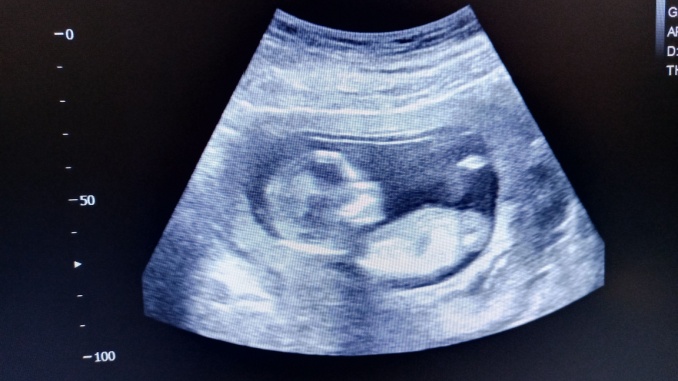
With the certification of the 2024 Elections complete, the battle lines are being drawn in what could amount to a lengthy legal clash over abortion restrictions in the state.
As reported by the Associated Press, the next fight to break out will likely be to render the present abortion law, a 2022 ban on abortions after 15-weeks with the exception of saving a mother’s life, inoperative. Unless and until a court rules or the legislature passes a new statute to align with the newly minted amendment, the 15-week ban remains in effect. It is around this bulwark that pro-life parties are beginning to build a defensive case, or conversely one that attacks the constitutional amendment.
Democrat Attorney General Kris Mayes told reporters, “The position of the state of Arizona will be that we agree that abortion is legal in our state.”
Cathi Herrod, president of the Center for Arizona Policy (CAP) told reporters with the AP that the group is working to anticipate any legal challenges to the current statutes and are preparing to legally “intervene where appropriate.”
Darrell Hill, policy director at the American Civil Liberties Union of Arizona told the wire service, “All the laws that have currently been on the books are under question and are subject to possible challenges at some point.”
In a post to X, the Center for Arizona Policy commented, “Today, Arizona Governor Katie Hobbs ‘celebrates’ the passage of Proposition 139 to amend the Arizona Constitution to enshrine a constitutional, fundamental right to an abortion. It is not a time to celebrate. It is a time to mourn the legal taking of unborn children’s lives and the resulting harm to their mothers.”
The advocacy group warned, “Within days, Arizona will see one or more lawsuits that will prove the real intent of Proposition 139: to overturn up to forty of Arizona’s common sense safety standards. Standards that not only protect the viability of unborn children but also the well-being and lives of their mothers. These laws were passed to protect women and their unborn children. Prior to the election, Prop 139 proponents scoffed when we pointed out that the amendment would not only legalize abortion until birth but would put all of Arizona’s common sense abortion safety standards in jeopardy.”
In addition to the 15-week ban, as many as 40 additional statutes require abortion restrictions. They range from requiring pregnant women seeking abortions to have an ultrasound performed at least 24 hours beforehand, to forbiddding abortions explicitly performed due to the existence of a genetic abnormality in an unborn child.
CAP added, “The proponents of this disastrous amendment are revealing what their real agenda has always been: to expand abortion – and their profits – at any cost, even the cost of Arizona women’s health and lives. Governor Hobbs celebrates. Those who value the sanctity of human life at all stages weep. Our commitment remains what it had always been: protect both the woman and her unborn child. We will fight tirelessly to defend these critical, lifesaving measures. We will do all we can to limit the anticipated breadth of Proposition 139.”
Challenges to Prop 139 may range from the vagueness of its standard of “fetal viability,” to how “a compelling state interest,” is defined, with one argument being that preventing murder is in the state’s direct and compelling state interest. Further, allegations that the proposition was only approved through disinformation propagated by Governor Hobbs may lead to legal challenges as well.
Matthew Holloway is a senior reporter for AZ Free News. Follow him on X for his latest stories, or email tips to Matthew@azfreenews.com.
by Matthew Holloway | Dec 1, 2024 | News
By Matthew Holloway |
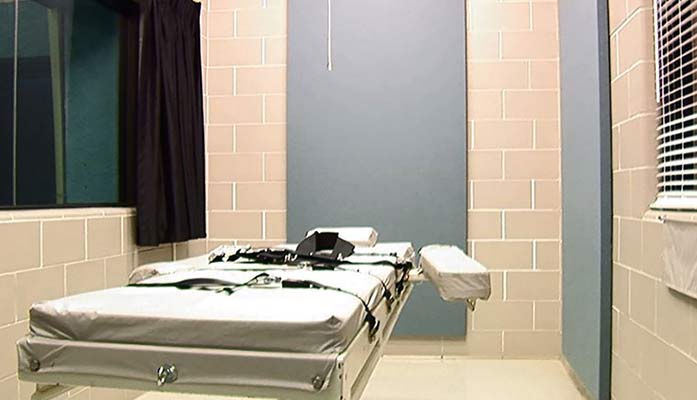
Attorney General Kris Mayes has said that the State of Arizona is prepared to act upon its first execution warrant after fellow Democrat Gov. Katie Hobbs dismissed a retired federal magistrate she appointed to review the state’s execution process in 2023.
Former Magistrate David Duncan reportedly never finished his work before his dismissal according to the Arizona Daily Star. Despite his authorization to charge $175 per hour up to $100,000 to conduct a full review of Arizona’s fraught execution process, Duncan was notified in a letter obtained by Capitol Media Services that Hobbs no longer has confidence in him.
According to the Daily Star, Hobbs said in the letter that Duncan’s review has strayed beyond his mandate, which was explicitly to review the protocols and procedures used by the AZ Department of Corrections, Rehabilitation and Reentry (ADCRR) to judicially mete out death.
Gov. Hobbs observed in one report that Duncan suggested the ADCRR should weigh the implementation of the firing squad, explaining that it “does overcome the impediments to lethal injection from unavailability of material and skilled personnel.” Though firing squad is not currently available under Arizona law, it is far from unprecedented with Idaho, Mississippi, Oklahoma, South Carolina, and Utah still offering the option as of 2024. Duncan’s inquest was terminated and he stands to be paid just $36,000.
Hobbs noted further that Ryan Thornell, whom she tapped for director of the corrections department, also completed his own review of the execution protocols and, per Capitol Media Services, made a series of recommendations including revised training standards and enhanced documentation.
Thornell told reporters that the greatest issues facing the department have been staff who’ve proven unable to place an intravenous line into the condemned to deliver the lethal injection, leading to “executions lasting longer than expected.” He further noted that some executions have depended on a procedure that was “extensive and intrusive.”
He reported that a medical team has been sourced, which includes a trained phlebotomist “providing a level of expertise to the team related to IV placement procedures.’’ He added that decision making in executions has been “inconsistent” and said, “I will not make decisions without the advice of the trained and qualified medical/IV team.”
Hobbs claimed, “With these changes in place, ADCRR is prepared to conduct an execution that complies with the legal requirements if an execution warrant is issued.”
Capitol Media Services reported via X that the first execution warrant should be sought by AG Mayes within two weeks.
That warrant will be sought to execute Aaron Gunches, a man who pleaded guilty to the first-degree murder and kidnapping of his girlfriend’s ex-husband Ted Price in 2002. In 2022, after nearly two decades on death row, Gunches waived his right to post-conviction appeal and motioned for his own execution, a motion he later withdrew in 2023 upon Hobbs taking office. The Arizona Supreme Court has refused to reconsider the motion, however, the warrant expired before it could be acted upon. Mayes must now seek a new death warrant.
“Given the review that has now been completed by the Department of Corrections, I feel confident that the state is prepared to conduct an execution,’’ the Attorney General told Capitol Media Services. “And so I will be issuing a request for an execution warrant to the Supreme Court in the next two weeks.’’ AG Mayes told reporters that there are some 111 inmates currently housed on death row in Arizona, awaiting execution and among them 25 have exhausted all possible appeals.
“There are 25 families out there who have an expectation that the killer of their loved ones will be executed,’’ Mayes told Capitol Media. She also added that the disparity between counties that can afford to implement the expensive procedures of the death penalty as opposed to those that cannot as easily is “something I think the Legislature needs to address.’’
Matthew Holloway is a senior reporter for AZ Free News. Follow him on X for his latest stories, or email tips to Matthew@azfreenews.com.
by AZ Free Enterprise Club | Nov 27, 2024 | Opinion
By the Arizona Free Enterprise Club |
Since the results of the 2024 election came in, much of the focus has been on President-elect Donald Trump’s historic win—and rightfully so. Trump won every single swing state in a massive victory over Vice President Kamala Harris, and he beat her in the popular vote too.
But Kamala Harris wasn’t the only significant loser to come out of November’s election.
Here in Arizona, teachers’ unions and other anti-school choice groups, like Save Our Schools Arizona (SOSAZ), made the 2024 election a referendum on school choice. And they lost big!
Much of their work began earlier this year, when Arizona Governor Katie Hobbs came into legislative session (just like she did in 2023) with her top priority being to regulate the wildly popular Empowerment Scholarship Account (ESA) program out of existence. But it didn’t work. Despite the noise from Hobbs, legislative Democrats, the legacy media, the teachers’ unions, and other anti-school choice groups, only minor changes were made to the ESA program through the budget, with most of it remaining untouched.
This failure fell on the heels of other similar failures…
>>> CONTINUE READING >>>