U.S. Representative Eli Crane (R-AZ-02) spent the last week of July traveling across Arizona’s Second Congressional District, meeting with constituents, educators, ranchers, business leaders, and local officials while highlighting legislative priorities ranging from agriculture and energy to education and public lands.
The weeklong tour included stops in Douglas, Show Low, Holbrook, Williams, Camp Verde, and other communities where Crane promoted recent federal investments, discussed ongoing policy initiatives, and gathered feedback from residents on issues affecting rural Arizona.
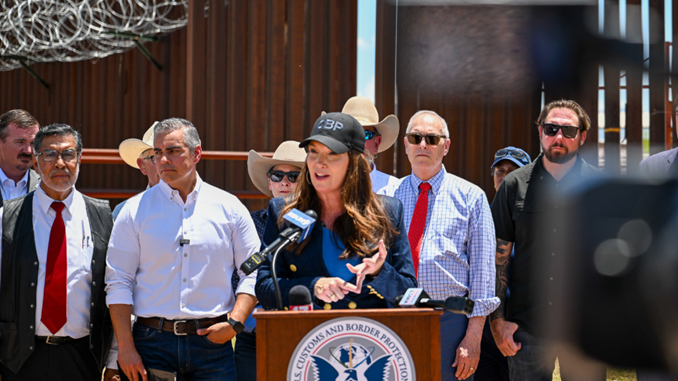
One of the week’s most significant announcements came Wednesday, July 29 in Douglas, where Crane joined fellow Republican Representatives Andy Biggs (AZ-05) and Juan Ciscomani (AZ-06) alongside Secretary Brooke Rollins as the U.S. Department of Agriculture (USDA) unveiled a $25 million investment to construct a new sterile fly production facility in Douglas.
The project is intended to strengthen the nation’s defenses against the New World screwworm, a destructive livestock pest that has prompted growing concern among ranchers across the Southwest.
The announcement followed a letter signed by Crane, Biggs, and Ciscomani along with Rep. David Schweikert (R-AZ01) and Rep. Paul Gosar (R-AZ09), urging the USDA to modernize the Douglas facility to improve the nation’s long-term response capabilities.
Following the announcement, the congressmen toured livestock inspection facilities at the Douglas Port of Entry, which is scheduled to re-open to livestock trade on August 24th after preparations aimed at safeguarding American agriculture.
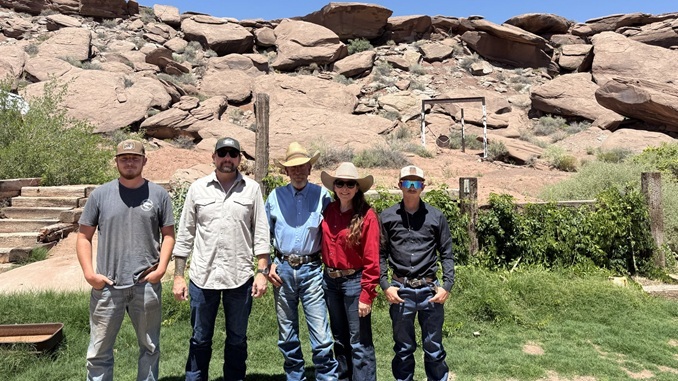
Crane later traveled to Show Low, where he visited Linden Valley Arena, a well known destination within Arizona’s roping community that has been owned and operated by the Perkins family since 2010.
The following morning, Crane addressed teachers and staff with the Show Low Unified School District ahead of the upcoming school year, sharing lessons on leadership and teamwork drawn from his experience as a Navy SEAL and small business owners.
He also thanked educators for their commitment to students while highlighting what he described as a recent legislative victory for rural schools.
Last year, Crane helped build congressional support for a three-year reauthorization of the Secure Rural Schools program, legislation that was ultimately signed into law and continues funding for education and essential county services in communities located near national forests throughout Arizona’s Second Congressional District.
After leaving Show Low, Crane visited Northland Pioneer College in Holbrook, where he met with administrators to discuss the college’s Commercial Driver’s License (CDL) program.
The visit coincided with the Trump administration’s recently announced Freedom Haulers Initiative, a federal effort designed to expand career opportunities for veterans entering the trucking industry.
Crane praised the initiative while recognizing the college’s work to strengthen workforce development through its CDL program.
Later that day, Crane met with the Murph family at H Bar and Y Ranch in Holbrook. The Murph family, whose cattle operation pre-dates Arizona statehood, faces uncertainty over long-held Arizona State Land Department grazing leases because of a proposed solar development by a foreign company.
Crane said he has been working behind the scenes to help resolve the dispute. The meeting also followed last month’s signing of a memorandum of understanding between the USDA and the Small Business Administration (SBA) establishing cooperation between the USDA Lawfare Portal and the SBA’s Office of National Ombudsman.
The agreement is intended to ensure complaints from farmers, ranchers, and agricultural producers alleging legal harassment are investigated and resolved.
According to the USDA, the Lawfare Portal has received more than 400 complaints from 47 states over the past two years.
Crane also toured the Cholla Power Plant, which stopped burning coal in March 2025 after more than six decades of operation. Arizona Public Service is pursuing plans to convert the facility to natural gas, a transition expected to generate approximately 380 megawatts of capacity while preserving jobs and maintaining reliable power generation for the region.
On Saturday, August 1, Crane attended the annual Coconino County Farm Bureau and Cattle Growers Association banquet in Williams, where he updated attendees on several legislative priorities pending before Congress.
Among the measures discussed was the House-passed Farm Bill which includes Buy American requirements for school meal programs, increased reporting requirements for agricultural land purchases by foreign adversaries, and strengthened farm credit and crop insurance programs.
Crane also highlighted his amendment intended to accelerate recovery efforts following the White Sage Fire, while noting his support for proposals removing pesticide liability protections and ensuring compensation for livestock losses caused by Mexican wolves.
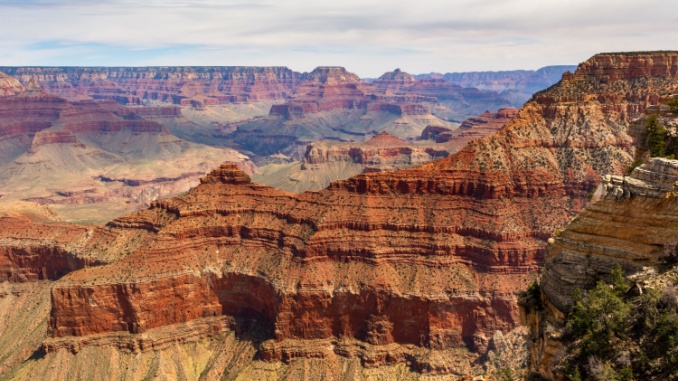
The measures seek to improve forest management through expanded technology and reduced litigation while accelerating reconstruction efforts at the Grand Canyon’s North Rim following the Dragon Bravo Fire. Both bills have passed the House but remain pending in the Senate.
The congressman’s final stop took him to Camp Verde, where he met with ranchers to discuss ongoing concerns involving the U.S. Forest Service.
Crane said he is developing legislation aimed at simplifying fence repairs following natural disasters while also addressing what he characterized as abuses of the Equal Access to Justice Act.
The district also received additional federal infrastructure support during the week as the U.S. Department of Transportation awarded more than $5 million in airport improvement grants throughout Arizona’s Second Congressional District.
The funding Includes:
Bagdad: $90,389 for design work to expand terminal parking.
Chinle: $339,000 to reconstruct aircraft apron pavement.
Cottonwood: $536,876 to reconstruct portions of Taxiway A.
Page: $679.031 for design of a new aircraft rescue and firefighting facility.
Springerville: $443,000 to construct a new taxilane serving future hanger development.
Prescott: $2.97 million to construct a new aircraft storage hanger designed to improve airport self-sufficiency.
ICYMI – The @USDOT awarded more than $5 million to improve airport infrastructure in #AZ02.
The latest awards follow additional federal grants announced last month totaling approximately $10 million for improvements at Polacca Airport and Coolidge Municipal Airport.
Reflecting on the week’s events, Crane emphasized the importance of maintaining close ties with constituents while Congress remains out of session.
“Last week, I had the privilege of visiting with constituents, industry leaders, and remarkable institutions within Arizona’s Second Congressional District,” said Rep. Crane. “While there is much work to be done in Washington, D.C., it’s refreshing to get back home and meet face to face with the people I’m honored to represent. I look forward to building on these relationships and delivering principled and effective solutions for all Arizonans.”
Ethan Faverino is a reporter for AZ Free News. You can send him news tips using this link.
Rep. Eli Crane’s reelection campaign has reserved $2.1 million in fall advertising as the Arizona Republican prepares for a rematch with former Navajo Nation President Jonathan Nez in the state’s Second Congressional District.
The advertising will run across broadcast television, cable, satellite, streaming services, social media, and radio beginning in mid-September, according to an announcement from the Crane campaign.
“The same D.C. Democrats who look down on rural Arizonans because we don’t share their woke values want to pretend like they all of the sudden care about AZ-02,” Crane said. “What they really care about is power.”
“The truth is it is just another seat to them, but not to me,” Crane continued. “This is a district made up of some of the finest people you’d ever meet, folks who pray to God, love their neighbors, work hard, and play by the rules. It is an honor to serve them in Congress.”
Crane said he was prepared to defend his record against Democratic attacks during the general election campaign.
“If the D.C. Democrats want a fight, they’ve got one,” Crane said. “I don’t back down and am more prepared than ever to put my record up against their lies.”
The reservation follows the July release of Crane’s first general-election advertisement, titled “Fight.” The digital ad highlighted Crane’s military service and presented the former Navy SEAL as an advocate for rural Arizona willing to challenge members of both political parties in Washington. Crane served 13 years in the Navy and completed five wartime deployments, including three with SEAL Team 3.
Crane’s campaign previously said it planned to invest at least seven figures in paid media during the general election. The new reservation specifies the amount, platforms, and timing of the planned spending.
The congressman enters the fall with a substantial fundraising advantage. Crane’s campaign reported approximately $9.48 million in total receipts and $2.84 million in cash on hand through the end of June.
Nez reported approximately $3.52 million in total receipts and $1.91 million in cash on hand over the same reporting period. His campaign spent approximately $1.67 million through June.
Crane and Nez were unopposed in their respective party primaries. They are expected to face each other in the November 3 general election along with Libertarian Curtis Goodwin.
The contest is a rematch of the 2024 election, when Crane defeated Nez with 221,413 votes, or approximately 54.5 percent, to Nez’s 184,963 votes, or approximately 45.5 percent. Nez carried Apache, Coconino, and Graham counties, as well as the district’s portions of Maricopa and Mohave counties, while Crane prevailed in Gila, Navajo, Pinal, and Yavapai counties.
Arizona’s Second Congressional District includes Prescott, Flagstaff, and much of the Navajo Nation. The Cook Political Report rates the race “Likely Republican” and gives the district a Republican advantage of seven percentage points in its Partisan Voting Index. Cook reported that Nez finished nine points behind Crane in 2024 while outperforming the Democratic presidential ticket within the district.
Crane was first elected to Congress in 2022 and is seeking a third term. Nez served as president of the Navajo Nation from 2019 through 2023 and is making his second bid for the congressional seat.
Arizona’s general election is scheduled for November 3. Early voting begins October 7, and the voter-registration deadline is October 5.
U.S. Agriculture Secretary Brooke Rollins announced a $25 million federal investment to build a sterile fly dispersal facility in Arizona. She made the announcement during a visit to the Douglas Port of Entry with Reps. Juan Ciscomani (R-AZ-06), Andy Biggs (R-AZ-05), and Eli Crane (R-AZ-02) ahead of the planned resumption of livestock imports from Mexico.
Rollins toured the port’s livestock inspection facilities Wednesday with Ciscomani, Biggs, Crane, and Arizona Department of Agriculture Director Paul Brierley. The Department of Agriculture plans to reopen the Douglas crossing to cattle imports on Aug. 24 as the first stage of a phased reopening of southern livestock ports.
During the visit, Rollins announced that the U.S. Department of Agriculture (USDA) would invest $25 million toward establishing a sterile fly dispersal facility in Arizona as part of the federal response to New World screwworm.
“Protecting American agriculture begins with protecting our borders and ensuring we have the strongest animal health safeguards anywhere in the world,” Rollins said. “The Douglas Port of Entry will reopen only because USDA has implemented one of the most rigorous livestock inspection protocols in history, giving us confidence we can safely resume this critical trade while ensuring cattle crossing the border are free from New World screwworm.”
As part of USDA’s phased reopening of 3 southern cattle ports for livestock trade, USDA will reopen the Douglas, AZ, port, which borders Sonora on Aug. 24, 2026. Every animal entering the U.S. through these ports will undergo a full USDA inspection to ensure it is free of any… pic.twitter.com/5k1HtOZSAU
— New World Screwworm Rapid Response (@Screwworm_RR) July 29, 2026
Ciscomani said Arizona livestock producers and agricultural leaders had pressed the department to establish a sterile fly facility in the state.
“Local agriculture leaders and I have been fighting to deliver this sterile fly dispersal facility because Arizona’s livestock industry cannot afford to wait on the New World screwworm threat,” Ciscomani said. “This $25 million investment is the direct result of that work, and I’m grateful to Secretary Rollins for listening to Arizona’s producers and delivering on it.”
Big things are happening in Douglas, AZ! 🐕🦺🐾🦺
As @USDA_APHIS prepares to deploy the New World screwworm detector dogs to the Douglas, AZ port of entry, we are fired up to support the mission — and have modified the cattle chutes to give these canine heroes the best possible… pic.twitter.com/OtmDqpXJLu
— New World Screwworm Rapid Response (@Screwworm_RR) July 30, 2026
The Douglas crossing was selected as the first port to reopen because the USDA considers Sonora among the Mexican states presenting the lowest screwworm risk, citing its animal-health inspection system and distance from the areas of southern Mexico where most cases are concentrated. The department said the closest active case to the Douglas port was approximately 325 miles away as of July 22.
The reopening remains contingent on Mexico’s compliance with a joint federal action plan and continuing USDA risk assessments. Following an evaluation of operations in Douglas, the department will consider reopening livestock crossings at Santa Teresa and Columbus, New Mexico.
Every animal imported through Douglas will receive multiple veterinary examinations, including an inspection by USDA veterinarians before entering the United States. Animals that fail to satisfy federal import requirements will be denied entry, and the discovery of New World screwworm would immediately halt imports through the port.
The USDA described the Arizona dispersal center as a proposed facility and said it would work with state officials to determine its specific location and operating plan in the Douglas area. The department said construction could be completed in as little as several months, depending on the selected site and available infrastructure.
Cochise County officials have proposed placing the center at Bisbee-Douglas International Airport, about eight miles from Douglas. The county has promoted the airport as a potential site because of its proximity to the border, transportation infrastructure, available land, and location in a less-populated area.
A previous USDA sterile fly facility operated near Douglas from 1963 until 1983. The former facility was located at Douglas Municipal Airport, approximately two miles from downtown.
Biggs led a June letter to Rollins urging the USDA to include Arizona in its long-term screwworm prevention and response strategy. The letter was signed by Crane, Ciscomani, and Reps. Paul Gosar (R-AZ-09) and Abraham Hamadeh (R-AZ-08) and identified the historic Douglas sterile fly facility site as a strategically valuable location for future production capacity.
New World screwworm is a parasitic fly whose larvae feed on the living tissue of warm-blooded animals, causing severe wounds that can become fatal. The pest can affect livestock, pets, wildlife, and, in rare cases, people. The USDA confirmed the first animal case in the current U.S. outbreak in a Zavala County, Texas, calf on June 3. Additional cases have since been confirmed in Texas and New Mexico, while Arizona has reported no confirmed cases.
The United States eradicated New World screwworm in 1966 through the sterile insect technique. The method releases sterilized male flies into affected areas. Female screwworm flies that mate with sterile males produce no offspring, reducing the wild population over successive generations.
The USDA said federal and state personnel have maintained trapping operations near Douglas during the past year. Nearly 1,000 captured flies were submitted for scientific testing, and none were identified as New World screwworm.
State Rep. Lupe Diaz (R-LD19), chairman of the Arizona House Land, Agriculture and Rural Affairs Committee, also attended the event and praised the federal investment and reopening plan.
“The port reopening demonstrates that we can protect American agriculture while responsibly restoring commerce through this vital trade corridor,” Diaz said. “USDA’s science-based approach includes multiple layers of inspection and strict federal oversight.”
✅Rep. Lupe Diaz Joins U.S. Agriculture Secretary Brooke Rollins for Douglas Port Reopening and Sterile Fly Center Announcement
"The new sterile fly distribution center at Bisbee-Douglas International Airport is another major step forward. It will serve Arizona, New Mexico,… pic.twitter.com/ebiGbaOoc3
— Arizona House Republicans (@AZHouseGOP) July 30, 2026
Arizona’s fiscal year 2027 budget allows the state Department of Agriculture to use up to $250,000 from the Commercial Feed Trust Fund for two full-time-equivalent positions. One is designated for expenses associated with the screwworm response. The department may conduct border inspections as part of that response if the border opens for live cattle imports, and the state veterinarian may oversee the response. The second position is designated for expenses involving foreign animal diseases or pests, USDA program diseases, zoonotic diseases, and other emerging animal-disease responses.
“The new sterile fly distribution center at Bisbee-Douglas International Airport is another major step forward,” Diaz said. “It will serve Arizona, New Mexico, Nevada, and California, giving western states a critical regional resource to combat the New World screwworm and protect our livestock industry.”
Rep. Andy Biggs (AZ-05), Republican gubernatorial candidate, is leading Arizona’s congressmembers in a bipartisan petition to House leadership to include emergency funding for Colorado River Basin infrastructure.
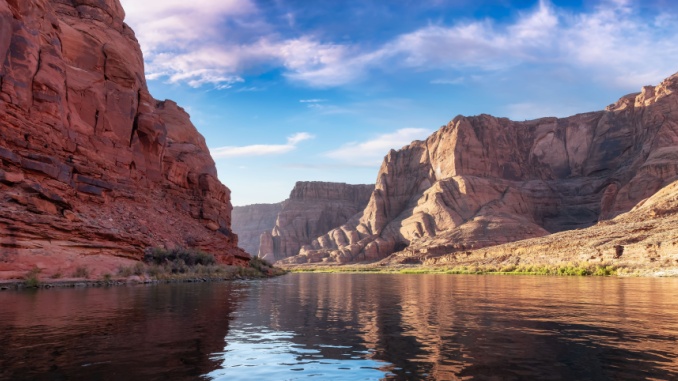
The Colorado River serves as a critical water supply for Arizona and the six other basin states. 36% of the state’s supply comes from the river. Put another way, the river supplies drinking water for one in 10 Americans.
Additionally, around 2.5 million individuals across the Western states rely on the river for power.
The river has reached historically low water levels due to prolonged drought and increasing aridity. These levels haven’t been seen on the river since the late 1950s.
The letter requested emergency funding to provide for infrastructure investments, upgrades, and long-term planning, noting that the present average flow measurements on the river amount to 20% less of what they were in the 20th century.
Democratic Reps. Yassamin Ansari (AZ-03), Adelita Grijalva (AZ-07), and Greg Stanton (AZ-04) joined the letter alongside Republican Reps. Eli Crane (AZ-02), Abe Hamadeh (AZ-08), and Paul Gosar (AZ-09).
The letter argued that the river’s decline represented a national security threat worthy of emergency funding, citing its critical function as more than a water and energy source for individuals but also as a source for the national security industry. California and Arizona are consistently among the top 10 states for defense spending, and Colorado is in the top 20.
“In addition to helping meet basic needs of communities out West by supplying drinking water, serving as a power source, supporting municipal services, and helping put food on the table, the Colorado River and its related parks, forests, and recreation areas also contribute over $26 billion to the outdoor recreation economy each year,” said the letter. “In addition, the River supports critical national security industries that have taken root in the West, including in the advanced manufacturing, aerospace, and defense sectors.”
The letter also documented congressional precedent for the proposed emergency funding. In 2022, Congress issued $4 billion for drought mitigation with priority given to Arizona and the other basin states. According to the congressmembers, this cash infusion did mitigate the water crisis.
By comparison, congressional funding sits currently at less than $100 million for the river.
“We have no doubt that without this vital funding source, the water crisis today facing our communities would be much worse,” stated the letter. “Funding is urgently needed to limit the pain that could be felt by communities across the basin in the near term and may smooth the path forward for post-2026 operating agreements.”
Biggs said in a statement that bipartisanship was a need because the river represents a crisis far bigger than either party.
“For desert dwellers, nothing is more important than protecting and cultivating our water resources,” said Biggs. “The Colorado River situation is not just an issue for Arizona and the West; it’s an issue that affects the entire country because of the national industries that depend on this water source. I hope that House leadership and appropriators will heed our request and include the necessary funding to prevent this crisis from getting worse and needlessly harming vulnerable Americans.”
AZ Free News is your #1 source for Arizona news and politics. You can send us news tips using this link.
Rep. Eli Crane’s (R-AZ02) legislation to expedite reconstruction at the Grand Canyon’s North Rim received its first Senate hearing last week week as the Department of the Interior endorsed the House-passed measure and requested expanded small-contract authority.
The Senate Energy and Natural Resources Subcommittee on National Parks considered H.R. 5729, the North Rim Restoration Act, during a legislative hearing on Tuesday. Crane introduced the bill last October after the Dragon Bravo Fire damaged the North Rim and destroyed the historic Grand Canyon Lodge.
“Last July, the Dragon Bravo Fire dealt a serious setback to Northern Arizona, inflicting harm on park staff, gateway communities, and local businesses,” Crane said. “In response, I’m grateful to have collaborated with key stakeholders on a federal response that will help rebuild this iconic destination.”
Crane thanked Senate Energy and Natural Resources Committee Chairman Mike Lee (R-Utah) for placing the bill before the panel and said he hoped Congress would complete work on the measure.
In a post to X, Crane wrote, “This marked the first significant Senate action on the bill since it unanimously passed the House in March. I’m hopeful we can get this across the finish line.”
On Tuesday, @EnergyGOP held a legislative hearing on the North Rim Restoration Act of 2025.
This marked the first significant Senate action on the bill since it unanimously passed the House in March.
The legislation would allow the National Park Service to use emergency acquisition procedures without requiring a presidential emergency or disaster declaration. Those procedures include increased micro-purchase thresholds, simplified acquisition thresholds and other contracting flexibilities under federal acquisition regulations.
The authority would cover forest management and restoration, planning and reconstruction of damaged structures, improvements to park grounds and other recovery work within areas of Grand Canyon National Park affected by the Dragon Bravo Fire.
The House-passed version would also permit the Interior Secretary to award limited noncompetitive recovery contracts to the concessioner operating at the North Rim. The secretary would first have to determine in writing that the concessioner is uniquely positioned to perform the work and that noncompetitive procurement is necessary for public safety, resource protection, or continuity of essential services.
Eligible projects would include employee housing, water and wastewater systems, power and communications infrastructure, lodging, food service, retail operations, transportation facilities, and maintenance buildings. The bill states that recovery contracts would remain separate from the concessioner’s existing agreement and would not extend or amend that concession contract.
The emergency authority would expire seven years after enactment or when the Interior Secretary determines that recovery work is complete. The National Park Service would have to report to four congressional committees every 180 days after it begins using the authority.
The reports would identify anticipated and actual costs, overruns, contractors, possible conflicts of interest, detected waste or fraud, projects completed below expected cost, and estimated completion dates.
Charles Cuvelier, associate director for visitor and resource protection at the National Park Service, told senators that the Interior Department supports the bill.
“This authority will enable the agency to move more efficiently on time-sensitive repair and reconstruction activities,” Cuvelier said in his written testimony.
Cuvelier said North Rim recovery requires coordination across damaged utilities, employee housing, and visitor facilities. The department asked the subcommittee to consider temporarily increasing several additional small-dollar procurement thresholds so the Park Service could issue minor construction and service contracts more efficiently.
The House passed H.R. 5729 on March 16 with no member objecting. The bill’s House cosponsors include Arizona Reps. Andy Biggs (R-AZ05), Juan Ciscomani (R-AZ06), Paul Gosar (R-AZ09), and Abe Hamadeh (R-AZ08), along with Reps. Celeste Maloy (R-UT02) and Tom Tiffany (R-WI07).
The Senate panel also considered S. 3785, the North Rim and Kaibab National Forest Restoration Act, introduced in February by Arizona Democratic Sen. Ruben Gallego with Sen. Mark Kelly as an original cosponsor.
That proposal would extend similar emergency contracting authority to both the National Park Service and U.S. Forest Service for areas affected by the Dragon Bravo and White Sage fires. It would cover Grand Canyon National Park and the Kaibab National Forest, require tribal and local participation in recovery planning, and direct federal officials to prioritize tribal and local businesses when practicable. Its authority would last five years or until recovery is complete.
The lightning-caused Dragon Bravo Fire began July 4, 2025, and burned 149,399 acres across the Kaibab Plateau, including 71,129 acres managed by Grand Canyon National Park. The fire destroyed 114 buildings and outbuildings, including the Grand Canyon Lodge, 80 guest cabins, and 24 buildings in the National Park Service headquarters historic district.
The National Park Service reopened the North Rim for the 2026 season in May. All paved park roads and the full North Kaibab Trail reopened, with the trail open to foot traffic, and the North Rim Campground reopened June 1. Overnight lodging remains unavailable on the North Rim while reconstruction continues.
H.R. 5729 remains before the Senate Energy and Natural Resources Committee. The committee would have to advance the legislation before it could receive a vote by the full Senate.
“With this week’s activity in the Senate, we are getting closer to delivering much-needed relief to those impacted by this destructive fire,” Crane said.