The U.S. House of Representatives passed H.R. 7008, the Stop Insider Trading Act, this week. The legislation is designed to prohibit Members of Congress, their spouses, and dependent children from purchasing individual stocks and certain other financial instruments while serving in office.
Rep. Eli Crane (R-AZ-02), who signed on as a cosponsor shortly after the bill’s introduction, voted in favor of the measure.
Throughout his time in Congress, Crane has advocated for stricter ethics standards and has consistently opposed insider trading by lawmakers, arguing that elected officials should not be able to profit from information obtained through public office.
Crane has also pledged not to trade individual stocks and has previously cosponsored similar legislation aimed at banning the practice.
“Our Founders envisioned a nation where citizen representatives served their constituents, not one where they used their positions to amass personal wealth,” stated Rep. Crane. “This legislation establishes solid guardrails to prevent lawmakers or their families from using insider information to enrich themselves.”
Our Founders envisioned a nation where citizen representatives served their constituents, not one where they used their positions to amass wealth.
The Stop Insider Trading Act prevents lawmakers or their families from using insider information to enrich themselves.
The legislation includes several exceptions, allowing investments in broadly diverted mutual funds and certain U.S.-focused investment funds, interests in qualifying small businesses, and assets held in qualifying blind trusts where lawmakers and their families have no authority over the trustee.
In addition to restricting purchases, the bill establishes new transparency requirements for the sale of covered investments.
Members of Congress would be required to publicly disclose their intent to sell a covert investment between seven and fourteen days before the transaction. The notice would include the anticipated sale date, a description of the transaction, and the number of shares to be sold, with disclosures published online by the Clerk of the House or Secretary of the Senate.
The legislation also outlines enforcement provision for violations. Individuals found to have improperly purchased covert investments would be required to divest those holdings and could face financial penalties of at least $2,000 or 10% of the value of the prohibited transaction, whichever is greater, in addition to forfeiting any net gains realized from the investment.
In certain cases, congressional ethics offices would have authority to refer violations to the Department of Justice.
The bill further prohibits Members of Congress from using official office funds or campaign contributions to pay any penalties assessed under the law.
If enacted, the restrictions would take effect 180 days after the legislation becomes law.
“While I commend my colleagues in the House for passing this bill, it won’t make a difference if our colleagues in the Senate don’t make it a priority,” said Crane. “I’m asking the American people to reach out to their senators and urge them to support this commonsense bill.”
Ethan Faverino is a reporter for AZ Free News. You can send him news tips using this link.
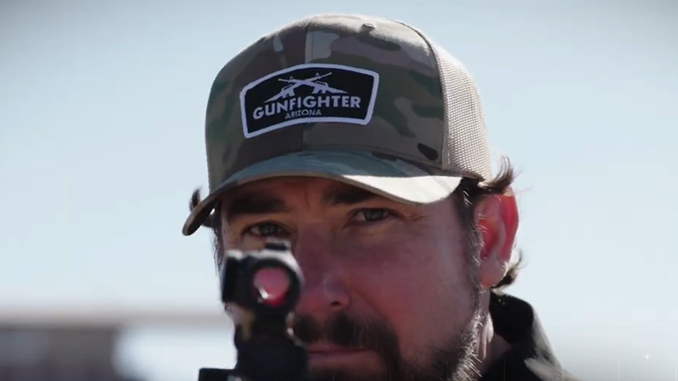
U.S Representative Eli Crane (R-AZ-02) has officially launched his general election campaign with the release of his first television and digital advertisement of the 2026 election cycle. The ad emphasizes Crane’s military background and positions him as a fighter for rural Arizona.
The advertisement titled “Fight,” debuted July 17, 2026. It centers on Crane’s service of five wartime deployments as a U.S. Navy SEAL sniper, focusing on his combat experience and leadership qualities that he says continue to guide his work in Congress.
According to the campaign, the ad will run across digital advertising platforms as Crane prepares to invest seven figures in paid media to defend Arizona’s 2nd Congressional District against Democratic challenger Jonathan Nez.
The campaign rollout follows Crane’s latest Federal Election Commission fundraising report, which shows the congressman has raised $9.4 million during the current election cycle.
The campaign says that total is more than two-and-a-half times the amount raised by Nez’s total receipts.
The filing also reports Crane entered the general election with approximately $2.8 million in cash on hand, compared to roughly $1.4 million at the same point during the 2024 election cycle.
In a statement accompanying the ad release, Crane contrasted his leadership style with what he described as Washington’s political establishment.
“The career politicians in Washington are really good at one thing – ducking a fight,” said Crane. “They retreat at the first hint of political blowback. They may talk tough on TV, but when the battle begins they are AWOL. Their battle cry is surrender. Real warriors know you are never out of the fight.”
Crane also argued that his willingness to challenge entrenched interests has made him a target of political opponents.
“The political establishment cannot control me and that is why they want me gone,” added Crane. “I do not back down. I take on the tough fights, and I deliver results. We don’t have to choose between principle and effectiveness. The real choice is between complacency and courage, between protecting the status quo and defeating it. I will fight for rural Arizona, and I will win. If the D.C. elites are firing back, that tells me I am directly over the target.”
The ad marks the beginning of what is expected to be a competitive general election campaign in Arizona’s 2nd Congressional District, with Crane seeking another term representing the largely rural district against former Navajo Nation President Jonathan Nez.
Ethan Faverino is a reporter for AZ Free News. You can send him news tips using this link.
President Donald Trump has issued a select number of endorsements in Arizona races for the 2026 election.
The latest endorsements went to Rep. Juan Ciscomani to retain his seat in the 6th Congressional District, Rep. Paul Gosar to retain his seat in the 9th Congressional District, and Mark Lamb, former sheriff of Pinal County, for the seat opened by departing Rep. Andy Biggs in the 5th Congressional District.
Neither Ciscomani nor Gosar have opponents in their primaries. Lamb faces off against Daniel Keenan, a construction company owner, in the primary.
Trump’s endorsement bundle on Friday referred to Gosar and Lamb as “MAGA warrior[s],” and Ciscomani as “a tremendous champion.”
All three men, Trump promised, were capable of improving border security, stopping migrant crime, strengthening the military, bolstering economic growth, cutting taxes and regulations, boosting domestic manufacturing and energy, supporting law enforcement, and protecting Second Amendment rights.
Ciscomani will likely face off against Democratic candidate Joanna Mendoza.
I’ve stood with President Trump from Day 1 and I’ve never wavered, not once.
I’m honored to have President Trump’s “COMPLETE & TOTAL” endorsement for Governor of our great state of Arizona! 🇺🇸 pic.twitter.com/gGootCd6kV
Here are the other endorsements for Arizona candidates made by Trump so far:
Thomas “Jay” Feely, former NFL kicker, for the seat opened by departing Rep. David Schweikert in the 1st Congressional District. Feely faces off against former State Rep. Joseph Chaplik and technology consultant John Trobough in the Republican primary.
I’ve stood with President Trump from Day 1 and I’ve never wavered, not once.
I’m honored to have President Trump’s “COMPLETE & TOTAL” endorsement for Governor of our great state of Arizona! 🇺🇸 pic.twitter.com/gGootCd6kV
Rep. Abe Hamadeh received Trump’s endorsement to retain his seat in the 8th Congressional District. Hamadeh has no opponents in the primary.
Happy birthday, Mr. President!
My first endorsement from President Trump came on his birthday, June 14, 2022. Even on his birthday he was giving to others. I will never forget that phone call. Thank you for trusting me to be in this battle alongside you to save our country! pic.twitter.com/K1YetQTTGp
Andy Biggs received Trump’s endorsement for the governor’s seat held by incumbent Democratic Gov. Katie Hobbs. Biggs has three other opponents: Schweikert and two businessmen, Scott Neely and Ken Miceli.
I’ve stood with President Trump from Day 1 and I’ve never wavered, not once.
I’m honored to have President Trump’s “COMPLETE & TOTAL” endorsement for Governor of our great state of Arizona! 🇺🇸 pic.twitter.com/gGootCd6kV
Other races have indicated some weigh-in from Trump, but no outright endorsements.
In the attorney general’s race, Trump reposted a county supervisor’s endorsement of Republican primary candidate Rodney Glassman sans commentary last month. Glassman is up against State Senate President Warren Petersen to determine who will face off against the Democratic incumbent, Attorney General Kris Mayes.
But in April, Trump gave Petersen a shout-out at the Turning Point Action (TPA) “Build the Red Wall” event. Trump said Petersen would “help achieve [the] victory” of expanding the “red wall” — the Republican majority.
Trump made a similar post in recent weeks in the secretary of state’s race. The president also reposted a picture sans commentary of another organization’s endorsement of Republican primary candidate Gina Swoboda, former chair of the Arizona Republican Party.
Swoboda took the repost as an outright endorsement, though the other Republican primary candidate in the race, State Rep. Alexander Kolodin, disputed that characterization. Kolodin was also given a shoutout at the TPA event in April.
AZ Free News is your #1 source for Arizona news and politics. You can send us news tips using this link.
The U.S. Department of Agriculture has issued two drought disaster designations covering several Arizona counties, making eligible farm operators in affected areas able to seek emergency loan assistance through the Farm Service Agency.
The designations name multiple Arizona counties as primary or contiguous natural disaster areas because of drought conditions, according to an announcement from Rep. Eli Crane’s office. The first designation, issued June 29, named Coconino and Maricopa counties as primary natural disaster areas. Gila, La Paz, Mohave, Navajo, Pima, Pinal, Yavapai, and Yuma counties were listed as contiguous counties.
In a post to X on Wednesday, Crane wrote, “The @USDA’s drought designations give our farmers and ranchers access to meaningful financial support during a difficult period. I appreciate @SecRollins and her team for recognizing the seriousness of these conditions and taking action.”
The @USDA’s drought designations give our farmers and ranchers access to meaningful financial support during a difficult period.
A second designation elevated Gila, Pinal, and Yuma counties to primary status. Coconino, Graham, La Paz, Maricopa, Navajo, Pima, and Yavapai counties were listed as contiguous counties under the second designation.
The determinations were made under 7 CFR 759.5(a), which provides for Secretarial disaster area designations when any portion of a county experiences D3, or extreme drought, or higher during the growing season, or D2, or severe drought, for at least eight consecutive weeks during the growing season of affected crops.
The Arizona Department of Water Resources says the U.S. Drought Monitor is the official record for federal drought relief claims. The department’s drought status page said Arizona’s Drought Monitoring Technical Committee advises U.S. Drought Monitor authors on current drought conditions in the state using precipitation, streamflow, drought indices, and impact data.
ADWR’s May drought status summary reported that severe short-term drought had advanced in Mohave, Coconino, Navajo, Gila, Maricopa, and Yavapai counties, covering 60% of the state, while extreme short-term drought expanded in Apache County. The department’s long-term drought update for January through March said Arizona experienced the hottest and 28th driest January-to-March period on record, as well as the hottest and 27th driest four-year period from April 2022 through March 2026.
Crane said the designations will give agricultural producers in affected counties access to federal assistance after years of drought pressure in rural Arizona.
“For years, rural Arizonans have faced worsening drought conditions without adequate federal assistance,” Crane said. “These designations finally give our farmers and ranchers access to meaningful financial support and help our producers during a difficult period.”
Crane thanked Agriculture Secretary Rollins and the USDA for recognizing the drought conditions and urged eligible applicants to work with their local Farm Service Agency office to determine whether low-interest loans could help offset recent losses.
Under Section 321(a) of the Consolidated Farm and Rural Development Act, USDA may extend disaster designations beyond counties that meet the drought criteria directly by naming neighboring counties as contiguous disaster areas. Crane’s office said both primary and contiguous classifications make farm operators eligible to be considered for FSA emergency loan assistance.
The FSA stated that emergency loans may be used to replace essential items such as equipment or livestock, reorganize a farming operation, or refinance certain debts. The agency reviews loan applications based on the extent of losses, available security, and repayment ability.
Farmers and ranchers in the affected counties have eight months from the date of their county’s listing to apply. Crane’s office said applicants should contact their local FSA office for help with the application process and required documentation.
Applicants with questions may also email FPAC.BC.Congressional@usda.gov and reference disaster designation number 2026N00000369 for the June 29 announcement or 2026N00000419 for the Monday announcement.
Rep. Eli Crane (R-AZ-02) has backed an arrangement to secure lawfare protections for American farmers and ranchers.
Crane was present for the signing of a memorandum of understanding between the Department of Agriculture (USDA) and Department of Small Business Administration (SBA) that establishes a joint process to intake, investigate, and resolve lawfare complaints.
As part of the signing, the two agencies hosted a roundtable where farmers and ranchers shared personal testimonies of alleged regulatory and legal overreach.
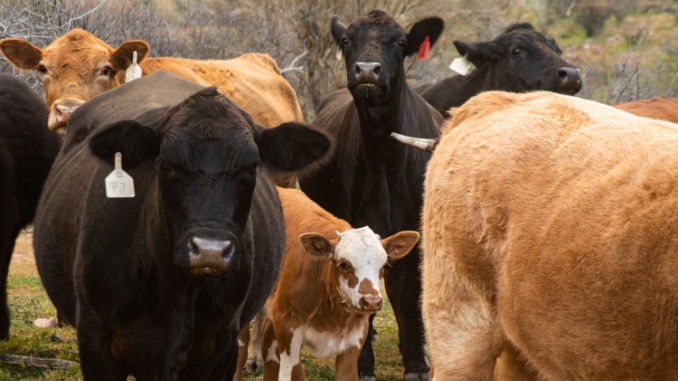
Two Arizona rancher families impacted by that kind of alleged overreach were present at the event: Dustin and Becki Ross of Windmill Mountain Ranch, and Casey and Meggan Murph of H Bar and Y Ranch.
The Ross family has endured a two-year-long stall on their grazing allotment due to archaeological-clearance requirements, affecting their property maintenance and herd management.
The Murph family faces the potential loss of their grazing leases to a foreign company’s solar project. Their family has worked the land for over 100 years, predating Arizona statehood.
In a press release, Crane accused the federal government of historically siding with environmentalists to target farmers and ranchers. However, Crane said the Trump administration has taken a novel, friendlier approach to the welfare of families like the Rosses and Murphs.
“Farmers and ranchers are the foundation of a strong and thriving nation. Despite their tremendous contributions to our way of life, the federal government has too often stood by as radical environmentalists targeted them,” said Crane. “Thanks to the leadership of President Trump, Secretary Rollins, and Administrator Loeffler, those days of bureaucratic neglect are over. This Memorandum of Understanding will help protect America’s producers from senseless red tape and litigation. We look forward to continuing this critical partnership and laying the groundwork for a healthy, robust industry for generations to come.”
Under this lawfare protection arrangement, the USDA will collect complaints and the SBA will handle case management and resolution.
The SBA said in its announcement of the memorandum of understanding that the Trump administration has taken a posture of believing the plight of farmers and ranchers first, and seeking justification for the regulations and legal actions that allegedly burden them.
“The goal is to identify patterns of abuse and eliminate regulations that drive up costs and drive down productivity,” stated the SBA. “Family farmers do not have the time or legal resources to fight back when Washington gets it wrong. Under POTUS, we are answering to the producers who power this country, not the bureaucrats who hold them back.
SBA and @USDA have signed a new MOU to help farmers, ranchers, and rural small businesses report costly federal rules and lawfare.
Under this partnership, USDA will collect complaints and share them with SBA for case management and resolution.
USDA Secretary Brooke Rollins said their agency’s Lawfare Portal received over 600 submissions from producers across 47 states, including Arizona, who she says were “unfairly targeted by their own government.”
The USDA launched its Lawfare Portal last April in the wake of a high-profile criminal trespass trial involving a South Dakota ranching couple in a land dispute with the U.S. Forest Service. Like the Arizona families at Thursday’s event, the South Dakota couple’s family have worked the land for over 100 years.
There is still so much more work to do.
Since launching USDA's Lawfare Portal last April, we've received more than 600 submissions from producers across 47 states—farmers and ranchers who have been unfairly targeted by their own government. We review every single case because… pic.twitter.com/KLg0w1ykR5
— Secretary Brooke Rollins (@SecRollins) July 2, 2026
AZ Free News is your #1 source for Arizona news and politics. You can send us news tips using this link.