by Ethan Faverino | Sep 1, 2026 | News
By Ethan Faverino |
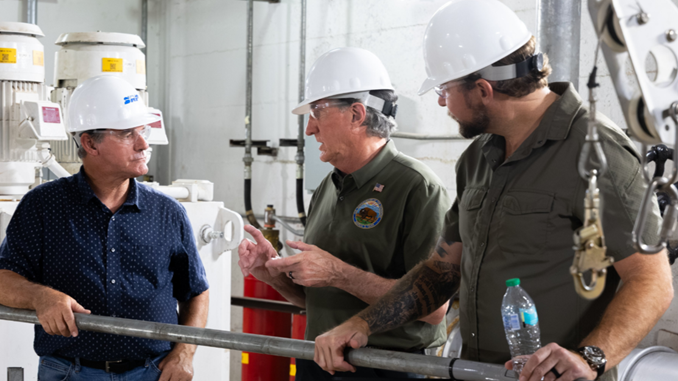
Congressman Eli Crane (R-AZ-02), spent the final days of the congressional district work period visiting communities and key infrastructure sites across Arizona, focusing on rural health care, the recovery of the Grand Canyon’s North Rim, water security, and domestic mineral production.
Crane was joined during portions of the visits by Interior Secretary Doug Burgum and Rep. Andy Biggs (R-AZ-05).
The engagements included stops with the Gila River Indian Community, Grand Canyon National Park, Salt River Project, and Freeport-McMoRan as Crane highlighted what he described as efforts to strengthen Arizona’s long-term economic and infrastructure needs.
Crane visited the Gila River Indian Community following the University of Arizona and Gila River Health Care’s announcement of a new partnership to expand medical education and physical recruitment in the community.
The partnership will establish a Doctor of Medicine-granting program that the university describes as the first rural regional branch of its kind established in partnership with a federally recognized Tribe on Tribal land.
Students will begin their foundational science coursework in Phoenix before moving to Gila River Health Care and other regional sites for clinical training.
The program is intended to encourage medical students to establish careers in rural and Tribal communities, where access to physicians and other health services can be limited.
Crane said the program could help create a long-term physician workforce within the community.
The visit followed Crane’s support for the Ak-Chin Indian Community’s selection for the Indian Health Service Joint Venture Construction Program.
The partnership is expected to support construction of a new health center providing primary care, dental services, behavioral health, and specialty care.
Crane also pointed to more than $160 million recently directed to Arizona through the Rural Health Transformation Program for health care clinics, workforce development, and infrastructure.
On August 25, Crane accompanied Burgum to both the North and South Rims of the Grand Canyon National Park.
At the North Rim, park personnel and other stakeholders briefed the officials on recovery efforts following the 2025 Dragon Bravo Fire, which severely damaged critical facilities.
The fire has left the North Rim facing additional challenges, including erosion, flash flooding, and disruptions to its water system, along with longer-term infrastructure and rebuilding needs.
Crane discussed his North Rim Restoration Act of 2025, which would streamline federal contracting procedures to allow the National Park Service to move more quickly on rebuilding efforts.
He also highlighted an amendment he introduced to the 2026 Farm Bill aimed at expediting recovery efforts related to the White Sage Fire.
Both measures passed the U.S. House unanimously and are awaiting further consideration in the Senate.
The following morning, Crane and Burgum traveled to Theodore Roosevelt Dam, located northeast of Phoenix.
The dam and Roosevelt Lake are operated by the Salt River Project (SRP) and provide water storage, flood control, hydropower, and recreation.
SRP officials briefed Crane and Burgum on the effects of recent dry winters, changing runoff patterns, and the importance of maintaining reliable water storage within the state.
Officials also discussed a 2024 decision by the U.S Army Corps of Engineers that allows SRP to retain water in a portion of Roosevelt Dam’s Flood Control Space for up to 120 days, compared with the previous 20-day limit.
The additional flexibility allows more water to remain stored following qualifying runoff events rather than being released downstream before it can be put to beneficial use.
SRP estimates the change could help support the water needs of hundreds of thousands of households during eligible periods.
Although Roosevelt Dam is not part of the Colorado River system, Crane said the reservoir remains important as Arizona prepares for potential reductions to Lower Basin water allocations beginning in 2027.
During the visit, Crane and Burgum discussed several issues surrounding the negotiations, including avoiding costly litigation, maintaining adequate water storage capacity, and supporting potential desalination projects.
While Governor Hobbs’ administration is leading the state’s interstate negotiations, Crane said he believes the federal government may need to intervene if the state cannot reach an agreement.
That afternoon, Crane, Burgum, and Biggs visited the Miami Smelter in Claypool, a copper processing facility operated by Freeport-McMoRan.
The century-old facility processes copper concentrate from Freeport’s Arizona mines and is the company’s largest U.S. source of sulfuric acid for its copper leaching process.
Freeport officials briefed lawmakers on the facility’s operations and recent maintenance work.
According to the company, the smelter processed approximately 821,000 metric tons of copper concentrate in 2025 and produced roughly 209,300 metric tons of copper anodes.
The 2025 maintenance turnaround was associated with approximately $73 million in maintenance and idle-facility costs.
Company officials also discussed the possibility of expanding the facility, arguing that using the existing infrastructure could be more practical than securing permits and constructing an entirely new domestic smelter.
Crane focused on federal regulations affecting the facility’s competitiveness, including Environmental Protection Agency standards finalized in 2024 for primary copper smelters.
Freeport had previously warned that complying with the standards could require significant equipment changes and additional costs.
Crane praised a two-year regulatory exemption granted to the facility by the Trump administration in October 2025, but said he believes a permanent solution is needed.
Crane said the series of visits provided an opportunity to examine challenges facing several of Arizona’s major industries and communities while working with state, federal, Tribal, and private-sector leaders.
“To our friends at Grand Canyon National Park, Salt River Project, Freeport-McMoRan, as well as the Gila River Indian Community and the University of Arizona, thank you for your generous hospitality,” stated Crane. “This past week and a half has been invaluable in terms of briefings, new partnerships, and progress toward recovery and growth.”
Crane also thanked Burgum for traveling to Arizona and meeting with leaders across the state.
“I’m also grateful to Secretary Burgum for taking the time to visit our state and meet with leaders across our vital industries. It was a tremendous honor to host the Secretary and his team as we worked to strengthen our blueprint for long-term stability,” Crane added.
Ethan Faverino is a reporter for AZ Free News. You can send him news tips using this link.
by Matthew Holloway | Aug 26, 2026 | News
By Matthew Holloway |
A new poll of Arizona’s Second Congressional District shows Republican Rep. Eli Crane leading Democratic challenger Jonathan Nez by 11 points in their rematch for the northeastern Arizona seat.
The Peak Insights survey, conducted August 17-20, found Crane supported by 53% of respondents and Nez by 42%, with 5% selecting neither candidate or saying they did not know.
The poll places Crane above 50% in the initial ballot test with just over two months remaining before the general election.
Peak Insights conducted 400 live telephone interviews with a representative sample of 2026 general election voters in the district using landlines and cell phones. The poll carries a margin of error of plus or minus 5 percentage points at the 95% confidence level.
The memo does not identify who commissioned or paid for the survey.
The poll’s ballot test listed Crane, Nez, and “Neither/don’t know.” It did not include Libertarian Curtis Goodwin, who advanced from the July 21 Libertarian primary and is also a candidate in the general election.
The Peak Insights memo also reported a positive job-approval rating for Crane. 41% of respondents approved of his performance in Congress, while 25% disapproved.
President Donald Trump was viewed favorably by 51% of respondents and unfavorably by 45%, according to the survey. Among voters who viewed Trump favorably, Crane led Nez 95% to 2%.
Peak Insights also examined the remaining undecided voters and reported that a majority are registered Republicans who supported Trump over former Vice President Kamala Harris in the 2024 presidential election.
The pollster characterized that group as favoring Crane based on its partisan composition and previous voting behavior.
Nez drew 42% in the ballot test, which Peak Insights noted matched Harris’ 2024 share of the presidential vote in the district. The memo reported that Nez received support from 2% of respondents who said they voted for Trump in 2024.
The candidates are meeting for a second consecutive general election after Crane defeated Nez in 2024. Alongside the release of his latest ad in early August, Crane said, “The same D.C. Democrats who look down on rural Arizonans because we don’t share their woke values want to pretend like they all of the sudden care about AZ-02. What they really care about is power.”
Crane won the 2024 contest with 54.5% of the vote to Nez’s 45.5%, a nine-point margin. The Cook Political Report notes that Nez ran ahead of Harris in the district, which Trump carried by approximately 15 points.
Cook currently rates the 2026 race “Likely Republican” and gives Arizona’s Second Congressional District a Republican-leaning R+7 Partisan Voting Index.
Crane, a former Navy SEAL first elected to Congress in 2022, is seeking a third term. Nez served as president of the Navajo Nation from 2019 to 2023.
Both advanced through the July 21 primary. The official state canvass recorded 89,205 votes for Crane in the Republican primary and 65,118 for Nez in the Democratic primary, with neither facing a listed opponent in his respective party contest.
The race has also drawn substantial campaign spending. Federal Election Commission (FEC) records through July 1 show Crane’s campaign with approximately $2.84 million in cash on hand, while Nez reported approximately $1.91 million.
Crane’s campaign had raised approximately $9.48 million during the 2025-26 election cycle through July 1, compared with approximately $3.52 million raised by Nez’s campaign, according to the FEC.
The Second Congressional District covers a large portion of northern and eastern Arizona, including Flagstaff, Prescott, and much of the Navajo Nation.
Matthew Holloway is a senior reporter for AZ Free News. Follow him on X for his latest stories, or email tips to Matthew@azfreenews.com.
by Matthew Holloway | Aug 24, 2026 | News
By Matthew Holloway |
The U.S. Small Business Administration has opened low-interest federal disaster loans to small businesses and private nonprofit organizations that suffered economic losses from the Pocket Fire.
The SBA issued the disaster declaration Aug. 11 after receiving a request from Arizona Gov. Katie Hobbs on Aug. 7. The declaration covers Coconino, Gila, La Paz, Maricopa, Mohave, Navajo, and Yavapai counties in Arizona, along with Kane and San Juan counties in Utah.
Businesses and private nonprofits in the affected counties may apply through the SBA’s Economic Injury Disaster Loan program (EIDL). Eligible applicants include small businesses, small agricultural cooperatives, and private nonprofit organizations, including faith-based organizations, that suffered financial losses directly related to the fire.
The SBA said agricultural producers, farmers, and ranchers generally are not eligible for disaster loans under the declaration, with an exception for aquaculture enterprises.
Economic Injury Disaster Loans may be used for working capital expenses including fixed debts, payroll, accounts payable, and other bills that could not be paid because of the disaster. Applicants may qualify even if their business or nonprofit did not sustain physical damage.
Loans are available for up to $2 million, with interest rates as low as 4% for businesses and 3.625% for private nonprofits. Repayment terms may extend as long as 30 years. Interest does not accrue, and payments are not required during the first 12 months after the initial loan disbursement.
“SBA loans help eligible small businesses and private nonprofits cover operating expenses after a disaster, which is crucial for their recovery,” said Chris Stallings, Associate Administrator of the Office of Disaster Recovery and Resilience at SBA. “These loans not only help business owners get back on their feet but also play a key role in sustaining local economies in the aftermath of a disaster.”
The SBA determines eligibility, loan amounts, and repayment terms based on each applicant’s financial condition.
“If your business or nonprofit experienced challenges caused by the Pocket Fire, I encourage you to review this avenue of assistance from the SBA,” said Rep. Eli Crane (R-AZ02). “The EIDL program offers eligible applicants low-interest loans, which can help offset losses from this disaster.”
Crane also thanked SBA Administrator Kelly Loeffler and the agency for issuing the declaration and encouraged affected Arizonans to examine the assistance available through the program.
The Pocket Fire began June 19 about seven miles north of Sedona. The fire remained at zero percent containment through June 30, 12 days after it began, and ultimately burned more than 27,000 acres. The Arizona Emergency Information Network reported on July 30 that the fire had reached 100% containment, allowing officials to substantially reduce the surrounding closure area.
The SBA has also opened a Business Recovery Center at the Sedona Chamber of Commerce Administrative Office, 45 Sunset Drive. SBA representatives are available Monday through Friday from 9 a.m. to 5 p.m. to answer questions and assist applicants. Walk-ins are accepted, and appointments may be scheduled in advance.
Crane’s office also publicized the availability of SBA federal disaster loans following the 2025 Dragon Bravo and White Sage fires.
Applications can also be submitted through the SBA’s disaster assistance website. The deadline for Economic Injury Disaster Loan applications related to the Pocket Fire is May 11, 2027.
Matthew Holloway is a senior reporter for AZ Free News. Follow him on X for his latest stories, or email tips to Matthew@azfreenews.com.
by Matthew Holloway | Aug 21, 2026 | Education, News
By Matthew Holloway |
The University of Arizona and Gila River Health Care have announced a long-term partnership to establish what the university says will be the nation’s first MD-granting medical school branch located on the lands of a sovereign Tribal Nation.
The University of Arizona College of Medicine – Phoenix Regional Medical Branch will operate in Sacaton within the Gila River Indian Community and place medical students inside the community’s tribally operated healthcare system for part of their training.
Beginning in July 2027, the branch will admit 10 students each year to the College of Medicine – Phoenix’s three-year Primary Care Accelerated Program. Students will complete the first 18 months of their medical education in Phoenix before moving to Sacaton for another 18 months of clinical education.
Gila River Health Care will provide full-tuition scholarships to participating students and has committed more than $25 million through 2034 for scholarships, faculty positions, and educational infrastructure supporting the branch.
U.S. Reps. Eli Crane (R-AZ-02) and Greg Stanton (D-AZ-04) joined Gila River Indian Community, university, and healthcare officials at Tuesday’s announcement.
Crane praised the agreement Wednesday, saying the partnership would strengthen healthcare in his district.
“It was great to visit the Gila River Indian Community yesterday with @RepGregStanton to celebrate an important agreement between @uarizona and @Gilariverhealth,” Crane wrote. “This partnership will strengthen healthcare in #AZ02 for years to come.”
The program is intended to increase the number of physicians working in tribal, rural, and medically underserved communities, where officials say recruiting and retaining healthcare professionals has remained difficult. The University of Arizona said Arizona ranks 42nd nationally for primary care access and cited projections from the Association of American Medical Colleges that the United States could face a shortage of as many as 86,000 physicians by 2036.
University President Suresh Garimella said the program combines accelerated medical education, scholarships, and potential residency opportunities aimed at keeping physicians in the communities where they train.
“Tribal and rural communities have some of the nation’s greatest unmet primary care needs,” Garimella said. “This partnership to establish the country’s first medical school branch within a Tribal Nation will train physicians through an accelerated three-year MD program, support them with full scholarships to free them of debt burden and provide residency opportunities that anchor them to the places and patients they know. That is how you build a physician workforce that remains in the communities that need them most.”
Gila River Indian Community Gov. Stephen Roe Lewis said the program could allow members of the community interested in medicine to pursue careers closer to home.
“For too long, many of our young people who dreamed of becoming doctors had to leave home to pursue that goal,” Lewis said. “This partnership with the University of Arizona changes that. It gives them the opportunity to learn, train and build their careers right here in the Community, where they can make a real difference for the people they serve.”
Students will work under faculty supervision across multiple clinical settings within Gila River Health Care while learning about historical, cultural, and social factors affecting healthcare in Native communities. Officials are also exploring the development of primary care residency programs within Gila River Health Care in an effort to retain graduates in underserved communities.
Dr. Fredric Wondisford, dean of the University of Arizona College of Medicine – Phoenix, told Arizona’s Family that patients in some rural communities can face drives of two to three hours to obtain healthcare.
“The tribal community has unique ways of viewing Western medicine, all of which requires students to be in that community to learn about the community,” Wondisford said. “If they don’t learn about the community, they’re not really going to reach their patients, and they’re not really going to deliver good healthcare.”
Gila River Health Care Board Chairman Robert Pablo said rural healthcare facilities continue to face difficulties attracting trained medical professionals.
“There’s a real challenge for rural health hospitals to recruit trained professionals to come and work in their communities,” Pablo said. “We are very fortunate to launch this first-of-its-kind partnership between Gila River Health Care and the University of Arizona, which will establish a starting ground for these young doctors to jumpstart their careers.”
The Gila River initiative follows another community-based medical education partnership announced by the University of Arizona with Onvida Health in Yuma last year.
The Gila River medical school branch is scheduled to enroll its first 10 students in July 2027.
Matthew Holloway is a senior reporter for AZ Free News. Follow him on X for his latest stories, or email tips to Matthew@azfreenews.com.
by Staff Reporter | Aug 9, 2026 | News
By Staff Reporter |
Arizona will be home to a new facility to combat screwworms following intervention by Republican Rep. Andy Biggs (AZ-05).
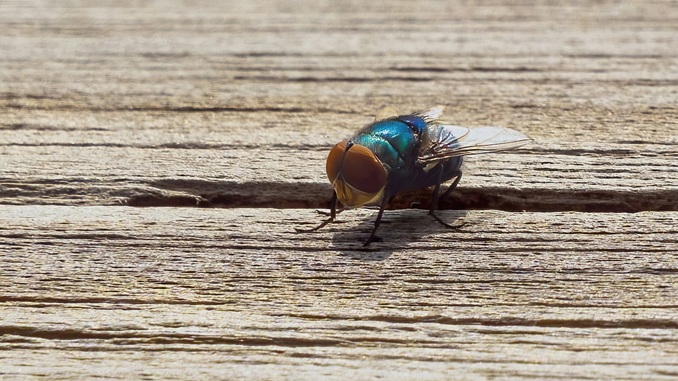
Brooke Rollins, the secretary of the Department of Agriculture (USDA), announced the new sterile fly dispersal facility at the Douglas Port of Entry last week. The facility will target the burgeoning threat of the New World screwworm, which feed on the living tissue of warm-blooded animals.
The USDA pledged a $25 million investment toward the new facility as part of preparedness measures to reopen the port to livestock trade later this month. The facility will also benefit from existing investments from Texas, Mexico, and Panama.
Biggs predicted in a press release that the new facility would further improve the already significant decline in New World screwworm cases over the past year.
“Arizona is leading the way in prevention efforts, and I am grateful that this administration answered my call for assistance,” said Biggs. “I know how hard our state’s ranchers and farmers work for America’s economy and supply chain, which is why I’m doing all I can to protect their cattle.”
The USDA and the Arizona Department of Agriculture will determine the location and operational plan for the facility. The USDA estimated that construction of the facility “could be completed in as little as several months.”
According to the USDA, over the last year its Animal and Plant Health Inspection Service has worked alongside Arizona officials to trap and submit approximately 1,000 flies for testing — none of which were identified as the New World screwworm.
The southern livestock ports are slated for coordinated, phased reopening contingent upon Mexico’s continued adherence to the administration’s Joint Action Plan to combat the New World screwworm. The USDA selected the Douglas Port of Entry as the first to reopen due to the reported strength of livestock in adjacent Sonora, Mexico, and the port’s ability to implement enhanced inspection protocols.
The USDA announced the first confirmed case of New World screwworm in early June. Days afterwards, Biggs led fellow congressmen Abraham Hamadeh (AZ-08), Eli Crane (AZ-02), Paul Gosar (AZ-09), and Juan Ciscomani (AZ-04) in a letter advising Rollins that Arizona was uniquely positioned to assist USDA response efforts in combatting the burgeoning screwworm threat.
In that letter, the congressmen identified the state’s historic Douglas sterile fly facility site and scientific capabilities within the University of Arizona and the Arizona Veterinary Diagnostic Laboratory.
“[The site] remains a strategically valuable location for future production capacity and strengthens Arizona’s ability to support national containment efforts,” stated the congressmen. “The state’s border access, transportation networks, livestock expertise, and university-led research efforts position Arizona to complement USDA’s ongoing investments and make our state an essential partner in preventing an outbreak, safeguarding producers, and strengthening long-term regional stability before this pest can take hold on American soil.”
According to Cochise County officials, a city librarian with the Douglas Public Library, Margaret White, uncovered records earlier this year revealing that Cochise County had helped uncover the sterile insect technique that ultimately eradicated the New World screwworm from the 1960s through the 1980s.
AZ Free News is your #1 source for Arizona news and politics. You can send us news tips using this link.