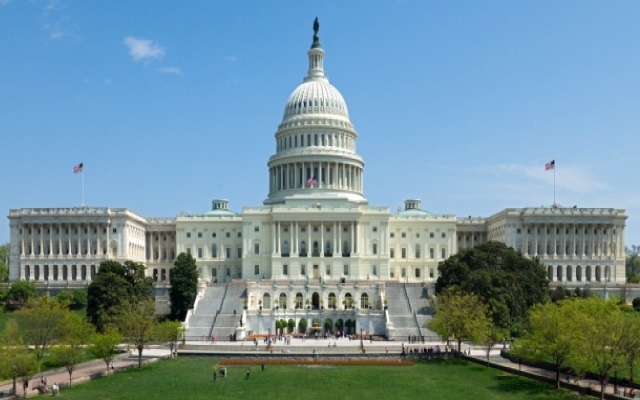
The U.S. House approved legislation Tuesday that would require automakers to provide access to AM broadcast radio as standard equipment in new passenger vehicles sold in the United States.
The AM Radio for Every Vehicle Act of 2025, introduced by Rep. Gus Bilirakis (R-FL), passed Sept. 15 by voice vote under suspension of the rules. The procedure produced no recorded tally identifying how individual House members voted.
Arizona Reps. Eli Crane (R-AZ-02), Greg Stanton (D-AZ-04), Abe Hamadeh (R-AZ-08), and Paul Gosar (R-AZ-09) are among the bill’s cosponsors. The congressional record also lists the late Rep. Raúl Grijalva (D-AZ-07), who died on March 13, 2025, as a cosponsor.
Crane called the voice vote unanimous in a post on X.
“Last night, the House passed the AM Radio for Every Vehicle Act in a unanimous vote,” Crane wrote. “This legislation protects a vital source Arizonans rely on for emergency information, weather updates, and news. Proud to support this measure.”
Last night, the House passed the AM Radio for Every Vehicle Act in a unanimous vote.
This legislation protects a vital source Arizonans rely on for emergency information, weather updates, and news.
Under the House-approved text, the Department of Transportation would have one year after enactment to issue a rule requiring new passenger vehicles to include equipment capable of receiving and playing broadcasts from analog or qualifying digital AM stations.
The requirement would cover vehicles manufactured domestically for sale in the United States, imported into the country, or shipped through interstate commerce. The AM function would have to be installed as standard equipment, accessible to drivers, and provided without an additional fee or surcharge.
The legislation defines passenger vehicles as those designed primarily to carry a driver and no more than 12 passengers. Motorcycles are excluded.
The Transportation Department would generally have up to two years after issuing the regulation to make it effective. Manufacturers that produced no more than 40,000 passenger vehicles for the U.S. market in 2022 would receive at least four years to comply.
During the period before the regulation takes effect, manufacturers selling vehicles without AM reception would be required to provide clear labeling notifying buyers. They also could not charge buyers an additional fee to access AM programming.
Supporters have cited AM radio’s role in delivering emergency information when power, cellular networks, or internet services are unavailable. House Speaker Mike Johnson said local communities depend on the technology during natural disasters.
“When disaster strikes—especially in hurricane and tornado-prone states like Louisiana—local communities rely on AM radio to deliver accurate, up-to-date information and critical safety alerts,” Johnson said.
The Federal Emergency Management Agency’s National Public Warning System consists of broadcast stations equipped with backup communications equipment and generators intended to keep them operating during and after disasters. FEMA says the system can directly reach more than 90 percent of the country’s population. The agency lists KDRI 830 AM in Tucson as Arizona’s Primary Entry Point station.
The bill would require the Government Accountability Office (GAO) to study AM radio’s role in the Integrated Public Alert and Warning System and compare its resilience, accessibility, and effectiveness with other emergency communications technologies. The Transportation Department would also be required to examine possible effects on vehicle safety and automated-driving systems before issuing its regulation.
The Transportation Department, in coordination with FEMA and the FCC, would also be required to report to Congress at least once every five years on whether AM radio remains useful for emergency alerts and whether alternative communications systems could provide comparable coverage.
The Congressional Budget Office (CBO) estimated that implementing the legislation would cost the Transportation Department and GAO approximately $1 million from 2026 through 2031. The CBO said the requirement would principally affect manufacturers of electric vehicles that have removed AM equipment or announced plans to do so.
The CBO also estimated that manufacturers would need to update equipment in approximately 2 million to 2.5 million vehicles annually. The agency projected that the private sector mandate would cost several million dollars per year, remaining below the $214 million threshold used to evaluate private sector mandates in 2026.
The Alliance for Automotive Innovation, a trade association representing major automakers, has opposed the mandate, citing interference between AM signals and electric vehicle propulsion systems. The organization cited a Center for Automotive Research estimate placing the potential industry cost at $3.8 billion over seven years.
The House legislation now moves to the Senate, where Massachusetts Democratic Sen. Ed Markey and Texas Republican Sen. Ted Cruz introduced a companion measure, S. 315. The Senate Commerce, Science and Transportation Committee approved that bill in February 2025, and it was placed on the Senate legislative calendar in April.
When severe weather strikes and the power goes out, Texans need communications they can count on.
AM radio remains a critical lifeline for emergency alerts, local news, weather updates, and other vital information.
The Senate bill currently has 60 cosponsors—37 Republicans, 21 Democrats, and two independents. Arizona Sens. Mark Kelly and Ruben Gallego are not listed among its cosponsors. The Senate has not held a floor vote on either the companion legislation or the House-approved bill.
The U.S. House of Representatives passed Kayleigh’s Law in late August, introduced in April by Rep. Abe Hamadeh (R-AZ-08). The Senate Judiciary Committee has not yet scheduled action on the measure.
H.R. 8481, the Kayleigh’s Law Act of 2026, passed the House by voice vote on Aug. 31; no individual vote tally was recorded. Reps. Andy Biggs (R-AZ-05), Eli Crane (R-AZ-02), Paul Gosar (R-AZ-09), Juan Ciscomani (R-AZ-06), and David Schweikert (R-AZ-01) were original cosponsors.
🇺🇸WATCH🇺🇸
"Mr. Speaker, I rise today as a former prosecutor and as an Arizonan who has seen what happens when the system prioritizes a criminal over the victim."
Congressman Hamadeh takes the House floor to champion his bill, H.R. 8481, the Kayleigh’s Law Act of 2026. pic.twitter.com/Yq4fy8PuHH
— Office of Congressman Abe Hamadeh (@RepAbeHamadeh) August 31, 2026
The Senate companion, S. 5372, was introduced Aug. 7 by Sen. Mike Lee (R-UT) and referred to the Senate Judiciary Committee. No hearing or markup date has been posted.
The bill is named for Kayleigh Kozak, an Arizona mother of five who was sexually abused as a child by her soccer coach. In 2020, 13 years after the offender’s conviction, Kozak was brought back to court when her attacker sought to end his lifetime probation.
🇺🇸WATCH🇺🇸
Congressman Hamadeh promised @kayleigh_kozak that if he got to Congress, he would pass federal Kayleigh’s Law, the lifetime no-contact protection Arizona enacted in her honor.
He introduced it. He pushed it. Yesterday, he brought Kayleigh and her family to the… pic.twitter.com/xYjFyGiQt6
— Office of Congressman Abe Hamadeh (@RepAbeHamadeh) September 1, 2026
Arizona enacted its state version of Kayleigh’s Law through Senate Bill 1653 in 2022. The federal bill would require a court at sentencing to issue a lifetime no-contact order when a victim—or the government with the victim’s consent—requests one following a conviction for a qualifying federal violent felony or sex offense. The order could be suspended or terminated only under limited circumstances specified in the bill. Victims could not be charged a fee for its issuance.
Lee said in August that victims “often have to face their abusers in court over and over again.” Kozak said the harm caused by sexual assault is lifelong and its protections should be as well.
Like too many other abuse victims, @kayleigh_kozak was forced to repeatedly face the soccer coach who assaulted her as a child, just to get courts to keep him away.
Victims deserve protection, not more fear for their safety.
Hamadeh called the House vote “promise made, promise kept.”
In a post on X, Biggs wrote, “The U.S. House did its job to protect victims of certain violent crimes in passing Kayleigh’s Law this week. Now, the U.S. Senate must act before the clock runs out on us in January. We cannot fail these victims. We must send Kayleigh’s Law to the President’s desk.”
The U.S. House did its job to protect victims of certain violent crimes in passing Kayleigh’s Law this week.
Now, the U.S. Senate must act before the clock runs out on us in January.
We cannot fail these victims. We must send Kayleigh's Law to the President's desk.
In a post quoting Biggs, Lee wrote, “Proud to have introduced Kayleigh’s Law in the Senate. Victims should not suffer years of unwanted contact with their abusers. And @RepAndyBiggsAZ is right: as with a large number of important House bills, we need to stop sitting around and PASS IT to President Trump’s desk!”
Proud to have introduced Kayleigh’s Law in the Senate. Victims should not suffer years of unwanted contact with their abusers.
And @RepAndyBiggsAZ is right: as with a large number of important House bills, we need to stop sitting around and PASS IT to President Trump’s desk! https://t.co/mRum5DDMgN
Legislation that does not become law before the 119th Congress ends in January would have to be introduced again in the next Congress.
AZ Free News contacted Lee’s office seeking a timeline for Senate Judiciary Committee consideration. No response was received by the time of publication.
Republicans hold the majority on the Judiciary Committee, which is chaired by Sen. Chuck Grassley (R-IA). The House passed the measure without recorded opposition. Its next potential steps include a committee hearing or markup on S. 5372, or Senate consideration of the House-passed bill.
Until the Senate acts, the Arizona-born proposal remains legislation and has not reached the president.
Congressmen Andy Biggs (R-AZ-05) and Eli Crane (R-AZ-02) are urging the Trump administration to select Arizona State University (ASU) as the home of a new national advanced manufacturing center aimed at strengthening military readiness and the U.S defense industrial base.
Biggs led a letter this month alongside Crane to Secretary of War Pete Hegseth supporting an ASU Research Enterprise proposal to establish the Applied Research for Manufacturing Operational Readiness Center or ARMOR Center, at ASU’s Polytechnic campus.
The U.S. Army is seeking to establish the center to help move advanced manufacturing technologies from research and development into practical military applications.
Under ASU’s proposal, the ARMOR Center would create a pipeline for developing, testing, qualifying, and scaling new manufacturing technologies before transitioning them into the Army’s Organic Industrial Base, defense contractors, and other manufacturing partners.
The center would focus on areas including additive manufacturing, artificial intelligence-enabled manufacturing, advanced composites and point-of-need production.
“Led by institutions and companies like Arizona State University, our state continues to position itself at the forefront of America’s defense industrial base,” stated Congressman Biggs. “Throughout my time in Congress, I have been pleased to support projects and initiatives that strengthen our national defense and help safeguard our citizens, freedoms, and interests.”
I recently led a letter to Secretary of War Pete Hegseth supporting Arizona State University’s application to establish the Applied Research for Manufacturing Operational Readiness Center at ASU’s Polytechnic campus in #AZ05.
Biggs said ASU is well positioned to lead the effort and expressed hope that the administration will select the university’s proposal.
In their letter to Hegseth, Biggs and Crane argued that Arizona’s existing defense industry, military installations, semiconductor investments, and research capabilities make the state a strong candidate for the center.
Arizona is home to major defense and aerospace companies including Raytheon, Honeywell Aerospace, Northrop Grumman, General Dynamics, and Boeing, along with hundreds of suppliers involved in the production of missiles, aircraft, avionics, and electronics.
Biggs and Crane also pointed to more than $210 billion in semiconductor and microelectronics investments announced in Arizona since 2020, arguing that the expanding industry could provide the Army with an established network for developing and scaling advanced manufacturing technologies.
Arizona’s military presence was also highlighted in the letter.
Fort Huachuca and Yuma Proving Ground support Army missions and testing, while Luke Air Force Base, Davis-Monthan Air Force Base, and Marine Corps Air Station Yuma provide additional military infrastructure within the state.
“Few states combine manufacturing, research, testing, and military operations in one place,” wrote Biggs and Crane.
ASU has also invested heavily in manufacturing research at its Polytechnic campus. It’s $200 million interdisciplinary Science and Technology Building 12 contains approximately $6 million in advanced manufacturing equipment, according to the letter.
The university offers bachelor’s, master’s, and doctoral degrees in manufacturing engineering and graduates more than 1,000 students annually across manufacturing, mechanical, and industrial engineering programs.
ASU has also conducted nearly $300 million in Department of War research during the past three fiscal years and leads one of the nation’s eight Microelectronics Commons hubs.
Beyond establishing the ARMOR Center, ASU’s proposal could position Arizona to host a University Affiliated Research Center (UARC) supporting the Army’s modernization and readiness efforts.
Such a center would provide the Army with a long-term research partner focused on developing and transitioning technologies needed for national defense.
Supporters contend that bringing the ARMOR Center to Arizona could strengthen domestic manufacturing capacity, expand the military’s ability to adopt emerging technologies, and reduce vulnerabilities within defense supply chains.
“A UARC in Arizona would deepen the Army’s partnership with a state that already delivers defense manufacturing, semiconductor production, federally funded research, and a skilled engineering workforce,” Biggs and Crane wrote.
Biggs and Crane asked Hegseth to give ASU’s proposal “full and fair consideration,” arguing that Arizona’s combination of defense manufacturing, military infrastructure, research capabilities and engineering workforce makes the state a natural location for the new national center.
Ethan Faverino is a reporter for AZ Free News. You can send him news tips using this link.
President Donald Trump signed a temporary federal funding measure Wednesday that finances government operations through Dec. 11 while Congress works on fiscal year 2027 appropriations.
The House approved the Senate-amended version of H.R. 6500 on Sept. 1 by a vote of 370-48, with 14 members absent. The supporting votes included 193 Republicans, 176 Democrats, and one independent.
Arizona’s House delegation divided 5-4 on the measure.
Republican Reps. Juan Ciscomani (R-AZ-06), Abe Hamadeh (R-AZ-08), and Paul Gosar (R-AZ-09) joined Democratic Reps. Greg Stanton (D-AZ-04) and Adelita Grijalva (D-AZ-07) in voting for the bill. Republican Reps. David Schweikert (R-AZ-01), Eli Crane (R-AZ-02), and Andy Biggs (R-AZ-05) joined Democratic Rep. Yassamin Ansari (D-AZ-03) in opposing it.
The Senate passed the measure Aug. 8 by a vote of 90-6. One senator voted present and three did not vote. Arizona Democratic Sens. Mark Kelly and Ruben Gallego both supported the bill.
The enrolled legislation generally continues programs covered by the 12 annual appropriations acts at rates derived from fiscal year 2026 funding. Those appropriations encompass defense, homeland security, veterans’ services, transportation, housing, health, education, federal land management, and other government operations.
The law directs agencies to take limited funding actions during the stopgap period and generally prevents projects that received no money or authority during fiscal year 2026 from being initiated. It also permits agencies to fund civilian compensation at rates needed to avoid furloughs after reducing or deferring eligible administrative expenses.
For Arizona, the measure maintains funding for federal personnel and operations along the international border, at military installations, in national forests and parks, and throughout the state’s federal health care and veterans’ systems.
Ciscomani said a shutdown would have disrupted military pay, required Customs and Border Protection personnel and other federal law enforcement officers to continue working without pay, and affected services for nearly 80,000 veterans in his southern Arizona district.
Today, I voted for a bipartisan, temporary Continuing Resolution (CR) to prevent another government shutdown. A government shutdown is not a political game; it has REAL consequences. It disrupts pay for our troops, leaves CBP agents and law enforcement working without pay, and…
“A government shutdown is not a political game; it has REAL consequences,” Ciscomani said. “It disrupts pay for our troops, leaves CBP agents and law enforcement working without pay, and disrupts services for the nearly 80,000 veterans I have the privilege of representing.”
The stopgap also keeps some new fiscal year 2027 spending from beginning until Congress enacts regular appropriations. Ciscomani said operating under a continuing resolution could postpone $42.7 million in proposed projects for Arizona’s Sixth Congressional District that had cleared initial appropriations hurdles.
He concluded, “I have NEVER supported a government shutdown—partial or full. Arizona families should not have to pay the price for Washington’s dysfunction. The House did the right thing today by coming together to keep the government open, keep essential services running, and continue delivering for Arizona.”
One provision with a direct Arizona connection authorizes the Interior Department to fund its assumption of the remaining responsibilities of the Office of Navajo and Hopi Indian Relocation.
The relocation office was created to administer benefits arising from the federal division of disputed Navajo and Hopi lands in northeastern Arizona. Its remaining work includes administrative appeals, fiduciary responsibilities, land management, and livestock obligations. Congress directed Interior Department to begin handling those outstanding responsibilities as part of the office’s closure, according to a Congressional Research Service report updated in February.
The law also provides additional funding authority for the Indian Health Service (IHS) at operating rates of $75.8 million for health services and $8.3 million for facilities. The money is intended to staff and operate facilities opened, expanded or renovated during fiscal years 2022, 2026 and 2027. The legislation states national account rates and leaves facility-level allocations to the agency.
The IHS maintains Phoenix, Navajo, and Tucson administrative areas with hospitals, clinics, and health centers located throughout Arizona. The Phoenix Area system provides health and community services to approximately 180,000 Native Americans in Arizona, Nevada, and Utah through service units and tribally operated facilities. The Phoenix Indian Medical Center alone provides direct services to more than 171,000 patients.
Wildfire and disaster operations also received special treatment in the stopgap.
The Interior Department and U.S. Forest Service may spend at rates needed for wildfire suppression during the approximately 10-week funding period. Arizona fire officials entered 2026 anticipating increased fire activity because of persistent dryness, fine fuels, drought-stressed vegetation, and tree mortality.
The law gives the Federal Emergency Management Agency (FEMA) similar flexibility to fund disaster response and recovery. It also extends the National Flood Insurance Program through Dec. 11.
Transportation programs that were scheduled to expire Sept. 30 will continue through Dec. 11 under a separate division of the legislation. The extension provides a proportional share of fiscal year 2026 highway and mass transit funding and extends the federal government’s authority to spend from the Highway Trust Fund.
Federal funding accounts for most of the money used in Arizona’s highway construction program. ADOT’s 2026-2030 program includes $2.77 billion for pavement and bridge preservation, $742.9 million for highway expansion, and $603.6 million for modernization.
The law also authorizes the Transportation Department to spend at the rate needed to maintain Essential Air Service. The program subsidizes commercial flights connecting Page and Show Low with Phoenix and Prescott with Denver and Los Angeles.
The Transportation Department’s May 2026 program report listed annual subsidies of approximately $4.4 million for Page, $5.9 million for Show Low, and $6.3 million for Prescott, totaling about $16.6 million.
Federal nutrition and housing programs serving Arizona residents will also continue.
The law maintains mandatory payments and activities under the Food and Nutrition Act, which covers the Supplemental Nutrition Assistance Program (SNAP). Arizona reported that 451,762 people received SNAP benefits in May 2026.
The measure allows the Department of Agriculture to spend at rates needed to maintain participation in the Special Supplemental Nutrition Program for Women, Infants and Children (WIC) and the existing caseload for the Commodity Supplemental Food Program (CSFP). Arizona administers the latter program as the Commodity Senior Food Program, providing monthly USDA food packages to qualifying residents who are at least 60 years old. The state projected an average monthly caseload of 29,931 people during fiscal year 2026 in its budget materials.
The Department of Housing and Urban Development may use prior-year balances to prevent families from losing tenant-based rental assistance because of insufficient funding during the 2026 calendar-year cycle. The City of Phoenix’s Housing Choice Voucher program alone assists more than 7,000 households.
H.R. 6500 also extends a series of veterans’ programs through Dec. 11. Those provisions cover rural mental-health services, suicide-prevention grants, assistance for family caregivers, ambulance reimbursement for qualifying rural veterans, housing support for homeless veterans, transportation to VA facilities, and adaptive sports programs for disabled veterans and service members.
The Department of Veterans Affairs estimated Arizona’s veteran population at 467,010 in fiscal year 2025. Nearly 160,000 Arizona veterans received disability compensation totaling an estimated $4.24 billion annually, while more than 53,000 participated in VA education programs.
The law also permits the Small Business Administration to adjust spending to meet demand for 7(a), 504 and Small Business Investment Company financing. The 7(a) program is the agency’s primary lending program and guarantees qualifying loans for real estate, equipment, working capital, business acquisitions, and other expenses.
H.R. 6500 keeps those operations and programs funded until Congress enacts the applicable fiscal year 2027 appropriations bill or the stopgap expires on Dec. 11.
The U.S. House passed legislation mandating victims of certain sexual or violent crimes have lifetime protections against their abusers.
Rep. Abe Hamadeh (R-AZ-08) sponsored the Kayleigh’s Law Act of 2026, or Kayleigh’s Law, named after Arizona native and survivor advocate Kayleigh Kozak. Reps. Andy Biggs (R-AZ-05), Eli Crane (R-AZ-02), Paul Gosar (R-AZ-09), Juan Ciscomani (R-AZ-06), and David Schweikert (R-AZ-01) were among the bill’s original cosponsors.
The legislation passed via unanimous voice vote on Monday.
In an address on the House floor, Hamadeh said that the bill would ensure that the criminal justice system would no longer prioritize the desires of abusers over the safety of victims.
In a press release, Hamadeh stated that Kayleigh’s Law would “eliminate the ‘legal tug-of-war’” requiring survivors to face their abusers in court.
“This bill is simple. When a predator is convicted, federal courts must issue a lifelong no-contact injunction. Not until probation ends. Not until some judge decides the offender has ‘moved on.’ For life,” said Hamadeh. “Victims should never again have to fill out another form, sit across from their abuser, or look over their shoulder because the sentence ran out and the system shrugged.”
Kozak has attested in many interviews in recent years that she was victimized by her middle school P.E. teacher who was also her soccer coach. Her abuser requested an end to probation in 2020, 13 years after his conviction, and Kozak was given three weeks’ notice.
“Two times as an adult she was hauled back to look at the man who destroyed her childhood just to keep him away. No victim should ever have to do that,” said Hamadeh.
🇺🇸WATCH🇺🇸
"Mr. Speaker, I rise today as a former prosecutor and as an Arizonan who has seen what happens when the system prioritizes a criminal over the victim."
Congressman Hamadeh takes the House floor to champion his bill, H.R. 8481, the Kayleigh’s Law Act of 2026. pic.twitter.com/Yq4fy8PuHH
— Office of Congressman Abe Hamadeh (@RepAbeHamadeh) August 31, 2026
Arizona law already requires courts to issue a lifelong no-contact injunction for sex offenders. This federal version would expand that no-contact mandate to certain violent felons.
“Contact” was defined to mean all direct or indirect communication, transmission, or physical interaction, including written, oral, electronic, digital, or physical means and communications executed through an intermediary or technological systems.
The Arizona version of this legislation was enacted in 2022, and is also named Kayleigh’s Law.
Biggs’ running mate for Arizona Governor, Sine Kerr, was the sponsor that led passage of the Arizona version of Kayleigh’s Law.
Today, the U.S. House unanimously passed Kayleigh’s Law by voice vote.
This victim-centered, public safety-focused legislation ensures that victims of violent crime have meaningful protections at the federal level while also serving as a model for states seeking to better… pic.twitter.com/XgJyXsdM8B
According to Hamadeh’s office, more than 1,000 child sex abuse survivors in Arizona benefited from the state’s lifetime no-contact protections within the first year of the law’s enactment.
“Kayleigh’s Law would give every American victim of a federal sex crime or a violent felony that same shield,” said Hamadeh. “Healing cannot begin if the abuser can show up again the day after release. Justice is not complete if the victim still lives in fear. Arizona already closed that gap; it is time the federal government did the same, so no American, no matter which state they live in, is left unprotected after a federal conviction.”
Three of Kozak’s five children were present with her for the passage of the bill.
A related bill, also titled Kayleigh’s Law Act of 2026, is making its way through the Senate under sponsorship from Utah Sen. Mike Lee. It was read twice and referred to the Senate Judiciary Committee last month.
AZ Free News is your #1 source for Arizona news and politics. You can send us news tips using this link.