Applicants to Arizona State University’s (ASU) law school may have to take their admissions test on their own, but they won’t have to do their own applications.
ASU Sandra Day O’Connor College of Law will now allow applicants to use generative artificial intelligence (AI) to complete their applications. In a press release at the end of last month, the law school stated that generative AI will be a necessary tool for upcoming lawyers.
“In our mission to educate and prepare the next generation of lawyers and leaders, law schools also need to embrace the use of technology such as AI with a comprehensive approach,” stated the school.
Stacy Leeds, Willard H. Pedrick Dean and Regents Professor of Law, added that generative AI also allowed for more equitable admissions.
“Our law school is driven by an innovative mindset. By embracing emerging technologies, and teaching students the ethical responsibilities associated with technology, we will enhance legal education and break down barriers that may exist for prospective students,” said Leeds. “By incorporating generative AI into our curriculum, we prepare students for their future careers across all disciplines.”
Generative AI consists of large language model (LLM) tools: one of the most popular models is ChatGPT.
Last month, two New York lawyers were sanctioned for relying on a ChatGPT-generated brief that cited fake cases. The judge punished the pair for not conducting a proper review of the AI brief and for insisting that the fake cases cited were real, not for relying on generative AI in the first place.
The pair paid $5,000 for their oversight. The lawyers stated that they didn’t know that ChatGPT could create fake cases. However, the lawyers’ firm issued a statement disagreeing that the use of generative AI constituted bad faith.
“We made a good faith mistake in failing to believe that a piece of technology could be making up cases out of whole cloth,” stated the firm.
The New York lawyers may well become a case study at ASU. ASU’s law school also offers courses through its Center for Law, Science, and Innovation (LSI) on the legal questions of AI use, especially within the legal field.
One of LSI’s AI-centered projects, the Soft Law Governance of Artificial Intelligence, proposes using “soft law” governance for AI rather than existing legal frameworks. Soft law is a blanket term for recommendations or guidelines, rather than law. The project is funded by the Charles Koch Foundation.
ASU’s law school began allowing AI-generated applications this month.
Corinne Murdock is a reporter for AZ Free News. Follow her latest on Twitter, or email tips to corinne@azfreenews.com.
Arizona State University (ASU) leaders accused of retaliation by a former employee for hosting two “faith-based” events have kept quiet on the allegations raised against them.
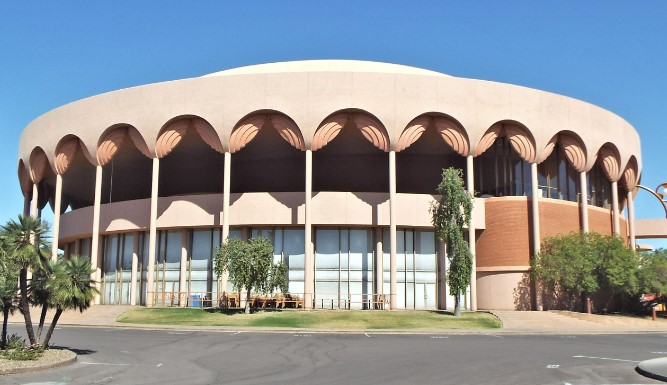
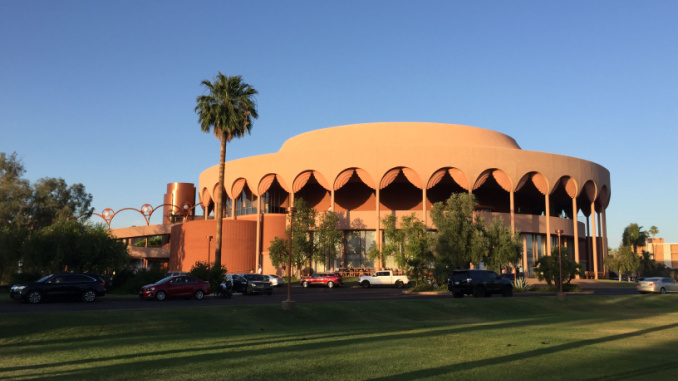
The former events operator of the ASU Gammage theater alleged retaliation in a letter last week to the Arizona Board of Regents (ABOR) for allowing “faith-based” events to take place.
The complainant, Lin Blake, alleged in a timeline spanning six pages that she had only received positive performance reviews for the nearly three years leading up to the controversial events. It wasn’t until January, the month leading up to the controversial events, that Blake faced challenges to her work performance. Blake allegedly experienced unprecedented scrutiny throughout the planning, preparation, production, and post-event processes concerning the event, though she noted the event was approved last fall.
“This marked the beginning of the micromanagement of my duties and the overall hostile work environment that would become my future,” stated Blake.
AZ Free News reached out to each of the individuals allegedly behind the intimidation campaign and punitive measures against Blake regarding the controversial events. None of them responded by press time.
One of the controversial events, hosted by the now-dissolved T.W. Lewis Center at Barrett Honors College, featured conservative speakers Charlie Kirk, president and founder of activist group Turning Point USA; Dennis Prager, radio host and founder of PragerU; and Robert Kiyosaki, a personal finance book bestseller and PragerU presenter.
The other controversial event, hosted by Bethel Chandler Church, focused on raising awareness for sex trafficking.
Ahead of the events, Blake alleged that ASU Gammage leadership convened a meeting to express concern that she was allowing a “church program” and “white supremacists” to have a platform at their theater. She also alleged enduring public condemnation and boycotting from her colleagues.
“While I was left with the obligation to run two large and high-profile events, my colleagues that did not show up to work received praise for standing by their personal beliefs,” said Blake. “ASU Gammage staff and leadership should not discriminate against any views, yet they did in plain sight.”
In addition to the accusations of supporting white supremacy, AZ Free News reported previously that Gammage Executive Director Colleen Jennings-Roggensack was alleged to have told staff that they were aligned in beliefs, that they all had voted for President Joe Biden and Gov. Katie Hobbs — even if they hadn’t.
At a faculty and leadership meeting following the upbraiding from Jennings-Roggensack, Blake said she was singled out to explain Gammage’s core values.
Blake further alleged that two ASU Dean of Students representatives breached security to enter a restricted backstage area and intimidate former Lewis Center director Ann Atkinson.
“[I]f speech was truly free at ASU, producing events with unpopular viewpoints would not have cost my job. There is no freedom of speech when it comes with the punishment of job loss for those who administer it,” wrote Blake.
The city of Phoenix’s “cool” pavement is making people hotter, something the city learned from their pilot program study with Arizona State University (ASU) — but chose to prioritize its sustainability goals to combat climate change instead.
The 2021 joint study discovered that the “cool” pavement makes people feel up to six degrees hotter: the material deflects sunlight, causing people to absorb it. The study declared the increased human discomfort a “necessary tradeoff” for reducing the temperature of city infrastructure.
The study not only reported negative physical impacts resulting from the pavement; survey respondents also relayed negative feelings about the aesthetics, safety, and durability of the pavement. Residents reported that the pavement was “blinding” due to its light color, and that the tire and oil marks stained the pavement in ugly ways. They also reported the pavement being slick, and even wearing off at a fast rate.
It appears that ASU researchers and Phoenix leaders were aware even prior to the study that the cool pavement would make people hotter. At the start of the pilot program, ASU professor David Sailor revealed that the same material was planned for use in the 2020 Summer Olympics marathon route in Japan, but that the material would likely make the runners hotter due to the solar reflection.
Despite the report indicating overall negative impacts to the human body and resident sentiments, the city decided to make the pavement program permanent. Since 2019, the city has spent over $12 million perArizona’s Family.
The city announced last month that it installed over 100 miles of the cool pavement.
🆒 NEWS: Three years after launching our Cool Pavement program, we've installed over 100 miles of cool coating across Phoenix!
This innovative coating is produced locally and is proven to reduce street surface temperatures by up to 12 degrees! 😎 pic.twitter.com/XLqoX3AkjM
While the city increases the coverage of pavement making people hotter, public health officials have been warning residents of the consequences of long-term exposure to record summer heat.
Temperatures are likely to reach record territory this weekend. Be careful out there and please practice good heat safety. #azwx#cawxpic.twitter.com/AlI3j0cfTh
In marketing their initiative, city leaders have pointed out that the pavement makes the ground 10-12 degrees cooler. While that may be true, the 2021 Phoenix-ASU report revealed that the surfaces cool by deflecting half of that heat to people.
Despite the 2021 report, city leaders claim that the material makes people feel cooler. Phoenix Mayor Kate Gallego claimed the pavement makes the city more “comfortable.”
Cool pavement has also presented an opportunity for city leaders to market Phoenix as innovative in terms of sustainability efforts, namely with energy usage. Gallego has cited the city’s membership with C40 Cities, a progressive climate change organization on whose steering committee Gallego sits as vice chair, as the driving force behind cool pavement.
Over the past 4 years, the most meaningful movement on climate has come from cities and states. #PHX has one of the largest cool pavement projects in the country, we lead the nation for solar installed on municipal property & we’re ensuring #RenewableEnergy is accessible for all. https://t.co/Z1tlCXcWLg
Sailor, one of the ASU researchers, projected in a 2020 interview during the ASU-Phoenix pilot program that the technology would save ratepayers up to $75 million per degree in energy costs.
Another researcher on the study, ASU professor David Hondula, was named director of the office overseeing the pavement initiative within weeks of the study’s publication.
The California-based manufacturer for the pavement material, GuardTop, opened its downtown Phoenix facility to create the product in 2017. Since 2022, after Phoenix made its pavement initiative permanent, the company has exclusively produced the material at its Phoenix facility, naming it “Phoenix Gray.” Australia, Canada, Singapore, and the United Arab Emirates have purchased the cool pavement material from the company.
GuardTop’s founder and CEO, Bob Koleas, is an alumnus of the University of Arizona.
Corinne Murdock is a reporter for AZ Free News. Follow her latest on Twitter, or email tips to corinne@azfreenews.com.
On Tuesday, a joint committee of the Arizona legislature launched an investigation into allegations of censorship at Arizona State University (ASU). Lawmakers issued a 60-day deadline to conduct the investigation.
The directive arose from the Joint Legislative Ad Hoc Committee on Freedom of Expression at Arizona’s Public Universities hearing concerning the T.W. Lewis Center, shuttered this year after the revocation of $400,000 in annual funding from its namesake, Tom Lewis, who cited “left-wing hostility and activism” as his reason for defunding the program.
Lewis’ contention arose from the efforts of 37 Barrett Honors College faculty members, who launched a coordinated campaign to prevent an event featuring prominent conservative speakers Dennis Prager and Charlie Kirk. Prager testified at Tuesday’s hearing; he also published an opinion piece on the event ahead of the hearing.
.@DennisPrager says Arizona State University Barrett Honors College faculty are intellectual & moral lightweights: "They fear any conservative coming for 90 minutes, because in 90 minutes I can undo the 4 years of the indoctrination that these leftists give their students." pic.twitter.com/tmXn56rFih
State Sens. Anthony Kern, co-chair (R-LD27), Frank Carroll (R-LD28), Sally Ann Gonzales (D-LD20), Christine Marsh (D-LD04), and J.D. Mesnard (R-LD13) served on the committee, as did State Reps. Quang Nguyen (R-LD01), Lorena Austin (D-LD09), Analise Ortiz (D-LD24), Beverly Pingerelli (R-LD28), and Austin Smith (R-LD29). Kern and Nguyen served as co-chairs.
“This is to get to the bottom of a state-funded university that is not meeting its obligation to freedom of expression and freedom of speech,” said Kern.
The center relied on an annual budget of around $1 million; ASU representatives explained that the center would live on through the classes taught, though the actual center itself and the executive director at its helm, Ann Atkinson, would be gone.
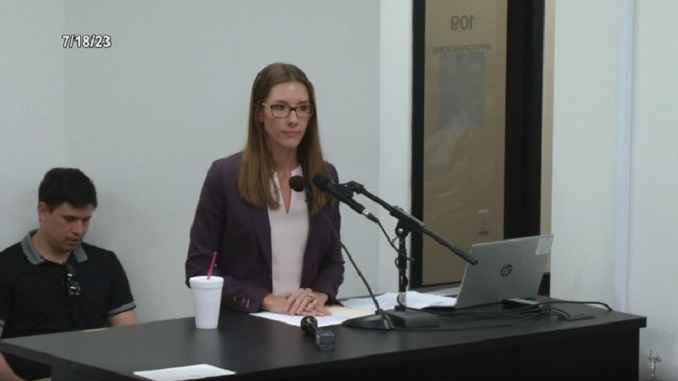
ASU Vice President of Legal Affairs Kim Demarchi explained that Lewis’ funding provided for career development and education. Demarchi testified that ASU considered what programs it could continue without Lewis’ funding, and declared that they could only sustain the faculty without Lewis’ funding. Demarchi also shared that the Barrett Honors faculty weren’t punished in any way for the letter or allegations of intimidation.
“It is possible it [their letter] has a chilling effect,” said Demarchi.
However, Demarchi clarified that a professor would have to explicitly threaten a student’s grade in order to be in violation of university policy.
Atkinson went public with the closure of the Lewis Center last month. (See the response from ASU). She toldAZ Free News that the university turned down alternative funding sources that would make up for the loss of Lewis’ funding necessary to keep the Lewis Center running.
Nguyen opened up the hearing by recounting his survival of Vietnam’s communist regime as a child, and comparing that regime’s hostility to free speech to the actions of Barrett Honors College faculty.
“My understanding is that there is an effort to prevent conservative voices from being heard,” said Nguyen. “I crossed 12,000 miles to look for freedom, to seek freedom.”
Nguyen expressed disappointment that none of the 37 faculty members that signed onto the letter showed up to testify in the hearing. He said if he accused someone, he would show up to testify.
Democratic members of the committee contended that the event occurred and therefore censorship hadn’t taken place. Kern said the occurrence of the event doesn’t resolve whether freedom of speech was truly permitted, citing the closure of the Lewis Center.
ASU Executive Vice Provost Pat Kenney emphasized the importance of freedom of expression as critical to a free nation. Nguyen asked whether Kenney read the Barrett letter, and agreed to it. Kenney said the letter was freedom of expression. He claimed the letter didn’t seek cancellation of the event.
“When faculty speak out on their own like that, they’re covered on the same topic we’re here about, which is free speech,” said Kenney.
ASU representatives claimed near the beginning of the hearing that Lewis and ASU President Michael Crow had discussed the withdrawal of funding. However, toward the end of the hearing Kern announced that he’d received information from a Lewis representative that the pair hadn’t discussed the funding, and accused ASU representatives of lying.
Ortiz called the anonymous complaints from students hypotheticals because no formal complaints were lodged. She also claimed that the hearing was merely an attempt to delegitimize public and higher education. Marsh claimed that lawmakers shouldn’t consider the claims of student fears of retaliation because the students should’ve gone to ASU directly.
Nguyen asked whether ASU would defend guest speakers, such as himself, if ASU faculty were to lodge claims of white nationalism. Kenney said that, in a personal capacity, ASU faculty were free to make their claims, but not if they spoke out on ASU’s behalf.
Atkinson contested with the characterization that the Barrett faculty spoke out in their personal capacity. She pointed out that Barrett faculty signed the letter in their capacity as ASU faculty, emailed her using their ASU emails, and sent communications to students about opposing the event using ASU technology.
Ortiz announced receipt of a letter from the Arizona Board of Regents (ABOR) on the outcome of the requested investigation into the incident, the results of which Kern and the rest of the committee appeared to not have been made aware, determining that no free speech violations took place at ASU.
✅FOR IMMEDIATE RELEASE✅ State Representative @azaustinsmith Calls on Board of Regents to Investigate & Report on Free Speech Concerns at Arizona State University
“Free speech is paramount to the future of our Republic. Higher education taxpayer-funded universities must be held… pic.twitter.com/GllgAZhLiq
— Arizona House Republicans (@AZHouseGOP) June 21, 2023
Marsh speculated that the professors didn’t show up because they faced death threats, citing media attention and conservative speaker Charlie Kirk’s Professor Watchlist. Kern said that would be a “lame excuse.” He also pointed out that the professors launched a national campaign and initialized bringing themselves into a bigger spotlight.
“You’re making excuses where we don’t know that’s the case,” said Kern.
Atkinson said that she could provide “dozens, if not hundreds” of students that could testify to experiencing faculty intimidation. She also claimed that Williams told her to avoid booking speakers that were political.
“We allow the speaker but you have to take the consequences,” said Atkinson, reportedly quoting Williams.
Atkinson testified that TV screen ads were removed and flyers were torn down following the Barrett Honors faculty letter. She also said she shared the information for the person responsible on June 13, yet it appears ASU took no action. ASU said they weren’t aware of any advertising for the event pulled.
Additionally, Atkinson testified that Williams pressured her to postpone the event “indefinitely.” She noted that Williams interpreted ASU’s policy of not promoting political campaigns as not allowing political speech at all.
“We were in an environment telling us that this was ‘hate speech,’” said Atkinson.
Atkinson said she was directed by leadership ahead of the event to issue a preliminary warning that the event contained potentially dangerous speech.
Gonzales told Atkinson that hate speech doesn’t qualify as constitutionally protected speech. However, the rules attorney corrected her that the Supreme Court ruled hate speech as protected.
Arizona Senate Democrats had tweeted that "hate speech" doesn't qualify as free speech. Sen. Mesnard reminds Democrats present of the Supreme Court 8-1 ruling for Westboro Baptist Church that the First Amendment protects "hate speech." pic.twitter.com/tJT3laTbv7
ASU professor Owen Anderson also testified. He said that he’s previously had to get the free speech rights organization Foundation for Individual Rights and Expression (FIR) involved twice due to faculty attempts to suppress free speech. Anderson also said that faculty have attempted to restrict speech by adding anti-racism and DEI to policy on class content and annual reviews of professors.
“Insults abound, but rational dialogue is rare. What we need are administrators that call these faculty to higher conduct,” said Anderson.
In closing, Kern said he doesn’t trust ASU, the University of Arizona, or ABOR. He argued that ABOR hadn’t issued a real investigation and called their report “typical government fluff [and] garbage.” Kern also called for the firing of Barrett Honors College Dean Tara Williams.
Corinne Murdock is a reporter for AZ Free News. Follow her latest on Twitter, or email tips to corinne@azfreenews.com.
It looks like we struck a nerve at one of the largest universities in the United States. Last week, the Free Enterprise Club published an article on Arizona State University’s (ASU) failure to uphold free speech. The article came in the aftermath of an event held by the T.W. Lewis Center for personal development—a center of the Barrett Honors College—that featured prominent conservative speakers like Robert Kiyosaki, Dennis Prager, and Charlie Kirk.
While the event was allowed to proceed, it faced a campaign from 39 of the 47 faculty from the honors college who tried to shut it down. Then, in the months following the event, the center was not only dissolved, but two staff members lost their jobs. Now, ASU has offered a “fact check” of our article in a desperate attempt to save face. And as you might expect, it’s another swing and miss…