by Corinne Murdock | Jan 25, 2023 | Education, News
By Corinne Murdock |
Arizona’s three public universities have this to say to potential employees: those opposed to modern diversity ideology need not apply.
As of last fall, Arizona State University (ASU) required diversity statements from approximately 81 percent of job applicants; Northern Arizona University (NAU) required diversity statements from 73 percent of job applicants; and the University of Arizona (UArizona) required diversity statements from 28 percent of job applicants. This data comes from a report issued earlier this month by the Goldwater Institute, a right-leaning public policy think tank.
The Goldwater Institute noted that universities both in Arizona and nationwide have even gone so far as to swap the traditional cover letter requirement with a diversity, equity, and inclusion (DEI) statement. The universities also encouraged applicants to incorporate critical race theory (CRT) terminology in written portions of their applications.
Though diversity efforts were long underway at these universities, the death of George Floyd in 2020 accelerated their progress at the urging of students, activists, and community members.
For UArizona and NAU, these diversity commitment disclosures are part of their Diversity Strategic Plan (DSP); ASU also implements a diversity plan, though they don’t refer to it as a “DSP.” These diversity plans are executed through independent administrative offices. For UArizona, it’s the Office of Diversity & Inclusion (ODI). For NAU, it’s the Center for University Access and Inclusion; they also have a dedicated “Diversity Fellow” or “Diversity Commission” to oversee various units at the university, which they call a larger effort to make NAU a “True Diversity University.” For ASU, it’s the Office of Inclusive Excellence.
UArizona asked applicants to issue a 500-word minimum personal statement describing their personal philosophy and future commitment to inclusivity.
Last September, NAU advanced its DEI efforts by requiring applicants to issue a “diversity, equity, inclusion, and justice” (DEIJ) statement. As part of this statement, applicants had to express comprehension of intersectionality, a commitment incorporating diversity ideology in the classroom and in research, and diversity-related community service and activities.
In one example given concerning ASU, the university asked postdoctoral fellow applicants to write a “diversity statement”: how their past or potential contributions to DEI efforts would advance the university’s diversity plan.
The universities’ push for commitment to diversity ideology extends beyond faculty. As AZ Free News reported earlier this month, the UArizona College of Medicine requires students to complete diversity training, in addition to faculty and staff. UArizona is also attempting to make law school admissions more equitable by pushing for an alternative to the LSAT.
UArizona has consistently ranked high for most DEI staff.
Last May, NAU proposed that students take a 12-credit general studies program focused on diversity. Backlash prompted the university to hide the proposal behind a login page.
“The 12 credits of diversity requirements are unprecedented and puts [sic] NAU at the forefront of higher education,” stated NAU.
In 2021, ASU launched a DEI curriculum for K-5 students through its K-12 online school, ASU Prep Digital.
Corinne Murdock is a reporter for AZ Free News. Follow her latest on Twitter, or email tips to corinne@azfreenews.com.
by Corinne Murdock | Dec 28, 2022 | Education, News
By Corinne Murdock |
Northern Arizona University (NAU) will offer illegal immigrant scholarships for the 2023-2024 academic year — even if they’re eligible for deportation. NAU partnered with TheDream.US, a scholarship program fund operated by the New Venture Fund: one nonprofit arm of the leading leftist dark money networks, Arabella Advisors.
The scholarships aren’t exclusively earmarked for Deferred Action for Childhood Arrivals (DACA) and Temporary Protected Status (TPS) recipients. Any illegal immigrant that came to the U.S. before the age of 16 and before 2017 may apply for these scholarships.
In a statement, NAU President José Luis Cruz Rivera said that the scholarships aligned with their university’s goal to make higher education accessible to all students. Rivera credited the passage of Proposition 308 for affirming this move.
“Through this partnership, NAU will further the will of the people of Arizona as expressed in the passage of Proposition 308, which affords Arizona Dreamers with in-state tuition and provides an invaluable pathway to upward economic mobility and social impact,” said Rivera.
Arizona State University (ASU), Benedictine University, and Grand Canyon University (GCU) also partner with TheDream.US.
Prop 308 awards in-state college tuition to Dreamers; voters approved the measure narrowly, 51 to 49 percent. The proposition was backed by at least $1.2 million of out-of-state dark money networks.
TheDream.US reports that at least 1.3 million illegal immigrant youth are eligible for DACA. Of the approximately 98,000 who graduate from high school each year, the program estimated that only five to 10 percent (65,000 to 130,000) enroll in college on average.
Per AZ Free News past reporting, New Venture Fund (NVF) has initiatives outside of immigration reform advocacy. NVF launched the Fair Elections Center, which is behind the progressive elections reform activist project, Campus Vote Project (CVP).
In October, Secretary of State Katie Hobbs, now governor-elect, selected CVP Vice Chair Anusha Natarajan for the 2022 John Lewis Youth Leadership Award: a Barretts Honors College student, Andrew Goodman Fellow, and digital producer for the student newspaper at Arizona State University (ASU).
In 2020, Oscar Hernandez Ortiz — a DACA and TheDream.US scholarship recipient, strategist with the Arizona Bar Foundation, former fifth-grade teacher, Greater Phoenix Economic Council member, ASU graduate, former state legislature policy intern, and Arizona Department of Education Latinx Advisory Council member — wrote an Arizona Republic op-ed attacking the Trump administration’s efforts to end DACA. While at ASU, Ortiz founded the Undocumented Students for Education Equity, a resource hub for illegal immigrants.
NAU isn’t the only partner school for TheDream.US. The program lists over 80 “Partner Colleges.”
TheDream.US offers two scholarship types: the National Scholarship, which the program suggests for Arizona applicants, offers up to $16,500 for an associate degree and $33,000 for a bachelor’s degree; and the Opportunity Scholarship, which offers up to $80,000 for a bachelor’s degree to illegal immigrant students located in states without access to college because they either must pay out-of-state tuition or can’t gain admission to state universities. Applications close Feb. 28.
(Note: TheDream.US removed award amounts from its National Scholarship page earlier this year).
TheDream.US founders are: Don Graham, chairman of Graham Holdings Company (formerly The Washington Post), former director of Facebook, and former member of the Pulitzer Prize Board; Carlos Guitierrez, chairman and CEO of Empath, former chairman and CEO of Kellogg’s, and former Secretary of Commerce for the Bush administration; and Henry R. Muñoz III, former finance chairman for the Democratic National Committee.
Among senior staff at TheDream.US: its president Candy Marshall, the former chief human resources officer for the Bill & Melinda Gates Foundation; director Maria Gabriela Pacheco, who immigrated illegally to the U.S. as a child; communications manager Sadhana Singh, a recipient of DACA and a TheDream.US scholarship; program manager Melanny Buitron, a DACA recipient; data manager, and Camila Salkhov, a Dreamer.
Corinne Murdock is a reporter for AZ Free News. Follow her latest on Twitter, or email tips to corinne@azfreenews.com.
by Corinne Murdock | Dec 11, 2022 | News
By Corinne Murdock |
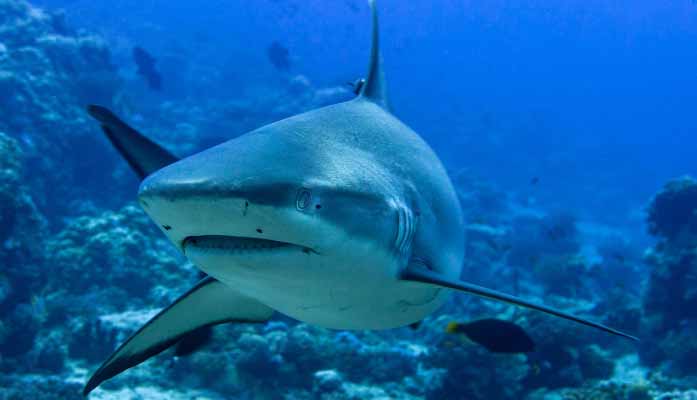
Arizona State University (ASU) researchers grapple with some of the most pressing questions of our modern political landscape — most recently, whether “Shark Week” is guilty of a racism that perpetuates negative perception of sharks.
One of the study co-authors, ASU Postdoctoral Scholar David Shiffman, speculated to The Washington Post that the lack of diversity was purposeful. He pointed out that there were more white male experts and commentators than women, specifically men named “Mike.”
“When there are hundreds of people of color interested who work in this field, [and] when my field is more than half women, maybe it’s not an accident anymore that they’re only featuring white men,” stated Shiffman.
The study noted that shark conservation efforts were hindered, in part, by presenting inaccurate facts, fearmongering, bias, and inaccurate representations of scientists.
“In addition to the logistical difficulties of effectively conserving wide-ranging marine species, shark conservation is believed to have been hindered in the past by public perceptions of sharks as dangerous to humans,” stated the study. “Shark Week is a high-profile, international programming event that has potentially enormous influence on public perceptions of sharks, shark research, shark researchers, and shark conservation.”
The study went on to posit that white men were partly to blame for negative perceptions and limited conservation messaging concerning sharks. Shiffman and five other researchers analyzed 32 years of Shark Week documentaries (272 episodes) to draw their conclusions.
“Shark Week’s depictions of research and of experts are biased towards a small set of (typically visual and expensive) research methodologies and (mostly white, mostly male) experts, including presentation of many white male non-scientists as scientific experts,” stated the study’s abstract. “While sharks are more often portrayed negatively than positively, limited conservation messaging does appear in 53% of episodes analyzed. Results suggest that as a whole, while Shark Week is likely contributing to the collective public perception of sharks as bad, even relatively small alterations to programming decisions could substantially improve the presentation of sharks and shark science and conservation issues.”
The study broke down “Shark Week” episodes by the rhetoric used, themes, and incorporated research methods, in addition to the demographics of featured experts and commentators. The publication noted that the show often presented non-scientists or those without peer-reviewed publications as experts.
The study also noted that none of the featured hosts or experts used non-binary pronouns or were publicly identified as transgender.
“Inclusion of all identities is critical for the future of STEM and shark science specifically,” stated the study.
AZ Free News reached out to Shiffman for comment. Specifically, we asked for his thoughts on criticisms that correlation doesn’t necessitate causation, if the negative perception of sharks in some way was connected to implicit bias and/or racism, and if his nature as a white man was impacted by the study’s findings.
Shiffman responded that he had no comment, but that he would encourage a read of the entire study rather than “ignorant alt-right criticism” of the Washington Post coverage.
The coverage and content of the study did draw sharp criticism from right-wing circles.
Shiffman also published another diversity-based study in May focusing on representation in a prominent shark and fish academic group: the American Elasmobranch Society. Shiffman discovered in this study that more than half of group members were women, but that over 70 percent of group leadership consisted of men.
Corinne Murdock is a reporter for AZ Free News. Follow her latest on Twitter, or email tips to corinne@azfreenews.com.
by Corinne Murdock | Nov 28, 2022 | News
By Corinne Murdock |
Arizona State University (ASU) will complete a five-year, $12.5 million CDC study to gauge the efficacy of the flu and COVID-19 vaccines. ASU’s Biodesign Institute will team up with Phoenix Children’s Hospital and Valleywise Health to recruit study participants.
In a press release earlier this month, ASU explained that the study would have two components: measuring the flu and COVID-19 vaccines’ effectiveness during the flu season, and vaccine-induced immune responses over time.
The first component will assess over 1,000 participants infected by the flu or COVID-19. In doing so, researchers will identify communities disproportionately impacted by the flu or COVID-19, as well as the genomic subtypes and variants present within the participants.
The second component will assess about 250 participants who received both the flu and COVID-19 vaccines. ASU disclosed that the purpose of this second component of the study is to better understand the impact of repeated vaccination on vaccine effectiveness.
The coalition’s clinical experts will be Joanna Kramer with Phoenix Children’s Hospital, Jeffrey Curtis with Valleywise Health, and Mario Islas with ASU. There will also be a number of team members hailing from various ASU schools and colleges: Vel Murugan, a primary investigator; Yunro Chung, a biostatistician; Efrem Lim, a virologist; Matthew Scotch, a molecular epidemiologist; Leah Doane and Cruz Cruz, health disparity experts; Mitch Magee, a clinical researcher; and Craig Woods, a clinical site manager.
Murugan said that the present state of the Valley makes it the perfect location for the study.
“Phoenix is a very fast-growing area with a diverse population, which is changing economically and demographically every day,” stated Murugan.
Arizona is one of a handful of states involved in the CDC’s Vaccine Effectiveness Networks.
RAIVEN sites conduct randomized trials to evaluate flu vaccine efficacy on those aged 18-64 years old. This fall’s trial compares the efficacy of the recombinant flu vaccine versus a standard dose egg-based flu vaccine. Trial participants receive one of the two study vaccines over the course of two flu seasons: 2022-23 and 2023-24.
The other Vaccine Effectiveness Networks are the Flu Vaccine Effectiveness (VE), Influenza and Other Viruses in the Acutely Ill (IVY), New Vaccine Surveillance Network, VISION Vaccine Effectiveness Network, Respiratory Virus Transmission Network (RVTN), and Randomized Assessment of Influenza Vaccine Efficacy Network (RAIVEN).
Arizona is also home to study sites for the VE, IVY, RVTN, and RAIVEN.
Corinne Murdock is a reporter for AZ Free News. Follow her latest on Twitter, or email tips to corinne@azfreenews.com.
by Corinne Murdock | Nov 22, 2022 | Education, News
By Corinne Murdock |
Last week, the Arizona Board of Regents (ABOR) approved over $2.4 million in salaries and bonuses for all three presidents of the state’s public universities — making them among the highest paid public employees in the state.
Arizona State University (ASU) President Michael Crow received a pay raise of over $38,500, bringing his base salary to over $809,800, as well as a $90,000 bonus. Crow also receives perks: housing, a vehicle allowance, and retirement contributions. ABOR extended his contract through June 2027.
Northern Arizona University (NAU) President José Luis Cruz Rivera received the largest pay raise of $61,800, bringing his base salary to $576,800, as well as a $75,000 bonus. ABOR extended his contract through June 2025.
University of Arizona (UArizona) President Robert Robbins received a pay raise of over $37,700, bringing his base salary to over $792,200. Robbins also received a $75,000 bonus. ABOR extended his contract through June 2025 as well.
The three presidents’ bonuses were contingent on the achievement of various at-risk goals.
Crow met all three at-risk goals: a strategy to address educational gaps in the state, a plan for the launch of at least one of the five Future Science and Technology Centers in the Fulton Schools of Engineering, and clarifying and documenting the expectations for relationships among ASU’s Teaching, Learning, and Knowledge Enterprises.
For Crow, an additional $150,000 in at-risk compensation goals were proposed for next year, each worth $50,000 if met: design and launch a premium brand for ASU online; develop and launch a plan to move the three core brands of the W.P. Carey School of Business, the Fulton Schools of Engineering, and the Barrett Honors College into three global brands; and design and launch a new Health Futures Strategy that includes a holistic approach around health sciences and launch preparations for the Public Health Technology School.
Crow also has five at-risk compensation goals through 2024 worth an additional $160,000. These goals will require Crow to demonstrate increased enrollment and student success in adaptive learning courses by offering over 15 courses, with an increase in overall course completion to over 80 percent; increase enrollment of Arizona students and number of graduates by over 10 percent; complete the design of the Global Futures Library with engagement of over 700 faculty members, as well as merge the three schools of the College of Global Futures; build and document enhanced regional collaboration in research; and demonstrate substantial expansion of ASU Digital Prep to at least 150 in-state schools, predominantly rural and underperforming schools.
Cruz Rivera also had three at-risk goals, which he met: a leadership team for NAU, restructured pricing and financial aid along with marketing and recruiting, and a set of goals and objectives to rebrand NAU.
For the upcoming year, Cruz Rivera has $135,000 in at-risk compensation goals aligned with the rebranding and restructuring efforts at NAU, each worth $45,000. Cruz Rivera must develop and implement a “New NAU System” to encompass in-person, online, and hybrid learning modalities, branch campuses, community college partnerships, and engagement with the state’s K-12 system. Cruz Rivera must also transform NAU Online, as well as increase enrollments and enhance career preparation opportunities.
Through 2024, Cruz Rivera is tasked with $120,000 in at-risk compensation goals, each worth $30,000. Cruz Rivera must expand the number of students from working-class families, increase overall graduation rates, and narrow completion gaps for working-class, first-generation, and minority groups; expand the Allied Health Programs and traditional NAU programs into Maricopa, Pima, and Yuma counties as well as distributed learning centers outside these three counties; and increase NAU profile, visibility, and programs for both Latino and Native American communities throughout the state and nationwide.
Robbins also met his three at-risk goals for this year: a new budget model that reduced college and department overhead costs by at least $10 million, a strategy to raise attainment in southern Arizona, and progress toward creating a Center for Advanced Immunology at the PBC.
In the coming year, Robbins faces $135,000 in at-risk compensation goals: secure at least $200 million in initial funding commitment from the state, local government, or private donors by next June for the Center for Advanced Molecular Immunotherapies; develop a plan to centralize responsibility and balance local authority in the university-wide administrative functional areas of Information Technology and Financial and Business Services by next June; and complete the transition of the UArizona Global Campus as an affiliated partner to its final stage under the full authority and oversight of UArizona by next June.
Then, Robbins faces $120,000 in at-risk compensation goals through the end of 2024: increasing retention by 85.5 percent; leveraging the Washington office of UArizona to increase federal research funding by 10 percent; progressing toward enhancing student experience and outcomes of the UArizona Global Campus; implementing an Information Technology security governance framework; and coordinating a collaborative relationship with ASU and NAU that raises the research potential of the UArizona College of Medicine Phoenix.
Corinne Murdock is a reporter for AZ Free News. Follow her latest on Twitter, or email tips to corinne@azfreenews.com.