by Staff Reporter | Mar 2, 2026 | News
By Staff Reporter |
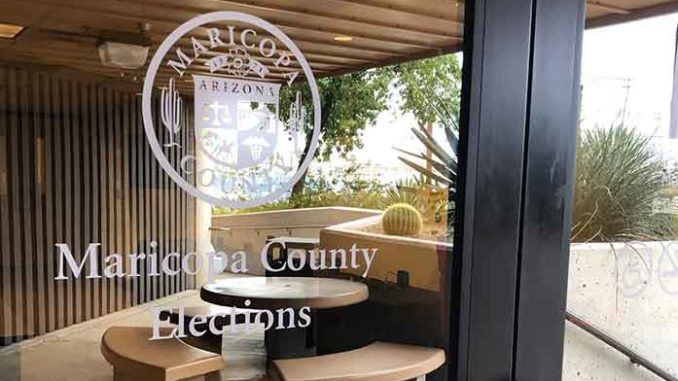
The Maricopa County Board of Supervisors (MCBOS) issued its polling place map for early voting, but the Maricopa County Recorder says its uneven distribution may disenfranchise voters.
Recorder Justin Heap issued a letter on Thursday to the MCBOS expressing these concerns. Heap said he doesn’t support the plan.
“I have serious concerns that the proposed early voting plan [the Board] provided makes voting inconvenient and inaccessible for a large number of Maricopa County voters,” said Heap. “I cannot support a plan that does not provide all voters a reasonably equal opportunity to vote. I remain willing to work in good faith. But cooperation does not mean rubber-stamping a plan my office had no role in building, and which fails to adequately protect the voters.”
According to the map, areas with higher population counts have significantly less early voting sites compared to areas with lower population counts. As an example, Tempe (population 180,000) has three designated early voting sites while Mesa (population 500,000) has one.
That Mesa voting site is not in the center of the city; it is located in the southeast corner, meaning most voters would have to travel over 10 miles to reach the location.
“That kind of imbalance makes voting more difficult in large portions of the county and risks leaving a substantial percentage of county voters without reasonable access to early voting,” said Heap. “Elections should be fair and accessible for everyone, regardless of where they live.”
In addition to those alleged troubles, Recorder Heap said that “no staff, funding, equipment, or planning authority” has been transferred to him by MCBOS as of the letter. Per Heap, the MCBOS Elections Director, Scott Jarrett, delivered to him an early voting plan on Monday developed without the involvement of his office and asked for an approval by Friday.
“Maricopa County voters made clear they seek us to have collaboration based on the statutory division of duties, rather than artificial deadlines or public narratives that obscure the facts and cause voter confusion,” said Heap.
Arizona law requires the board to provide funds and resources to the recorder’s office.
In response, Chair Kate Brophy McGee and Vice Chair Debbie Lesko issued a joint statement dismissing his claims as “misleading and disappointing.” McGee and Lesko said the board would continue to plan for Election Day regardless of Heap’s rejection of the plan.
“We offered to help him because he’s never done [early in-person voting] before, and time is of the essence,” read the joint statement. “We even gave him a list of more than 160 voting centers he could use or modify, but we can’t force him to accept our assistance.”
The board issued a letter on Tuesday to Heap asking whether he would accept Jarrett’s plan for early in-person voting. According to their letter, the plan opposed by Heap maintained consistency with practices implemented by Heap’s predecessors.
“The Board of Supervisors strongly supports maintaining a comprehensive early in-person program consistent with prior practices,” stated the letter.
AZ Free News is your #1 source for Arizona news and politics. You can send us news tips using this link.
by Ethan Faverino | Mar 2, 2026 | Education, News
By Ethan Faverino |
Arizona Senate Republicans are moving forward with legislation to strengthen school safety and emergency preparedness statewide, advancing a measure to allocate $3.2 million for enhanced communication and coordination during school emergencies.
The bill, SB 1582, cleared a key committee hurdle and is now headed toward a full Senate vote, with Republicans emphasizing their commitment to student protection amid unanimous Democratic opposition.
Sponsored by Senator Kevin Payne (R-LD27), SB 1582 appropriates $3.2 million from the state general fund in fiscal year 2026-2027 to the Arizona Department of Education for the school safety program established under A.R.S. § 15-154. The funding supports initiatives to improve interoperability and communication systems between schools, law enforcement, and first responders.
“This is exactly the kind of proactive, commonsense action that Arizonans expect from their Legislature,” stated Senator Payne in a recent press release announcing the advancement of school safety funding. “SB 1582 provides funding to enhance communication between schools and law enforcement, which is crucial for effective emergency response.”
“Republicans supported this bill because protecting children should never be a controversial issue. The fact that every democrat voted against it speaks volumes, but it won’t deter us from doing what’s right for students, parents, and educators across the state,” Payne added. “Voting against funding that improves school safety and emergency response is not principled; it’s irresponsible. When politics takes precedence over protecting children, lawmakers fail the very communities they were elected to serve.”
The bill updates requirements for communication systems funded through related programs, ensuring they are compatible, reliable, and effective during crises. It also allocates funding to the Arizona Department of Administration (ADOA) for the School Safety Interoperability Fund, strengthening coordination and promoting safer learning environments across the state.
Senator Mark Finchem (R-LD1), a retired law enforcement officer, expressed frustration with the Democratic opposition. “In the realm of public safety, there are no second chances; when communication fails, people can get hurt or even killed. SB 1582 would provide practical tools to help first responders during a school emergency.”
“Yet today, democrats chose to vote no. Tomorrow, they’ll likely use ‘school safety’ as a talking point when it’s politically convenient or when they want to score rhetorical points against common-sense policies,” continued Finchem. “This is not leadership; it’s hypocrisy. You cannot oppose funding that protects children and then claim the moral high ground. When it’s time to take action instead of just talking, their priorities are clear, and Arizona families deserve better.”
SB 1582 now awaits a full Senate vote.
Ethan Faverino is a reporter for AZ Free News. You can send him news tips using this link.
by Matthew Holloway | Mar 2, 2026 | News
By Matthew Holloway |
Arizona Senator David Farnsworth (R-LD10), chairman of the Senate Appropriations, Transportation & Technology Committee, hosted executives from Pivotal Aviation during a visit to Arizona aimed at showcasing developments in advanced air mobility technology.
Pivotal, a developer of electric vertical takeoff and landing aircraft, met with Farnsworth and explored potential flight locations and applications for its aircraft in communities including Superior and Globe. The discussions included how eVTOL technology could enhance connectivity, public safety, emergency response, and mobility in rural parts of the state.
Pivotal’s aircraft are part of a broader category of electric vertical takeoff and landing vehicles that are central to the emerging advanced air mobility (AAM) sector. AAM, as defined by the National Business Aviation Association, uses electric aircraft to move people and cargo between locations not easily served by traditional transportation or aviation modes, and the concept is being developed for both urban and regional applications.
The company, currently marketing single-seat eVTOL aircraft such as its Helix, is preparing customer deliveries of next-generation aircraft and continuing operational development.
Farnsworth described Arizona as having an opportunity to lead in next-generation transportation and emphasized the potential for AAM solutions to serve residents across the state.
He said in a statement, “Advanced Air Mobility is not just about technology for the sake of technology; it’s about enhancing how people move, keeping communities connected, and preparing for the future. Witnessing how these aircraft can directly benefit Arizona and discussing their operation across diverse landscapes, including rural towns, reinforces why our state is well-positioned to take the lead. My goal is to ensure that Arizona remains a place where innovation is welcomed, responsibly explored, and ultimately used to improve the quality of life for all Arizonans today and for generations to come.”
Arizona lawmakers have been taking steps to integrate advanced air mobility into the state’s transportation planning framework. Under Senate Bill 1307, signed into law in May 2025, the Arizona Department of Transportation (ADOT) must begin developing or upgrading a statewide aviation plan that incorporates infrastructure for advanced air mobility, including vertiports, “specialized areas for vertical takeoff and landing,” per the FAA, and aircraft charging stations, by September 1, 2026. The legislation also establishes funding mechanisms for constructing vertiports and supporting AAM demonstrations.
The state’s Advanced Air Mobility Fund, created through recent state appropriations, is intended to support infrastructure development and aircraft testing tied to AAM. Bills under consideration in the current legislative session would expand the uses of that fund, including potential applications for border security operations.
Local planning efforts also reflect growing interest in the technology. The City of Phoenix Aviation Department released an advanced air mobility framework study that outlines how AAM technologies, including eVTOL aircraft, could be integrated into the city’s airport system with roles defined for Phoenix Sky Harbor, Deer Valley, and Goodyear airports, according to AVWeb. That framework is intended to support infrastructure readiness, regulatory coordination, and potential future operations.
Advanced air mobility has also attracted federal attention. A pilot program launched by the Federal Aviation Administration in 2025, per Reuters, aims to accelerate air taxi deployment through public-private partnerships, enabling selected aircraft operations ahead of full regulatory certification. The program is part of a broader national effort to safely integrate eVTOL and similar technologies into U.S. airspace.
Matthew Holloway is a senior reporter for AZ Free News. Follow him on X for his latest stories, or email tips to Matthew@azfreenews.com.
by Staff Reporter | Mar 1, 2026 | News
By Staff Reporter |
Arizona’s elected leaders reacted along a partisan divide to the U.S. attack to liberate Iran from the Islamic regime.
Arizona’s Republican congressional officials have signaled support for President Donald Trump’s decision to launch a joint military operation against Iran, and called for an end to the partial government shutdown to ensure full funding for this military venture.
Arizona’s Democratic officials oppose the attack. They are looking to compel a vote on the War Powers Resolution, though all conceded their opposition to the continued existence of the Iranian regime.
Early Saturday morning, the U.S. and Israel attacked over a dozen areas across Iran, at least, including the capital Tehran. The attacks resulted from Iran’s failures to meet nuclear negotiations. Iran retaliated with missile strikes without success.
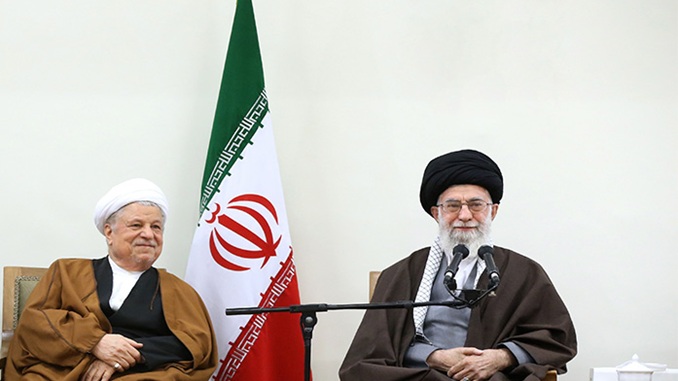
Key fatalities include several senior Iranian officials. The fate of Iran’s longtime supreme leader, Ayatollah Ali Khamenei, remains disputed as of this report. A spokesman for Iran’s foreign ministry claimed Khamenei was alive. However, President Donald Trump announced on Saturday afternoon that Khamenei was dead.
“[Khamenei] was unable to avoid our Intelligence and Highly Sophisticated Tracking Systems and, working closely with Israel, there was not a thing he, or the other leaders that have been killed along with him, could do. This is the single greatest chance for the Iranian people to take back their Country,” said Trump.
Trump said the bombings would continue until peace was achieved in the Middle East.
Trump urged Iranians to conduct a regime change in an address shared to social media early Saturday morning. Trump said the U.S. attacked Iran to eliminate threats to the American regime.
“I say tonight that the hour of freedom is at hand,” said Trump. “When we are finished, take over your government, it will be yours to take. This will be probably your only chance for generations. For many years you have asked for America’s help but you never got it. No president was willing to do what I am willing to do tonight.”
To the Islamic Revolutionary Guard, armed forces, and police, Trump advised them to cease their resistance.
“Lay down your arms and you will be treated fairly with total immunity, or you will face certain death,” said Trump.
Rep. Abe Hamadeh (R-AZ08) called on Democrats in Congress to end the partial government shutdown in order to provide full funding to the Department of Homeland Security (DHS).
Rep. Juan Ciscomani (R-AZ06) said Iran chose this escalation, not the U.S.
“Today’s action by President Trump sends a clear message: the Iranian regime’s aggression and destabilizing threats will not go unanswered,” said Ciscomani. “For decades, the Iranian regime has funded terror, attacked our allies, and threatened American servicemembers.”
Rep. Yassamin Ansari (D-AZ03) expressed reluctance to recognize Trump’s authority to launch a war without congressional authorization. Ansari’s parents came to the U.S. as Iranian refugees of the Islamic regime.
“Consistent with my previous votes, public statements, and the consensus in my district, I believe no president — Republican or Democrat — has the authority to launch military strikes of this magnitude without Congressional approval,” said Ansari. “I want a free Iran and a future of democracy and dignity for the Iranian people. Those goals must be part of a coherent strategy that does not risk chaos or another endless war in the Middle East and require seriousness and leadership equal to the stakes.”
Rep. Greg Stanton (D-AZ04) said none would mourn the collapse of the Islamic Republic, but that Trump was wrong for launching such an attack.
“[T]he United States cannot be dragged into another open-ended foreign war. Americans know the cost of conflicts with no clear strategy, no defined objectives, and no end in sight, and they do not want to repeat those mistakes,” said Stanton.
Rep. Adelita Grijalva (D-AZ07) accused Trump of entering the U.S. into another “forever war,” characterizing this latest attack as both reckless and needless.
“Taking the United States into a major military conflict without debate or the consent of the people’s representatives is a clear violation of Congress’s constitutional war powers,” said Grijalva.
Sen. Ruben Gallego claimed there was another pathway for the U.S. supporting Iranian regime change without going to war.
“Young working-class kids should not pay the ultimate price for regime change and a war that hasn’t been explained or justified to the American people,” said Gallego. “Strikes are underway and Congress hasn’t voted. No President gets to drag working-class Americans into another war without authorization.”
Sen. Mark Kelly, like Grijalva, questioned Trump’s promise of keeping the U.S. out of war.
“The Iranian people deserve freedom. They deserve the right to choose their own leaders. So, what’s the plan for what comes next?” said Kelly. “I don’t think Donald Trump knows the answer, and that’s dangerous when American lives are on the line.”
AZ Free News is your #1 source for Arizona news and politics. You can send us news tips using this link.
by Ethan Faverino | Mar 1, 2026 | News
By Ethan Faverino |
In a decisive step to strengthen voter confidence and streamline Arizona’s election processes, the Arizona House of Representatives passed HCR 2016, a proposed constitutional amendment sponsored by Representative Rachel Keshel (R-LD17).
HCR 2016 seeks to require in-person voting to take place exclusively at designated precinct polling places, eliminating the use of countywide voting centers, emergency voting centers, and on-site early voting locations.
If approved by voters in the upcoming election, the resolution would cap election precincts at no more than 2,500 registered voters at the time precincts are designated. It would also remove statutory authority for voting centers and related provisions in election administration, electioneering, and unlawful acts statutes.
“Arizonans want elections they can understand, observe, and trust, and the precinct model delivers that,” stated Rep. Keshel. “HCR 2016 puts Election Day voting back where it belongs: at clearly designated polling places tied to precincts, with reasonable precinct sizes that are easier to staff and manage. Voting centers and last-minute location changes create confusion, weaken consistent procedures, and slow results. This helps restore faith in our elections for Republicans, Independents, and Democrats who expect clear rules and timely results.”
The resolution would end the option for in-person voting at on-site early voting locations through 7:00 p.m. on the Friday before an election and eliminate references allowing on-site tabulation of early ballots at voting centers.
House republicans advanced HCR 2016 as a key priority under the House Republican Majority Plan to secure elections by reinforcing the structure of in-person voting and empowering Arizona voters to decide the issue directly at the ballot box.
The measure aligns with broader efforts to ensure fast, accurate ballot counting for timely results, protect election integrity, and promote transparency.
Secure elections remain a top focus for Arizona Republicans, who emphasize that voters deserve free, fair, and transparent processes where ballots are counted quickly and results are known sooner. HCR 2016 supports these goals by addressing structural elements that contribute to delays and confusion in election administration.
The measure now advances to the Arizona Senate for further consideration.
Ethan Faverino is a reporter for AZ Free News. You can send him news tips using this link.
by Staff Reporter | Mar 1, 2026 | News
By Staff Reporter |
The Arizona House has passed a bill banning gender transitions for minors.
HB 2085 not only bans gender transition procedures to minors, it bans referrals and distribution of public funding to gender transition procedures. The bill defined procedures to include puberty blockers and hormone replacement drugs.
The legislation did include exemptions for individuals who were born with sex development disorders; who were endangered due to a physical disorder, physical injury, or physical illness; or who sustained an infection, injury, disease, or disorder caused or exacerbated by a gender transition procedure.
It is likely this bill is dead on arrival should it pass the Senate and hit the governor’s desk. Gov. Katie Hobbs supports gender transition procedures for minors, and her husband, Patrick Goodman, assisted children with gender transitions as a Phoenix Children’s Hospital Gender Support Program counselor.
The partisan divide was clear during House floor arguments for and against the bill.
Democrats argued HB 2085 violates parental and medical freedom.
Rep. Nancy Gutierrez (D-LD18), assistant minority leader, claimed parents had the right to decide for their children to transition their children.
Rep. Betty Villegas (D-LD20) argued puberty blockers and hormone therapies should be acceptable for gender transitions since they’re used to treat other ailments and defects.
Rep. Janeen Connolly (D-LD8) said gender transitions were a personal decision that should be beyond the scope of lawmakers. Connolly shared that one of her grandchildren, now 17 and identifying as “they/them,” had transitioned genders at 12 years old.
Rep. Stephanie Simacek (D-LD2) argued these decisions to transition genders weren’t made in haste since minors relied on parental consent to make the decision.
Across the aisle, Republicans argued the gender transitions of minors amounted to child abuse.
Rep. Lisa Fink (R-LD27), the bill sponsor, argued that allowing the puberty process to occur uninhibited was the prevailing treatment for gender dysphoria. Fink read off the myriad adverse health effects of puberty blockers and hormone replacement medications when applied to healthy children seeking gender transitions.
Rep. Rachel Keshel (R-LD17) accused those in support of gender transitions for minors of being inconsistent in their logic.
“It is my opinion that a parent that allows a child to permanently alter their body and potentially take away their ability to be parent one day, that is child abuse,” said Keshel.
Rep. Pamela Carter (R-LD4) countered that gender transitions don’t qualify as valid healthcare, and therefore not within the acceptable bounds of health decisions parents may make on behalf of their children.
“The physicians even now are stopping some of these procedures because they see the results of what happens to a minor when they realize what has happened: they cannot have children, or they are marred physically, emotionally for life,” said Carter. “Parents should be in charge of their children’s health, but to me this is not healthcare.”
Rep. Alexander Kolodin (R-LD3) questioned how Democrats could support irreversible procedures for minors given the universal agreement on age limits for other activities.
“Point of fact, there are many things our society does not allow minors to do: we don’t allow minors, at least up to a certain age, to drive. We don’t allow them to vote. We don’t allow them to drink. We don’t allow them to smoke,” said Kolodin. “We don’t even allow them to get tattoos because we’re worried that one day they will regret that decision. How much more so then should we not allow minors to engage in elective surgery that permanently disfigures them?”
AZ Free News is your #1 source for Arizona news and politics. You can send us news tips using this link.