The Arizona Department of Revenue announced Tuesday it is working with its tax software vendor to automatically amend any filed 2021 individual income tax returns impacted by the recent overturning of Proposition 208.
The 3.5 percent surcharge on individual income over $250,000 ($500,000 married filing jointly) hit taxpayers starting in 2021, but last week a Maricopa County Superior Court judge struck down Prop 208 as unconstitutional.
Taxpayers who have already filed their Arizona individual income tax returns using current forms and instructions will not need to file an amended return, according to ADOR.
“The Department will hold these returns and process them correctly once it has modified its tax system to remove the surcharge and amend the tax bracket rates,” the statement reads. “At that time, ADOR will automatically adjust the returns to provide for the correct distribution of monies.”
The court ruling which voided Prop 208 will not, however, actually impact an individual’s overall tax liability. The reason, according to ADOR, is legislation signed into law last year by Gov. Doug Ducey which counteracted the surcharge by reducing the state’s top income tax rate for those subjected to the additional tax.
With the Prop 208 surcharge now dropped to 0 percent, the top income tax rate will return to 4.5 percent, ADOR noted.
“Arizona taxpayers will neither owe more tax nor receive a larger refund due to the voiding of the Prop 208 Surcharge,” the statement reads.
Taxpayers who have not yet filed a 2021 individual income tax return are reminded of Arizona’s April 18 filing deadline. ADOR is working as quickly as possible to revise the 2021 tax forms and adjusting the individual income tax brackets to the now proper rates.
State officials are also working with various tax software companies like TurboTax and H&R Block to ensure changes are made to those programs as well.
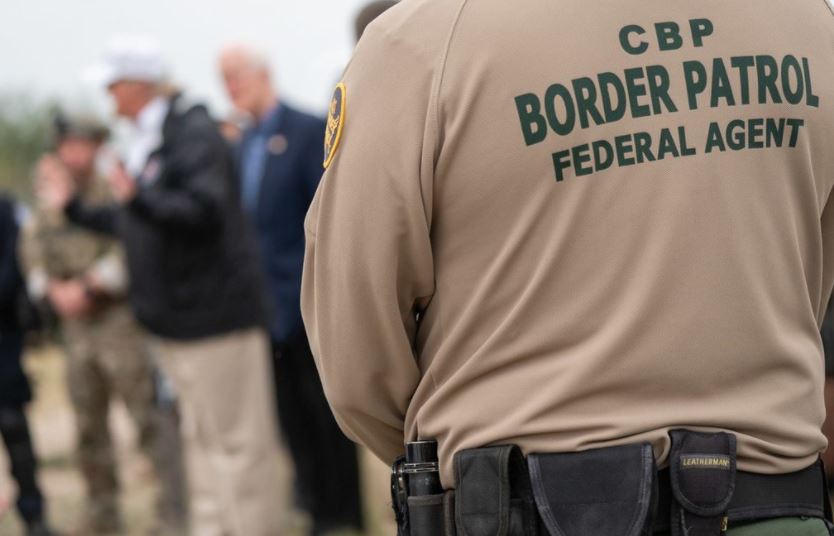
Senators Mark Kelly (D-AZ) and Kyrsten Sinema (D-AZ) championed their work to mitigate the border crisis Monday, highlighting several key provisions they secured in Congress’ annual budget bill. Their press release came the same day as the latest data was published by Customs and Border Protection (CBP), reporting nearly 165,000 illegal border crossings in February: the highest number for that month since 2000. The record high complements the record 154,000 illegal crossings in January. Those numbers fall in line with the Department of Homeland Security (DHS) prediction at the onset of this year that the border crisis would worsen throughout 2022.
None of their provisions included finishing the border wall. As AZ Free News reported last month, the Arizona legislature passed two separate bills to finish the border wall, allocating hundreds of millions to cover the remaining 17 miles. The House and Senate must consider the bills passed by the other before they will go before the governor.
Additionally, suggestions by Governor Doug Ducey presented in draft legislation for Sinema and Kelly were recognized and ignored in part. Ducey’s legislation called for border wall completion, physical barriers, and virtual surveillance; requirement that asylum seekers who have traveled through another country attempt to claim asylum in that country; requirement for asylum seekers to claim asylum at a port of entry; an increase in immigration judges; additional funding for local law enforcement and humanitarian efforts; and a clear declaration by the federal government that the borders aren’t open for immigration except through a port of entry and legal means.
Sinema and Kelly’s acquisitions that fulfilled Ducey’s requests were additional funding for local law enforcement and humanitarian efforts, as well as border security technology which includes virtual surveillance. In addition to their other border infrastructure investments, Sinema and Kelly secured over $2.3 billion.
Sinema emphasized that the billions would allow not only American citizens to be kept safe, but to ensure that the illegal immigrants receive fair and humane treatment.
“These critical resources will help secure the border through improved technology and additional personnel, manage the flow of migrants to keep Arizona communities safe, and provide Arizona nonprofits and DHS the resources needed to ensure migrants are treated fairly and humanely,” said Sinema.
Kelly alluded that there wasn’t a guarantee that further border crisis-related burdens wouldn’t befall Arizona in the future.
“The crisis at the border continues to put a strain on our communities and law enforcement as they work to maintain a safe and orderly process. It’s critical that we are bringing needed technology, personnel, and other resources to improve border security,” said Kelly. “I’ll keep working with my Republican and Democratic colleagues in the Senate and continue pushing the Biden administration to ensure Arizona does not bear the cost of this crisis.”
From 2000 to 2006, the total number of illegal crossings at all borders hovered around one million. Then, from 2007 to 2011, that number dropped steadily from under 900,000 to 340,000. The number of crossings picked up slightly and fluctuated between 300,000 to 500,000 from 2012 to 2018. A sharp spike of 860,000 occurred in 2019, before petering off to 405,000 in 2020.
Corinne Murdock is a reporter for AZ Free News. Follow her latest on Twitter, or email tips to corinne@azfreenews.com.
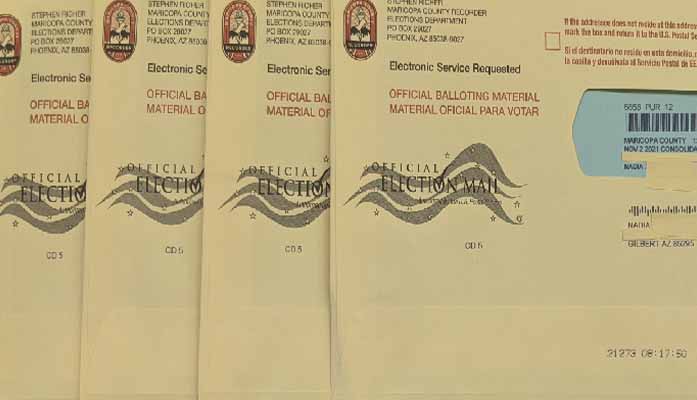
One of the most prominent lawyers for the Democratic Party (DNC), Marc Elias, announced last Friday that he submitted a motion to intervene in a case challenging the constitutionality of Arizona’s no-excuse mail-in voting system. Elias filed on behalf of the Senate Democrats (DSCC), Democratic Congressional Campaign Committee (DCCC), and the Arizona Democratic Party in the case Arizona Republican Party v. Hobbs.
Not only does Elias specialize in election litigation, he’s been involved in the elections themselves. His December 2017 testimony detailed his role in Hillary Clinton’s Russigate hoax: how he came to hire the intelligence firm Fusion-GPS for the DNC and Clinton’s 2016 presidential campaign, who then ordered the debunked dossier compiled by former British spy Christopher Steele and sourced by analyst Igor Danchenko, a Russian citizen who resided in Virginia. The FBI arrested Danchenko for the “Steele dossier” early last November.
Today, @dscc, @dccc, @DNC and @azdemparty filed a motion to intervene in the Arizona Republican Party’s legal action seeking to end early and absentee voting in Arizona – the dominant form of voting in the state.https://t.co/xD1JAEIP5n
Elias could be considered a fixture within the Democratic Party establishment. The Jewish New York native worked with the DNC since 1993, notably serving as general counsel for two of the last three Democratic presidential candidates’ campaigns: John Kerry in 2004, then Hillary Clinton in 2016. Elias also followed former President Barack Obama from his days in the Senate all the way to the White House, earning a distinction by 2011 relayed in a Politico profile of being Obama’s “top lawyer.” Although lawyer Bob Bauer was technically Obama’s general counsel, Elias was a critical player.
Those are just the biggest names in American politics — the entire Democratic Party reportedly relies on Elias as their “go-to lawyer.” This was confirmed by fellow establishment members of the Democratic Party, such as former Federal Election Commission (FEC) chairman, Obama advisor, and Biden campaign counsel Robert Lenhard.
“For members of the House and Senate, there is no Democratic-side campaign finance lawyer who is more important than Marc Elias. That is without a doubt,” Lenhard told Politico. “While Bob Bauer served as White House counsel, Marc led that practice group and it thrived under his tutelage.”
Elias has been on all sides of the 2020 presidential election controversy, a predictable involvement considering his decades of redistricting fights, post-election litigation, and work with Big Tech giants Facebook and Google. Elias earned Google a win to effectively manipulate its search results with preferred candidates through its pay-per-click advertisement system, AdWords. The woman behind AdWords, Sheryl Sandberg, was picked up by Facebook in 2008.
Elias founded Democracy Docket on March 5, 2020, a Democratic Party voting advocacy group formed about a week after former President Donald Trump declared the ongoing national state of emergency over COVID-19. Democracy Docket operates out of Fairfax County, Virginia. To date, the group has been involved in nearly 330 cases, 150 of which they’ve won.
Last August, Elias left his legal firm of 28 years, Perkins Coie, to form his own: Elias Law Group.
Elias pledged to sue Arizona if the state legislature approves certain election integrity laws, such as: HB2596, which never made it to committee; HB2238, which passed the House and has yet to be considered in a Senate committee; HB2237, which passed the House and will soon be considered on the Senate floor; SB1058, approved by a Senate committee last month but not yet considered on the Senate floor; HB2170, which passed the House but has yet to be considered by a Senate committee; and HB2243, which passed the House and will soon be considered on the Senate floor.
The Arizona Senate took the final vote on 16 election-related bills on Monday, including one to restore the precinct committeemen (PC) elections, sans its emergency clause implementing it immediately. The remaining 11 of the 16 failed, with either State Senator Paul Boyer (R-Glendale) alone or State Senator Michelle Ugenti-Rita (R-Scottsdale) joining him to kill the bills.
The #AzSen just passed SB1720 – a fix to the PC issue but sans the emergency clause. Just one Democrat voted for it – @seanbowie@FannKfann asks, “What would Sen. Bradley do?”
SB1259, increasing the minimum number of precincts included in post-election hand counts, as well as allowing an Arizona resident or the attorney general, secretary of state, or legislative council to request a recount.
SB1329, requiring county recorders or lead election officials to post online the number of early ballots returned on election day.
SB1362, allowing voters to have their early ballot tabulated on site at a polling place or voting center, so long as they present an ID.
SB1460, allowing voters to receive a standard ballot at a polling place even if they received an early ballot previously, so long as no record of their vote existed in the election system.
Six bills failed narrowly, 15-14, with Boyer being the sole Republican to vote against them:
SB1055, rendering election equipment or services contractors liable for damages and guilty of a class 2 misdemeanor if they fail to fulfill the terms of the contract.
SB1056, invalidating ballots not included in chain of custody documentation and making it a class 2 misdemeanor to knowingly put a ballot into the collection, verification, or tabulation process outside of the official chain of custody.
SB1360, allowing election observers the right to observe, document, and question all stages of the election process.
SB1465, requiring the secretary of state to revoke certification for election equipment that doesn’t meet outlined requirements, and requiring at least one member of the Equipment Certification Advisory Committee to hold a cybersecurity certification. The Senate approved a motion to reconsider the bill from its sponsor, State Senator Wendy Rogers (R-Flagstaff).
SB1577, requiring county recorders or other lead election officials to separate and record duplicated and adjudicated ballots by their type and defect or damage, compiled in a report submitted to the legislature.
SB1609, requiring a court to order an election to be repeated within 90 days if a contested ballot measure or candidate didn’t receive the highest number of votes.
— Paul "nothing but trouble" Boyer (@PaulDBoyer) March 14, 2022
On five bills, Ugenti-Rita joined Boyer and Senate Democrats to vote “no”:
SB1359, requiring unique election system passwords for election employees, volunteers, and contractors.
SB1457, requiring the secretary of state to ensure that vote recording, tabulating machines and devices meet certain security standards, don’t have internet connectivity, and may track users with unique login credentials.
SB1476, requiring ballots to be consecutively numbered with a unique number, and requiring chain of custody documents or logs to track ballots.
SB1570, implementing additional voting equipment chain of custody requirements such as access restricted to authorized election personnel, tamper-proof seals for accessible ports, and chain of custody logging, as well as prohibiting voting equipment from having internet access capabilities.
SB1572, requiring county recorders to publish a list of eligible voters on their website 10 days before primary and general elections, as well as all ballot images and sortable cast-vote records, and requiring all ballots to be separated and tabulated by precinct.
Ugenti-Rita is campaigning for secretary of state this year.
. @PaulDBoyer kills a bill that would require passwords to be unique on tabulation equipment@MichelleUgenti votes No also – – – hoping this means we will see it back
This bill is very simple and the language was modified to serve the counties#SB1359
— Merissa Hamilton 🗳 ⛽🗽 (@merissahamilton) March 14, 2022
Corinne Murdock is a reporter for AZ Free News. Follow her latest on Twitter, or email tips to corinne@azfreenews.com.
A bill to require K-12 schools to post all curriculum and learning materials on their website passed the State Senate along party lines, 16-13. It now heads to the House for consideration.
Senate Democrats argued that the bill would hinder teachers’ ability to have flexible, constantly changing lesson plans. State Senator Christine Marsh (D-Phoenix) said that while she agrees “100 percent” with transparency, she said that the bill would result in a slew of unintended consequences. Marsh claimed that teachers would be too busy uploading curriculum data to spend additional time with students.
Some Arizona teachers complained that they can’t meet the requirements of the bill because there would be no way to have their curriculum done in time for review. The bill sponsor, State Senator Nancy Barto (R-Phoenix) rebutted that claim during the Senate’s vote on Monday, explaining that what was required of teachers concerned a list of material titles “like a syllabus.”
“It’s been even testified by opponents, teachers who oppose the bill, even in their testimony they were saying they already do something like this,” said Barto. “What it will require is merely putting up the title of what they’re teaching of their lesson plans every week. And not the entire year in advance, which some somehow translate this bill as requiring. Nope. It’s within seven days after, so they just have to use something like a Google Doc, which many are using already — it was testified over and over again.”
Barto cited a study that teachers spend an average of four hours a week searching for material to use in their classrooms.
Nobody expects, and sadly our children don’t deserve, an inquisition… but that is exactly what #SB1211 is – an unjustified, backwards, and blatant example of big/authoritarian government overreach that would hurt AZ’s children.
Some Republicans expressed reluctance to have their vote fall in line with the party.
State Senator Michelle Ugenti-Rita (R-Scottsdale) expressed that the bill was a step in the direction but failed to get at the root of the problem with Arizona’s school system. Ugenti-Rita claimed that the problems concerned leadership, teacher’s unions, and nonpartisan school board members.
“Putting up loads and loads of information isn’t really going to solve the problem we have in K-12,” said Ugenti-Rita. “This is really not enough to get at the problem. This will leave parents with the impression that something is done when nothing is done. I don’t know what our obsession is with putting things online but you need to really go after the sacred cow, and it’s not the materials online, it’s the elections — these nonpartisan school board elections.”
Ugenti-Rita also expressed concerns that the bill was “intense and overkill.” She asked for commitment from House leadership to make the legislation implementable.
“To me, this is like a supplement. It’s like if you had real, deep health problems, a vitamin isn’t going to fix it. You need to diet, you need to exercise. This is helpful, but it’s really not going to get at the problem at our schools. This isn’t going to keep schools open. This is really going to do very little than look as though we’re doing something,” said Ugenti-Rita.
State Senator Tyler Pace (R-Mesa) said bills like Barto’s were the reason he took heartburn pills over the summer. Pace said he disliked the broad scope of what information educators would have to upload. However, Pace admitted there was a need for curriculum transparency, citing his own experience in which he learned a teacher allowed his kids’ class to play games like “Cupcake Vampire Princess Makeup Tutorials” after they finished an exam.
Other Republicans normally on the fence with certain party initiatives supported the bill wholeheartedly. State Senator Paul Boyer (R-Glendale) rebutted that the legislation wouldn’t be a burden on teachers, citing his own experience. Boyer insisted that it would alleviate current burdens on parents as well as benefit teachers looking to improve their curriculum by looking at what teachers are using at successful schools.
Passage of the bill comes over a month after the Senate Education Committee approved the bill.
NOW: SB1211 Academic Transparency passes the AZ senate! Now headed to the House. This bill let’s parents know what’s being taught in their kid’s classroom @GoldwaterInst@NancyBartopic.twitter.com/Or3xi1AYta
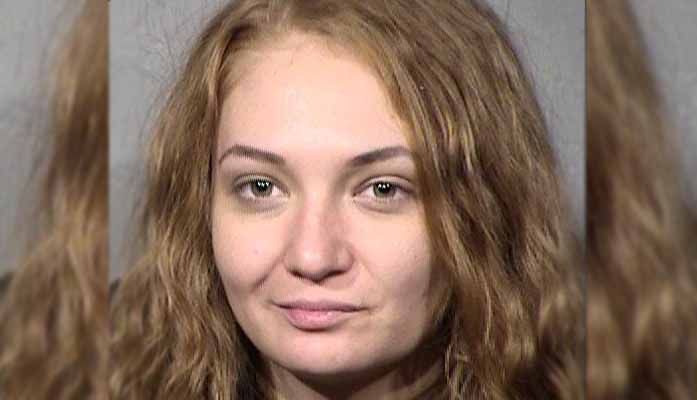
A Phoenix-area Antifa member, Arizona State University (ASU) graduate, and certified nursing assistant (CNA), Marysa Leyva, made death threats against prominent investigative journalist Andy Ngo, who rehashed details about Leyva’s Antifa involvement and criminal history.
Leyva’s comments were associated with claims that Ngo was behind the shooting that took place at an Antifa meeting in Portland, Oregon earlier this month. Ngo reported that Leyva resides in the Portland area, consistent with the location listed in one of her Twitter account bios.
Disinfo #antifa accounts are spreading false claims about the shooting in Portland. They falsely claim I posted a flyer about their event & that I was involved in the shooting.
Marysa Leyva says it is time for me to die. Felony suspect Alissa Azar says I have blood on my hands. pic.twitter.com/6RrBm1iZ5G
Marysa Leyva, a Phoenix-area militant #antifa member & a traveling nurse who is now in Portland, is calling for me to be killed. She used to run @antifash_m but was so extreme that she was permanently suspended. Now she's evading that ban with a new account calling for violence. pic.twitter.com/s4KAXP9Y18
As Ngo reported, Leyva’s original account, @antifash_m, was suspended for violating Twitter rules. Leyva then made her backup account, @BirdAppFugitive, private after Ngo discovered it; sometime that same week, that secondary account was also suspended. Leyva’s bio describes the account as a slander account for Maricopa County Attorney Allister Adel, who is under investigation by the Maricopa County Board of Supervisors and the State Bar of Arizona for her sobriety and absence at work.
Leyva was one of 15 individuals who received controversial and later dropped street gang charges for her involvement in the August 2020 Black Lives Matter (BLM) protest, which included assisting a criminal street gang, aggravated assault on an officer, rioting, unlawful assembly, resisting arrest, and obstructing a public thoroughfare. As AZ Free News reported, ASU graduate student Sarra Tekola was among those charged. Leyva toldABC15 Arizona that although the felony charges against her were dropped, the ordeal caused her to lose her patient care technician job with Tempe St. Luke’s emergency room.
“We were like, this is just so outrageous,” said Leyva. “How are they ever going to prove this in a court of law? We know Phoenix Police Department is bad, but man, they, like, really were just seeing how much they could get away with.”
Leyva also tweeted that the survival of the five officers who were ambushed by a shooter earlier this month while trying to rescue an infant was a “missed opportunity.”
According to the Arizona State Board of Nursing, Leyva’s nursing license was issued December of last year, and won’t expire until March 2024.
Corinne Murdock is a reporter for AZ Free News. Follow her latest on Twitter, or email tips to corinne@azfreenews.com.