by Staff Reporter | Sep 10, 2026 | News
By Staff Reporter |
On a Friday in July 2022, the Department of Justice (DOJ), under President Joe Biden, arrested a man for a bomb threat he’d made a year and a half earlier to the Arizona secretary of state at the time, Katie Hobbs.
According to the DOJ’s public announcement of that arrest, that threat was sent online in mid-February 2021 through the secretary of state’s Elections Division contact form. Yet, it took law enforcement more than a year to nab the perpetrator: a Massachusetts man named James Clark.
Media outlets promptly picked up the news of Clark’s arrest, framing it as the latest in what was then an ongoing scourge of threats to election officials following the contentious 2020 election.
Hobbs was reaffirmed in the public eye as a face of resistance to former President Donald Trump’s purported election denialism. And she was deep into a contentious race of her own for the governor’s office against Trump-backed candidate Kari Lake.
“Election officials across the country are being threatened regularly for doing their jobs,’’ said Hobbs in a prepared statement at the time. “It’s unconscionable and undermines our democracy. This harassment won’t be tolerated and can’t be normalized. We thank the FBI for their persistence on further investigating this incident.”
The one detail that never received much attention was the timing of Clark’s arrest.
On the same day that the DOJ sparked a flurry of media coverage on their delayed arrest of a Trump-defying Democrat’s would-be assassin, a Hobbs campaign operative quietly registered Will of the People, a political action committee (PAC) that would go on to raise more than $5 million from dark money and labor union heavyweights across the nation.
The listed address for the PAC is a virtual office in downtown Phoenix. Its treasurer from day one was Dacey Montoya, founder and president of The Money Wheel, a well-known political and nonprofit compliance firm in Democratic circles. Montoya is currently the treasurer for both Gov. Katie Hobbs’ campaign and Hobbs’ alleged campaign finance fund-washing fund.
Montoya has offered her Money Wheel services to numerous Democratic candidates, party organizations, and progressive dark money operations both in Arizona and nationally over the years. Past clientele include Gov. Katie Hobbs, Secretary of State Adrian Fontes, Rep. Yassamin Ansari, Sen. Mark Kelly, Jevin D. Hodge, Kirsten Engel, Reginald Bolding, Arizona Democratic Party, Maricopa County Democratic Party, Progress Now Arizona/Progress Arizona, Our Voice Our Vote Arizona, Copper State Victory, and the Arizona Education Association.
The Money Wheel has received more than $5.2 million since 2017 at the federal level according to Federal Election Commission records, and more than $1.9 million since 2017 at the state level according to secretary of state campaign finance records. Since 2022, Montoya’s company has received more than $119,000 from the PAC.
Will of the People PAC
Most of Will of the People PAC’s millions came in 2022 and 2024.
- $2.3 million from SEIU-UHW and SEIU-COPE, the nation’s largest labor union and a PAC
- $1 million from Open Society Action Fund, an organization by the Soros family, who are top Democratic dark money donors
- $680,000 from ProgressNow AZ
- $600,000 from the National Education Association
- $360,000 from the Fairness Project
- $200,000 from the American Civil Liberties Union (ACLU) of Arizona
The PAC has not reported any income this year, and the only significant reported expenditures so far have been $8,000 from January through April given to The Money Wheel.
The PAC has spent an undisclosed amount of funding on lawfare to kill Republican-led ballot initiatives; in recent months, they filed two lawsuits to stop Propositions 142 (called the “Prohibit Mandatory Support for Discrimination or Preferential Treatment by Government Entities Amendment”) and 318 (called the “Require All Schools and Athletic Associations to Restrict Sports Participation and Access to Private Spaces Based on Sex Measure”).
Prop 142 would prohibit the state and government agencies from compelling, promoting, or implementing practices rooted in preferential treatment or discrimination based on race or ethnicity.
Prop 318 would restrict access to private spaces like restrooms and locker rooms based on biological sex, bar male students from participating in female sports, and establish a definition of sex rooted in biology.
In the case of Prop 318, the PAC also created a website called “Vote No on Prop 318.” However, per media coverage and the website itself, the PAC is now claiming to be a program under Progress Arizona, a progressive 501(c)(4) nonprofit. This website has not been disclosed under the PAC’s campaign finance reporting as of this report. The PAC’s logo is displayed on the website.
“Will of the People is a program of Progress Arizona,” states the website. “Email info@progressarizona.org. Paid for by Will of the People.”
Concerning the media — as previously reported, the PAC once identified The Arizona Republic as an endorser of their efforts.
It appears that the PAC may have failed to file some of its required expenditure disclosures. Four television advertisements urging Arizonans to vote “no” on Prop 132 (called the “60% Vote Requirement for Ballot Measures to Approve Taxes Amendment”) weren’t reflected in the PAC’s ballot measure expenditures for 2022, because none were issued.
Voters approved Prop 132 in 2022, which established a 60% vote threshold for ballot measures approving taxes.
Will of the People Is Also a Nonprofit
The PAC also has a similarly named nonprofit, “Will of the People Arizona.” The two share a launch year, an address, and leadership.
One of the first leaders of the nonprofit arm, Betsy Boggia, was not listed on PAC documentation. Boggia served as the director/secretary from 2022 through 2024, based on Arizona Corporation Commission records.
Will of the People: Articles of Incorporation
Will of the People Annual Reports: 2023, 2024, 2025, 2026
Boggia is a League of Women Voters board member and a recent former president of its Tucson chapter, according to her active and up-to-date LinkedIn profile. Notably missing from her work history and posts were any references to her leading a nonprofit that raised more than $5.5 million in three years.
Boggia’s silence on the matter may be explained by the nonprofit’s tax filings, which reported that Boggia spent an average of just one hour per week running the multi-million dollar operation.
Between the nonprofit and PAC, the two apparently affiliated entities have raised and spent approximately $11 million in four years.
The nonprofit didn’t disclose its revenue sources on its available tax filings from 2022, 2023, and 2024. Only four contributions totaling $2.1 million were publicly available through other organizations’ tax filings:
Only the ACLU provided a detailed explanation for the purpose of their contribution: paid communications to defeat Propositions 128, 129, and 132.
Propositions Targeted by Will of the People PAC and Nonprofit
Based on various sources, the PAC and nonprofit together targeted at least 14 Republican-led propositions from 2022 through this year.
Nine were defeated and five passed. Five are to be determined this year.
The PAC and nonprofit also successfully advocated for the passage of Prop 139 in 2024, which made abortion a constitutional right in Arizona.
On publicly available archived versions of the PAC’s site from 2024 through 2025, the PAC clearly disclosed which propositions it opposed: Props 134, 136, 137, and 139.
Prop 134 would have set a signature distribution requirement in all 30 legislative districts for citizen-led initiatives: 10% for statewide initiatives, 15% for constitutional amendments, and 5% for statewide referenda.
Prop 136 would have allowed individuals to sue to stop voter-proposed initiatives from being put on the ballot if they believe them to be unconstitutional.
Prop 137 would have ended term limits for state supreme court justices and superior court judges.
Then, earlier this year, the PAC changed its website to offer a ballot proposal guide in exchange for donations. The linked donation button led to a donation page hosted by ActBlue Civics, which disclosed that the donated funds would be given to Progress Arizona, a 501(c)(4) nonprofit, not the Will of the People PAC.
In 2024, the PAC disclosed giving $8,000 to Progress Arizona’s policy and research director, Casey Clowes, in 2024 to run digital ads opposed to multiple propositions and in favor of one proposition, Prop 139, which created a constitutional right to abortion.
The PAC has also paid $55,000 to ProgressNow AZ and Progress Arizona PAC, and $706,000 to the Arizona Democratic Party.
The current version of the site as of this report no longer includes the promise of a ballot proposal guide in exchange for fundraising. Instead, the PAC website now urges individuals to endorse a “no” vote on Props 142, 144, 318, and 320.
“A group of power-hungry politicians have voted to put a set of highly deceptive propositions on your ballot this November,” states the present version of the site. “They are aiming to make voting more difficult for Arizonans, hollow out our schools with funding cuts, and institute blanket discrimination in youth sports. You can help stop these propositions by adding your name to the list of Arizonans endorsing a NO vote on these dangerous measures.”
Despite its grassroots-sounding name, Will of the People has been funded by millions of dollars from national labor unions, progressive organizations, and Democratic-aligned dark-money groups, while its leadership and vendors have extensive ties to Arizona’s Democratic political establishment.
The organization has opposed numerous Republican-led ballot measures. With five targeted measures still awaiting a vote, its influence over Arizona’s ballot initiatives remains active heading into November.
AZ Free News is your #1 source for Arizona news and politics. You can send us news tips using this link.
by Staff Reporter | Sep 10, 2026 | News
By Staff Reporter |
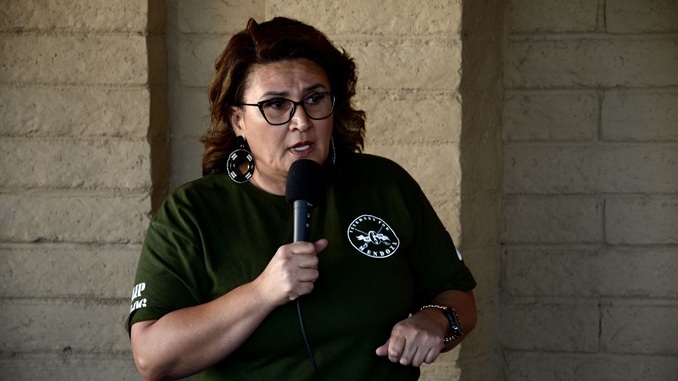
An event hosted by an anti-police group featuring 6th Congressional District candidate JoAnna Mendoza was canceled after a media outlet inquired about it.
The Washington Free Beacon had inquired about the virtual town hall event, which was scheduled to take place last Thursday night.
The canceled event was hosted by the program CareWins and paid for by its parent organization, MomsRising PAC. Mendoza was scheduled to appear virtually alongside Manny Rutinel, a Democratic candidate for a congressional seat in Colorado.
MomsRising has advocated for divesting police funding, eradicating police and prisons, and police-free schools for years.
The organization has referred to law enforcement as rampant with “a deadly mix of white supremacy and violence.”
The Washington Free Beacon noted in its report that the MomsRising network has also advocated for the closure of immigration detention centers and prohibiting police from working with Immigration and Customs Enforcement.
In 2020, the first and strongest year of Black Lives Matter-led violence and advocacy, MomsRising called for defunding of the police.
That same year, Mendoza had expressed support for reducing police funding in favor of social welfare programs during her campaign for Arizona State Senate District 11.
“I support the reallocation of funding to programs that would allow people to live their best lives, such as the social service programs such as housing, public education, health care, ensuring that we’re addressing economic stability and environmental safety,” said Mendoza.
However, Mendoza opposed calls for total defunding of the police. She made that clear during a Clean Elections debate in September 2020.
“I do not support the defunding of police,” said Mendoza. “You know, police officers take an oath to protect and serve their communities much like military service members.”
Rather, Mendoza said she supported investing in other social welfare resources and additional funding into body cameras, deescalation training, and investigations into deadly force.
“Police officers are being asked to do too much, they’re being asked to address issues because of the lack of resources in our communities,” said Mendoza. “I support ensuring they have the resources but there also needs to be some accountability.”
Mendoza reiterated that position in a March 2026 opinion piece published by the Arizona Daily Star.
“The answer is not to defund law enforcement – it’s to fund law enforcement with intention. That includes ICE,” said Mendoza. “That means supporting the officers who serve honorably while insisting on training, body cameras, clear identification, lawful conduct, and meaningful oversight.”
Mendoza has raised more than $7.3 million according to Federal Election Commission data; no donations have come from MomsRising or Care in Action PAC, the political action committee affiliated with the CareWins program.
Approximately $665,000 of funds raised came from House Victory Project 2026, a joint Democratic fundraising committee. Most of the other funds have been reported as pooled donations from ActBlue, the main fundraising platform for Democratic candidates.
Rep. Juan Ciscomani, the incumbent and Mendoza’s opponent, has raised less. Ciscomani has raised just over $6.1 million this election cycle.
AZ Free News is your #1 source for Arizona news and politics. You can send us news tips using this link.
by Matthew Holloway | Sep 10, 2026 | News
By Matthew Holloway |
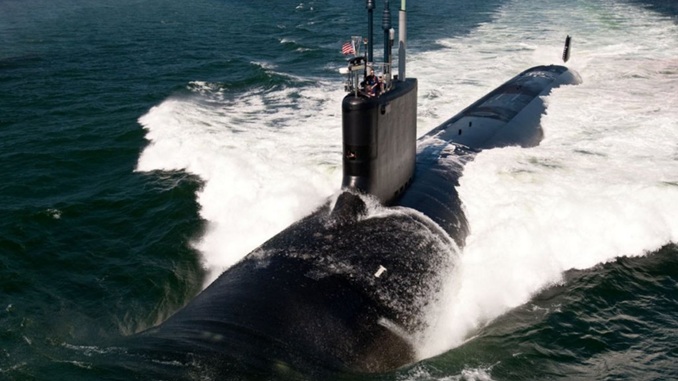
Arizona Reps. Quang Nguyen (R-LD1) and Justin Wilmeth (R-LD2) are encouraging public support for the future USS Arizona and its crew following a meeting with representatives of the foundation supporting the submarine’s commissioning and preserving the legacy of its battleship predecessor.
The lawmakers recently met with USS Arizona Legacy Foundation President Nicole LaSlavic and ship sponsor Nikki Stratton where they discussed the foundation’s work, the commissioning process, and opportunities for Arizonans to support the vessel and its sailors.
“The name USS Arizona carries special meaning for the people of our state, and Arizonans should know that name is returning to the fleet. A new generation of sailors will carry Arizona’s name around the world for decades to come,” Nguyen said. “We should be proud of them, stand behind them, and make sure the legacy of the USS Arizona and those who served aboard her is never forgotten.”
The submarine will be the first U.S. Navy warship to carry the Arizona name since USS Arizona (BB-39), which sank during the Japanese attack on Pearl Harbor on December 7, 1941.
The attack killed 1,177 sailors and Marines aboard the battleship. Its sunken hull remains at Pearl Harbor, where the USS Arizona Memorial honors the fallen service members. Retired Lt. Cmdr. Louis “Lou” Conter, the last surviving crew member from USS Arizona’s sinking at Pearl Harbor, died in 2024 at age 102.
Stratton’s connection to the project includes her own family’s history. She is the granddaughter of Donald Stratton, who survived the attack aboard the battleship. Despite severe burns that led to his discharge in 1942, he reenlisted in 1944 and returned to service in the Pacific.
At the submarine’s December 7, 2022, keel-laying ceremony in Quonset Point, Rhode Island, Nikki Stratton welded her initials onto a steel plate intended for permanent placement aboard the vessel. The ceremony marked a milestone in its construction.
The future Arizona is a Virginia-class submarine designed to include the Virginia Payload Module, an additional hull section containing four large-diameter payload tubes. The module expands the submarine’s capacity to carry weapons and other undersea payloads.
In August, the Navy announced that it would reclassify 19 planned Virginia-class submarines equipped with the module as guided-missile submarines, using the designation SSGN. The announcement identifies SSGN-803 as the first platform in that group and estimates delivery in fiscal year 2029.
Wilmeth said that the submarine’s connection to Arizona and the sailors lost at Pearl Harbor warranted public recognition and support for its future crew.
“These sailors will serve aboard a submarine named for our state and carrying the name of a vessel whose sailors made the ultimate sacrifice at Pearl Harbor. It’s important that we honor that past while focusing on the future. We want Arizonans to know who they are, take pride in their service, and stand behind them.”
The USS Arizona Legacy Foundation, established in 2021, identifies its mission as supporting commissioning activities, educating future generations about Pearl Harbor and the battleship, and maintaining a connection between the submarine’s crew and Arizona throughout the vessel’s service.
Matthew Holloway is a senior reporter for AZ Free News. Follow him on X for his latest stories, or email tips to Matthew@azfreenews.com.
by Matthew Holloway | Sep 9, 2026 | Education, News
By Matthew Holloway |
Chandler Unified School District (CUSD) Governing Board member Kurt Rohrs is calling for Board President Patti Serrano to step down, accusing her of attempting to impose a land acknowledgment at board meetings and graduation ceremonies without the board’s concurrence. His proposed resolution comes as the board is scheduled to consider approving the acknowledgment at its September 9 meeting.
The district’s current agenda lists Serrano’s proposal as Item 9.01, “Possible Action to Approve CUSD Land Acknowledgement.” The proposal requests approval to include the acknowledgment at every governing board meeting and in all district graduation ceremony programs.
The proposal initially appeared as an information item on the August 19 agenda, announcing that the practice would begin September 9. According to the district’s draft minutes, board member Ryan Heap requested that it return at the next meeting as an action item.
The district’s proposal describes the acknowledgment as a “meaningful expression of respect and recognition” honoring Indigenous peoples’ sovereignty, history, and contributions. Serrano defended the practice during the August discussion.
Rohrs’ resolution alleges that Serrano attempted to introduce the acknowledgment without the board’s agreement and created division through politically motivated activity unrelated to academic performance.
In the resolution, Rohrs wrote that Serrano “has abused her authority as Board President” and “should immediately step down as Board President and be replaced by another Board Member who can faithfully carry out those duties.” The document contains no recorded vote or adoption date.
Rohrs also criticized Serrano for declining to recite the Pledge of Allegiance in the resolution. Video obtained from meeting attendees in April 2025 showed Serrano standing with her hand over her heart without reciting the pledge. The report said Serrano declined to discuss her reasons during public comment because the matter was not on the agenda and offered to follow up personally with the community member who raised it.
In his written request to remove the item, Rohrs argued that the acknowledgment would inject political and social activism into district business.
“This is an arbitrary decision that was never discussed or approved by the board,” Rohrs said during the August meeting. “There is no district policy that either requires or allows this. Land acknowledgment can be considered as a progressive socialist partisan political performance piece that has nothing to do with improving academic performance of our students.”
In his written removal request, Rohrs alleged that the acknowledgment appeared to violate provisions of A.R.S. § 15-112 and A.R.S. § 41-1494. “This statement is also divisive and promotes negative stereotypes and guilt-shaming regarding certain other ethnic groups,” he wrote.
Serrano disputed Rohrs’ contention that the acknowledgment would violate state law, arguing that the acknowledgment concerns sovereign Native nations and pointing to similar practices at Arizona’s public universities and community colleges.
The dispute also involved Rohrs’ decision to speak during public comment as a private citizen and taxpayer. The draft minutes record Serrano warning that the attorney general’s office had discouraged board members from switching roles during meetings because of potential Open Meeting Law concerns and confusion over whom they represent.
Rohrs responded that he had a right to speak and would not be intimidated into silence. Serrano said she was relaying the attorney general’s guidance and that her remarks were not intended to intimidate him, as noted in the minutes, which remain a draft pending board approval.
CUSD already maintains a “Land Acknowledgement 2025” section on its Indigenous Education Program website. The page identifies the district’s location as ancestral land of the Piipaash, Akimel O’odham, Gila River, Salt River, Pima, Maricopa, and Yaqui tribes and includes a land acknowledgment video.
Board members Barb Mozdzen and Claudia Mendoza expressed support for the acknowledgment during the August discussion, citing respect for Indigenous history, Native students, and the district’s community.
The September 9 public meeting is scheduled to begin at 6:30 p.m. at 1525 W. Frye Road in Chandler. The action portion is tentatively scheduled for 8:20 p.m. The agenda notes that listed times are approximate.
Matthew Holloway is a senior reporter for AZ Free News. Follow him on X for his latest stories, or email tips to Matthew@azfreenews.com.
by Ethan Faverino | Sep 9, 2026 | News
By Ethan Faverino |
State Representative Walt Blackman (R-LD7) is asking the Arizona Department of Corrections, Rehabilitation, and Reentry (ADCRR) to provide records detailing cooling system failures reported at correctional facilities in Arizona throughout August.
Blackman, who chairs the Arizona House Government Committee, said he plans to review the outages to determine which prison facilities experienced cooling failures, how long the systems were offline, and how the conditions affected correctional officers, employees, and inmates.
The review will also examine the cost of emergency repairs and whether continuing to maintain aging cooling systems is the most cost-effective option for taxpayers.
“Arizona’s prisons must remain safe, secure and operational through the summer,” stated Blackman. “Correctional officers should not be working in dangerous temperatures because critical equipment is failing, and taxpayers should not be repeatedly paying for emergency repairs without knowing whether there is a better long-term solution. Before we consider additional spending or legislative action, I want the facts.”
Blackman intends to request information covering August 1 through August 31, including records of cooling system outages, affected facilities, the duration of outages, temperature readings, and emergency cooling measures implemented by ADCRR.
The request will also seek maintenance requests, work orders, and repair costs, as well as information about any heat-related impacts on correctional officers, employees, and inmates.
Blackman is specifically seeking information about any medical incidents or inmate relocations resulting from excessive heat. The review will also include conditions at the Lewis Prison Complex, including the Bachman, Barchey, and Stiner units.
Another focus will be the age and expected service life of existing cooling equipment. Blackman said he wants to compare the projected cost of continuing to repair aging systems with the potential cost of replacing or modernizing them.
ADCRR has an extreme heat strategy in place for the 2026 summer season that calls for regular temperature monitoring, additional checks of HVAC performance, and the use of temporary cooling equipment when air-conditioning systems become inoperable.
The department’s strategy also provides for portable fans, ice, air-conditioned cooling centers, and increased health monitoring in heat-affected areas.
Blackman said the information he receives from ADCRR will help determine whether the department’s current maintenance practices are adequately protecting employees and inmates and whether continued repairs to aging equipment remain the most cost-effective approach.
“Our correctional officers perform one of the toughest public-safety jobs in state government, and they deserve facilities where they can safely do their jobs,” said Blackman. “Conservative government means taking care of the infrastructure taxpayers already own and making sound decisions before small problems become expensive emergencies. If we are spending substantial sums every summer repairing the same aging equipment, we need to know that. If replacement would save money over the long term, we need those numbers too.”
The records will help shape Blackman’s next steps, depending on what the review finds. He said the legislature could consider additional oversight, hearings, budget discussions, or changes to how the state approaches maintenance and replacement of aging prison infrastructure.
Ethan Faverino is a reporter for AZ Free News. You can send him news tips using this link.
by Staff Reporter | Sep 9, 2026 | News
By Staff Reporter |
The Arizona Department of Health Services (ADHS) has issued standing orders for access to the latest COVID-19 and influenza vaccines.
These standing orders grant authority to authorized healthcare professionals to administer the vaccines to all individuals aged six months and older, including pregnant women.
These authorized healthcare professionals include physicians, physician assistants, advanced practice registered nurses or nurse practitioners, and pharmacists. Additionally, pharmacists may delegate the administration of both vaccines to an active, licensed, trained intern and pharmacy technicians under pharmacist supervision.
ADHS explained in a press release that it issued the standing orders amid uncertainty with the schedule and timing of the next meeting by the Centers for Disease Control’s Advisory Committee on Immunization Practices (ACIP), the entity responsible for developing vaccine schedule recommendations.
ACIP canceled the first two of three meetings scheduled for this year, one in March and one in June, due to ongoing litigation. The third meeting is scheduled to take place from October 21-23. The American Academy of Pediatrics (AAP) sued the Department of Health and Human Services over ACIP appointments made by Secretary Robert F. Kennedy Jr. and the new childhood immunization schedule.
ADHS identified COVID-19 and influenza as “major” and “significant” causes of morbidity in its respective standing orders.
Dr. Richard Carmona, ADHS public health medical advisor and the nation’s former surgeon general, said the standing orders ensured “safe and timely access” to the vaccines necessary for preventing severe illness and death.
The American Academy of Family Physicians (AAFP) and AAP recommend the influenza vaccine once or twice per year for children aged six months to approximately nine years old, and once per year for minors from approximately nine to 18 years old. For adults, the AAFP recommends the influenza vaccine between the ages of 19 and 64 years old; the recommended schedule did not provide a specific dosage amount.
The AAFP and the AAP recommend the COVID-19 vaccine once or more per year for children aged six months to 18 years old. For adults, the AAFP recommends one or more doses of the COVID-19 vaccine for individuals between the ages of 19 to 64 years, and two or more doses for those aged 65 years or older.
The American College of Obstetricians & Gynecologists recommends that all pregnant and lactating women receive the COVID-19 vaccine and booster shots.
So far for the ADHS 2025-2026 respiratory illness reporting season — which runs from November 2025 through October 2026 — there have been more than 19,000 confirmed cases of COVID-19 and approximately 49,700 confirmed influenza cases.
The latest ADHS data on the leading causes of mortality in Arizona from 2023 reported that COVID-19 was the 11th leading cause of death and influenza and pneumonia were the 13th leading cause of death; just over 950 deaths were attributed to COVID-19 and slightly more than 900 deaths were attributed to influenza and pneumonia.
COVID-19, influenza, and pneumonia accounted for approximately 3% collectively of the 16 leading causes of death identified in 2023.
The top three identified leading causes of death — heart disease, malignant neoplasms, and accidents — accounted for approximately 62% of deaths that year.
AZ Free News is your #1 source for Arizona news and politics. You can send us news tips using this link.